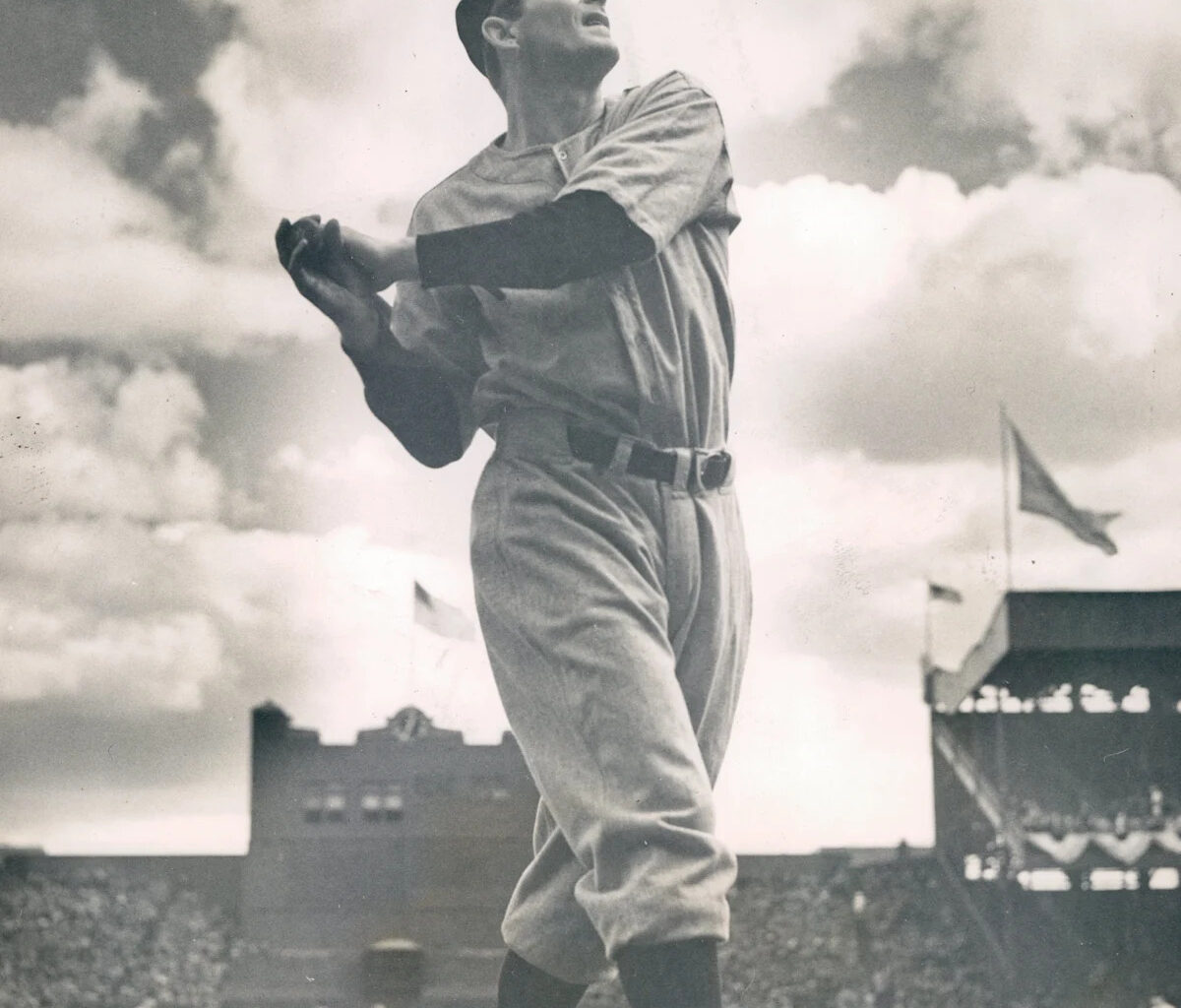
Replacing a legend is never easy, to the point where there is often a thing people say in sports that you never want to replace the legend, you want to replace the person who is replacing the legend. At least in recent Yankees’ history, the team did manage to replace one legend somewhat successfully, as Didi Gregorius did about as admirable a job as anyone could have taking over for Derek Jeter in the mid-to-late 2010s.
If we go even further back in time, there is another instance of someone replacing a Yankees’ legend quite solidly, even if they didn’t match their predecessor’s remarkable heroics. In the case of George Herman “Babe” Ruth, the Yankees replaced him in right field with another George, who helped the Bombers to five World Series titles and earned a spot in his own right on our Top 100 Yankees series.
Advertisement
George Selkirk
Born: January 4, 1908 (Huntsville, Ontario, Canada)
Died: January 19, 1987 (Fort Lauderdale, FL)
Yankees Tenure: 1934-42
Born in Canada a few hours outside of Toronto, Selkirk moved with his family to Rochester, New York at an early age. He excelled in school at wrestling and baseball, and the latter got him noticed by scouts. Selkirk originally came up playing catcher, which got him signed by local minor league team, the Rochester Tribe in 1927.
Later in 1927, Selkirk was picked up by the Cambridge Canners of the Eastern Shore League, who needed a catcher. Upon first reporting to them, he accidentally went into the wrong clubhouse, walking in on the visiting Crisfield Crabbers. Not realizing his mistake, he told the Crabbers’ manager, who replied that they weren’t looking for a catcher, but needed an outfielder. Wanting to take his chance, Selkirk replied that he could also play outfield, and did that day for the Crabbers, bluffing his way out there. He survived that day out there unscathed, but from then on out, he would play the outfield as opposed to catcher.
After a good couple years in the minors, the Yankees picked Selkirk up in 1934. Initially, they just needed a replacement for Earle Combs, who injured himself crashing into a wall (ultimately dooming his career). Selkirk acquitted himself well, OPSing .819 in 46 games.
Advertisement
The following offseason, the Yankees opted to let Ruth go to the NL’s Boston Braves. Ruth had made it clear in the previous years that he would like the opportunity to become a manager when his playing career was over. However, the Yankees had also made it clear that they weren’t going to be giving him that job anytime soon, as they were content with Joe McCarthy, who had won them a World Series in a 107-win 1932. The Braves’ owner ended up fibbing to Ruth, but he promised him a player/coach role with the team, with the opportunity of ascending to the manager’s position. The Yankees decided not to stand in their legend’s way, and allowed him to have an ill-fated stint in Boston.
That left the Yankees quite the gap in the outfield. Not only would replacing Ruth just in general be a herculean feat, but — even if he wasn’t at his peak — Ruth was still excellent in 1934, putting up a 160 OPS+. McCarthy had liked what he’s seen from Selkirk in his 1934 stint, and decided to let the 27-year-old have the full-time right field gig in 1935. Selkirk decided not to back away from this challenged and donned Ruth’s No. 3 uniform (which in these early days of uniform numbers wasn’t being held out of circulation yet, as it would no doubt be years later), saying “If I am going to take his place I’ll take his number, too.” Considering what happened to the people who tried wearing No. 21 after Paul O’Neill did, that might not have been taken too kindly had it happened a couple decades later.
Selkirk was not another Babe Ruth, frankly no one could be. However, he rewarded the Yankees’ faith with a very nice career. He hit .312 with 94 RBI in his first season replacing Ruth in 1935, and then bested that in the coming years. In 1936, Selkirk put up a .931 OPS (132 OPS+), while cracking the 100 RBI mark and earning his first career All-Star appearance. They also returned to the World Series that year, having fallen short the previous three seasons, and Selkirk hit two home runs in the 4-2 Fall Classic victory over the Giants. Throughout all that, he also gained the affectionate nickname of “Twinkletoes” for his distinctive running style.
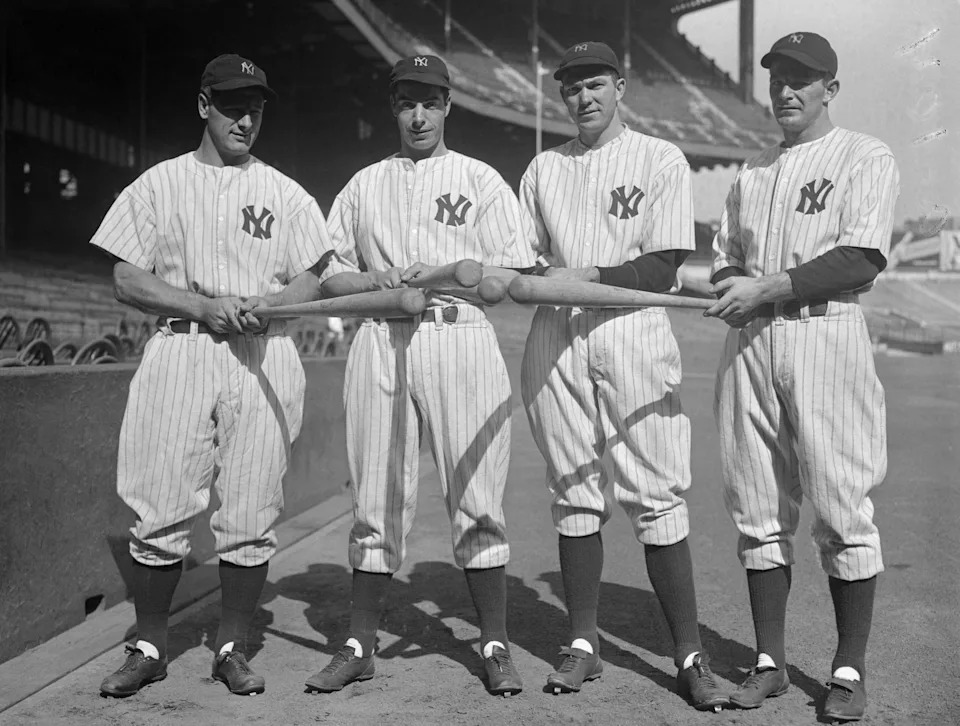
The Yankees won the World Series again and 1937 and ‘38, and Selkirk was again a solid contributor to those teams — particularly in ’37, when despite his season being shortened by a broken collarbone, he batted .328 with a 1.040 OPS and 156 OPS+ in 78 games. His career year then came in 1939. For the second time in his career, Selkirk was named an All-Star in ‘39, a year in which he hit .306/.452/.517 with a personal high of 21 home runs. He walked a career-best 103 times and put up over five wins above replacement, according to both Baseball Reference and FanGraphs. He struggled a bit in the World Series, but the Yankees completed their fourth-consecutive championship with a sweep of the Reds that October.
Advertisement
Selkirk began to fall off a bit in the following seasons, although he helped the Yankees to another World Series win in 1941. A young Joe DiMaggio had already been Selkirk’s teammate for several seasons, but Charlie Keller and Tommy Henrich also began to emerge, eventually booting Selkirk from his spot in the outfield. After 1942, Selkirk enlisted in the Navy during the height of World War II, and was released by the Yankees upon getting discharged in 1946 at age-38.
After his playing career, Selkirk held various roles in several organizations, including spending some time as a minor-league manager for Yankees’ affiliates, skippering for up-and-comers like Yogi Berra and Mickey Mantle. His most notable role came as the general manager of the Washington Senators (the second edition of the Senators, who are now the Texas Rangers) from 1962-68. He later returned to the Yankees as a scout before moving to Florida in retirement. He passed away there in 1987 at age 79, just a few years after being named to the inaugural class of the Canadian Baseball Hall of Fame.
It’s pretty rare that you’ll be able to directly replace a legend with someone else who becomes a legend. Generally, if you can replace a legend with a reliable dynasty contributor like George Selkirk, you’ve done a really good job.
Sources
Canadian Baseball Hall of Fame
See more of the “Yankees Birthday of the Day” series here.