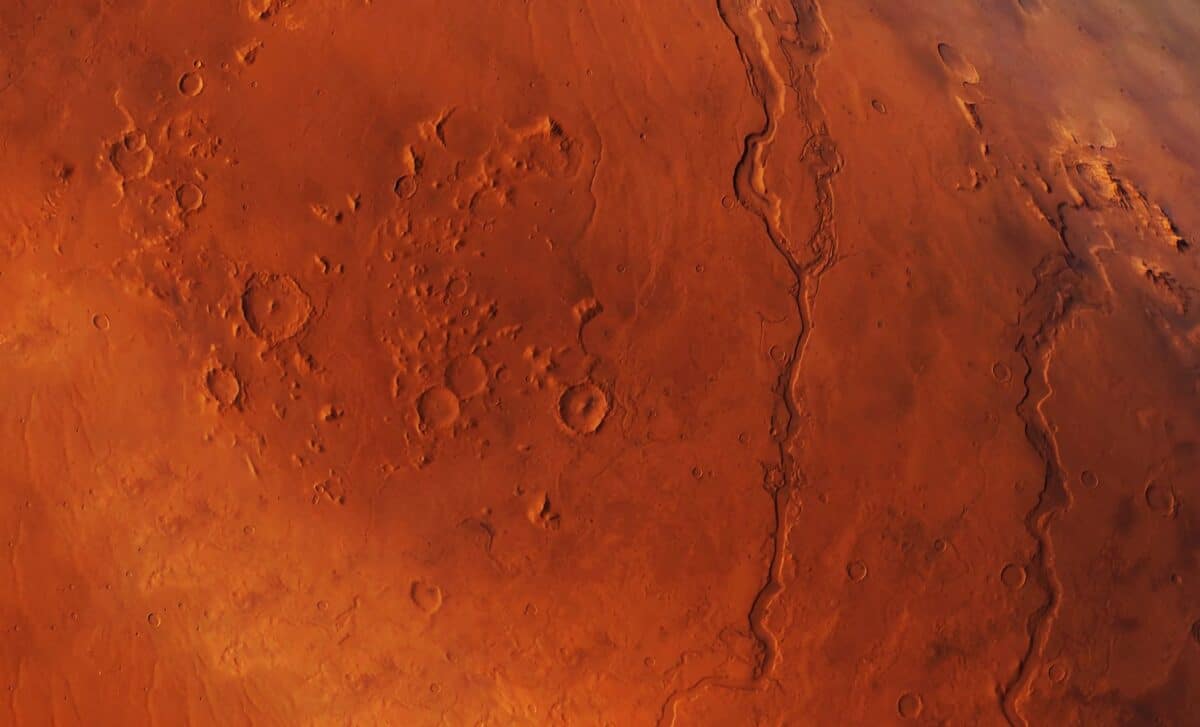
On Mars, NASA’s Perseverance rover has detected chemical signatures in rocks similar to those created by microbial life on Earth. The minerals found, vivianite and greigite, appear in a structured pattern within mudstone drilled from Jezero Crater.
The sample was taken in July 2024 from a rock formation in Neretva Vallis, an ancient riverbed that once fed into the crater’s long-dry lake. According to the research team led by Joel A. Hurowitz of Stony Brook University, the layered sediment and distinct mineral textures suggest a low-temperature, water-rich environment, conditions favorable for microbial activity if it ever existed on the Red Planet.
Mineral Evidence and Earth-based Parallels
The discovery, published in Nature, centers on a specific pattern in the mudstone core, tiny greigite-rich centers surrounded by vivianite rims. This bullseye-like structure has previously been observed in anoxic Earth sediments, where sulfate-reducing bacteria and iron-reducing microbes drive a series of chemical reactions. These minerals are strongly associated with biological activity when found in similar settings on our planet.
The instruments responsible for detecting these patterns, SHERLOC and PIXL, revealed that the minerals co-occur with organic carbon, phosphate, and sulfur, arranged in repeating, ordered textures. Vivianite often forms in blue-green nodules within wet, oxygen-poor sediments, and greigite is known to appear only in long-term microbial incubations under laboratory conditions.
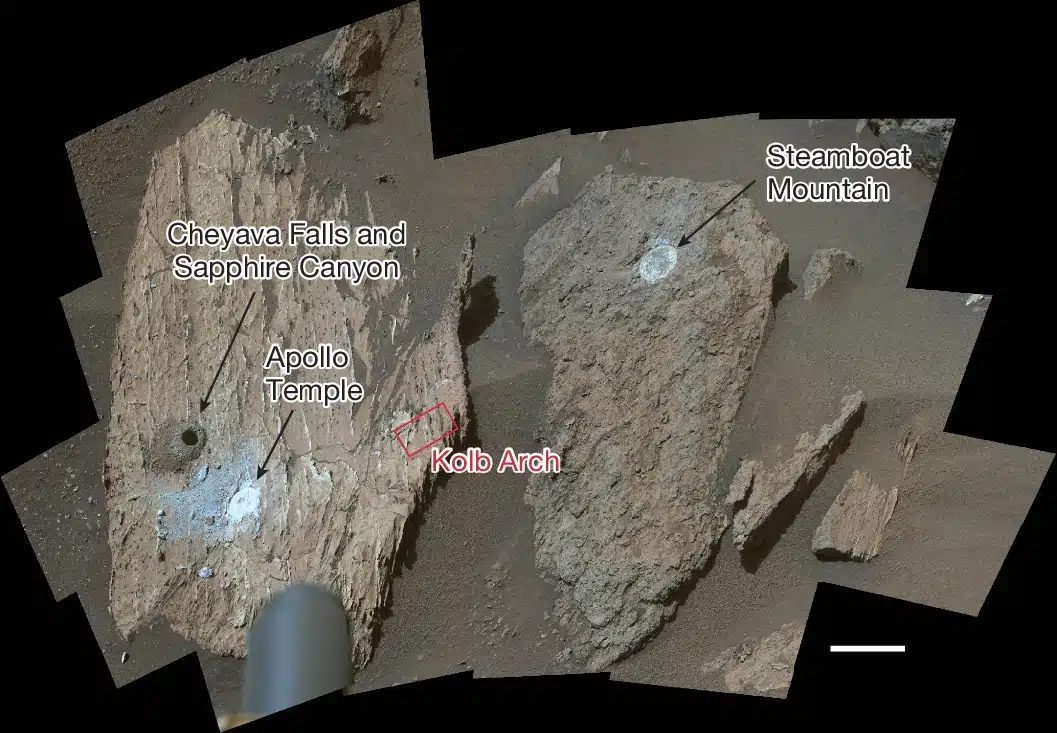 Rock outcrops in Jezero Crater captured by Perseverance, showing key analysis sites: Cheyava Falls, Apollo Temple, Kolb Arch, and Steamboat Mountain. Credit: Nature
Signs of Life on Mars, or Chemical Coincidence?
In accordance with the agency’s Confidence of Life Detection (CoLD) scale, these results fall within the initial stages, where signals have been detected and some non-biological alternatives addressed, but not yet eliminated.
“We cannot claim this is more than a potential biosignature,” said Joel A. Hurowitz, echoing statements from other officials who have emphasized the need for independent laboratory verification.
The CoLD scale defines seven levels of confidence. This finding checks off some of the early boxes, but the toughest tests, like isotope ratios and detailed microtextural analysis, will need to wait for Earth-based labs, where scientists have access to far more powerful tools. The sample has been sealed and set aside for a possible return to Earth as part of NASA’s ongoing Mars Sample Return plans.
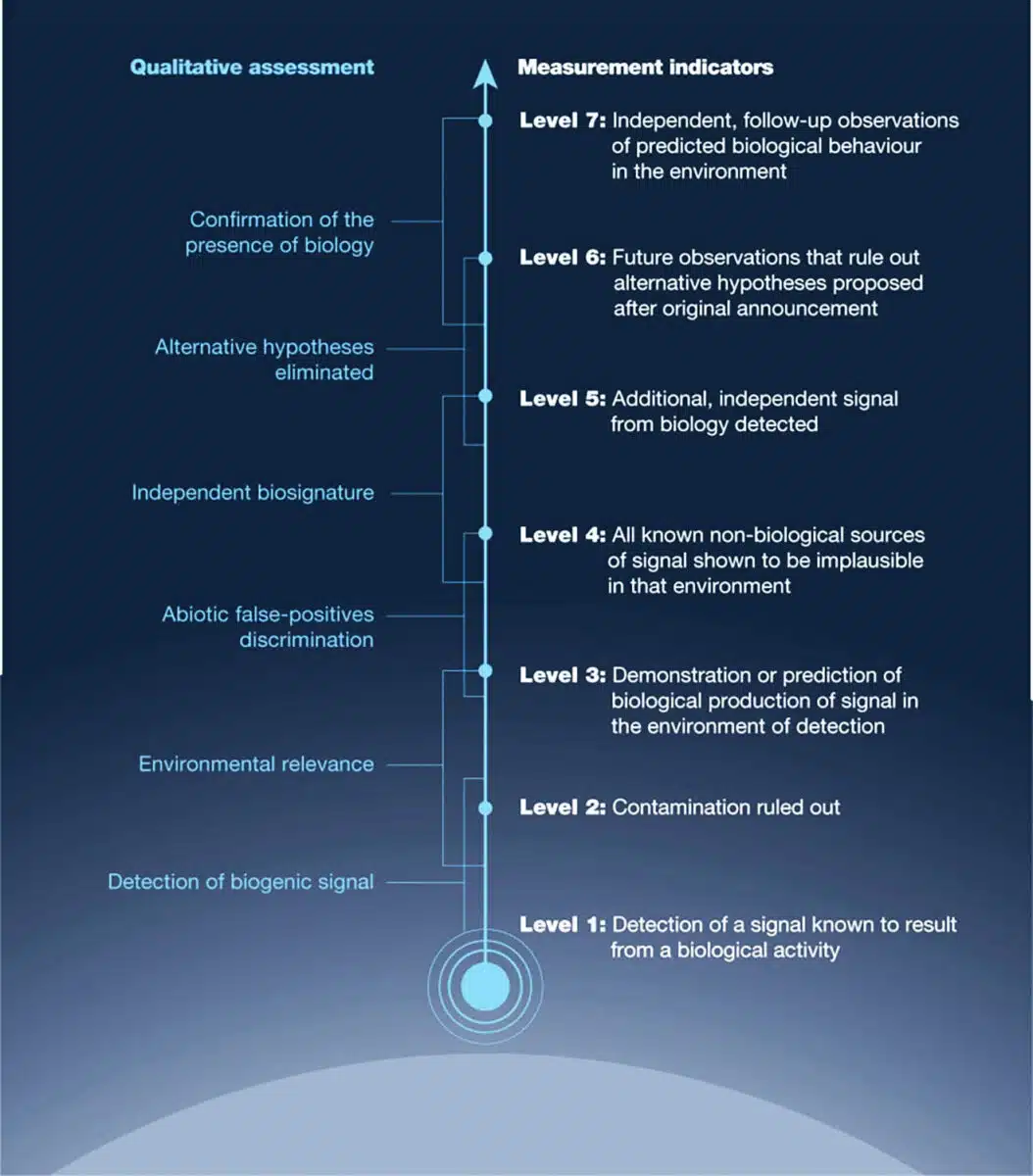 The CoLD scale outlines seven steps to assess how confidently observations can indicate life. Credit: NASA
Two Minerals That Could Change Habitability
The broader context of Mars’s chemical history adds further weight to the finding. In a separate 2024 incident, NASA’s Curiosity rover accidentally split a rock open in Gediz Vallis and revealed an unexpected concentration of bright yellow sulfur crystals. The discovery startled scientists, including Ashwin Vasavada, who noted:
“Finding a field of stones made of pure sulfur is like discovering an oasis in the desert,” Vasavada said. “It shouldn’t be there, which means we now have to explain it. Moments like this – when Mars surprises us – are what make planetary exploration so thrilling.”
Sulfur plays a key role in energy cycles on Earth, with many microorganisms relying on sulfur compounds for survival. The presence of olivine in the same area also points to interactions between water and rock, further indicating geochemical conditions that could support microbial processes. According to the study, even if these minerals formed without biology, they still reflect a complex and evolving Martian redox environment.
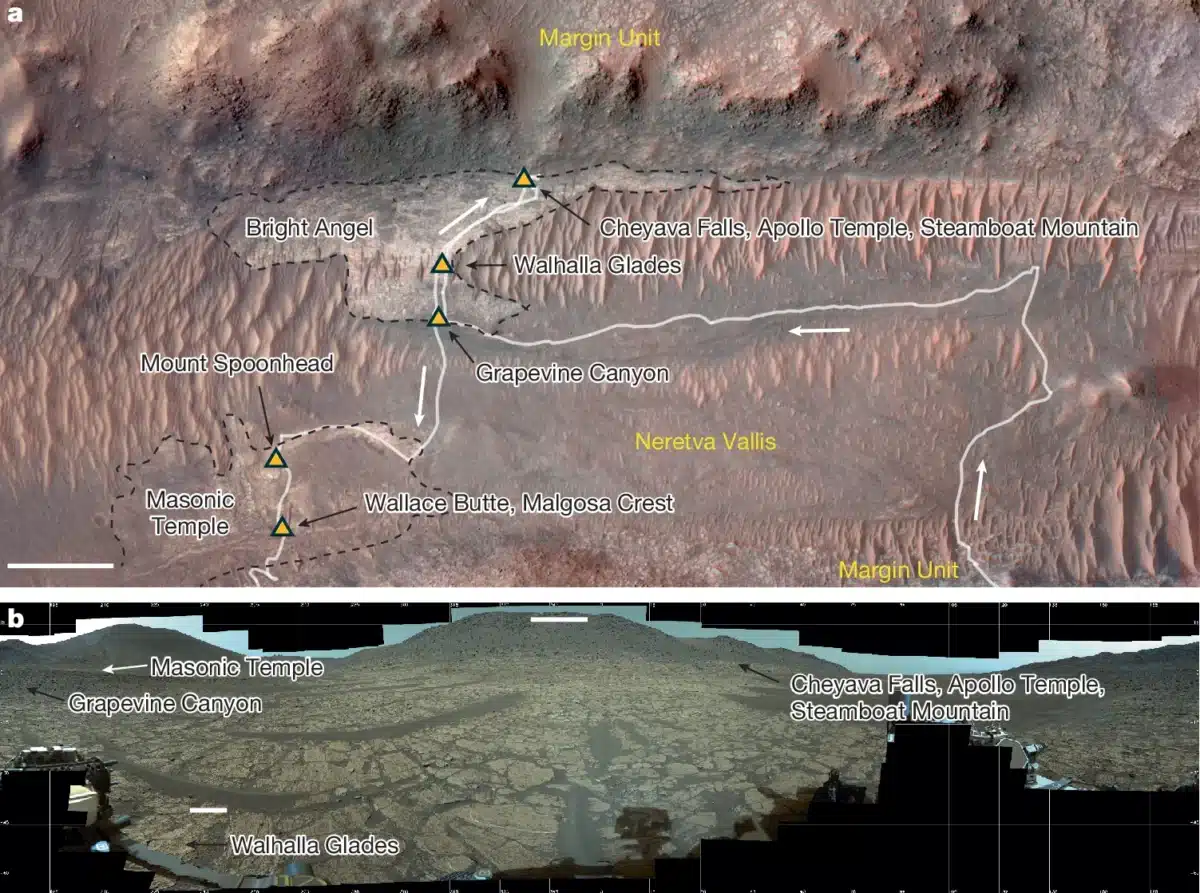 Perseverance’s journey through Neretva Vallis and its survey of the Bright Angel formation. Credit: Nature