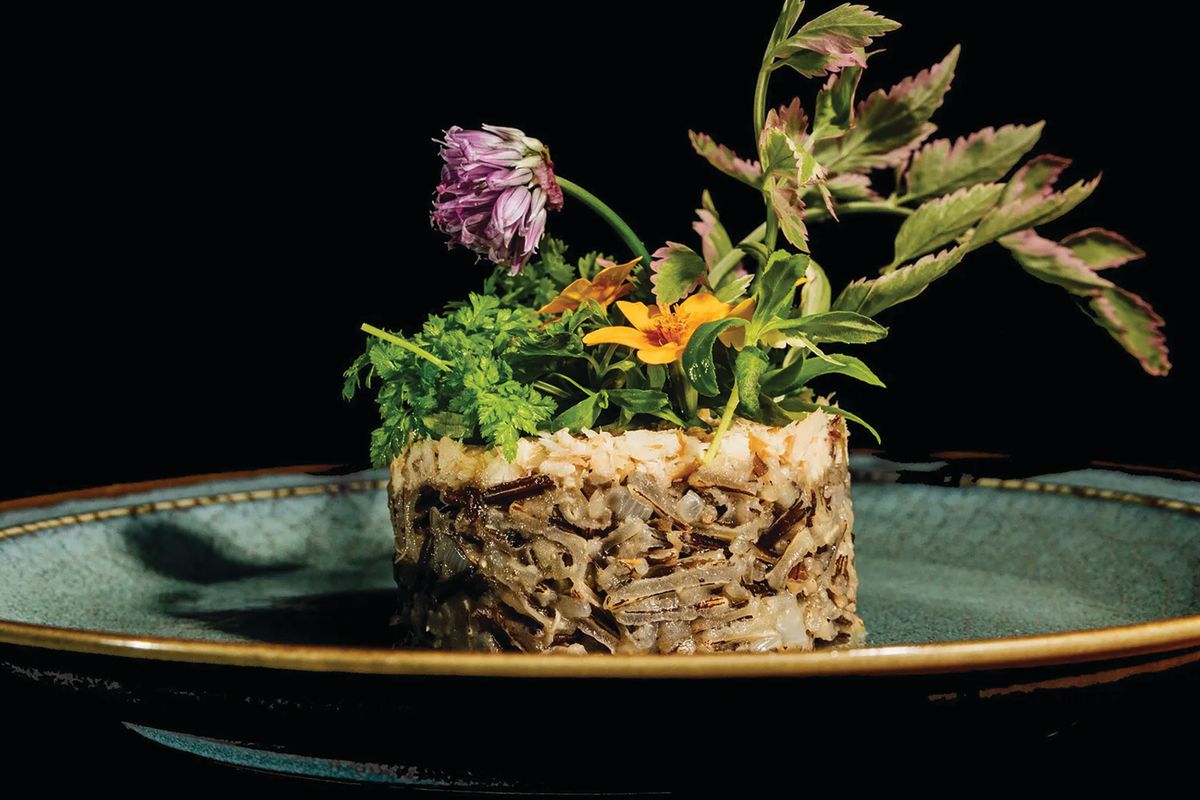
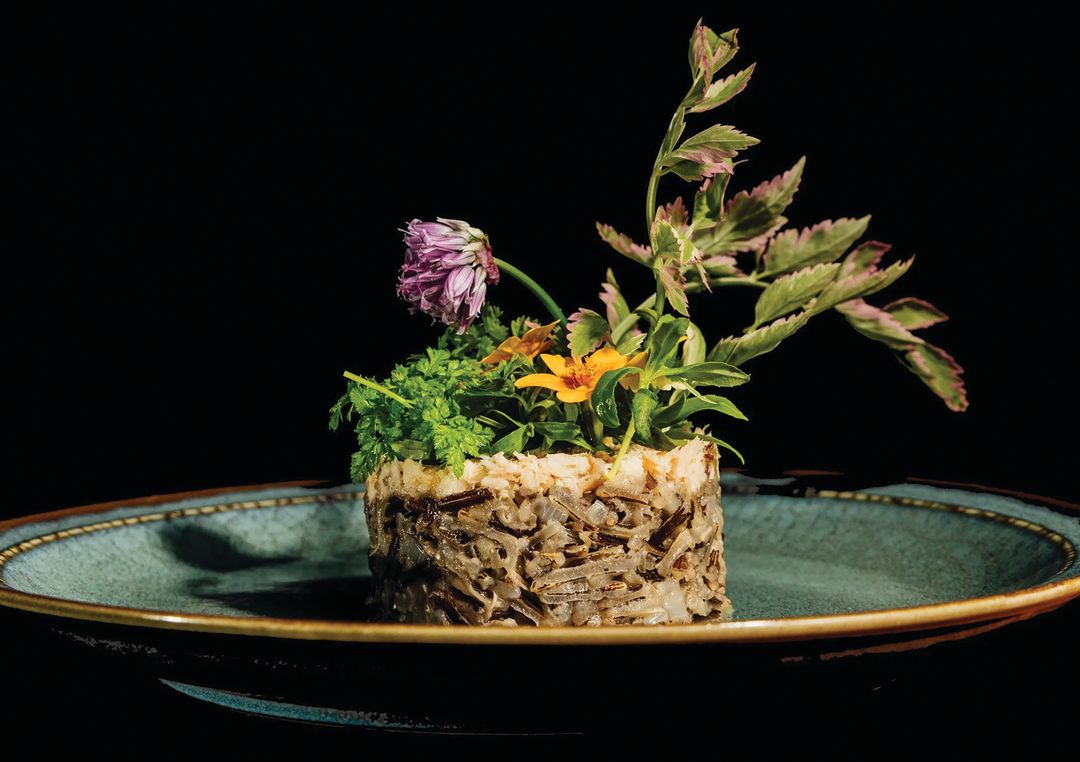
Ishtia offers a tasting-menu experience in Kemah.
For chef David Skinner, opening a restaurant outside of the Loop in Kemah felt like a natural choice.
After years of splitting their time between Memorial and the peaceful, sleepy Gulf town of Kemah, he and his wife decided to pack up their lives and move there. Around 2007, he stepped away from his corporate roots to work on what would become Clear Creek Vineyard, a venture that opened in 2011. Three years later, he launched Eculent, the restaurant that earned him his reputation as the “Willy Wonka of food.”
People traveled to Kemah from around the world, sometimes for just one night, to witness Skinner’s innovative, magician-like approach to modern gastronomy. It proved to Skinner that to be successful, he didn’t need to be in the Inner Loop. Still, many people questioned, “Why Kemah?” Others encouraged him to pursue a new location, saying that if he opened a restaurant in the city, it’d be packed. Skinner would point to his dining room in rebuttal: “Do you see any empty seats?”
Skinner doubled down in 2023 when he opened a second restaurant at his Kemah winery, The Prsrv, a Native American and Thai tasting-menu restaurant that recently closed to pave the way for Eculent Restaurant + Liquid Lab, a slight revival of his original concept. Crafted with James Beard Award–winning chef Benchawan Jabthong Painter, the tasting menu took diners through the chronological evolution of Thai and Native American cuisine. A year later, he transformed Eculent’s original space into another Indigenous tasting-menu restaurant, Ishtia. For Skinner, the suburbs are where it’s at, and other acclaimed chefs are following suit.
Areas inside the Loop—specifically Rice Village, the Heights, Montrose, and East Downtown—may be prime real estate for new and emerging restaurants. But in recent years, Houstonians have continued to expand outward as they seek more affordable living options, more desirable school districts, and additional space. Restaurateurs are following this trend, and what was once known as “the sticks” is now booming with life.
Thomas Bille, who won the 2025 James Beard Award for Best Chef: Texas, is a prime example. His New American restaurant, Belly of the Beast, is nestled in a shopping center off of FM 2920 in Spring, serving Mexican-inspired dishes such as birria quesotacos, bluefin tuna tostadas, and ceviche de pescado with the catch of the day.
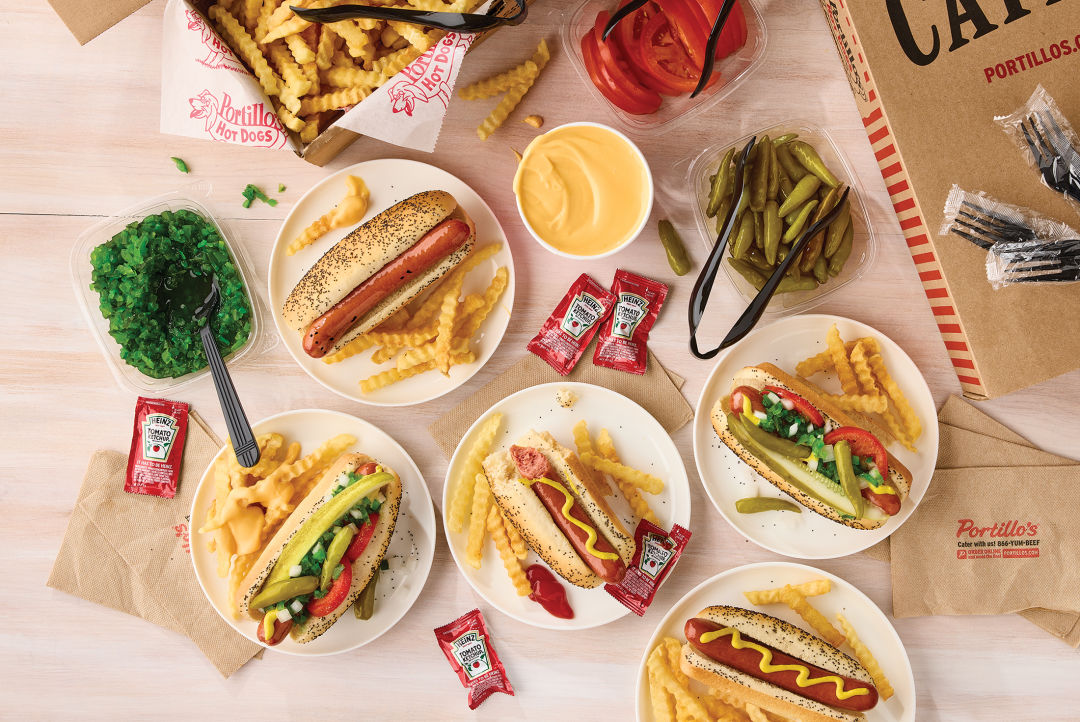
Portillo’s has opened up locations in Stafford, Willowbrook, and Katy.
Bille says choosing to open a restaurant in the suburbs was easy: It’s where he lives. He wasn’t interested in a 45-minute commute to the city when he could work 15 minutes from home. Rent in the suburbs is often more feasible, and in Spring, he feels he’s filling a need in the community. “When we first started, [Spring] was very underserved when it came to high-quality chefs,” he says. “More things are opening up slowly, but I feel like most of the people here [think] if they want to eat at an upscale restaurant that’s not a chain that they have to drive into the city, and not everybody has the luxury or time to do that.”
That doesn’t mean he hasn’t thought about moving to Houston. After experiencing success at the now-shuttered Heights restaurant Chivos, Bille says he considered opening a restaurant in Houston following his first rendition of Belly of the Beast. A pop-up in West University, a suburb that often gets mistaken for Houston proper, changed his mind.
Conversations with diners and fans revealed that most of them had driven down from Spring to experience his cooking again. That’s when he decided to stay. “We already built a community here, and they wanted us back,” he says. “It’d be a disservice for ourselves and them [to move].”
The Howard Hughes effect
While some are flocking to suburbs for affordability and shorter commute times, others are in search of the next big thing, and that’s partly thanks to Howard Hughes Holdings—the real estate development company behind The Woodlands and up-and-coming master-planned community Bridgeland.
Jim Carman, president of the Texas region for Howard Hughes, says these master-planned communities are designed to be all-inclusive ecosystems that are sustainable for people to live, work, and dine without needing to leave the area. Today, fewer people commute out of The Woodlands because it’s now home to several companies, including Hewlett Packard Enterprise and Chevron Phillips Chemical, meaning there’s a built-in population base that can actively support local businesses and restaurants. Keeping this in mind, Carman says that his team pursues joint ventures where restaurants serve as amenities and investments to help foster a sense of community. “When it comes to dining, our residents expect to have a variety,” Carman says. “They expect to have great opportunities to entertain, so we take that responsibility seriously to meet that demand.”
It’s particularly enticing for chefs who have already lived and worked in one of these master-planned communities. Austin Simmons, head chef of the now-closed Woodlands’ steak-focused restaurant Tris, says people often had qualms about traveling up to the suburb, with many jokingly referring to the area as “South Dallas.” But being a restaurateur in a suburb has its benefits. Like Bille, Simmons was drawn to The Woodlands because it’s where he lives. It’s a thriving, safe environment ideal for raising his five daughters, he says. Although it has a reputation for being upscale and pricey, Simmons says it’s more affordable for his staff. The area offers pockets of apartment complexes and housing that are often cheaper than what’s available in the Inner Loop. All of these factors are why he’s chosen to stay put in The Woodlands to open Charolais by Chef Austin Simmons, which he says will focus on serving a clean product through hand-reared cattle. It’s expected to open in Restaurant Row at Hughes Landing in early 2026.
Chef Aaron Bludorn will open a second location of his tavern-style restaurant, Bar Bludorn, on The Woodlands Waterway. The original, which opened in Hedwig Village, near Memorial, last year, has quickly become a favorite among Houston-area diners. “It’s a neighborhood restaurant,” Bludorn says. “While we love all the locations that we currently are in, we see a lot of opportunity to be able to bring something new to those markets that don’t have a concept like Bar Bludorn. We thought The Woodlands was a perfect example of that.”
Bridgeland’s time to shine
Bridgeland, a community of around 26,000 that’s within the recently named hottest zip code in the country, is in a position to follow in The Woodlands’ footsteps, Carman says. Chef Jonathan Levine of Jonathan’s the Rub, a restaurant that has locations in Memorial, East End, and Spring Valley Village, is opening a new location in Bridgeland’s Village Green this fall. The 70-acre mixed-use development marks the first phase of the soon-to-be 925-acre urban district called Bridgeland Central.
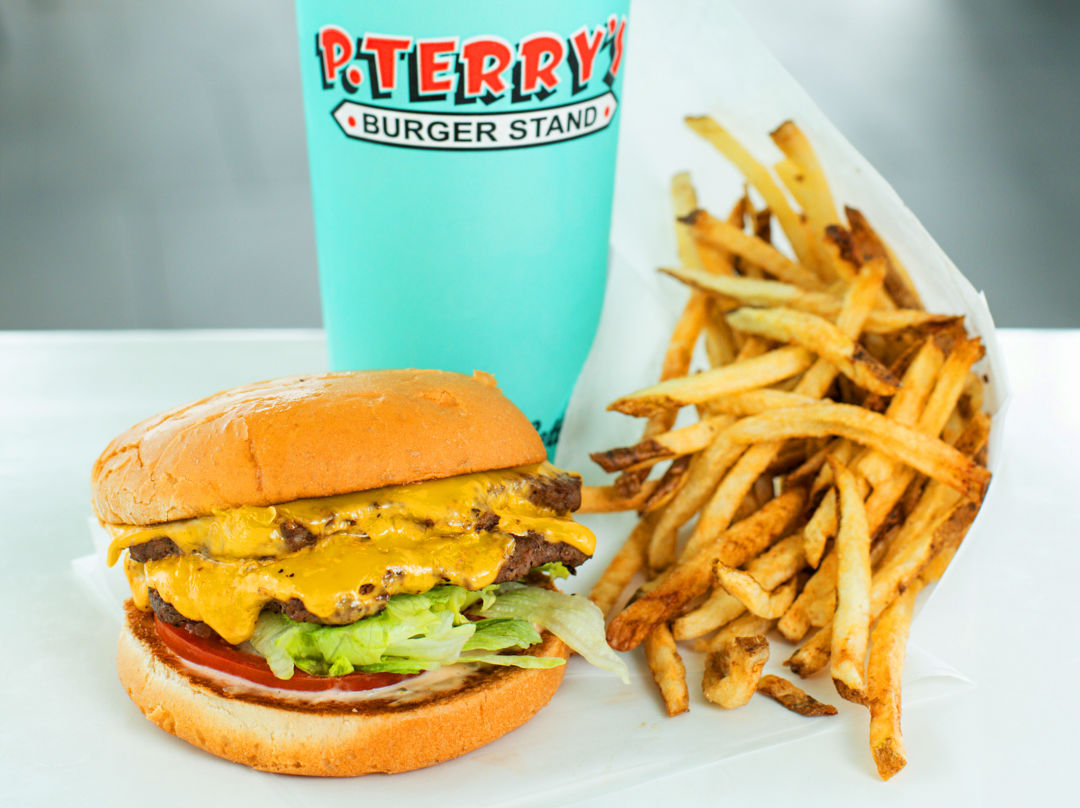
P. Terry’s has expanded to Houston from Austin.
Though it’s completely new, Levine sees Bridgeland as an opportunity to branch out beyond the inner city, where Houston neighborhoods are already saturated with dining options. “I got this notion to be in the next frontier so that we could just build our place and not have to worry about 18 restaurants all around us and get a clear identity,” Levine says.
Bridgeland has been under construction since 2004, but Levine only became aware of it five years ago. Intrigued by the area’s potential, he introduced himself to some workers at Howard Hughes in 2021 and invited them to the Rub’s Memorial location. After sharing a meal and conversation, they invited Levine to join the Bridgeland community, with hopes of opening locations where the population is trending or predicted to grow.
Chains are also moving to the suburbs. Chicago-based Portillo’s, known for its hot dogs, and California-based burger chain In-N-Out have opened outposts in Stafford, Willowbrook, and Katy. Austin’s P. Terry’s Burger Stand, now in Spring and Richmond, will open its fourth location in the new sprawling Cypress community—a decision the company made after realizing how many transplants from Austin miss their burgers, says Monty Montgomery, P. Terry’s senior vice president.
Traveling for good food
Although the influx of newer restaurants and chains in the suburbs means accessibility for those residents, it doesn’t always mean everyone is happy—especially Inner Loop folks who must travel farther, but Skinner says it might not be as far as you think.
Many people assume his restaurants in Kemah are actually farther down near Galveston and are surprised to learn the drive isn’t as taxing as they thought, he says. Driving is part of the experience, as the Michelin Guide, which launched in Texas in 2024, emphasizes: journeying to dining experiences that are worth the drive. “I’ve traveled the world for 40-plus years, eating in the best restaurants in the world, and many of them are in way out-of-the-way places,” Skinner says. “It’s not like you can just walk down the street or drive down the street to get to them.”
Simmons says that it’s all about timing the travel, which can include mapping out the commute and determining the best way to avoid traffic. It’s always great to travel with a dining buddy to keep you company, and cueing up a podcast or an audiobook can make a huge difference, almost like you’re going on a trip. “For our restaurants, and in the style they are, you’re not just coming for a great meal, you’re coming for an experience,” Skinner reminds us.
Because one thing is for sure: Skinner and Simmons aren’t leaving the burbs, and there aren’t any immediate plans to open a restaurant in the Inner Loop area. “The Woodlands is a special place for me, because it’s a community,” Simmons says. “I think it will always be home.”