Even as the state of municipal governance in Chicago continues to sap the confidence needed for investors to bet on the city’s future, there is a silver lining in all this anxiety. Chicago now boasts a legitimate bench of promising political talent at the municipal level.
This is new. With a pair of Daleys dominating the political scene locally since the 1950s, Chicago’s City Council historically hasn’t been the sort of place that drew ambitious, promising politicians.
The leadership vacuum in the mayoral office on the fifth floor of City Hall has changed all that.
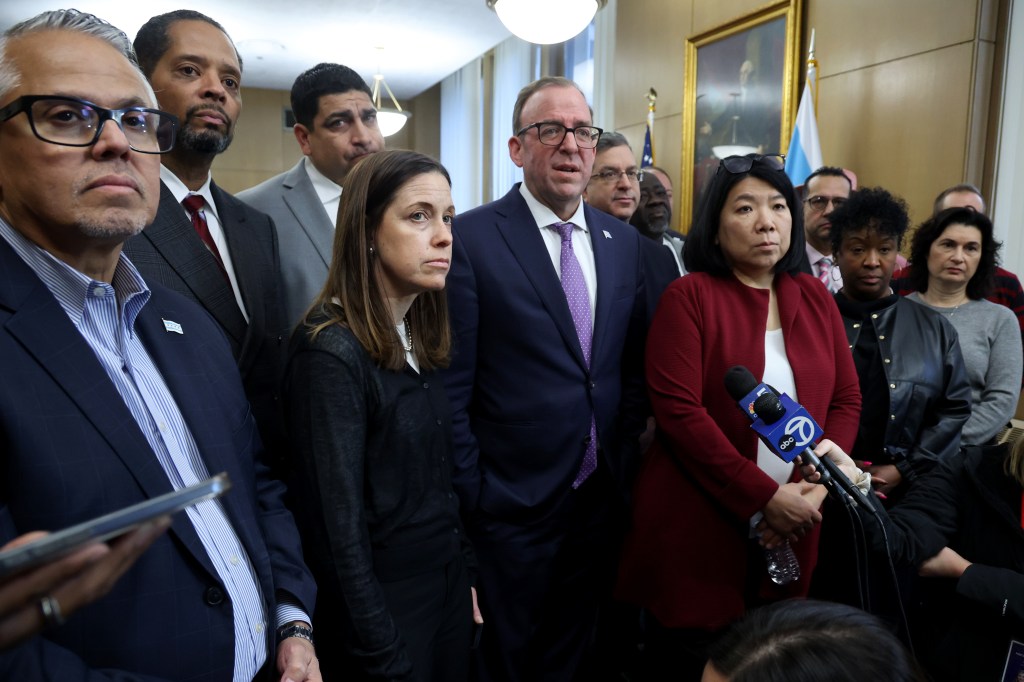
We’ve been heartened to see that a substantial number of alders has emerged from the recent city budget fracas to show resolve, self-discipline and real political chops.
They represent many parts of the city, both economically and ethnically. While they have differing policy views on many issues, all share something in common: They understand that their main job is problem-solving, not advancing a preconceived agenda.
Not everything was advisable in the budget this group shepherded against the wishes of Johnson, who allowed the tax-and-spending plan to become law without his signature. But these alders’ pushback against economically destructive ideas such as Johnson’s $33-per-month tax on jobs — as if employing people were a sin to be punished — was a badly needed signal to the business community that there’s a sensible and pragmatic middle at City Hall that understands Chicago’s already precarious finances will crater without private-sector investment.
Deftly leading the City Council through the budget debate that culminated in a convincing margin of victory were Aldermen Nicole Lee, 11th, and Scott Waguespack, 32nd. Lee, one of only two Asian American aldermen, represents Chinatown and Bridgeport, the latter of which has become one of the most diverse neighborhoods in Chicago. Waguespack, whose ward contains affluent areas including parts of Lakeview, Lincoln Park and Wicker Park, is a former Finance Committee chairman who understands the intricacies of budgeting better than most of his colleagues.
Another key figure proved to be Ald, Samantha Nugent, 39th, whose Northwest Side ward is a middle-class bastion. Nugent, using her power as president pro tempore to vote on any City Council panel, cast meaningful votes during critical Finance Committee budget deliberations. She also has doggedly and effectively challenged the Johnson administration on the issue of homeless encampments in city parks. First elected in 2019, Nugent is a real up-and-comer.
One of the council’s longest-tenured members also has risen to prominence over this period. Ald. Pat Dowell, 3rd, was first elected nearly two decades ago and as Finance Committee chair played perhaps the most critical role in winning the budget battle. Representing African American Bronzeville on the South Side, Dowell calmly rebutted Johnson’s attempt to cast the fevered debate in terms of racial and class-based division, one group of Chicagoans against another.
Addressing attack ads that falsely accused her and other alders of “trying to take meals away from seniors” and favoring property tax hikes, Dowell told the Tribune last month, “No one likes the attacks when they are not true. Many of the priorities that the mayor has, I also share, but we have to figure out how to fund those.”
Dowell embodies Theodore Roosevelt’s famous saying, “speak softly and carry a big stick.” Throughout the fraught final two months of 2025, her actions spoke louder than her words, which unfailingly were conciliatory and left the door open to compromise. Dowell’s cool head impressed us.
Other aldermen also emerged from relative obscurity as the council flexed muscles always institutionally available but rarely employed. Ald. Bill Conway, 34th, was a consistent voice against the Johnson administration’s worrying reliance on debt in a city swimming in IOUs. Ald. Anthony Beale, 9th, used his deep knowledge of parliamentary procedure to aid the cause.
This is not a comprehensive list. There are others as well.
We would be remiss, though, if we didn’t highlight the fortitude shown by Ald. Desmon Yancy, 5th. A first-term alder and member of the Progressive Caucus, representing South Side neighborhoods such as Woodlawn and South Shore, Yancy was the target of some of this budget season’s most intense political attacks. Before voting with the majority Dec. 20, Yancy spoke memorably on the council floor, calling out his fellow progressives for their attacks on him.
“This is more about pushing an agenda than it is about making a real difference in this city,” he said of their tactics. “I didn’t sign up for that. I signed up to listen to my constituents and to be fiduciarily responsible for how we do the work in this city.”
That’s courage.
The next few years — indeed, the next decade — in Chicago are shaping up to be among the most challenging in our long and storied history. So while Chicagoans are justified to feel anxious about the future, we think they also should take some comfort and even some pride in what we’ll call the City Council’s Pragmatic Caucus.
Editor’s note: This editorial has been corrected to reflect that there are two Asian American aldermen in Chicago. Leni Manaa-Hoppenworth, 48th, is the other.
Submit a letter, of no more than 400 words, to the editor here or email letters@chicagotribune.com.