Key Takeaways
- Vitamin D supports immune cells but supplements might not prevent all infections.
- Turmeric may help reduce inflammation but doesn’t reliably boost immunity.
- There is not enough evidence to support taking vitamin D and turmeric together to prevent infections.
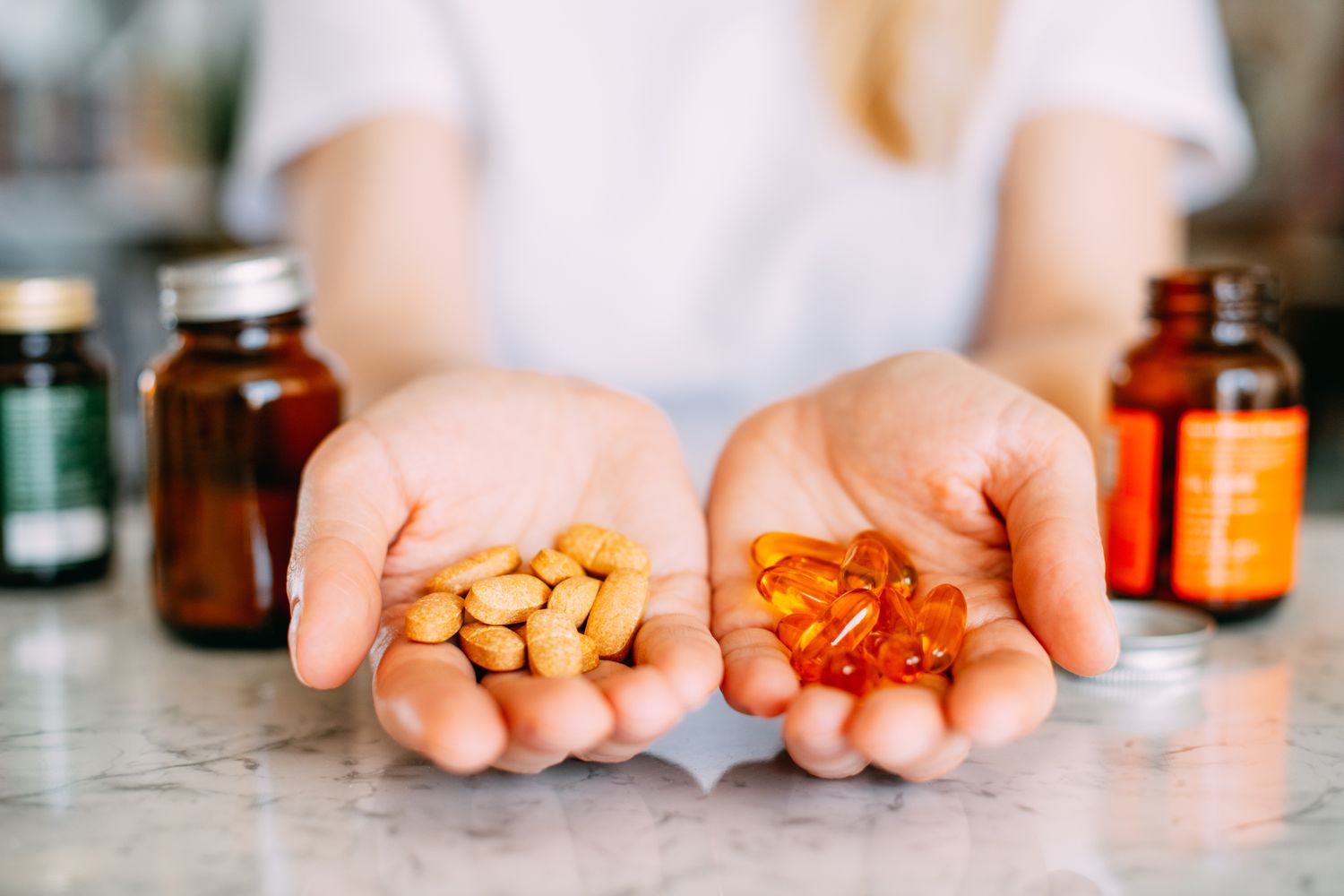
With cold and flu season in full swing, many people are reaching for supplements to support their immunity. Turmeric and vitamin D are two of the most popular, with some products even containing a combination of the two.
Some early studies suggest these two supplements may help in combination, but more research is needed to know for sure.
Vitamin D Helps Support Immune Cells
Vitamin D plays a clear role in immune function, and supplementation may modestly reduce the risk of acute respiratory infections in some people, said Lauri Wright, PhD, RDN, director of nutrition programs and an associate professor at USF College of Public Health.
“This is especially true when Vitamin D is taken regularly and for individuals who start out deficient,” Wright added.
Vitamin D helps control how certain genes work that guide the growth and activity of immune cells, according to Ashley Drews, MD, an associate professor at the Center for Infectious Diseases at Houston Methodist Research Institute.
“Vitamin D deficiency has been associated with several infections, most notably respiratory tract infections, so logically one would hope that supplementation of vitamin D would reduce the risk of respiratory tract infections,” Drews told Verywell. “Unfortunately, data from studies investigating the effect of high-dose vitamin D supplementation on infections have been inconclusive.”
One recent meta-analysis of 17 randomized trials showed no significant effect of high-dose vitamin D supplementation on the incidence of upper respiratory tract infection.
Turmeric Helps Reduce Inflammation
Turmeric has both anti-inflammatory and antioxidant properties, but evidence that it prevents common infections or reliably “boosts” immunity in generally healthy people is limited, Wright explained.
Much of the research focuses on inflammation markers or specific clinical situations.
For turmeric, the best evidence shows it mainly helps with inflammation, not with preventing infections, Wright said.
“There are randomized trials and reviews in specific settings, including COVID-19 adjunct studies, but that doesn’t automatically translate to fewer colds or a stronger immune system in everyday life.”
Combining the Two May Have Extra Benefits
When it comes to combining turmeric and vitamin D, one trial combined turmeric root with vitamins C and D in elite athletes and reported that participants experienced fewer self-reported respiratory and GI symptoms.
“Interesting, but it’s a niche population and includes multiple nutrients, so it can’t prove a turmeric–vitamin D combo effect for the general public,” Wright said.
One rodent study, which looked at using turmeric and vitamin D in mice infected with Salmonella typhi, suggested that the combination could have antimicrobial and anti-inflammatory effects.
However, more research is needed before doctors can recommend taking vitamin D and turmeric together to prevent infections.
How Much Should You Get a Day?
For vitamin D, the main risk is from excess supplementation which can cause hypercalcemia and kidney problems, Wright said.
The recommended daily allowances for Vitamin D is 600 IU per day for ages 1–70 and 800 IU/day for individuals over 70.
For turmeric, she said food use is generally safe, but issues can arise with concentrated supplements.
Potential concerns include increased bleeding risk, worsening GERD, and interactions with certain medications. If someone has kidney stone history, Wright said high-dose turmeric may not be a great idea due to oxalate content in some supplements.
There is no recommended daily allowance for turmeric. Wright said that in supplement studies, doses commonly range from 500 to 1,000 mg per day, but there is no proven level for immune boosting.
Verywell Health uses only high-quality sources, including peer-reviewed studies, to support the facts within our articles. Read our editorial process to learn more about how we fact-check and keep our content accurate, reliable, and trustworthy.
-
Jeyakumar A, Bhalekar P, Shambharkar P. Effect of vitamin D supplementation on the immune response to respiratory tract infections and inflammatory conditions: A systematic review and meta-analysis. Human Nutrition & Metabolism. 2024;37:200272. doi:10.1016/j.hnm.2024.200272
-
Wang L, Yu Y, Liu K, Yu X, Li Y. The role of vitamin D in the prevention and treatment of acute respiratory infections in pediatric populations: a systematic review and meta-analysis of randomized controlled trials. BMC Pediatr. 2025;25(1):985. doi:10.1186/s12887-025-06361-6
-
Peng Y, Ao M, Dong B, et al. Anti-inflammatory effects of curcumin in the inflammatory diseases: status, limitations and countermeasures. DDDT. 2021;Volume 15:4503-4525. doi:10.2147/DDDT.S327378
-
Clayton DJ, Burbeary R, Parker C, et al. Combined turmeric, vitamin c, and vitamin d ready-to-drink supplements reduce upper respiratory illness symptoms and gastrointestinal discomfort in elite male football players. Nutrients. 2024;16(2):243. doi:10.3390/nu16020243
-
Department of Physiology, Faculty of Medicine and Health Sciences, Universitas Muhammadiyah Makassar, Indonesia, Febriza A, Centre for Biomedical Research, Research Organization for Health, National Research and Innovation Agency (BRIN), Cibinong Science Centre, West Java, Indonesia, Idrus HH, Centre for Biomedical Research, Research Organization for Health, National Research and Innovation Agency (BRIN), Cibinong Science Centre, West Java, Indonesia. Curcumin and vitamin d reduce hmgb-1 mrna levels in mice infected with salmonella typhi. MJMS. 2024;31(5):143-150. doi:10.21315/mjms2024.31.5.10
-
Office of dietary supplements – vitamin d. Accessed December 16, 2025. https://ods.od.nih.gov/factsheets/VitaminD-HealthProfessional/
-
Daily JW, Yang M, Park S. Efficacy of turmeric extracts and curcumin for alleviating the symptoms of joint arthritis: a systematic review and meta-analysis of randomized clinical trials. Journal of Medicinal Food. 2016;19(8):717-729. doi:10.1089/jmf.2016.3705

Thanks for your feedback!
What is your feedback?
Helpful
Report an Error
Other