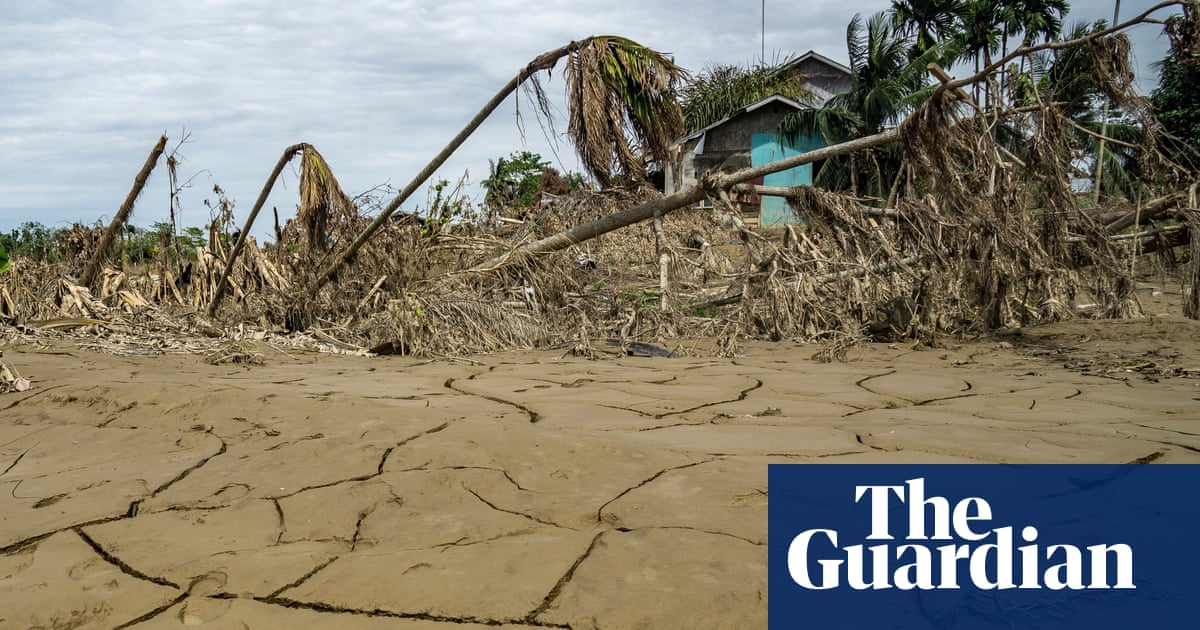
Your editorial (The Guardian view on adapting to the climate crisis: it demands political honesty about extreme weather, 26 December) rightly highlights the urgency of climate adaptation. But to truly understand the scale of what we face, we must confront an uncomfortable truth: the Earth will survive this crisis. It is humanity, and countless other living species, that may not.
As we edge closer to an irreversible point, the climate is becoming less a “challenge to manage” and more a hostile environment in which many will struggle to live. The planet is already adapting to its future. The question is whether we will do the same.
The problem is not simply technical or financial; it is profoundly moral. The world is divided into three groups: those in need, who are already suffering and losing homes and livelihoods; those driven by greed, who profit from delay and denial; and those who claim to care, but hide behind endless excuses for inaction. Meanwhile, the clock keeps ticking.
Poorer nations, which did least to create this crisis, are being asked to pay the highest price. Wealthy nations debate costs and political convenience while lives are being lost and futures erased. That is not policy failure; it is injustice.
Adaptation funding is not charity. Emissions cuts are not optional. Honesty, courage and compassion are now survival tools. Anything less is betrayal.
Keith Nicholls
Swansea
Your leader says “What we can do to minimise, or at least reduce, the risks to life from such events [as violent storms]– as well as more gradual changes – is what climate adaptation experts think about all the time.” Accompanying such storms will be sea level rises, affecting coastal infrastructure.
This raises the question of the efficacy of building new energy plants on vulnerable coastal areas, such as the North Sea coast in Suffolk and the Somerset Levels. The Office for Nuclear Regulation has hosted several roundtable discussions on these dangers in the past year.
The two newest nuclear plants are at Hinkley C, in an area that suffered Britain’s biggest ever flood in 1607; and at Sizewell C, where huge sea walls are having to be constructed to protect the plant from a Fukushima-style inundation from North Sea level rise and increased storms.
It is ironic that nuclear proponents argue such plants are needed to combat climate change.
Dr David Lowry
Senior international research fellow, Institute for Resource and Security Studies
Too many people are left to carry on their daily lives in complete denial of the new climate reality that is unravelling around us. Political leadership is urgently needed, but most of our electorate seem blissfully ignorant of the implications of our maximised consumer lifestyles.
Previously our government has brought in laws replacing cigarette and tobacco branding with succinct facts and hard-hitting pictures. This precedent could now be followed with laws to replace all petrol station branding with informative facts from the latest attribution studies and scientific research, together with pictures of the destruction, devastation and human impacts of recent extreme weather.
The terrifying reality of our current direction of travel needs to be spelled out in a concerted “government health warning” style of information campaign to get enough people supporting the kinds of change required to leave a livable planet for future generations.
Leo Young
Oxford