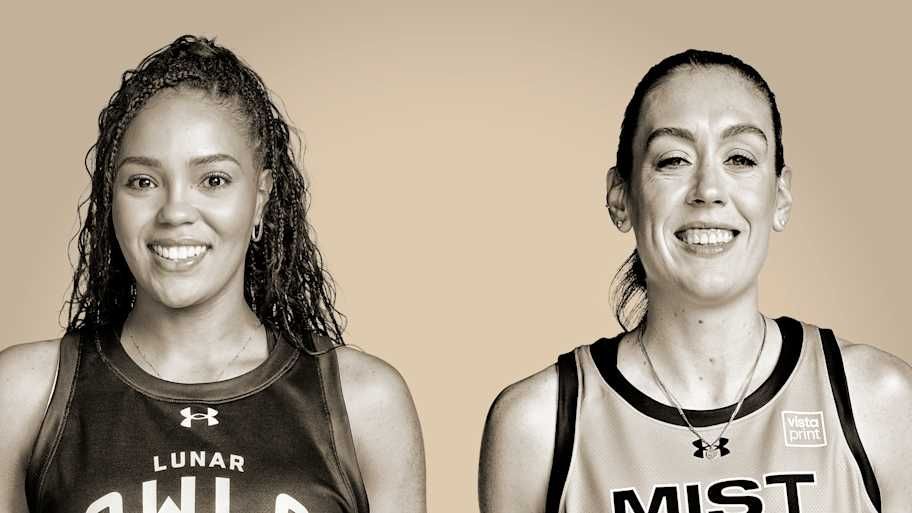
Early in their careers, feeling out the constraints on the modern female athlete, Napheesa Collier and Breanna Stewart grew familiar with a mindset that could be alternately positive and patronizing. It came up in statements about wanting to support women’s basketball, to do the right thing. This was generally well-intentioned, and sometimes accompanied by real generosity, too. It just seemed tremendously limiting to WNBA players like them.
“When people see you as a charity, they don’t care whether you make money or not,” says Collier. “They’re doing this for a good cause.”
That attitude undercut any drive for the sport to be taken seriously on its own terms. This was personally annoying to the players, of course, but it also felt like a missed opportunity. So eventually Collier pitched her former UConn teammate Stewart on countering that dynamic by creating something new. In early 2023, the pair began pursuing investment for a wintertime, player-led, three-on-three league. And over the last three years, as they developed the league now known as Unrivaled, they have found the language around the sport changing entirely.
Now, that framework of charity has all but disappeared from women’s basketball. This is unquestionably the domain of business—increasingly big business.
That is obvious in the WNBA—now flush with cash from a new $2.2 billion media rights deal and record expansion fees (Cleveland, Detroit and Philadelphia each paid $250 million)—where the economics are being reshaped by a new collective bargaining agreement. It’s obvious in the development of additional offseason leagues, including the moneyed international outfit Project B, a five-on-five league that will tip off next winter with games to be played around the world. It’s obvious in the viewership numbers and sponsorships that players are seeing off the court. And it’s obvious in what Collier and Stewart have created.
When Unrivaled began its first season in 2025, it offered something relatively modest for professional sports, but strikingly ambitious in the context of what players knew from the WNBA. The new league played a short season, from January to March, designed to create a break after the WNBA playoffs wrapped in October while still allowing for some time before training camp began in April. Unrivaled held its entire season in one compact arena outside Miami. But the centralized location and small footprint allowed the league to focus its energy (and money) on the player experience instead. The average salary of $220,000 was roughly equal to the maximum salary for a longer season in the WNBA at the time. All 36 of the inaugural players received equity stakes in the league. They had resources—childcare, treatment facilities, massage rooms—that are unevenly distributed in the WNBA.
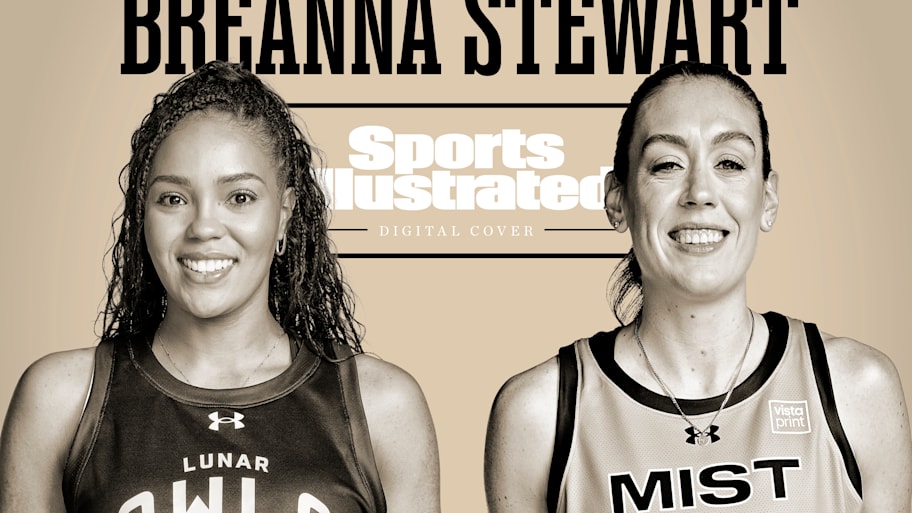
Napheesa Collier and Breanna Stewart created the ultimate sustainable league in Unrivaled. | Courtesy of Unrivaled
Unrivaled exceeded its revenue targets by nearly breaking even in its first year. It announced a $340 million valuation in September following another round of fundraising, with expansion coming ahead of schedule: Season 2, which began Jan. 5, will see eight teams, up from six. And while the sports’ economics continue to change, Unrivaled has framed the discussion about what players can reasonably demand. Collier and Stewart wanted to move beyond the constraints that came with being treated as a social cause. They wanted to see how much women’s basketball could grow by treating it seriously as a business.
It’s that vision that has made Collier and Stewart Sports Illustrated’s Innovators of the Year for 2025.
“Unrivaled showed that it’s possible,” says Collier. “To do it in a way that creates a sustainable business, I think that we really raised the bar for women’s sports.”
The question of what players would do in the WNBA offseason had never felt like much of a question at all. For the money, for the experience and for the skill development, WNBA players generally went overseas and kept playing.
“You get drafted. Two weeks later, you go to the WNBA, then all of a sudden, you go overseas to China,” Stewart says of her experience of entering the league, which she did in 2016. “And you’re on this hamster wheel that just keeps happening over and over and over.”
There were some variations as the years passed. The top destinations went from China to Russia to Turkey. Stewart became a multiple-time WNBA champion and MVP. But she never felt like she had much of a choice when it came to playing abroad. She could earn seven figures annually in foreign leagues while still not cracking six figures under the pay structure of the WNBA. Her example was something of an extreme one: Stewart’s talent put her among the most highly paid players internationally. (And changes to the WNBA’s CBA in 2020 pushed the average player salary over $100,000 for the first time, while simultaneously adding new restrictions on when players had to return to the United States for training camp.) But many of her fellow players felt like they, too, could not pass up the money they would earn overseas, and so they played a calendar that had no true offseason.
It wasn’t just about the money. The WNBA season lasted only a few months: The schedule was largely set at 34 regular-season games until 2022, when it gradually began increasing, up to 44 in ’25. That still left the majority of the year open for players hoping to grow their skill sets. And playing internationally meant a chance to develop against more varied competition. That could be especially critical to players scrambling for roster spots: There is no developmental league for the WNBA. Any young player looking to meaningfully level up or any veteran hoping to find a way back into the league generally had to prove herself elsewhere.
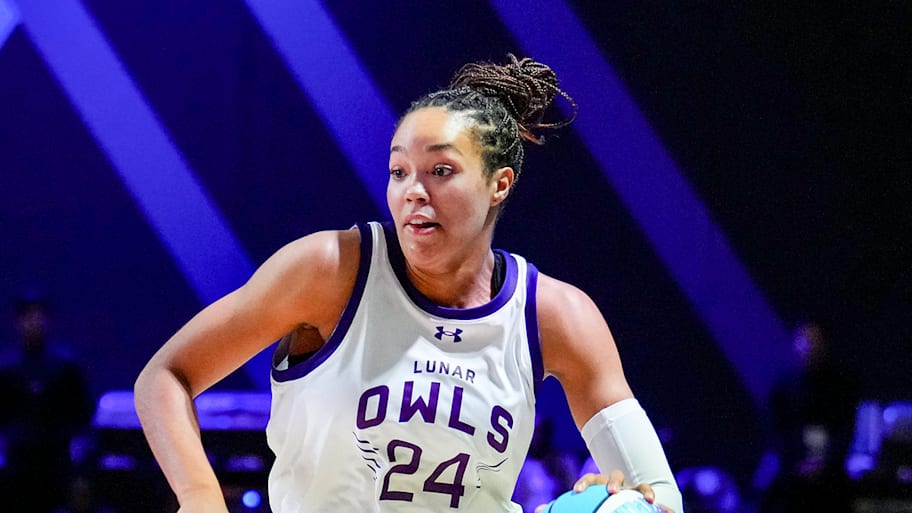
After winning the league’s one-on-one tournament and taking her Lunar Owls to the semifinals last season, Collier will miss this Unrivaled season recovering from ankle surgery. | Rich Storry/Getty Images
But spending months overseas could be difficult or sometimes even dangerous. (Collier was in China when the COVID-19 pandemic shut down the world in early 2020. Two years later, when Brittney Griner was detained in Russia for bringing vape cartridges of cannabis into the country, every player reviewed their personal calculus on where to consider playing and for how much.) Even if players felt like they needed the money they made abroad, they found that it came with financial compromises, too: It was hard to establish a meaningful personal brand in the U.S. if they disappeared from view for more than half the year.
In other words, this was a question about player development and marketing just as much as it was a question about money. Collier believed she had something that could answer all of the above. That would be a winter league that paid them well, let them grow their profile stateside and developed their skills while being less physically strenuous than a full six months of five-on-five. She formulated the idea with her husband, Alex Bazzell, who is now the president of Unrivaled. When Stewart decided that she was in, they were confident that many other players would be, too.
“We wanted to kind of break the cycle,” says Stewart. “We’re going to stay home, and we’re going to build our brands, and we’re going to connect with partnerships that normally don’t work with women’s basketball and show them why they should.”
This was something new for both Stewart and Collier. (Neither had been anywhere close to the business school at UConn: “I wish I would have taken some business classes, that’s for sure,” says Stewart.) They surrounded themselves with experts. For commissioner, they tapped former WTA president Micky Lawler, impressed by how tennis had led the way in higher pay for women athletes. And they found that players, investors and other partners were intrigued by what they had to say.
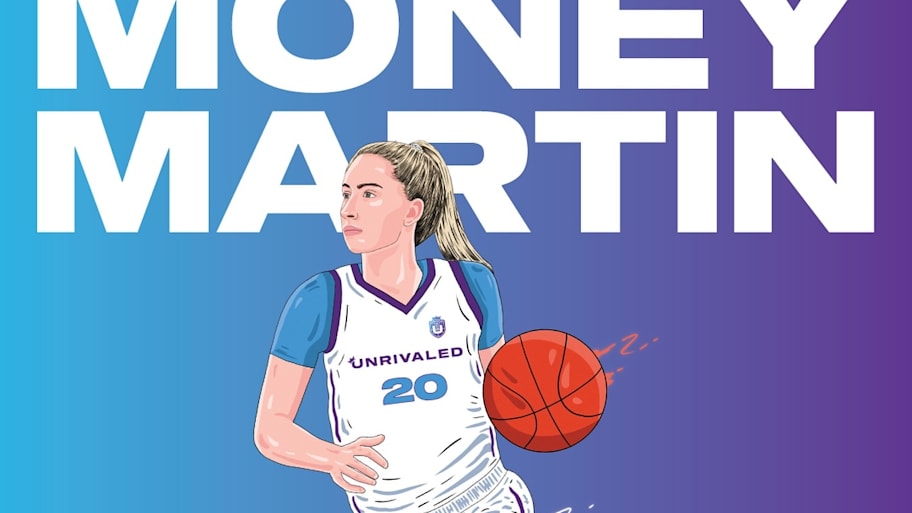
With an eye on marketability, Unrivaled embraces each athlete’s personal brand. | Courtesy of Unrivaled
Unrivaled signed a six-year, $100 million deal with TNT Sports, the first time the network had secured broadcast rights for women’s pro hoops in the U.S. In a pairing that feels too obvious for any other female sports property to have missed, Unrivaled became the first sports league to partner with beauty retailer Sephora, which stocked a glam room, sponsored the entry tunnel where players arrive and now has naming rights to the league’s arena. The startup made deals with companies that had existing partnerships with the NBA or WNBA, like Wilson and Ally Financial, and with some that did not, like Morgan Stanley and Wayfair.
But none of that would mean anything without the participation of the players. Stewart and Collier had settled on a modified version of three-on-three, using a bigger court than in the Olympics, designed to make the game faster and more dynamic for television. That meant selling players on a version of their sport they had never seen before. Many decided they had enough trust in Collier and Stewart to give it a try. Unrivaled did not land every star—players like A’ja Wilson and Caitlin Clark have limited their schedules to play solely in the WNBA—but its first season featured marquee names like Sabrina Ionescu and Angel Reese and its second includes Paige Bueckers and Kelsey Plum. They hoped to build something that could boost players’ brands without being too dependent on any individual player: On the court, this season will be missing Collier, who announced last week that she would be sidelined while recovering from ankle surgery. And the league’s structure was designed to allow its entire roster to grow their profiles.
“When people see you as a charity, they don’t care whether you make money or not.” Nahpeesa Collier
That was partially a matter of what it meant to play on national television for a few extra months of the year while staying in the U.S. It was also a matter of how the players were marketed. Having operations centralized in one location (with most players living in nearby apartments provided by the league) meant nearly unlimited opportunities for social media content. And the available resources gave them a chance to share different stories about themselves. Women’s basketball had long seen its biggest storylines come from players fighting to land what they didn’t already have—dedicated practice space, adequate recovery facilities, childcare. But all of that was covered here. What the players shared online could now focus on themselves and their games and teammates.
Unrivaled had positioned itself to tell a very straightforward, coherent story: It was a league created by players, and centered on them, too.
Collier and Stewart readily admit they were lucky to have good timing. What felt like a potentially good idea in late 2022 was a great one when they went public in July 2023 and a glaringly obvious business opportunity by the time they launched last January. But if they were lucky, they were prepared, too. WNBA players had long been told to be patient as they waited for the world to catch up so the game could grow. And so Collier and Stewart positioned themselves to benefit when that finally happened.
“It was like, Oh, keep doing what you’re doing, eventually they’ll come around, they’ll pay attention,” Stewart describes the longtime message to players. “Now, we’re empowered. As professionals, we’re the best in the world and we know it, and we want to make sure that we use every opportunity we can to show it.”
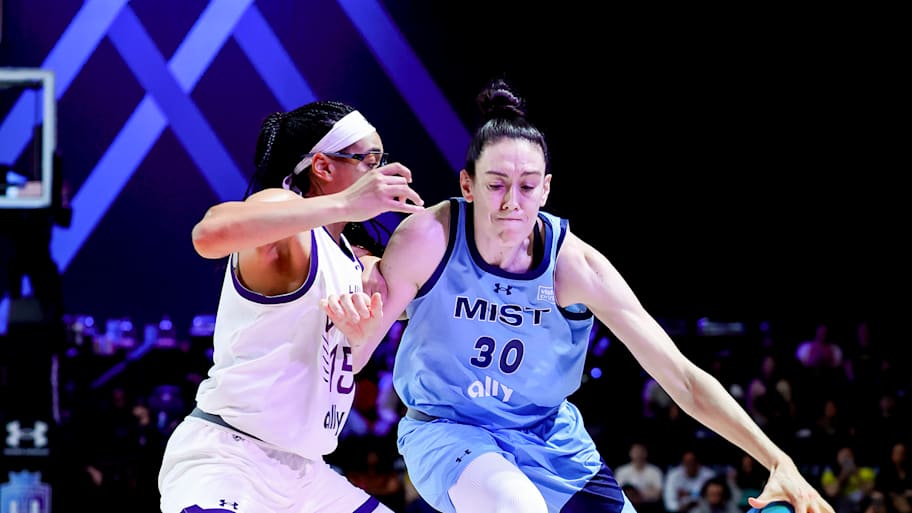
“We wanted to kind of break the cycle,” says Stewart. “We’re going to stay home, and we’re going to build our brands, and we’re going to connect with partnerships that normally don’t work with women’s basketball and show them why they should.” | Carmen Mandato/Getty Images
All of the questions of pay and resources that Unrivaled was designed to answer have already begun to look very different. The WNBA’s average salary is expected to increase significantly next year. (Collier and Stewart are both on the bargaining committee for the WNBA players union that is negotiating the new CBA.) A growing number of teams are upgrading their practice facilities and locker rooms. The increasing money in the sport has created another winter league that will soon be competing for elite talent in Project B.
But in all of that change, which they have played a part in, there is also this: None of their conversations are framed as if they’re running a charity.
“I’m happy that’s not the case anymore, and that we have to prove ourselves,” Collier says. “Because we know that we can back up what we’re saying. And it just shows the landscape and how much it’s shifted.”
This article was originally published on www.si.com as Napheesa Collier and Breanna Stewart Are SI’s 2025 Innovators of the Year.