My colleagues found a way to raise my blood pressure this morning. I woke up and saw that our resident car designer, Adrian, had thrown a link into Slack going to an article about some random woman on TikTok who somehow found her car dead after changing a sun visor. She says her husband used AI to try to fix the car and probably wasted a bunch of time. Everything about this article and the whole situation is insane, and I have to say something. You can’t trust AI to fix your car without constantly fact-checking it, and you’re better off just logging into an old-school car forum or a Facebook group for your car.
This story comes to us from Motor1. The publication recently debuted a “Trending” section, where some of the site’s writers will comment about car-related stories from TikTok. Many of these stories involve people not knowing that U-Haul charges fees for truck mileage, people not knowing how car financing works, or people not knowing how car dealerships work. If you want to consume TikTok without actually watching TikTok, these posts seem to do the trick.


Normally, these posts aren’t really our style, and that’s fine. Every site has its own vibe! But this piece caught our attention because of the fantastically terrible way that AI ruined this poor woman’s day, and how seemingly nobody noticed the obvious path of diagnosis.
The Conundrum
Ladies if your hubby is a mechanic or works for @Chevrolet or @General Motors HELP. I can’t get my car to start #chevrolet #gm #generalmotors #mechanic #tahoe
First, I’ll give you the TikTok. If you cannot watch the embed above because you’re at work or have TikTok blocked, click this link. You should be able to view the video without creating a TikTok account.
In the video, TikToker Sarah Novak (@sarahnovakwallace) talks about how the driver-side sun visor in her 2020 Chevrolet Tahoe broke. She ordered a new OEM part, and her husband installed it. The next day, Sarah attempted to drive her Tahoe, only to hop in the driver seat, attempt to start the vehicle, and find only a Christmas tree of lights and no start.
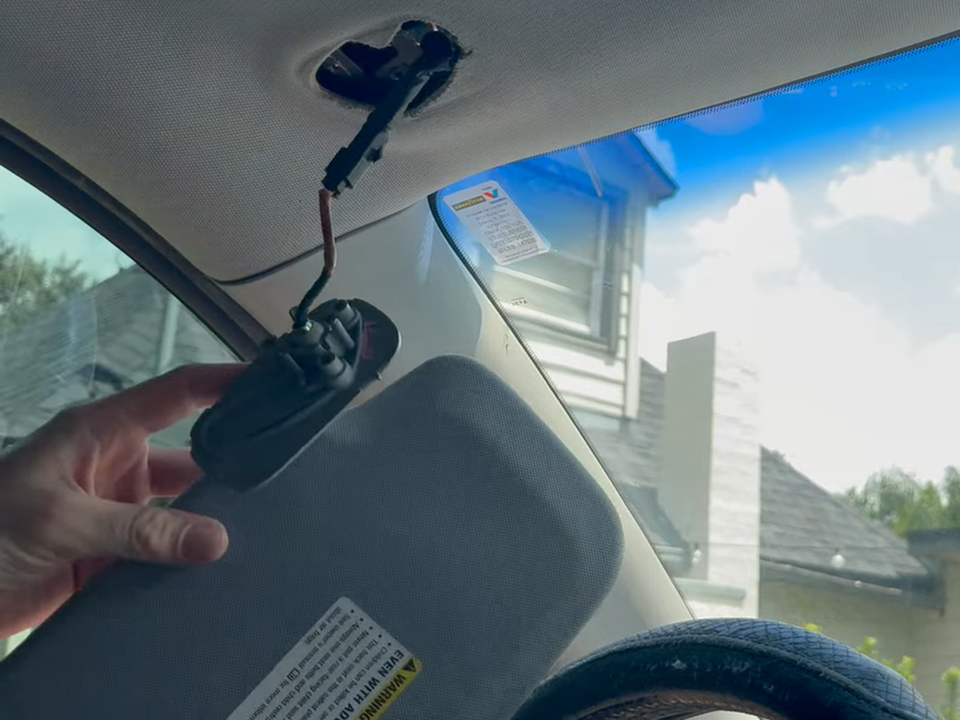 Example of what replacing a visor in a 2020 Tahoe looks like. Credit: Screenshot: DIY for Home and Life/YouTube
Sarah and her husband were immediately stumped and turned to AI, which told her that if you mess with any wiring, the vehicle’s various modules might stop working. So, her husband disconnected the battery for some time, hoping to reset whatever computer was angry. This didn’t work, and the next time Sarah attempted to start the SUV, she got exactly nothing out of the vehicle. Sarah continues by saying: “We’re ChatGPTing it, but I don’t know if we’re doing it right or what the problem is.” Then she says she only recently spent $400 on a brand-new battery.
Sarah’s car still wasn’t working when she published the video on December 29, and she was so desperate that she reached out for help on TikTok. Alright, so the stage is set. Here’s what happened next.
AI Fails At Diagnosis
 Chevrolet
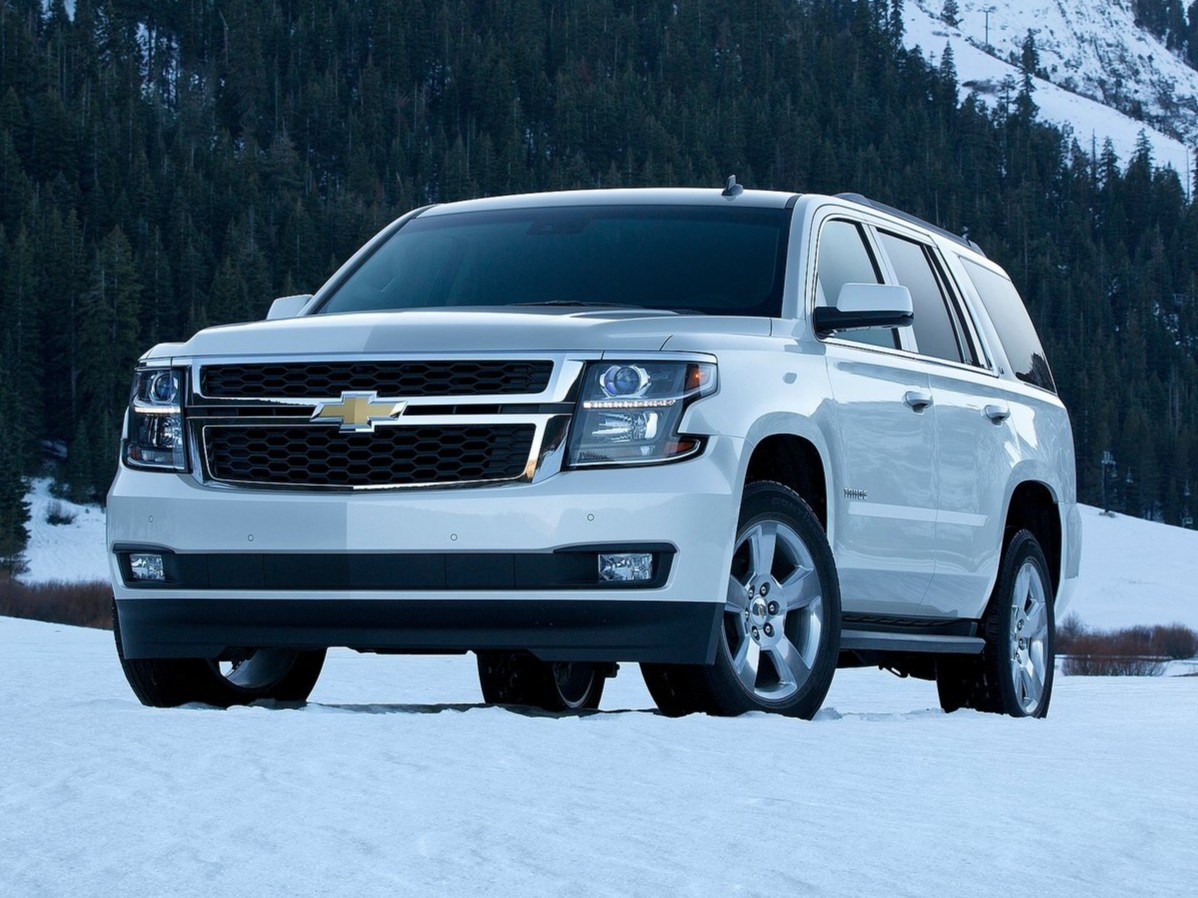
Motor1‘s article doesn’t start off great, as whoever is in charge of graphics at Motor1 used a photo of a third-generation Tahoe, when Sarah’s Tahoe is a fourth-generation model. I’ve noticed this issue in a lot of TikTok articles on various websites. Anyway, the writer’s response was this set of paragraphs, from Motor1:
To many drivers, a sun visor feels like a purely cosmetic part. In modern vehicles, especially full-size SUVs like the Tahoe, that assumption can be misleading.
According to General Motors service documentation and industry explanations from the Society of Automotive Engineers, late-model GM vehicles rely on multiplexed electrical networks, such as CAN and LIN, to enable dozens of control modules to communicate. Components in the headliner area can share wiring paths with airbag systems, interior lighting, and the body control module, or BCM, which manages functions like starting authorization, door locks, and dashboard displays.
If wiring is pinched, grounded, or left partially disconnected during an interior repair, the BCM can detect a fault and disable vehicle startup as a protective measure. Automotive electrical experts frequently note that once a BCM fault is logged, simply disconnecting the battery may not restore functionality, as many modules retain error states until they are cleared with a diagnostic scan tool.
The writer then talks about how battery disconnects could make the no-start condition worse before dropping this nugget:
That distinction helps explain why Novak’s nearly new battery was unlikely to be the root cause, even though battery failure is a common suspect in no-start situations.
But here’s the thing: there’s no reason to just rule the battery out by default. Just because a battery is new does not mean that it cannot be drained. If Sarah’s husband messed around for too long with accessory power on or accidentally let the visor’s light stay on all night, those alone could drain a battery regardless of its age. Replacing a visor in one of these SUVs isn’t rocket surgery, either. Watch this:
Likewise, the only electrical connection that the mirror has with the rest of the car is for its light. If you watch the video above, you’ll see just two wires and a plastic connector for them.
One comment in the video reflects this:
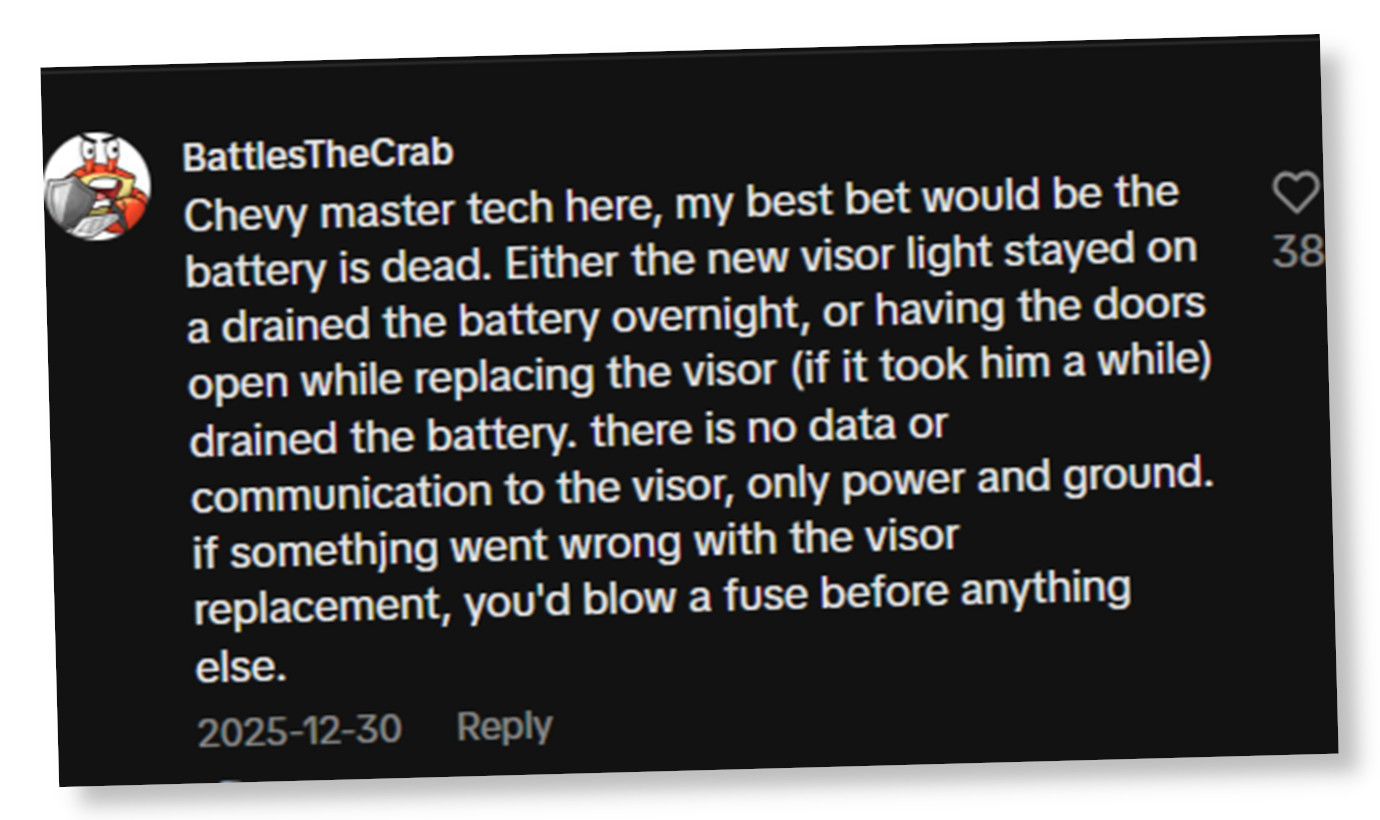 Screenshot: TikTok
The terrifying thing is that, depending on how you word the question, AI will give you some entirely unhelpful answers. Here’s what Google AI gave me after typing in “2020 chevy tahoe won’t start after sun visor replacement.” It went straight to assuming something is wrong with the vehicle’s Body Control Module:
Your 2020 Chevy Tahoe likely won’t start after a sun visor replacement due to a disconnected or blown fuse for the Body Control Module (BCM) or ignition, a loose battery connection, or potentially disrupting the ignition switch wiring, common after interior electrical work; check the main fuse box (under the hood and driver’s side) for relevant fuses like BCM or ignition, ensure battery terminals are tight, and if issues persist, consider resetting the BCM by disconnecting the battery for a few minutes.
Possible Causes & Solutions
Blown Fuse: The wires for the sun visor lights might have shorted or been pulled loose, blowing a fuse.
Action: Check the fuse box under the hood and the one on the driver’s side (left of the steering wheel) for blown fuses related to the BCM, ignition, or interior lights.Loose Battery Connection: You might have jostled the battery or terminals during the process.
Action: Ensure battery terminals are clean and very tight.Disconnected/Damaged Wiring: The wires for the visor might be connected to a circuit that also affects starting or dash power.
Action: Re-examine the visor’s wiring and the connection points in the headliner. Ensure no wires were pulled or damaged.BCM Malfunction: A brief electrical issue can sometimes put the Body Control Module into a protective state.
Action: Try disconnecting the battery negative terminal for 10-15 minutes to reset the BCM, then reconnect and try starting.
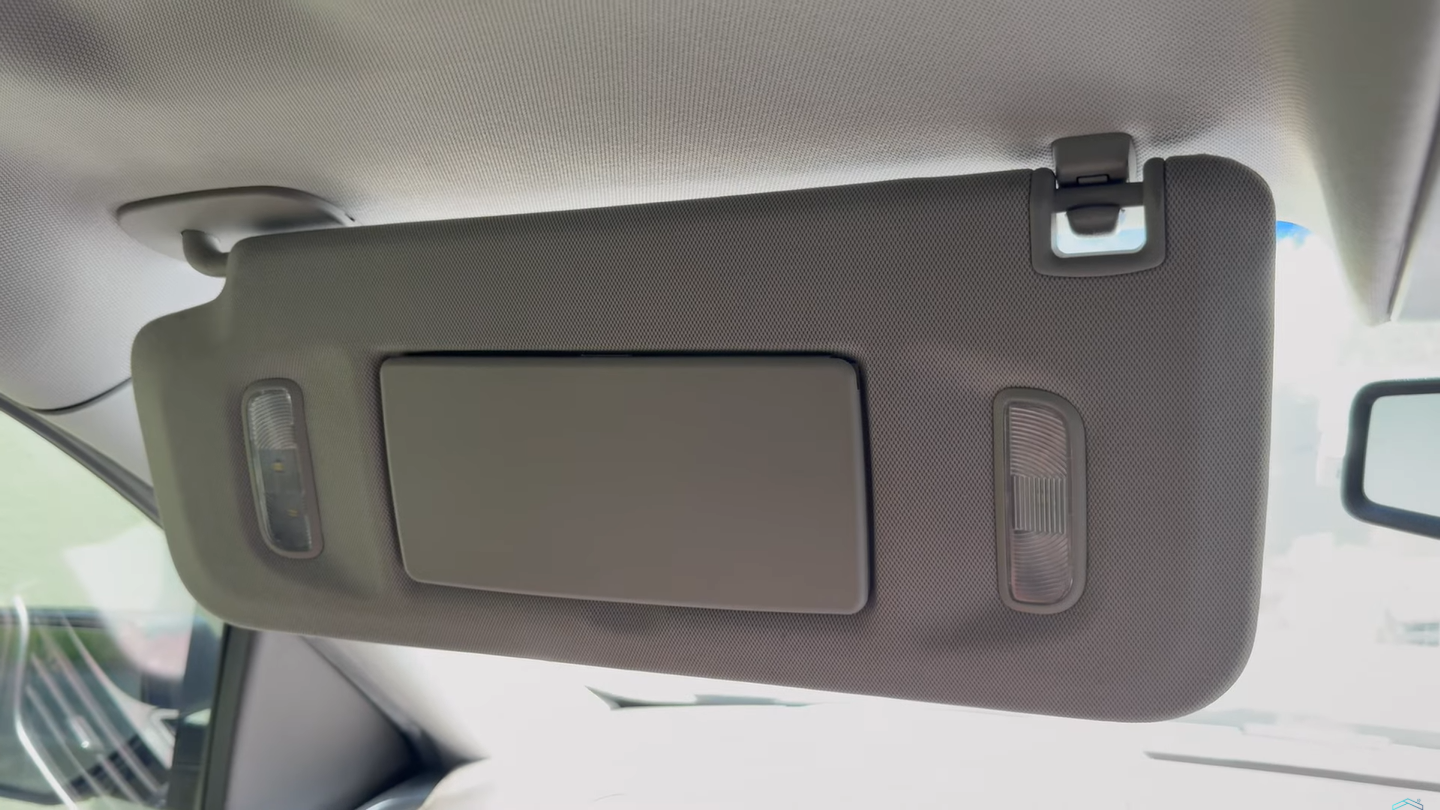 Credit: Screenshot: DIY for Home and Life/YouTube
ChatGPT was equally unhelpful:
A no-start right after replacing a sun visor on a 2020 Chevy Tahoe strongly suggests something electrical was disturbed. The visor area is tied into several sensitive systems (airbag, BCM, interior power), so this is a common scenario. Here’s a clear way to narrow it down.
I won’t bore you with the details, but ChatGPT gave me a list that started with checking fuses related to the airbag system, the BCM, and interior lighting. Then it said that the visor replacement could have disrupted the anti-theft system or the airbag system. To its credit, ChatGPT did tell me that a drained battery could be the cause, but rated it as unlikely. If I logged out, logged back in, and gave ChatGPT the same question, it gave me a slightly different answer. One of the AI’s suggestions was to replace a fuse even if it is only slightly blown. Is a slightly blown fuse like being slightly pregnant?
I would not be surprised if AI gave Sarah’s husband an answer closer to what Google AI gave me, considering he tried to reset the vehicle’s computers by disconnecting the battery. The problem I had with this is that AI has no idea how to diagnose or how to troubleshoot. It can only take what it can search and spit it back out. Thus, poor Sarah and her hubby are chasing around computer issues without even having checked the easy stuff.
To be fair to the AI, it didn’t give the most insane response; that would go to some of the commenters on TikTok, who told Sarah that she fried the SUV’s Powertrain Control Module (PCM), told her to reflash the anti-theft system, or told her to reprogram the key. What’s with the suggestions for nuclear options after basically no troubleshooting?
Try The Easy Stuff First
Here’s what I would have done. First, I would have checked the battery. If it’s below 12 volts, or maybe the clamps aren’t tight, that’s probably the problem. A multimeter is only $8 at Harbor Freight, and anyone who works on their own car or their own home should own one, anyway. A dead battery would cause Sarah’s issues with flashing dash lights, no start, and then, later, a totally dead car.
If the battery tests good, uninstall the new visor. Use a flashlight to see if you somehow penetrated a wiring harness when you installed the visor. This is unlikely if you used the OEM screws, but it is still possible. It’s also worth checking fuses.
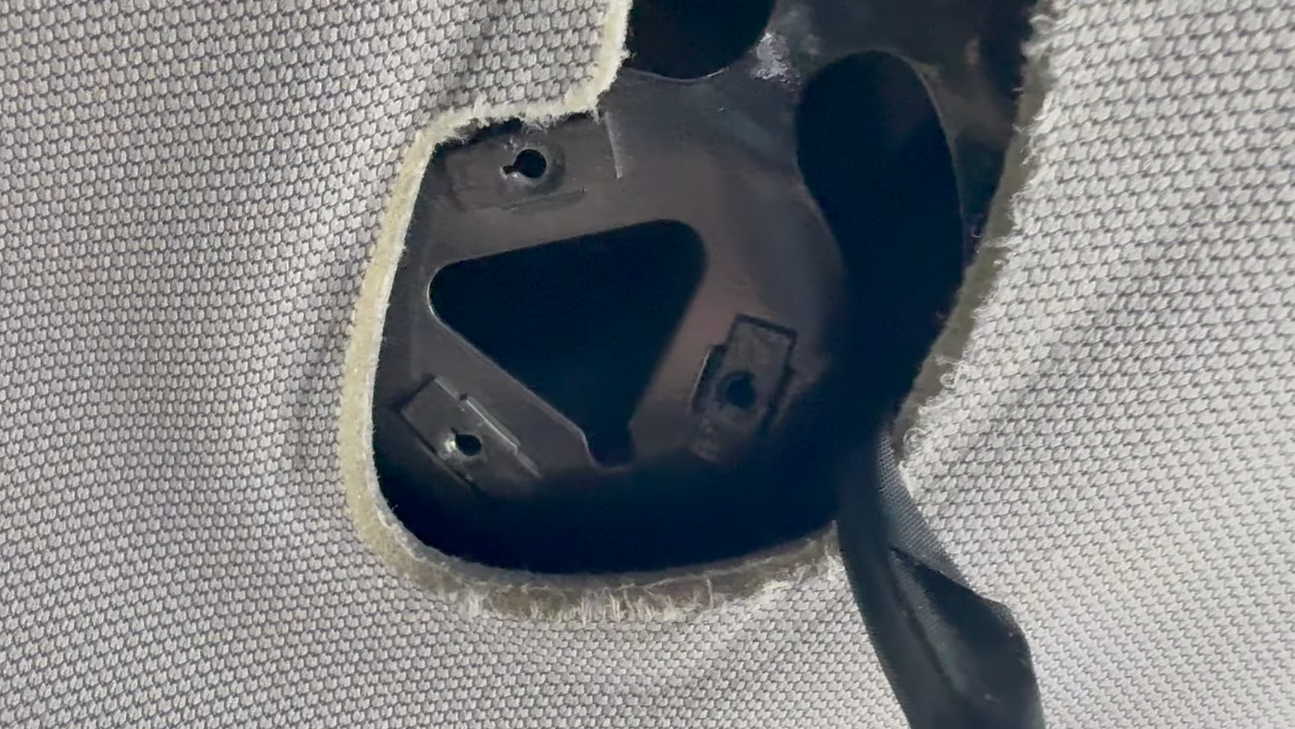 What the visor mount looks like in a fourth-generation Tahoe. Credit: Screenshot: DIY for Home and Life/YouTube
It’s possible that the no-start condition is not even related to the visor at all, and it’s just a wild coincidence that the Tahoe is not starting a day after the visor’s replacement.
I wouldn’t be sweating about the PCM, the BCM, or the anti-theft system until after I tried the easy stuff, like checking the battery. It wouldn’t be my first place to look. It would be like jumping straight to the assumption that you’re going to die just because you have a new cough. But this is one reason why AI cannot be trusted for wrenching unless you double and triple-check it. At that point, you’re sort of better off without it. AI has no nuance or context. It has no idea what it’s doing.
Just to be clear here, I’m not blaming Sarah or her husband for anything. They did the best they could with what they thought was a reliable resource. Not everyone spins wrenches or gets into car diagnosis, and that’s okay! I reached out to Sarah and will update if I hear back. Sarah has not published a follow-up, so maybe she and her husband figured it out.
If you have a problem with your car, don’t ask AI, and be careful soliciting opinions on just regular social media. Go to a make or model-specific Facebook group or an old-school car forum and just pitch your question there. You’ll almost certainly get better advice than you’d find on TikTok, and certainly better than AI.
Top graphic images: GM; DepositPhotos.com