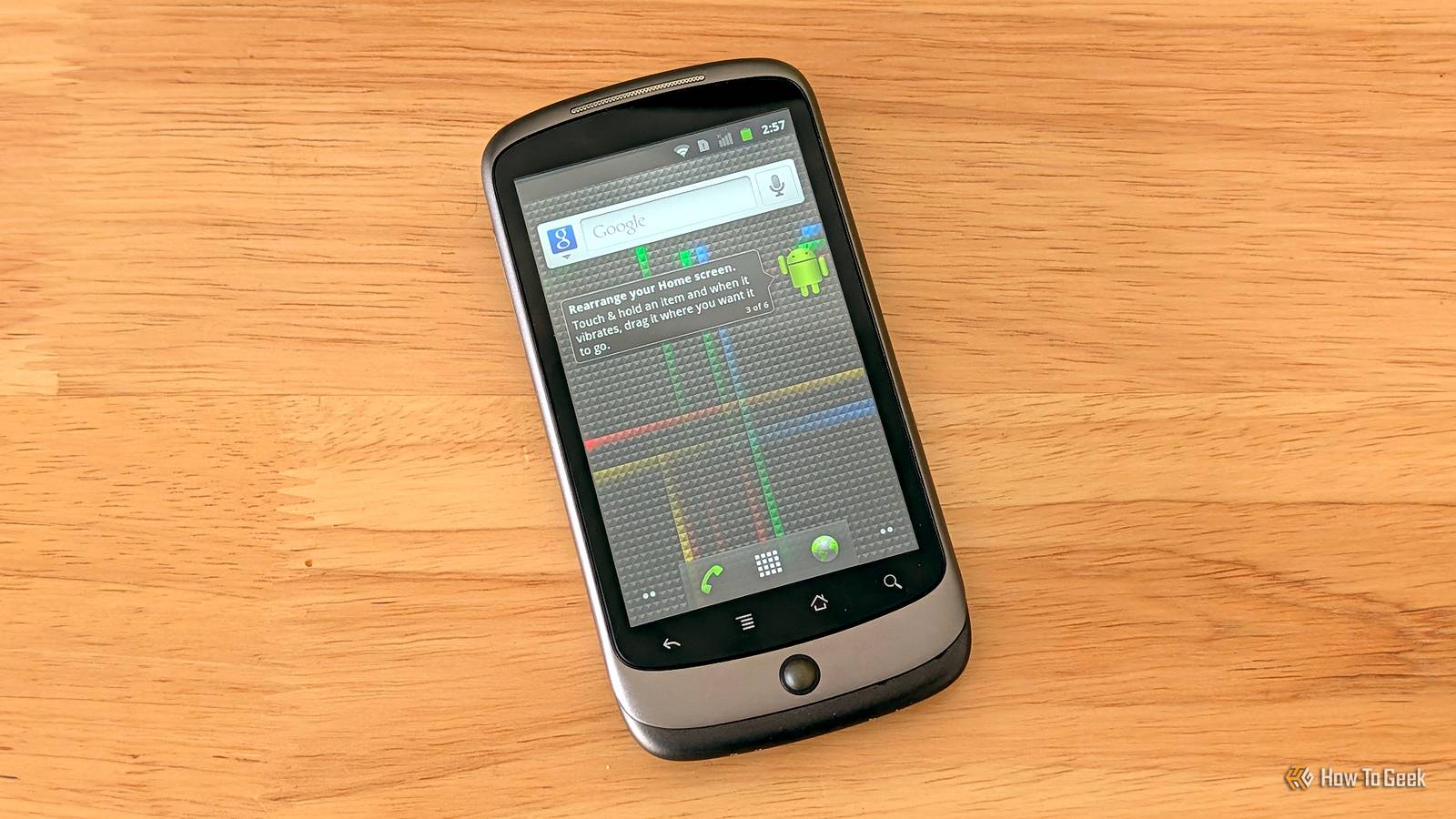
Many phones have come and gone in Android’s nearly 20-year history, but some phones stand out more than others. Phones that changed the landscape. Phones that held a special place in our hearts. One such device is the aptly named Nexus One, and it was released 16 years ago today.
Google leaked its own secret project
The story of the Nexus One starts on December 12th, 2009. Google published a post on its official blog titled “An Android Dogfood diet for the holidays.” Dogfooding is an old term in software development that means using your own product before releasing it to the public. And that’s exactly what Google employees were tasked with for the holidays. The blog post had this to say:
“We recently came up with the concept of a mobile lab, which is a device that combines innovative hardware from a partner with software that runs on Android to experiment with new mobile features and capabilities.”
It didn’t take long for people to discover that the secret dogfood device was the Nexus One. Later that very same day, the Wall Street Journal revealed several details about the device. They were the first to report the name and that HTC would manufacture it. It’s hard to believe right now, but HTC was basically dominating the Android world at this time. They had kicked off Android with the T-Mobile G1 and followed it up with several of their own branded devices before Samsung and LG even got their feet wet.
Hidden in plain sight
Credit: TechCrunch
The next step in the news cycle is usually blurry photos and leaked renders. However, people had already seen the device—they just didn’t know it at the time. Nearly 2 months before the Nexus One news broke, a device with codenames including Dragon, Passion, and Bravo, popped up in leaked photos. It wasn’t until a Google employee literally tweeted a photo of the device that people realized they had seen it before.
The employee described the phone as “iPhone + a little extra screen and a scroll wheel. Great touch screen, and Android.” He wasn’t the only one being loose-lipped about the device, either. One programmer said she got “the new Google phone.” Another said, “A friend from Google showed me the new Android 2.1 phone from HTC coming out in January.” The Nexus One was beginning to be a poorly kept secret.
The first “Google Phone”
It was at this time that it became clear this was a “Google Phone.” Some people were concerned about this new direction from Google. The worry was that OEMs would see Google as playing favorites with HTC, or they wouldn’t want to compete with Google’s own phones. One could argue that those worries were warranted since the US smartphone market today has been whittled down to Apple, Samsung, and Google.
Credit: Search Engine Land
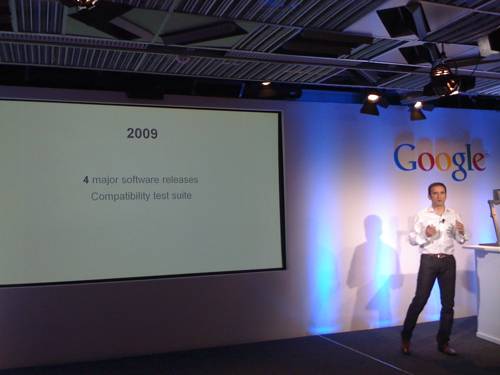
On December 19th, things got a little more official when Google sent out invites for a press event that would take place on January 5th in Mountain View, California. A Google event in 2010 was very different than the Google events today. It was held in a relatively small room at Google HQ. The presentation screen was no bigger than something you’d find in a classroom. Sadly, I can’t find a video of the event.
The first person on stage was Mario Queiroz, VP of product management. He said, “Today we will unveil the next stage in evolution for Android.” They asked themselves, “What if we work even more closely with our partners to bring devices to market to showcase the great software technology we’re working on at Google?” The result was the Nexus One.
The tagline for the Nexus One was, “Where web meets phone.” Browsing the web on a phone was still a big deal in 2010. It wasn’t exactly a great experience either. That’s why Google was making a big deal about the strides it had made in performance. Mario was not afraid to call the Nexus One a “superphone,” so let’s talk about what high-end specs in 2010 looked like.
A “superphone” phone in 2010
Credit: Cory Gunther / How-To Geek
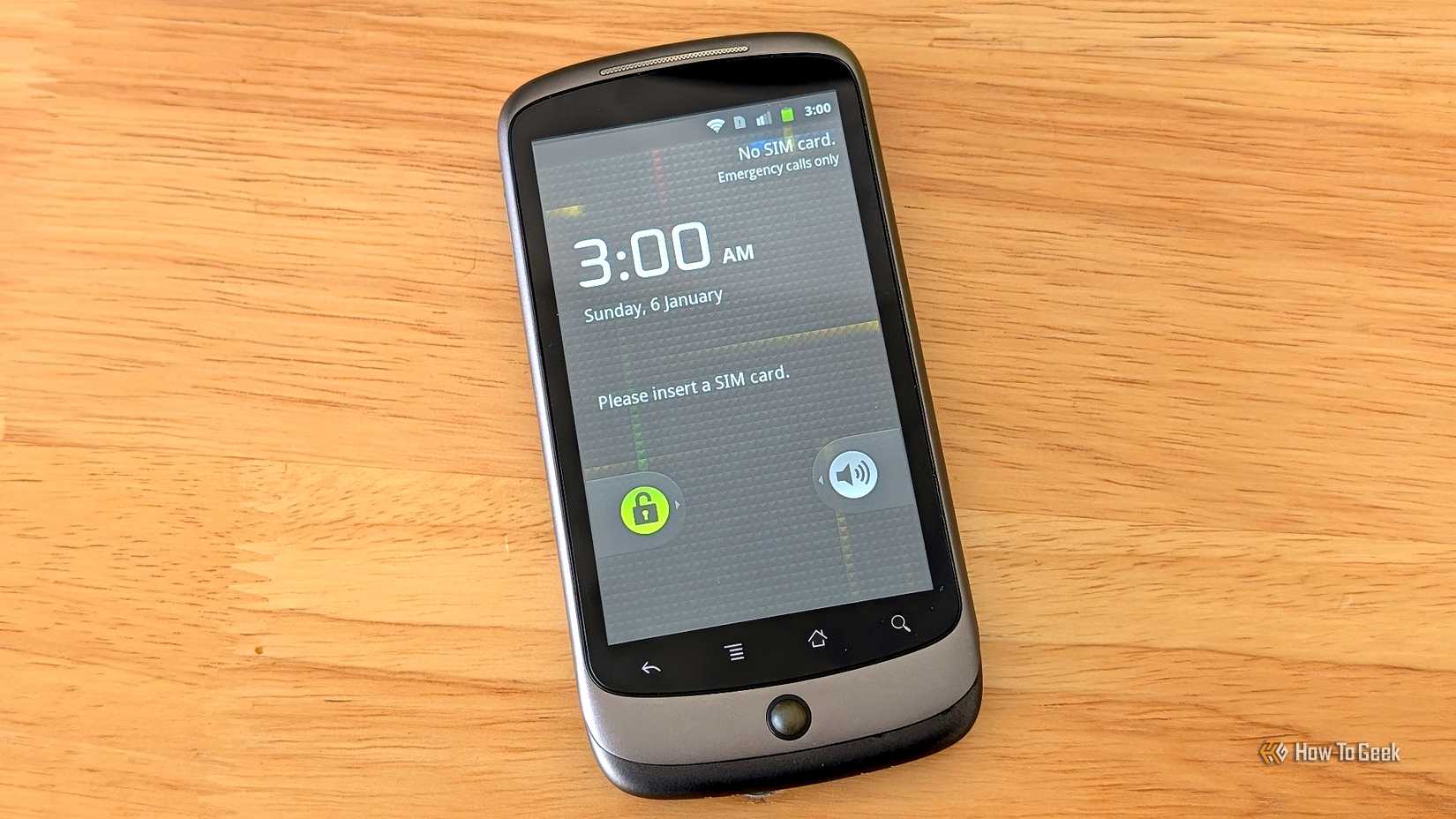
The Nexus One had a gargantuan 3.7-inch display. It was AMOLED with a resolution of 480×800. Powering the device was a 1GHz Qualcomm Snapdragon processor. Back then, 1GHz was the holy grail of processors. The exact Snapdragon processor model name wasn’t even shared. All people cared about was that 1GHz stat. Not many devices had it yet, and Google made sure to tout the speediness of the device.
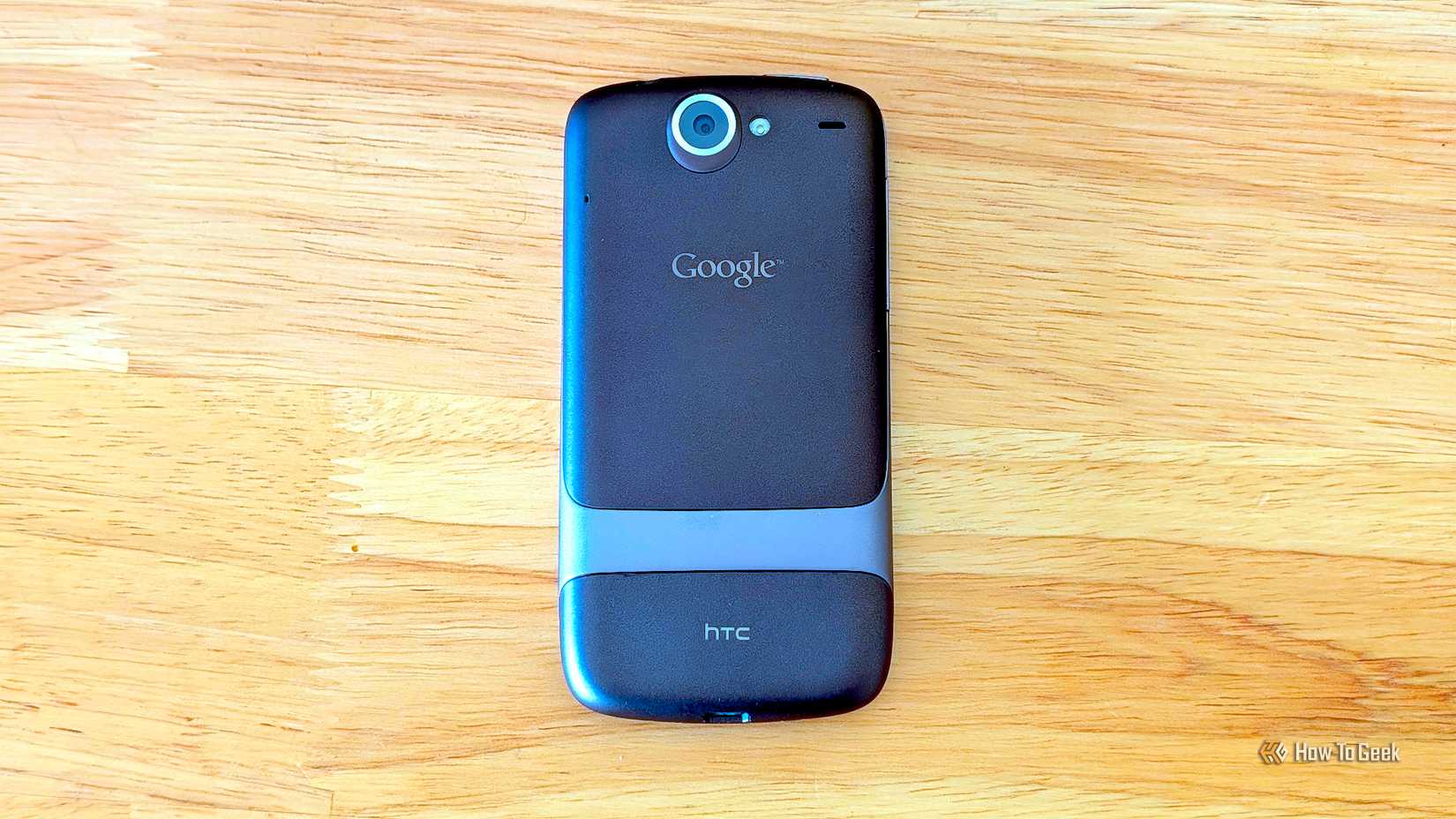
The camera on the back was 5MP, and there was no front-facing camera. In fact, the term “selfie” didn’t exist yet. It wasn’t a very good camera. Google never really had a good camera phone until the Pixel. The battery was only 1,400 mAh, but phones didn’t require massive batteries back then. As screen size and processors have improved, batteries have also needed to do more. Oh, and it had a 3.5mm headphone jack. Because if you didn’t have that in 2010, you’d be laughed off the stage. It was a different time.
Credit: Cory Gunther / How-To Geek
The design of the Nexus One has held up pretty well over time, but there are a few features that look dated. The most obvious standout is the trackball. The little ball sat in a ring, and you could move your finger across it to move and highlight things on the screen, and tap it to select. The trackball made it easier to select tiny links on webpages that weren’t optimized for mobile yet—which was most webpages. The Nexus One trackball doubled as the notification light. It could glow with different colors for various notifications.
The other thing that dates the Nexus One is the four physical buttons on the front. This is one area where Android has changed a lot since 2010. From left to right, the Nexus One had buttons for Back, Menu, Home, and Search. The menu button was there to open the menu in whatever app you were using. That 3-dot menu icon that we know today didn’t exist in 2010. The Search key would open a search in whatever app you were using. These are things that are built into sidebars and floating buttons now.
The beginning of the “Stock Android” craze
Credit: Cory Gunther / How-To Geek
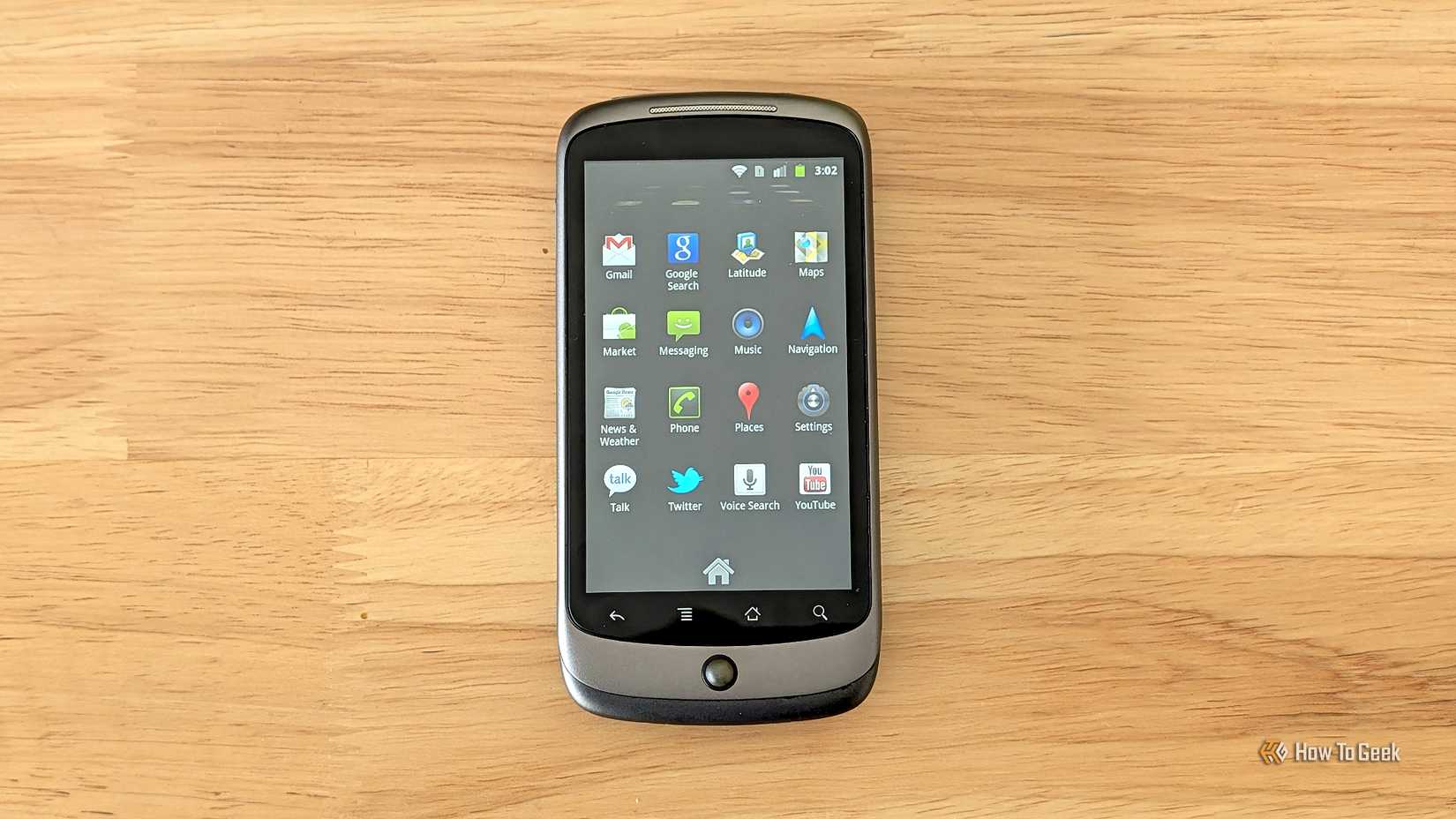
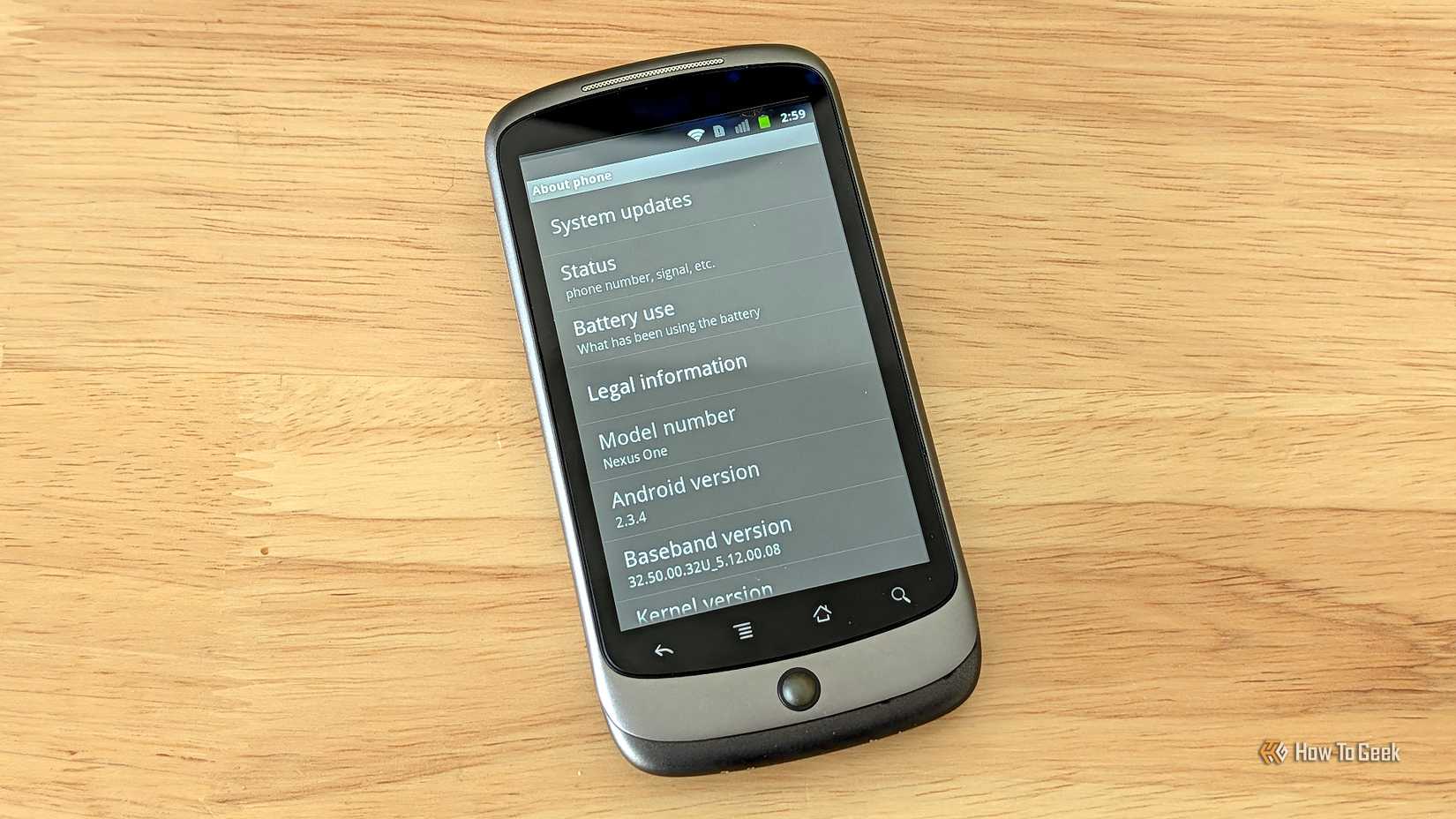
The Nexus One launched with Android 2.1, also known as Eclair. This was only the third desert nickname Google had used. Eclair was considered a minor upgrade, but the Nexus One was the first to get it. This was the first time Android had live wallpapers. Google expanded the home screens from 3 to 5 pages. Need more than five pages? Too bad. They also added the ability to zoom out and see all the pages at once.
Previous versions of the stock launcher had an ugly pull tab at the bottom of the screen for the app drawer. Eclair swapped that out for a grid icon, and the app drawer got a very cool 3D waterfall effect. As you scrolled through the list of apps, they would sort of bend off the screen. This sort of thing looks tacky nowadays, but it was incredibly cool at the time.
Credit: Cory Gunther / How-To Geek
Something else to mention about Android at this time was the existence of OEM skins. HTC Sense was very popular because, frankly, stock Android wasn’t very attractive. OEM skins were a necessary thing for a lot of users, but that started to change. Launching a device with plain ‘ol Android didn’t seem like a home run until it became extremely coveted by Android diehards.
“It costs how much?!”
Credit: Cory Gunther / How-To Geek
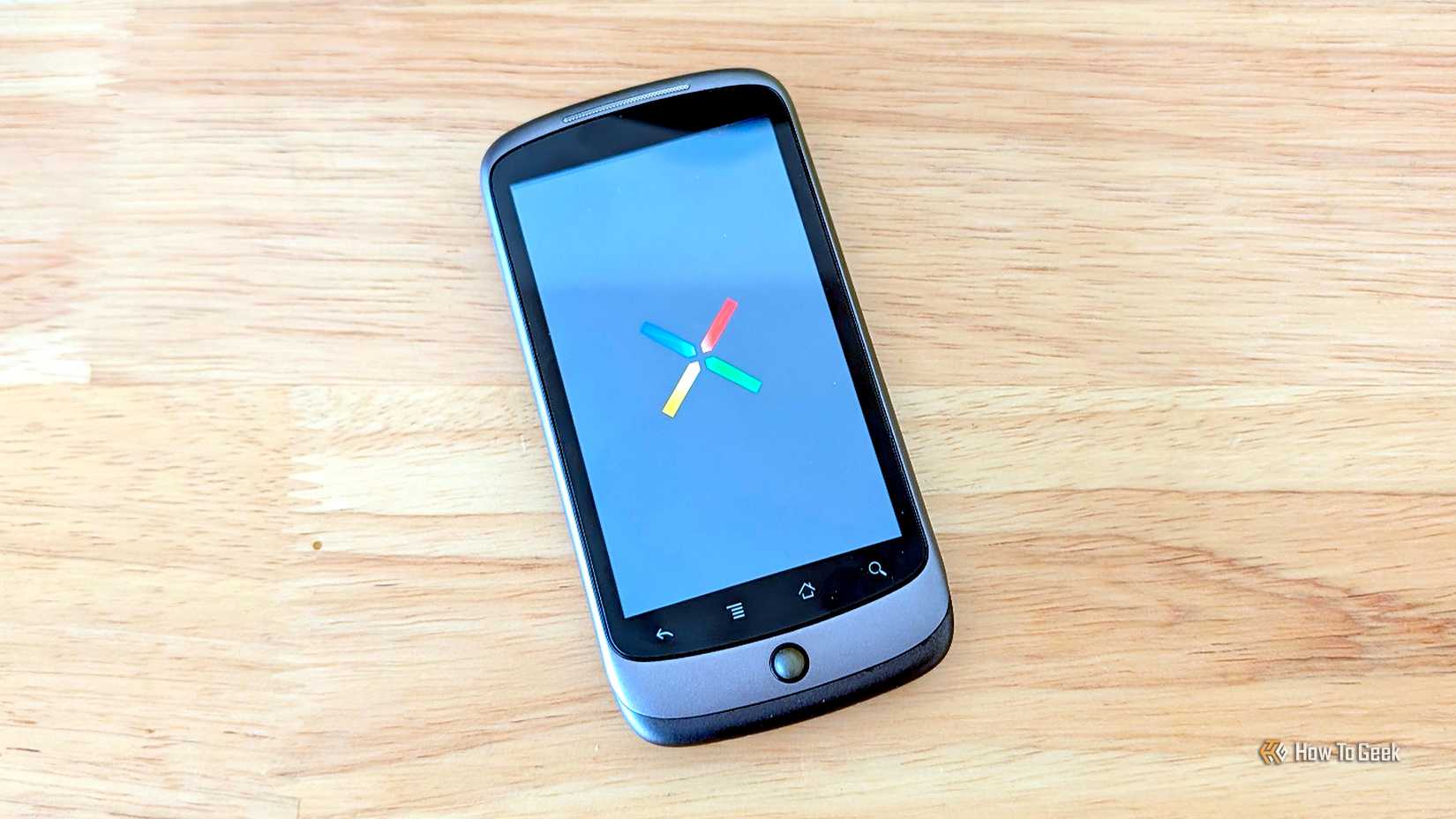
At this point in the event, it was time to talk about where people could buy the phone. Mario announced that the device would be available through the Google web store—and that was it. All you had to do was go to google.com/phone. The phone could be purchased unlocked without service or with service from a partner. It was available that day from T-Mobile for $180. The unlocked price was $530.
Now, $530 ($790 adjusted for inflation) seems like a pretty awesome deal for a top-of-the-line smartphone today, but in 2010, some considered it to be outlandishly expensive. Most people thought every new smartphone cost around $200, because that was the price with a two-year contract. So for Google to announce a phone that cost $530 was a pretty risky decision. They also had said the Nexus One would later come to Verizon in the Sprint, but that never happened.
So what did Google learn from the Nexus One? What can we take away from this story in 2026? Google was ahead of its time in a lot of ways. Selling unlocked phones has become a lot more popular, and we’ve seen the two-year contract pricing model die off. But Google learned not to be exclusive. You can now get the Pixel 10 series on most carriers.
The Nexus One also started something that we see a lot in the Android community: loyalty to Google. There are a lot of Android diehards who only want Google products. I think the Nexus One is responsible for starting the passionate love that people have for Google. It was a device straight from the source in every definition. You bought it from Google. It had the Google name on the back. It was Google the way Google intended it to be.
The Nexus series walked so the Pixel series could run.