
This article first appeared in Wealth, The Edge Malaysia Weekly on December 29, 2025 – January 4, 2026
Venture capitalists (VCs) are expecting the public listing of several VC-backed, late-stage companies in the coming years that can garner strong interest from the younger crowd.
They are the highly anticipated integrated circuit design company SkyeChip; integrated car e-commerce platform Carsome; baby wellness brand Applecrumby; beverage company The Vida World; and ergonomic furniture design company TTRacing Tech.
Industry observers tell Wealth the track record has been modest, with only a few venture-backed Malaysian companies reaching public markets — but this may soon change as more firms move into the late-stage phase.
Gobi Partners — one of Southeast Asia’s longest running venture firms and an active early-stage investor in Malaysia — is among those expecting a few of its Malaysian portfolio companies to enter the late-stage pipeline.
SkyeChip will mark Gobi’s first-ever initial public offering (IPO) on the exchange. The Penang-based company generated RM77 million in revenue and RM33.7 million in profit after tax, as at the first quarter of financial year 2024, ended March 31, according to its CTOS report.
Thomas Tsao, co-founder and chairperson of Gobi, says several other names are progressing steadily, with some now approaching listing readiness.
Carsome — Malaysia’s first unicorn — is also exploring its listing options. Gobi, an early investor in the company, says a Bursa Malaysia listing could be a natural fit given Malaysians’ familiarity with the platform.
“The company is getting pulled in many directions. But if [Carsome] could list here, it would make a lot of sense. There would be a lot of interesting retail support. If Carsome lists in the US, maybe it gets a higher valuation,” says Tsao.
“The problem [is, has] anybody in the US ever used Carsome [and does] it have a loyal follower base? If Carsome missed its numbers by one quarter, the fund manager or research analyst in Boston or New York [who has never used Carsome would] look at the numbers [and give it] a downgrade.
“But people in Malaysia who use Carsome [and] know how good the service is [will stick with them even if the company] hits a speed bump and its earnings are not projected. That’s the advantage of listing here.”
500 Global — a Silicon Valley founded venture firm that has been active in Malaysia for over a decade — has also yet to see any of its Malaysian-backed companies listed on Bursa.
Now, Khailee Ng, its managing partner and board member, says three of 500 Global’s Malaysia-linked portfolio companies are showing the strongest potential for a local listing: The Vida World Sdn Bhd, TT Racing Tech and Applecrumby Sdn Bhd.
Vida, in which private equity firm 5X Capital made an investment in 2021, recorded RM85.1 million in revenue and a loss of RM824,764 last year, according to its CTOS report.
NEXEA Ventures — launched in 2015 — is also preparing for several listings in the coming years. “One candidate in particular, if executed correctly, has the potential to deliver a return of over 20,000% to its earliest investors,” says its managing partner Justin Lim.
A company that NEXEA is known to have invested in early is Lapasar Sdn Bhd. The corporate e-commerce and e-procurement platform recorded RM445.6 million in revenue but remained loss-making at RM6.45 million in 2024, according to its CTOS report.
Tsao believes that 20% to 30% of Malaysia’s market capitalisation could come from VC-backed companies within the next 15 to 20 years.
“In the US, nearly half of market cap comes from venture capital-backed firms. In Malaysia today, it’s single digits. Within 15 to 20 years, 20% to 30% is achievable but only if public markets reward growth, founders retain control and domestic late-stage capital becomes deep, not timid,” he says.
“Otherwise, what happens is what we already see: Malaysia’s best companies build regionally and Malaysia exports its best market capitalisation to other exchanges. The [nation’s] goal is that in 20 years, young Malaysians won’t need to look overseas to believe in growth.”
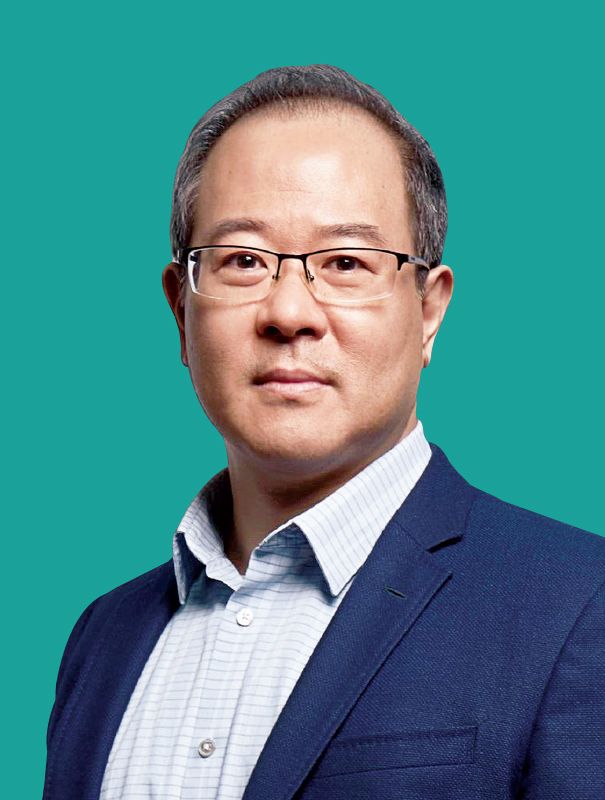
“Bursa doesn’t lose young investors because Malaysia lacks start-ups. It loses them because we’re listing companies too late. Young investors want exposure to growth while it’s still compounding, not after the risk is fully stripped out.” -Tsao, Gobi
What do younger investors want to see?
Young investors want exposure to growth while it is still compounding, not after the risk has been stripped out, and they are increasingly drawn to companies that can show fast international traction and early liquidity pathways, says Tsao.
“Bursa doesn’t lose young investors because Malaysia lacks start-ups. It loses them because we’re listing companies too late. Young investors want exposure to growth while it’s still compounding, not after the risk is fully stripped out,” says Tsao.
“Capital isn’t leaving Malaysia because it dislikes the country; it’s leaving because it dislikes the velocity. Young investors look for fast international proof and early liquidity narratives.”
To address this, Malaysia must start listing companies earlier, not once they are fully profitable, but while they are still in their high-growth phase, when younger investors want to participate, he says.
But the current listing pathways do not fully support that, says Tsao. Bursa’s Main Market requires profitability, which pushes high-growth tech firms to delay listing even when their momentum is strong. ACE Market is an option, but secondary boards often carry a “junior market” stigma and offer thinner liquidity.
Even then, investment banks that act as IPO sponsors still insist on profitability for ACE because institutional and retail investors in Malaysia tend to be conservative. The LEAP Market is for sophisticated investors.
In a nutshell, Bursa lacks companies that can offer young investors exciting growth due to its listing requirements.
In this regard, the Securities Commission Malaysia (SC) is fine-tuning the listing requirements for IPOs on the Main Market. Positive cash flow will be a consideration, but not a must, for companies seeking listing on the market as long as these companies have profit track records that meet the listing rules, says the SC in a consultation paper.
The SC is also raising the minimum latest annual profit after tax (PAT) requirements by more than double to RM15 million from the current RM6 million. The three-year cumulative PAT will be higher at RM30 million from the current RM20 million.
This could bring about more new-economy companies that pique the interest of younger investors. In response, the ecosystem must produce founder-led, export-ready, category-creating companies that can be listed while they are still scaling, says Tsao.
“Malaysia doesn’t need more copy-cat apps. It needs systems-level ambition, frontier engineering, regulatory alignment and export DNA. That’s why we focus on four platform sectors that behave more like regional digital infrastructure,” he says.
Bursa is also looking for more new-economy, innovation-driven tech companies, even if they are loss-making, but the broader investment community remains cautious towards companies like these, says Muhd Farrish Ishak, vice-president of listing development at Bursa.
“Just burning cash and trying to go fast and hit hard, I don’t think that really pays anyone right now. Post-Covid-19 with the high interest rate environment and all that, investors are more critical of companies that they want to invest in,” he said during a panel session at the Malaysia Venture Forum 2025.
He added that Bursa is also in active discussions with the SC to make the LEAP Market more vibrant — with announcements on this matter expected next year.
Gobi’s highest-confidence IPO sectors are the ones where Asia controls real leverage, says Tsao. These are in the circular economy, semiconductors, deeptech, Taqwatech and fintech infrastructure.
Taqwatech is a term coined by the company to represent entrepreneurs and start-ups focusing on serving niche Islamic demands of the Muslim population through technological innovations.
In the circular economy, Gobi backs Carsome, CompAsia and iMotorbike. In semiconductors and deeptech, its key names are SkyeChip, Efinix and nanoSkunkWorkX. In Taqwatech, the firm is behind Bitsmedia and Durioo+. In fintech infrastructure, its portfolio includes PolicyStreet and HealthMetrics.
All these companies have the potential to list on Bursa, according to Tsao. “Our role is deliberately uncomfortable. We build governance long before the IPO, international revenue before domestic comfort, and institutional credibility before public listing.
“The future Bursa winner must already survive Hong Kong, Karachi, Manila, Riyadh, Shenzhen and Silicon Valley before it ever rings a bell in Kuala Lumpur,” he says.
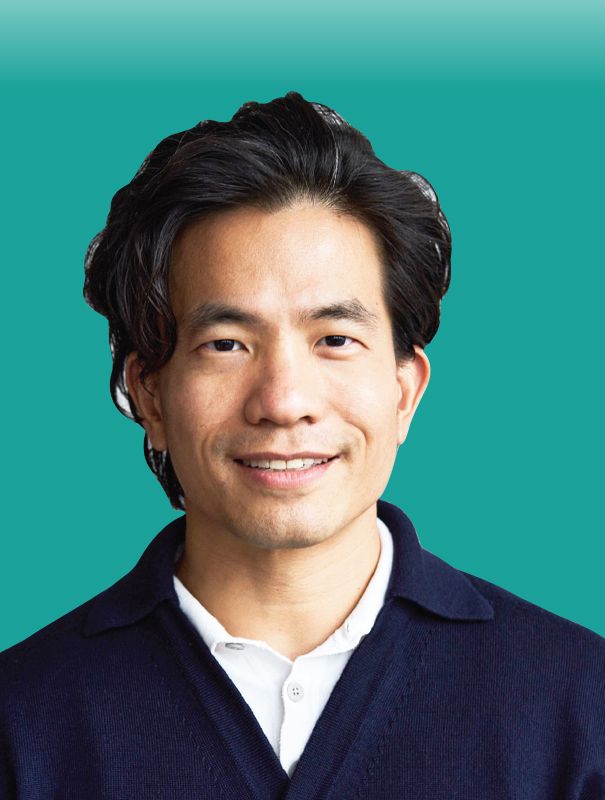
“We’ve completed a mandate from the Employees Provident Fund to identify and nurture Malaysian companies that would be local champions, and get them to be export-driven sooner.” – Ng, 500 Global
500 Global deploys different listing strategies depending on company
500 Global’s Ng says the firm categorises Malaysian start-ups into three types. One type is well-suited for Bursa, while the other two — although important for the country’s economy — do not naturally align with Bursa’s listing expectations.
What type is suitable for Bursa? According to Ng, this is the local champion that relies on Malaysian market dominance before expanding wider, such as Oriental Kopi Holdings Bhd (KL:KOPI), 99 Speed Mart Retail Holdings Bhd (KL:99SMART), Farm Fresh Bhd (KL:FFB) and Mr DIY Group (M) Bhd (KL:MRDIY).
These companies have early profitability, bank financing and private equity support that come in later. He says these companies do not rely on venture capital.
On its part, 500 Global has been working to grow mid-sized local champions by accelerating their path to export markets.
“We’ve completed a mandate from the Employees Provident Fund to identify and nurture Malaysian companies that would be local champions, and get them to be export-driven sooner. We leverage our presence in 20 countries and investments in 80 to help our portfolio companies enter new markets,” says Ng.
“Some of our portfolio companies have entered 11 to 49 markets since our backing, and are progressing well towards potential Bursa listing readiness. We don’t currently have any new mandates for this sector but we believe continued effort here is critical for Bursa.”
The next type of companies 500 Global focuses on is the tech champion — companies with products that are software-based, that operate unprofitably for years, and chase regional or global market leadership before monetisation.
These companies have a high risk of failure and an unknown return period and rely on angel investment, venture capital, a mix of local, regional and global capital as well as venture debt on occasion, says Ng.
He says these tech champions are “incompatible” for Bursa as the majority of Malaysian investors want profitability and predictability.
“But the world’s most transformative companies require the opposite: investor patience for long-term losses, dynamic expansion and pivots, while building entirely new markets. This is why these sorts of companies match better with different investor appetite and horizon, usually found in the US stock exchanges. And the investors who are looking for them will trade there,” says Ng.
500 Global’s role here is to keep the venture pathway alive for founders who choose to build for the regional or global scale — the kind of companies that operate unprofitably for years, pivot aggressively and aim for markets larger than Malaysia.
“If a start-up has strong technology or global potential, we help position them in ecosystems like Silicon Valley, where half of all unicorns are founded by first-generation immigrants. The US$10 billion to US$100 billion outcomes we backed like Stripe and Talkdesk were built by immigrants who went to the US,” says Ng.
“Malaysian founders can play on that same stage. In the last six months, we brought five Malaysian companies to take root there, and we will do even more in 2026.”
The advent of artificial intelligence has also seen the rise of the lean AI company — the type of company that produces ultra-high profits with very few human staff.
“We have dedicated investment funds working on this type of company. It is a very specific type of work, and the mandate is not tied to any one country. For Malaysians, we developed an AI residency programme to unearth the Malaysians who are built for this kind of journey,” notes Ng.
“The only way to get into these companies is to be involved before or at the start.”
Cradle sees big IPO potential in deeptech
Cradle Fund Sdn Bhd, the focal-point agency for the country’s start-up ecosystem, sees deeptech and semiconductor start-ups as Malaysia’s most promising long-term initial public offering (IPO) pipeline for Bursa Malaysia.
Malaysia has 616 deeptech start-ups — about 12.8% of the ecosystem — with the number of incorporations accelerating between 2016 and 2020, and funding momentum led by names such as Aonic Sdn Bhd and BioGenes Technologies Sdn Bhd, says Cradle CEO Norman Matthieu Vanhaecke.
Aonic recorded revenue of RM281.7 million and profit after tax of RM8.65 million in 2024, according to its CTOS report.
“Deeptech takes longer, but it builds companies that endure and are class-leading. And that’s exactly the kind of pipeline Malaysia needs,” says Vanhaecke.
Malaysia can also build globally competitive companies in the foodtech sector, which recorded a steady deal flow and consistent fundraising from 2019 to 2024. Deals involving companies such as Zuspresso (M) Sdn Bhd (better known as Zus Coffee), Incite Foodtech Sdn Bhd and FMH Group Sdn Bhd point to sustained investor appetite and the sector’s ability to scale regionally, he says.
Zus Coffee completed a US$53.04 million secondary transaction in July 2024, while FMH Group, or Food Market Hub, raised US$10.45 million in a Series A1 round in 2022, bringing its total funds raised to US$25.2 million as at July 2022, according to Pitchbook.
“This tells us that there is real demand. Repeat investor confidence and a strong pipeline of companies are forming year after year,” Vanhaecke says.
Meanwhile, artificial intelligence, fintech and logistics are emerging as Malaysia’s strongest contenders for building globally scalable companies, driven by steady deal activity, continuous start-up creation and resilient investor interest.
There were 74 AI-related deals between 2019 and 2025 while fintech remains one of the most active sectors with over 120 deals, says Vanhaecke. Logistics leverages Malaysia’s natural strengths in supply chain connectivity, manufacturing depth and regional trade flows, which position start-ups to scale beyond the domestic market.
Vanhaecke says biotech and robotics are also rising sectors that add intellectual property-driven and frontier innovation to the ecosystem.
“These sectors matter because they create the kind of companies that can eventually become strong IPO candidates on Bursa — business with recurring revenue, operational scalability and real customer stickiness. If we can bring more of these high-growth, high-conviction start-ups to the public markets, we can rebuild the excitement of younger investors and position Malaysia as a market for tech champions, not just traditional sectors,” he adds.
Cradle recently reached its 5,000 start-ups target by 2025 under the Malaysia Startup Ecosystem Roadmap 2021-2030. Cradle-funded start-ups that have listed include Grab Holdings Inc and 3REN Bhd.
Save by subscribing to us for
your print and/or
digital copy.
P/S: The Edge is also available on
Apple’s App Store and
Android’s Google Play.