
The plan to release frogs to save crops began as a biological control measure against sugarcane beetles, got out of control, poisoned predators, and decades later led scientists to explore tadpoles that devour the frog’s own eggs.
Australia decided Releasing frogs to save crops In 1935, when sugarcane plantations were booming and a native beetle was devastating production, the promise seemed perfect: introduce a frog specialized in eating these beetles and restore peace to the countryside.
The problem is that the “savior” has become the invader. The frog spread, brought the ecosystem to its knees, and proved that a biological solution can turn into a biological disaster.especially when the country has no predators capable of dealing with the new poison and its rapid reproduction rate.
The original enemy: beetles in the sugarcane and the rush for a solution.
In the 1930s, the sugarcane beetle plague was described as a problem that farmers were unable to control.
— ARTICLE CONTINUES BELOW —
See also other features
-
The automaker surpasses Toyota and BYD by launching a hybrid engine with 48,09% thermal efficiency, a hybrid turbo, 15,5:1 compression ratio, and technology capable of increasing range by 100 km without consuming more fuel.

-
Scientists can’t believe what they’ve seen: a newly discovered galaxy cluster is five times hotter than it should be and could change what we know about the universe.
-
Hundreds of European bison are being released into the Tarcu Mountains in Romania after the species disappeared from the wild; the plan seems like a last resort, faces local conflicts, but in 10 years has created a self-sustaining herd and increased vegetation by 30% in the region.
-
China confronted advancing deserts with straw, science, and human strength, halted sandstorms, transformed dunes into fertile soil, and spearheaded one of the greatest environmental turnarounds on the planet.


Are you in favor of US military intervention in Venezuela and the arrest of Nicolas Maduro?
— Click Oil and Gas (@clickpetroleoeg) January 3, 2026
It was in this context that scientists proposed Releasing frogs to save crops as a “smart” and cheap solution: a live predator, working in place of chemicals.
The logic seemed simple. If the beetle destroys the sugarcane, bring in an animal that will devour it. But ecosystems aren’t a simple calculation.
The “hero frog” that became a plague: absurd reproduction and rampant poison.
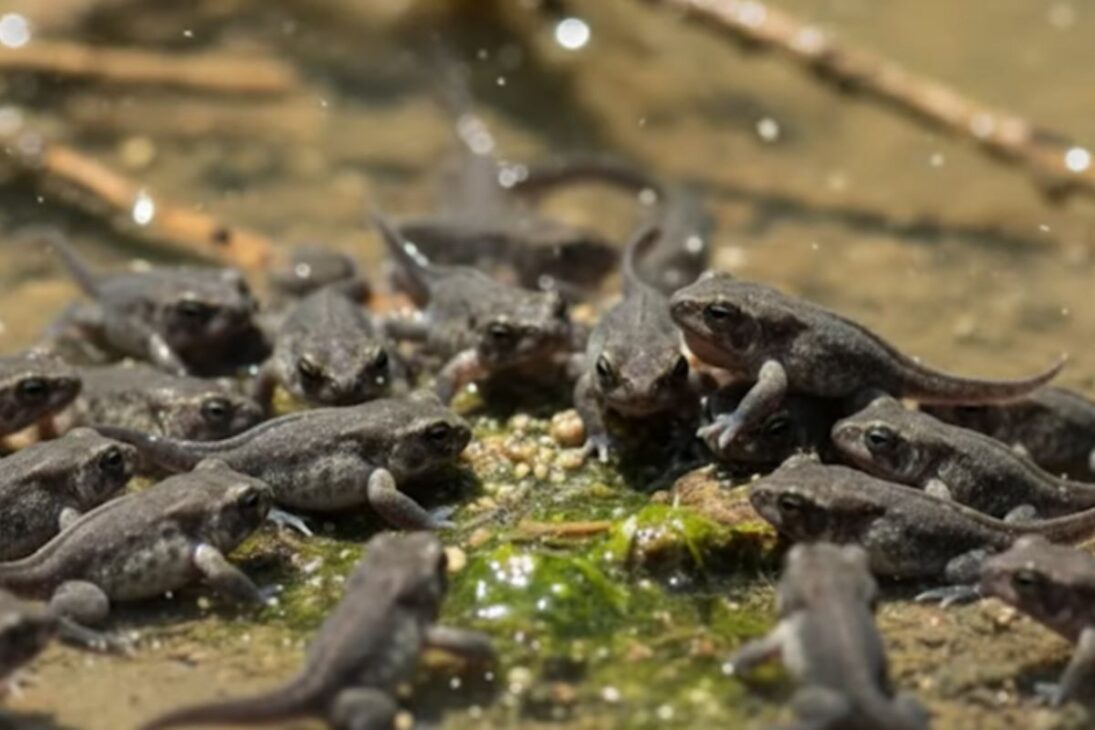
The introduced frog, known as the cane toad, showed why nature kept it away from Australia. It was hardy, adaptable, and extremely prolific.
Females can lay Up to 30 eggs in a single clutch.which makes any attempt at control an unequal race.
And there was a decisive factor: venom glands in the skinPredators that tried to eat the frog died from poisoning.
The result was a domino effect: declines in bird populations, impact on insects, deaths of animals that bit the frog by mistake, and a scenario described as “ecological chaos.”
When the crops change and the pest remains: the country discovers it has lost control.
Over time, sugarcane itself lost the same economic importance described at the beginning of the story. But the frog did not. It was already established and thriving.
From there, Releasing frogs to save crops It came to be remembered as a warning: you might solve a short-term problem and end up with a bigger, more expensive, and much harder one to undo.
Why “killing frogs” didn’t solve the problem: capture, poison, and repeat the cycle.
Various approaches have been tried over the years, including capture and eliminate programs and proposals using chemicals.
But the reasoning was cruelly simple: you kill hundreds of thousands, but it only takes a small group of females to lay eggs for the number to explode again.
Furthermore, the country feared repeating the mistake of creating another imbalance with poisons or with a newly introduced predator. Australia learned the hard way that trying to control nature with more nature can go very wrong.
The dark turn: tadpoles that eat eggs and the “cannibalismas a tool
That’s when the most unlikely idea emerged. Scientists observed that cane toad tadpoles can eat eggs from the cane toad itself as a form of competition for food.
In the laboratory, some tadpoles became known as “Peter Pan,” being larger, darker, and with an intense appetite for eggs of their own species.
In controlled tests, these tadpoles consumed most of the available eggs within a few days, leaving almost none to hatch into a new generation.
The discovery was shocking because it suggested that the invader’s worst enemy might be the invader himself.
Important: the account itself makes it clear that Large-scale releases in the field were not carried out.The discussion progressed, but the fear of generating another unexpected consequence remained heavy.
The unexpected side effect: real-time evolution.
While researchers were studying cannibalism, nature was doing something else: adapting the invader. Over the decades, the frogs on the “invasion front” began to show traits of rapid dispersal, such as longer legs and a greater migratory drive, with reports of advancing tens of kilometers per year.
But this speed comes at a cost. Many of these “athlete” frogs die prematurely, with a higher risk of injury and exhaustion. It’s Darwinism accelerated: the species trades longevity for territorial conquest.
Australia reacts unintentionally: predators learn, change, and survive.
The report also describes a biological counterattack: native predators began to learn “how to eat the frog without dying.” Birds and other animals started to avoid the most toxic areas and explore less dangerous parts.
Some snakes, for example, have been observed to have changes that make it difficult for them to swallow larger frogs. It’s not an adaptation from one generation to another over millennia; it’s an adjustment that’s visible in just a few decades.
What does this story really teach us?
In the beginning, Releasing frogs to save crops It seemed like a brilliant solution. In the end, it became a classic case of how a simple intervention can create a gigantic, long-lasting, and expensive problem.
And the most troubling detail is also the most honest: There is no such thing as “perfect control” when the ecosystem collapses.Sometimes, all that remains is to study the mechanisms of the pest itself, such as tadpole cannibalism, and try to use that knowledge without repeating the same mistake of interfering without considering the consequences.
If you were responsible for deciding, would you support… Releasing frogs to save crops Again in another country, knowing what happened in Australia?