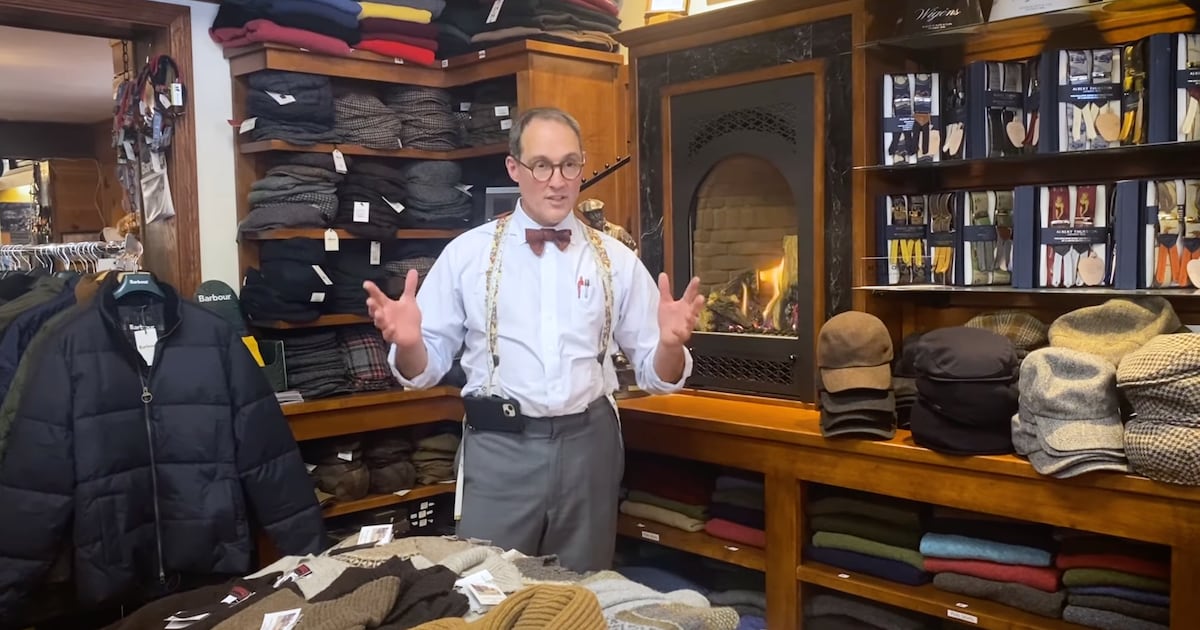
In an era of fast fashion and disposable trends, a family-owned Upstate New York clothing store known for timeless, made-to-last pieces is getting national attention.
O’Connell’s Clothing on Main Street in Buffalo has been named one of the New York Times’ 50 best clothing stores in the United States — an honor that has brought a surge of new customers through its doors, according to The Buffalo News.
The Western New York shop, located in Buffalo’s University District, is owned by father and sons Bernhard “Bernie,” John and Ethan Huber. O’Connell’s is best known for its tailored menswear, including suits, sport coats and trousers. In its write-up, the Times noted that while O’Connell’s carries many of the same brands found in high-end boutiques, some of its real treasures are tucked away in the back room where a deep inventory of deadstock and vintage items rewards curious shoppers willing to dig.
The store’s history stretches back to 1959, when it was founded by three Buffalo Bills players: Tommy O’Connell, Richie Lucas and Don Chelf, according to WKBW Channel 7. Bernie Huber was among the store’s first employees. What began as an 800-square-foot shop has grown through six expansions to about 10,000 square feet.
There is also a small but mighty women’s department on the second floor. Former Hollywood costume designer and fashion industry veteran Joan Fedyszyn has curated the space, filling it with classic brands such as Barbour, Aquascutum, Draper of Glastonbury, Schneiders of Salzburg and Marimekko.
O’Connell’s reputation reaches far beyond Western New York. The Buffalo News reported that the store fills orders for hard-to-find pieces for major celebrities in sports and film, and supplies authentic period clothing for Broadway and movie productions. International buyers also seek out the shop’s vintage offerings, particularly customers from Japan, where small-sized Lacoste shirts and Brooks Brothers pieces are in high demand.
Through it all, the Hubers have remained committed to O’Connell’s identity as a destination store built on quality and longevity. Many of the garments are still made in the United States, Canada and the United Kingdom, even as much of the apparel industry has shifted toward cheaper, trend-driven production overseas.