
The American Dream has never felt further out of reach. And it’s not just because the house with the white-picket fence and the nanny to care for the children are unaffordable. They’re also, for many, unavailable.
America’s affordability problems are real. A weakening job market means pay raises are getting smaller. Prices have been trending higher – particularly for must-haves like groceries and electricity.
Yet wages have outpaced inflation for a few years now, and many Americans are earning a lot more than they were before the pandemic. Why, then, the unrelenting economic gloom?
The answer may be more about what Americans can’t get at any price.
Consider housing and child care. A yearslong standstill in the housing market has thwarted a generation of first-time buyers and kept growing families in too-small homes. In much of America, there simply aren’t enough child care professionals to take care of all the children of working parents.
That’s put many Americans in a frustrating bind: Many have moved into higher tax brackets but are unable to enjoy the trappings of their higher-income lives, while others feel like they’re falling further and further behind.
The cost of buying a home has surged in recent years, largely because of a housing market that has remained historically stuck, combined with mortgage rates north of 6% – triple their level from just a few years ago in the immediate pandemic aftermath.
Sales of existing US homes have been in a rut for several years, hovering at an annual rate of around 4 million since late 2022, according to the National Association of Realtors. With the brief exception of the spring of 2020, current home inventory and sales have remained near their lowest point since the housing and financial crisis that ended in 2010.
Exacerbating high home prices, homebuilding essentially stopped during the 2007-2009 housing crisis, and it never fully rebounded. Now, America is short by about 4 million homes needed to address the supply shortage and return housing to affordable levels in this country, according to Goldman Sachs Research.
To put that in perspective: the number of total vacant housing units – both for rent and sale – is lower than at any time in the past four decades.
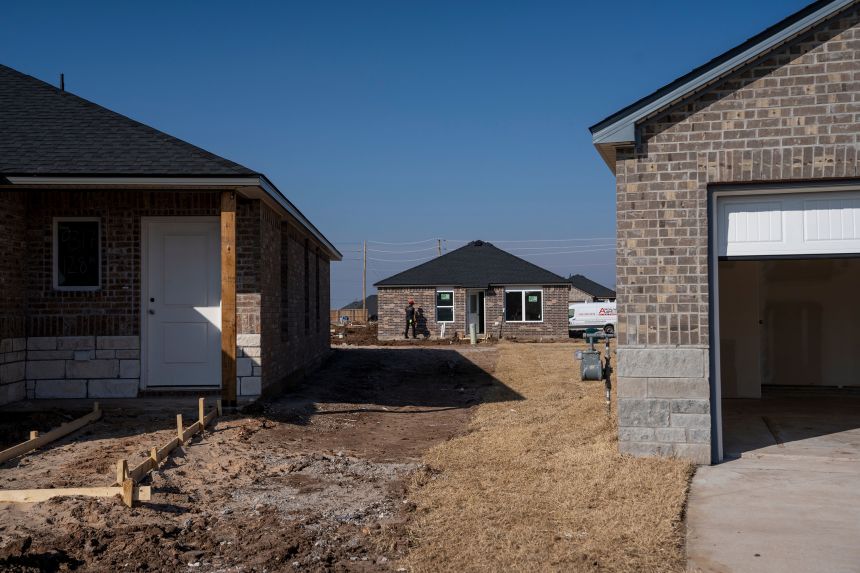
“The reason we have an affordability issue is a supply issue,” said Chen Zhao, head of economics research at Redfin. “There’s a mismatch between where the opportunity is and where affordability is.”
The fastest-growing markets tend to be where the jobs are – the New York metropolitan area and San Francisco. It happens to be extraordinarily difficult to build in those regions.
Kim Sheldon and her three children have been at the same rental for 10 years since moving to Holden, Massachusetts, just outside of Worcester. Although she’s happy with her rental, her curiosity has been piqued when nearby homes have popped up for sale.
“I thought, ‘Oh, those are so cute, let me just look,’” she said. “And then I’m looking and see it’s $650,000 for a three-bedroom, two-bathroom, single-floor ranch home.”
For the single mother on a teacher’s salary, the American Dream never felt more out of reach.
“I went to college, I’ve worked my entire life, and with the costs of everything being what they are, we get by, we certainly don’t live luxuriously, and nor do we need to,” she said. “Do I wish we could own our own house? That would be awesome.”
But she worries what the financial strain of homeownership would mean for her children.
Housing is far more affordable in the Sun Belt: Texas, Florida and Georgia are among the easiest states to build in and the most affordable. But their popularity is waning as return-to-office mandates have forced many folks to move – including those who took advantage of the affordability arbitrage to work remotely in places where they could get more house for their money.
Even in those regions, however, some pockets of the housing market remain unapproachable.
People who are seeking homes now are finding that low supply has kept prices high, while mortgage rates are hovering above 6% – far higher than the ultra-low 2% rates some got during the pandemic.
“People aren’t looking to sell because they don’t want to get out of their mortgages that they’ve got for 2% now … the supply side is crunched,” said Steve Mercer, who recently moved to Atlanta from Iowa. “There’s a lot of new builds in the area that we’re looking at, but those are all still priced more than I would have anticipated. And with the cost of everything going up, it just makes the burden of homeownership just that much more.”
Boomers largely bought at low prices that surged over time and high rates that fell over time – a kind of lottery ticket that unlocked their wealth. But people buying into the market now are buying at high prices that economists don’t believe will rise dramatically anytime soon – and rates that aren’t expected to fall significantly in the near future.
“I think for the younger generation, there’s discontent because there’s a sense that the American Dream is not achievable anymore,” Zhao said. “Young people who couldn’t get their foot in the door are really caught, and they can’t figure it out.”
Traditionally, Americans’ biggest monthly expense is housing. However, for a growing number of families, the cost of child care easily competes for that top line item.
In nearly every US state, child care for two kids is more expensive than mortgage or rent, according to advocacy group Child Care Aware, which found that the average annual price of child care was $13,128 in 2024, an increase of 13% from the year before.
The lack of affordability, however, is merely a symptom in an industry where operators are increasingly finding themselves in a “grim financial bind,” University of California, Berkeley research shows.
“Child care problems include two other elements, which are availability and quality,” William T. Gormley, university professor emeritus at Georgetown University’s McCourt School of Public Policy, told CNN in a recent interview. “All of these issues are interrelated.”

When living in Iowa, Mercer and his wife encountered those headwinds after trying to find child care for their young son.
“We have a 16-month-old that we pulled out of child care, between a combination of a bad experience and the cost of it,” he said, noting the monthly bill back in Iowa was $1,800. “It’s just been difficult to justify sending him into daycare, and so my wife stays home now.”
Low funding and poor pay has contributed to worker shortages (now further exacerbated by immigration reductions) as well as “child care deserts.” The cost burden is pushed instead to families, who often find the prospects too pricey.
Wages for child care workers and those in early education are lower than 97% of all US professions, said Gormley, an early childhood education policy scholar who serves as the co-director of the Center for Research on Children in the United States.
“That is because the child care workforce in almost every state is hanging by a slender thread,” Gormley said. “The child care workforce faces some systemic challenges that are attributable to the relative paucity of government support for child care in the United States.”
The monthly burden for Americans’ child care expenses is growing: Daycare and preschool costs have been rising at nearly double the pace of overall inflation, Bureau of Labor Statistics data shows.
Those rising expenses are hitting families at precisely the most difficult times in their lives, Gormley said.
“They are relentless, and you can’t ignore them,” he said. “The only way you can ignore child care expenses is to stay home with your children. And for many working families, that is simply not an option.”
The ripple effects through the labor market and broader economy are chilling. Higher child care costs were found to have a direct negative effect on the labor force participation of mothers, according to a US Census Bureau Center for Economic Studies report published in April.
As the expenses grow, families pull back and some parents – often mothers – pull out of the workforce to provide full-time care.
Women’s labor force participation rates slumped in 2025, reversing some historic gains seen post-pandemic. Women with children under the age of five drove the outflow from the labor force.