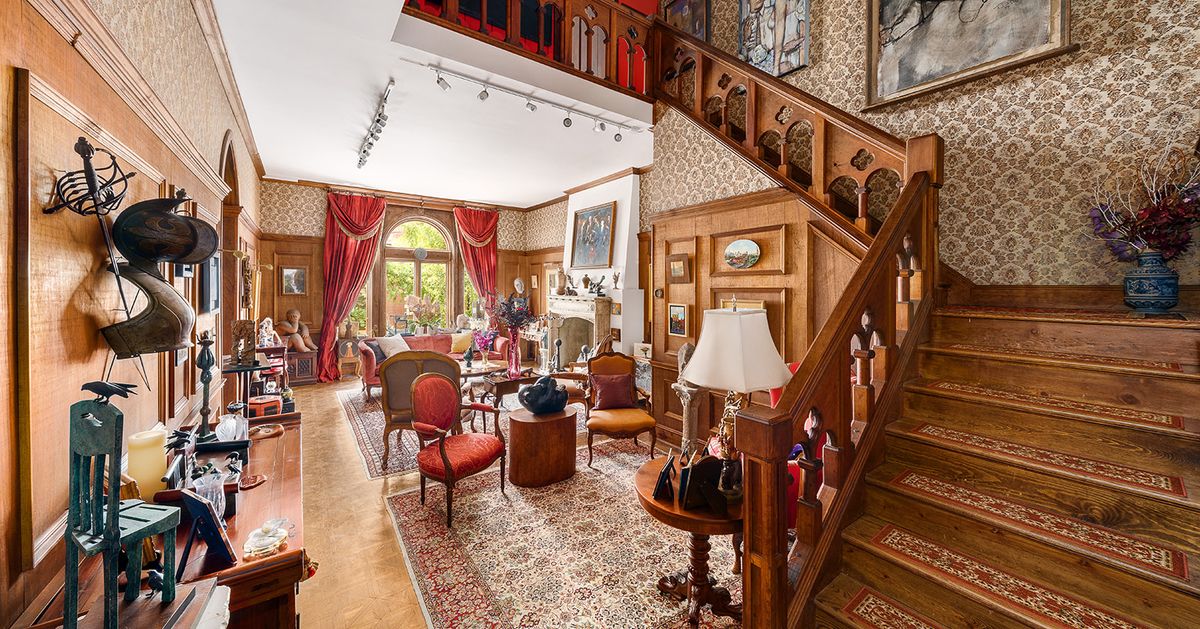
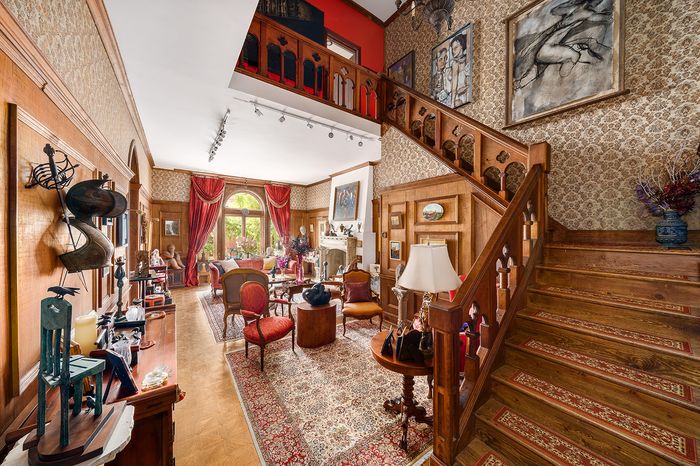
The grand 43-foot-wide mansion at 323 West 80th Street was once a single-family home — 21 rooms spread across 11,000 square feet with a gymnasium and a solarium, a fountain and a loggia. It was a layout that perhaps made sense for the personal attorney to the Vanderbilts or the wife of a 19th-century real-estate tycoon, but when Bill and Donna DeSeta bought the building in 1970, it had been chopped up and left to squatters. Still, Bill had a “medieval-castle fantasy,” says Donna, and the Renaissance Revival building stuck out from a sea of grim townhouses and bland tenements. The limestone and brick façade had curves and columns, leaded glass and fancy ironwork, arched windows and rough stone lintels. The couple paid $170,000 and got to work.
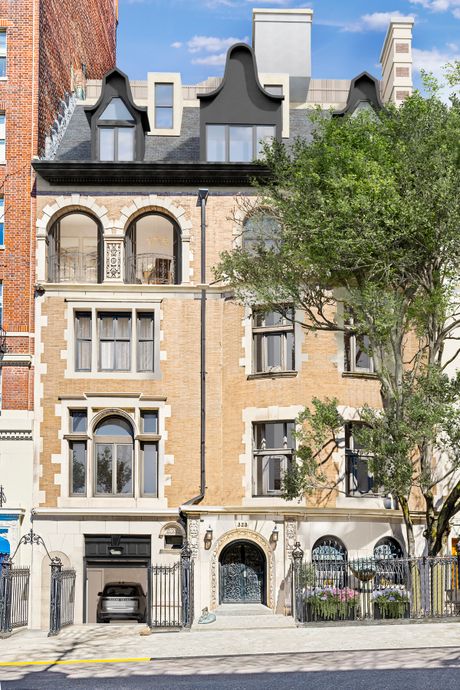
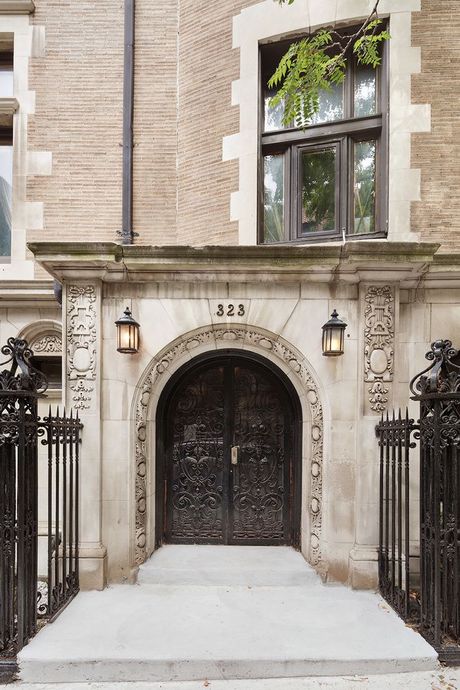
A rendering of the exterior; the original carving around the main entrance. Will Ellis.
A rendering of the exterior; the original carving around the main entrance. Will Ellis.
Bill DeSeta had built artists lofts across Soho, designed clubs (the Tin Angel), and was working as a set designer in theater. It made sense the couple would do the work themselves. Friends were happy to swing hammers to help turn the second and third floors into the owners’ duplex and create six rental apartments above and two below. Finding tenants was easy thanks to Donna’s day job managing a modeling agency that brought in beautiful people from across the country who didn’t always have a place to stay once they got to New York. “The first tenants in the building were all these models,” she remembers. “And the models attracted hockey players and all kinds of sports figures.” Donna had previously worked as an actor (like her sister, Bernadette Peters), and a young Mary-Louise Parker and Joel Gray, the Bob Fosse star, were also among the early tenants. When someone was in town on a short contract, they would call the DeSetas to see if a room was empty. The proximity to Lincoln Center was an obvious draw for musicians, and renters included an avant-garde composer on the sixth floor, a bassist on the fourth, and an opera teacher on the ground level. “Sometimes you’d hear this glorious music coming out of her apartment, and sometimes you wanted to put earphones on to stop the screeching,” says Donna.
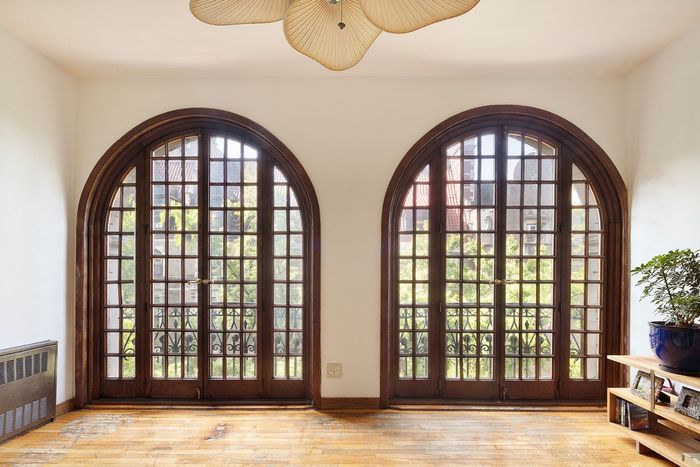
Arched windows in a fourth-floor rental unit.
Photo: Will Ellis
If renters stayed for years and years, that might have been due to their atypically generous landlords. Bill fixed up the roof to create a communal deck and garden with views over the river. The cellar included an art studio open to all. And hallways held the overflow of the couple’s personal collection, which included some Kiki Smiths. “We had art going up the whole six floors. The whole place was a gallery,” says Donna. But the showstopper was their personal home: a 3,000-square-foot two-bedroom apartment that revealed the true extent of Bill’s castle fantasy. They added parquet floors (by hand), put Gothic arches over doorways, and built out the primary bedroom with dark-wood shelving that made it feel more like a monk’s study than Bill’s office, which had views over leafy 80th Street. A panel in a wood-walled double-height living room popped open to reveal a secret cocktail bar, and curved terra-cotta roof tiles were built into the wall of the dining room to create an improvised wine rack. When they came up with the idea of concealing an airshaft with stained glass, Donna took a class at the YMCA and installed the glass herself. The staircase beside it is Bill’s ode to Donna; he wanted something grand enough for her to make an entrance. The couple decorated with period wallpaper and dark curtains, but they didn’t have Gilded Age sensibilities, and parties often included the renters. “All of our tenants were friends,” says Donna. “People were in and out my door constantly. The building was full of life.” Mark Jovanovic, a real-estate agent, started helping rent the units around 2005 and couldn’t turn down an invitation to Bill and Donna’s duplex. “After a showing, I would dedicate 40 minutes just to hear their stories,” he says.
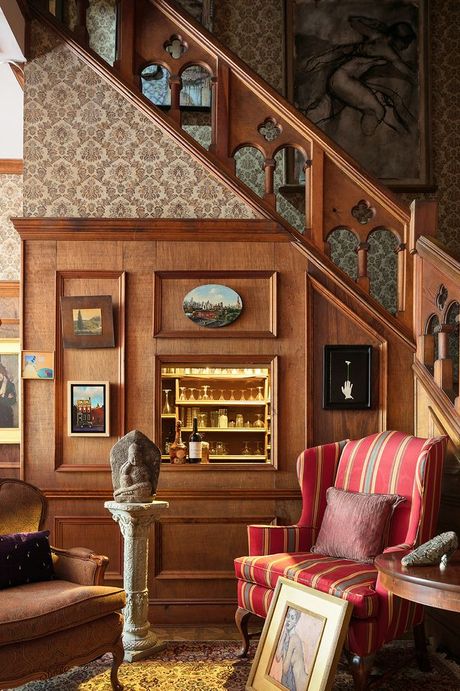
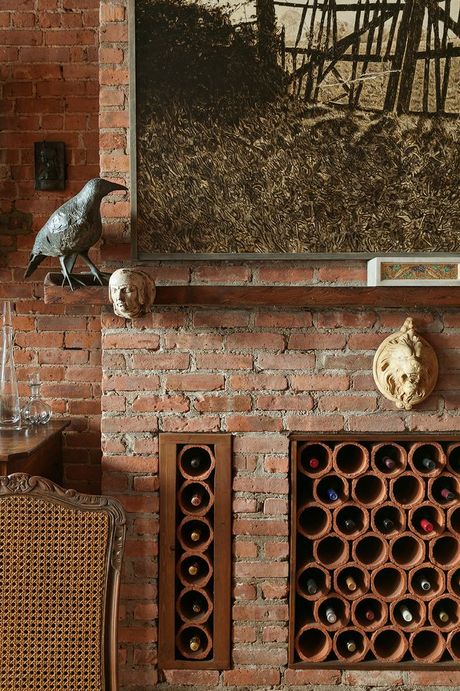
A hidden bar makes use of space under the stairs. A wine rack made of roof tiles sits in the dining-room fireplace. Will Ellis.
A hidden bar makes use of space under the stairs. A wine rack made of roof tiles sits in the dining-room fireplace. Will Ellis.
Price: $7 million (around $200,000 in annual taxes)
Specs: 11,000 square feet currently including an owner’s duplex and eight units
Extras: Roof deck, private garage, elevator, basement
10-minute walking radius: Zabar’s, Riverside Park, Fred’s
Listed by: Mark Jovanovic and Scott Hustis, Compass
But selling was always the plan, especially after their son moved to Florida. (A childhood here might have led to his career as an interior designer.) When the DeSetas first listed the place in 2017, at $20 million, they considered a $15 million offer, says Jovanovic, who almost shudders at the memory. But they weren’t “emotionally ready” to sell, he adds. “It wasn’t about the money.” When they relisted in 2020, new laws had just passed protecting renters in multifamily buildings. “Long story short, the value plummeted,” Jovanovic tells me. They relisted at $12 million, lowered to $10 million, and finally pulled the building off the market. Last year, the DeSetas reached out to say they had made the permanent move to Florida and were serious about selling. So Jovanovic and his team listed at $7 million in March 2025. The price accounted for the home’s considerable taxes — around $200,000 a year — but still generated a bidding war, and they signed a contract to sell at $7.8 million. Donna remembers the buyer wanted a multigenerational home and toured the whole family through — “even the mother-in-law.” The deal seemed done. But then the buyer went silent and failed to show up at closing, Jovanovic says. Lawyers snapped into action, filing a suit on behalf of the DeSetas against buyers Justin and Teresa Tsang seeking to cash the $785,000 payment now in escrow.
Jovanovic had to wait for those lawsuits to clear before listing again this year. Selling may be easier this time, he says. With no renters upstairs and no furniture, either, wealthy families drawn to the idea of a 43-foot-wide mansion with a curb cut and a garage may have an easier time imagining it back to what it once was: a Gilded Age mansion. “It might be one of the last ones where someone can do something like that,” says Jovanovic.
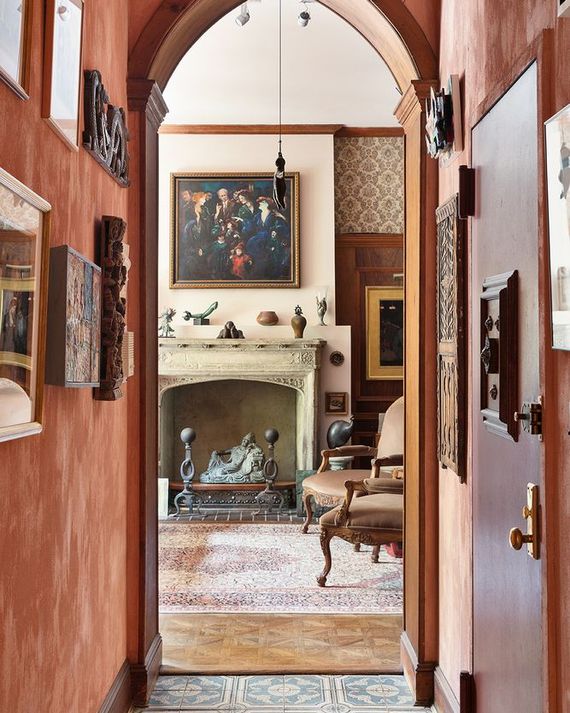
The door to the owners’ duplex (right) leads to a hall straight into the living area.
Photo: Will Ellis
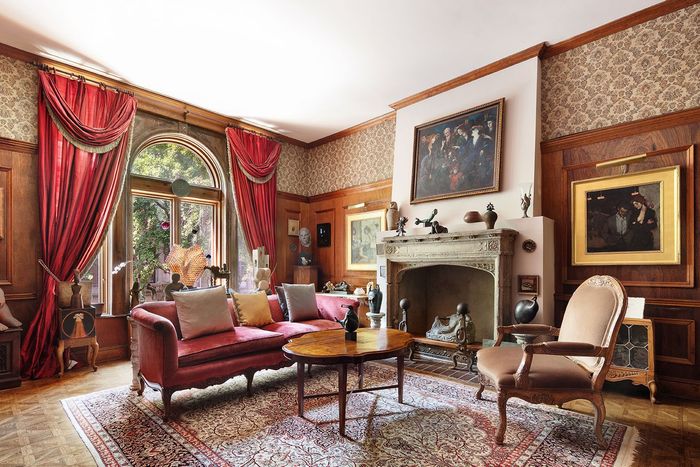
The living room overlooking 80th Street.
Photo: Will Ellis
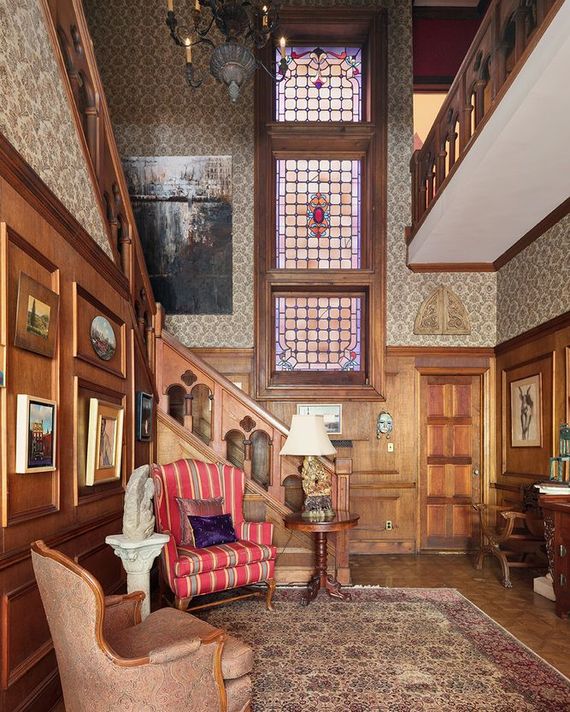
In the rear of the living room, the ceiling rises to double height. The stained glass is by Donna DeSeta, and the staircase was built by a set designer who worked with Bill DeSeta.
Photo: Will Ellis
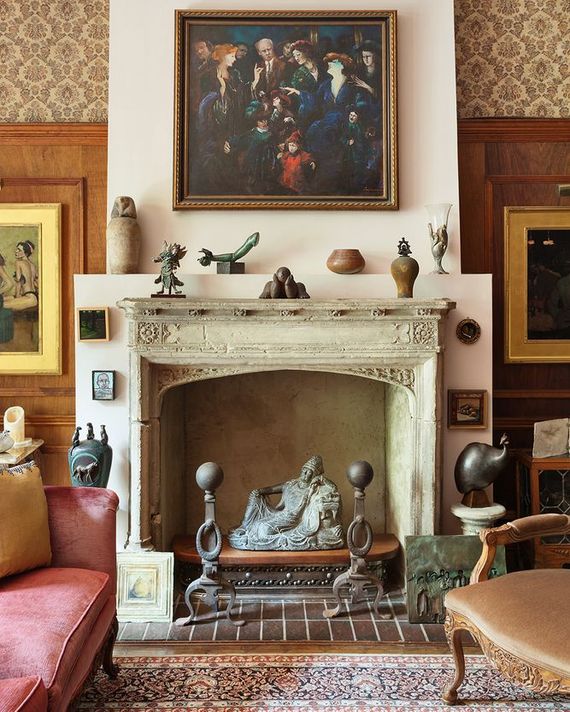
The mantel came from a home being gutted on West 78th Street.
Photo: Will Ellis
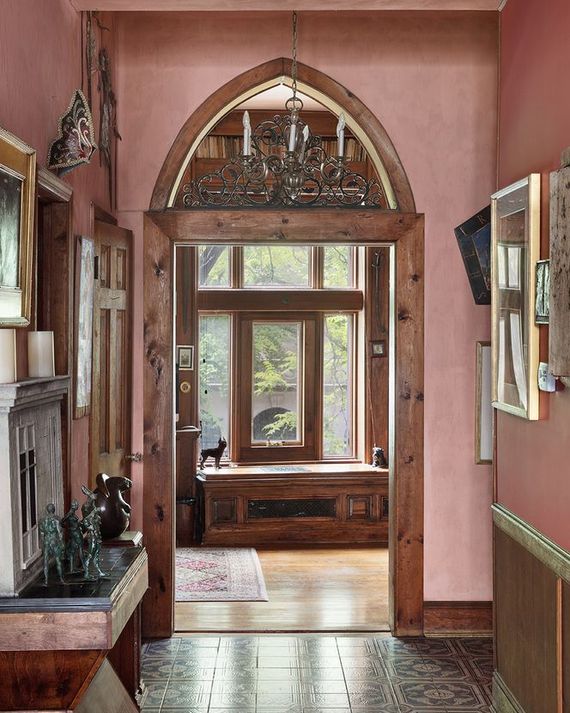
Head back to the same hallway and cross the Spanish tiles to reach Bill’s personal office.
Photo: Will Ellis
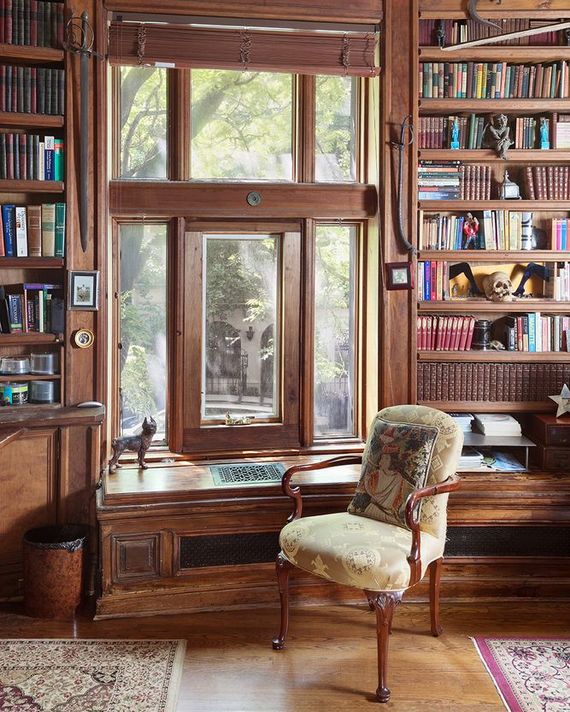
Some of the shelving in the front office is original.
Photo: Will Ellis
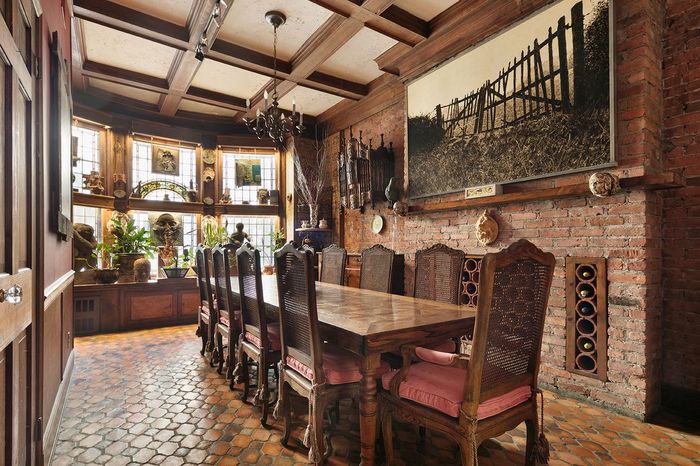
The dining room is in the rear of the second floor.
Photo: Will Ellis
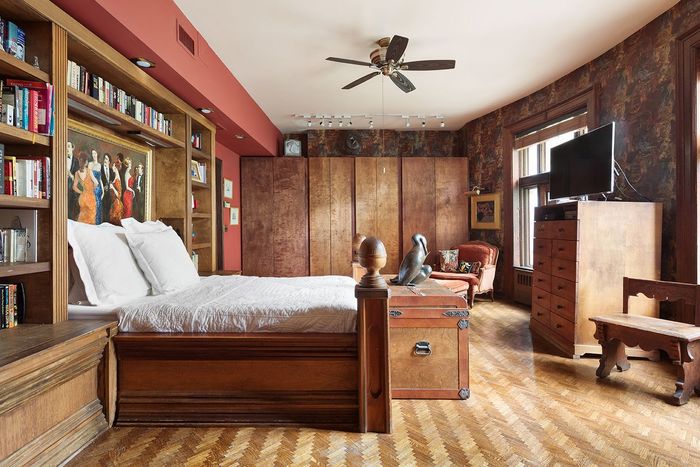
The DeSetas added parquet floors and built-ins to the primary bedroom.
Photo: Will Ellis
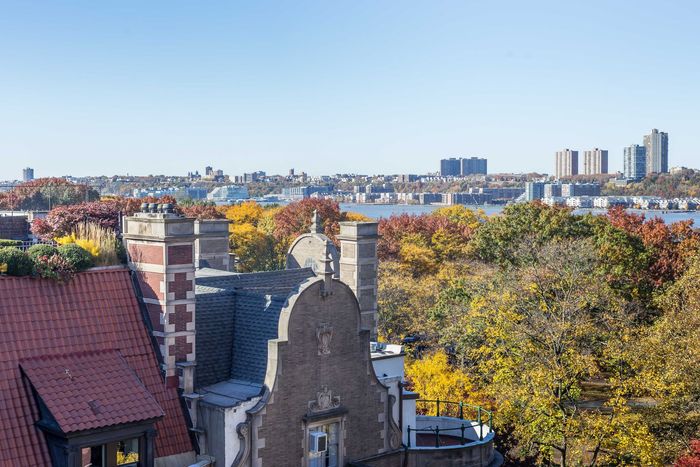
Views over Riverside Park and the Hudson from the roof deck.
Photo: Will Ellis

A virtual rendering of the roof deck.
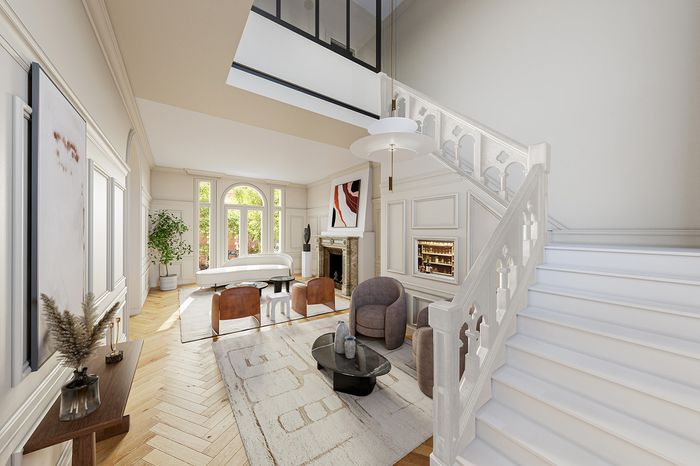
A virtual rendering of the main living area, slapped with a coat of white paint.
Photo: Will Ellis
Sign Up for the Curbed Newsletter
A daily mix of stories about cities, city life, and our always evolving neighborhoods and skylines.
Vox Media, LLC Terms and Privacy Notice
Related