The Athletic has live coverage of Ruben Amorim’s sacking by Manchester United.
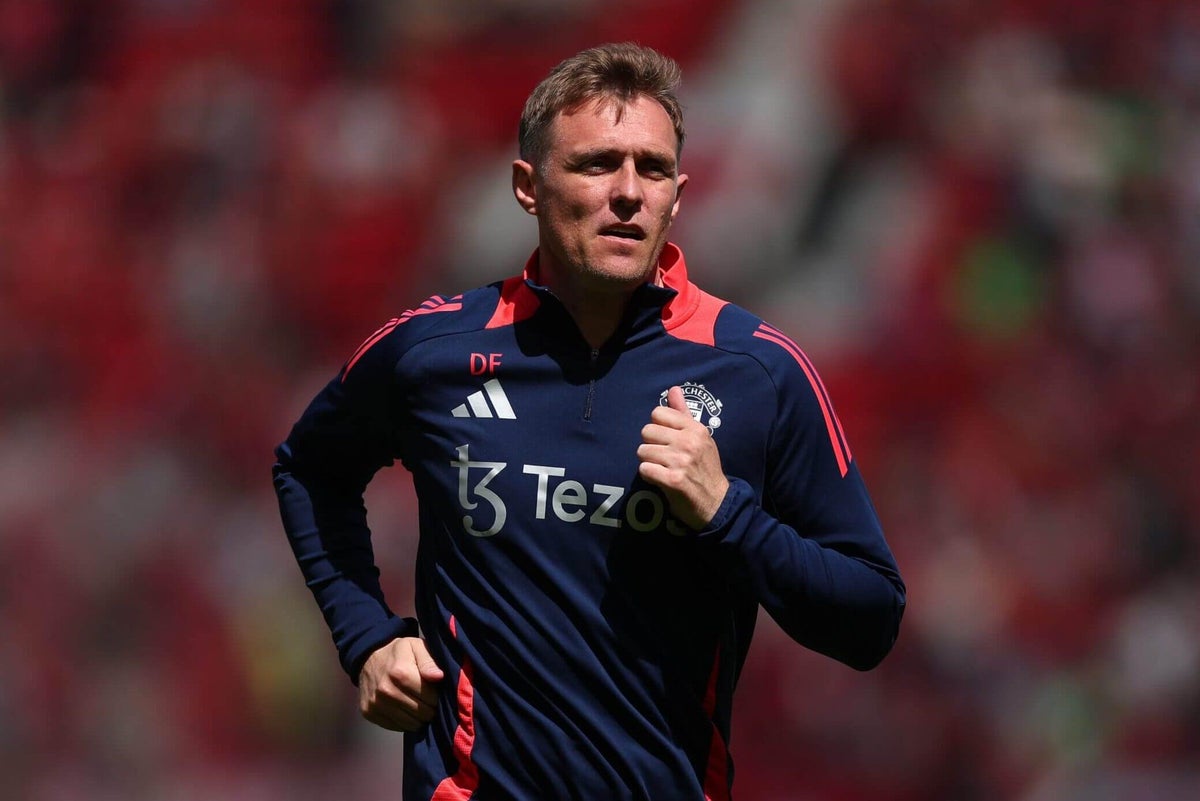
When the news broke about Darren Fletcher becoming the interim Manchester United manager, The Athletic called someone who worked with Fletcher on the football side most days when the Scot was part of the first team set-up.
That person, who worked under every manager since Sir Alex Ferguson, is no longer at United and is not sanctioned to speak publicly by his new employers, but he was unequivocal in his enthusiasm.
“I have genuine faith as him as a manager,” he said. “He has been incredibly supportive of every manager and coach. He’s extremely skilled and professional, energetic, enthusiastic and giving. He has always been studious and wanted to become better.
“I realise I might sound like his spin doctor here, but I mean every word. Darren had an excellent balance between the human side and the coaching side with very good relationships with everyone inside the club — football and non-football.
“He always puts the club before himself and taking the under-18s job was evidence of that. He felt he could help the club and make the biggest impact there. Why? Because he cares about the club. There’s nobody better to take on the club in an interim period. He’ll deliver progressive, proactive football — and proactive is the key word.
“He believes that Man United teams should dominate matches through being the aggressor, being the protagonist. It’s about giving the players conditions to express themselves and their strengths, which creates a confidence and a positivity.”

Fletcher with Ruben Amorim, the man he is succeeding on a temporary basis at United (Alex Livesey/Getty Images)
It is a ringing endorsement for Fletcher, who is due to oversee United in their Premier League game at Burnley tomorrow and at Old Trafford against Brighton & Hove Albion in the FA Cup on Sunday following the sacking of Ruben Amorim.
Fletcher rejoined United in 2020 after he’d left the club for West Bromwich Albion in January 2015 by, in his words, the “back door… I was probably entitled to a United testimonial and I didn’t want it.”
That verdict was delivered in an interview with me at his home in Cheshire, as part of Bring on United, a book I compiled on the United team in the noughties. He offered an extraordinary account about his life as his four children (two sets of twins, plus a bulldog) buzzed around the home.
Fletcher explained his roots in rural County Mayo, in the west of Ireland, and growing up on Mayfield, a massive estate just outside Edinburgh. The father of his brother-in-law, John Keane, was honoured by Celtic after he died in 2024. Keane started out farming turnips with Fletcher’s grandad in Ireland before moving into construction. He put £1million — most of his savings — into helping save Celtic from administration in the early 1990s.
Fletcher loved Celtic as a kid and had a season ticket, first for the old Jungle terrace. He was always attracted to midfielders.
“John Collins was a hero, then the three amigos — Pierre van Hooijdonk, Jorge Cadete and Paolo Di Canio,” he told me. “Tommy Burns was the manager and he ended up being my coach. One of the best men I’ve ever met in football.
“I’ve always been a football nut, obsessed with everything to do with it from stadiums to strips, fantasy football to computer games. I didn’t really like other sports; it was all about football for me. I was obsessed with Spanish football in the 1990s and everything associated with that. I’d be an encyclopaedia on World Cups and players. Even to this day. I’ve tried my hand at golf, but kind of figured out that I’m doing it because it’s sociable. I don’t really enjoy it.”
He attracted early attention as a footballer, being scouted by Hearts, Rangers, Celtic and then Manchester United. He would train every night of the week, but his father — whose family largely followed Rangers — was keen for him to experience different environments so did not let him commit to one club too young.
Fletcher had his first United trial aged 12 and did so well that he was introduced to Sir Alex Ferguson. He progressed right up to the United first team, reaching the reserves at 15 where he played with Ole Gunnar Solskjaer, Jordi Cruyff and David May, despite possessing a slimmer build than many of his age (he weighed less than 70kgs/11st).
He did so well that there was serious talk about Fletcher making his first-team debut at an age when his peers in Manchester were still in school and he travelled with the first team for a game at Aston Villa, only for administrative red tape relating to him being on a schoolboy contract to scupper any chance of him playing.
It was only a minor delay to his progress. Roy Keane was an early admirer and mentor, offering to help him with contracts when he was younger even if he could be “brutal and hard” in training. The Republic of Ireland international had notoriously high standards and would test Fletcher in training by firing passes at him — and others — to ensure his touch was up to scratch.

Darren Fletcher became close with Roy Keane (left) as a player (Alex Livesey/Getty Images)
Fletcher took Keane’s lessons to heart, driving himself onto bigger and better things by setting his own exacting levels in practice. He would, in his own words, “treat every training session like the World Cup final” and once annoyed Keane during an inter-squad match.
“I switched sides midway through (the game) and he said: ‘Fletch, will you f*** off. You’re like Zidane playing against me, but when you’re on my team you’re useless’. He had a point; we were winning when I’d swapped to Roy’s side.”
Keane was desperate for him to play for the Republic of Ireland, but Fletcher stuck with the country where he was born, Scotland. For United, he became established in arguably the best midfield in football, playing 35 games in 2003-04, then 30, 41 and 40 times over the following seasons. There was a flag at away games which read: ‘Darren Fletcher, football genius’.
If Keane was his mentor, Wayne Rooney was his best friend. “I was quiet, I’d listen and learn from all these amazing characters and leaders,” Fletcher recalled. “Wayne was younger than me but way more confident. He’d say stuff to the older players with no fear. He’d start conversations or shout at them on the pitch. Wayne and I clicked straight away. He’s witty, but angry.”
If the noughties were when Fletcher made his name and established his reputation, the following decade was more problematic. He was diagnosed with ulcerative colitis — a bowel condition which made him need the toilet 30-40 times a day — in 2011 and went from being in the PFA team of the season in 2009-2010 to playing just a few dozen games over the next four years.

Fletcher is close to Sir Alex Ferguson (Shirlaine Forrest/Getty Images)
He couldn’t leave the house to go to the park with the kids or to a restaurant, as he would continually need to rush to the toilet. His wife Hayley was a rock during this traumatic period, and United also stood by him, honouring his contract even though he wasn’t playing. He became close to Ferguson and, to this day, can call him whenever he wants. Eventually, his symptoms subsided to the extent that he was able to play again at the highest level with United, West Brom and Stoke City.
After retiring in 2020, Fletcher returned to United and became a popular and highly regarded coach of United’s first team, one still fit enough to join in training to help improve the team. He didn’t do the pranks that he did as a player: one favourite was putting red food dye in Wes Brown’s new Adidas Predators so his feet turned bright red. Brown got on the phone to his agent to complain about the boots and ask for replacements. When they arrived, Fletcher promptly did it all over again.
Other things changed, too. “Having kids helped me, it relaxed me,” he said. “I was a bit too intense with football and it gave me a distraction, a maturity.”
Both of Fletcher’s boys, Jack and Ty,ler are now professional footballers at United. The youngest twins, girls, are toddlers. Fletcher is a devoted family man but Manchester United are also in his blood. It feels like, for now at least, the team is in safe hands.