CHICAGO — Chicagoans using rideshare apps like Uber and Lyft across large swaths of the city will now have to pay an extra $1.50 surcharge, depending on where the ride starts or finishes.
An expansion of the city’s existing Downtown rideshare surcharge area went into effect Tuesday across parts of the North Side, West Loop, South Loop and Pilsen, as well as in a newly established “congestion” zone encompassing most of Hyde Park.
Rideshare users in a single-user ride starting or ending between 6 a.m.-10 p.m. everyday in the newly established zones will be charged the additional $1.50 fee. Shared rides will see an added 60-cent fee, also for trips between 6 a.m.-10 p.m. but on weekdays only.
Rides to and from McCormick Place are exempt from the expansion, but an existing $5 surcharge to take an Uber or Lyft there — as well as to O’Hare and Midway airports and Navy Pier — is still in effect, according to a city website.
The expansion of the surcharge zones was crafted as part of the city’s 2026 budget, which the City Council passed in late December after a majority of alderpeople backed an “alternative” spending plan that killed Mayor Brandon Johnson’s proposed corporate head tax and made other amendments.
The changes that went into effect this month also include a 5-cent hike to the grocery bag tax and an increased “boat mooring” fee for people docking their boats at Chicago harbors. A new tax on retail liquor sales is set to be implemented in March.
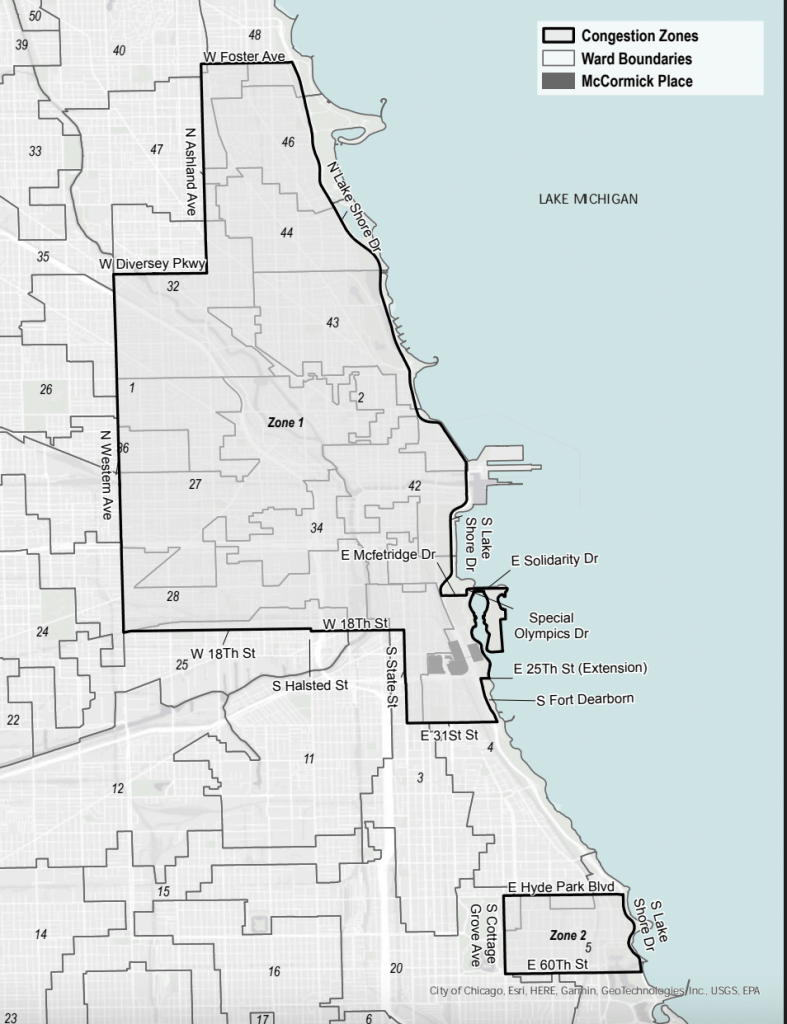 A map of two newly-established “congestion zones” where rideshare users will have to pay an added $1.50 charge per ride. Credit: Provided/City of Chicago
Congestion “zone one” will impact rideshare riders in all of Downtown and parts of West Town, Bucktown, Lincoln Park, Lakeview, Uptown, the South Loop and Pilsen.
The new Hyde Park congestion zone is bordered by Hyde Park Boulevard to the north, Cottage Grove Avenue to the west, 60th Street to the south and DuSable Lake Shore Drive to the east.
The Downtown rideshare surcharge zone first went into effect in 2020. Its former boundaries — which were limited to Downtown, the Near North Side, the West Loop and parts of the South Loop — can be found here.
On top of the new rideshare fees, Chicago shoppers will also now pay 15 cents per shopping bag, with 1 cent going back to the retailer.
This is the second year in a row the grocery bag tax has been hiked: Johnson’s 2025 budget raised it from 7 to 10 cents. The latest increase was proposed as part of the so-called alternative budget plan backed by the City Council.
The city’s boat mooring tax also increased this year from 7 percent to 23.25 percent, although nonprofits are exempt and will continue to pay the former rate.
The 2026 budget also established a new flat fee on off-premise liquor and beer sales, although it won’t go into effect until March to give retailers more time to prepare for the change.
The 1.5 percent tax will affect retail sales of liquor, beer and wine, but not those sold directly to customers drinking at bars or dining at restaurants. Though the fee was reduced from an earlier 3 percent proposal, the alcohol and hospitality industries are still opposed to it.
Listen to the Block Club Chicago podcast: