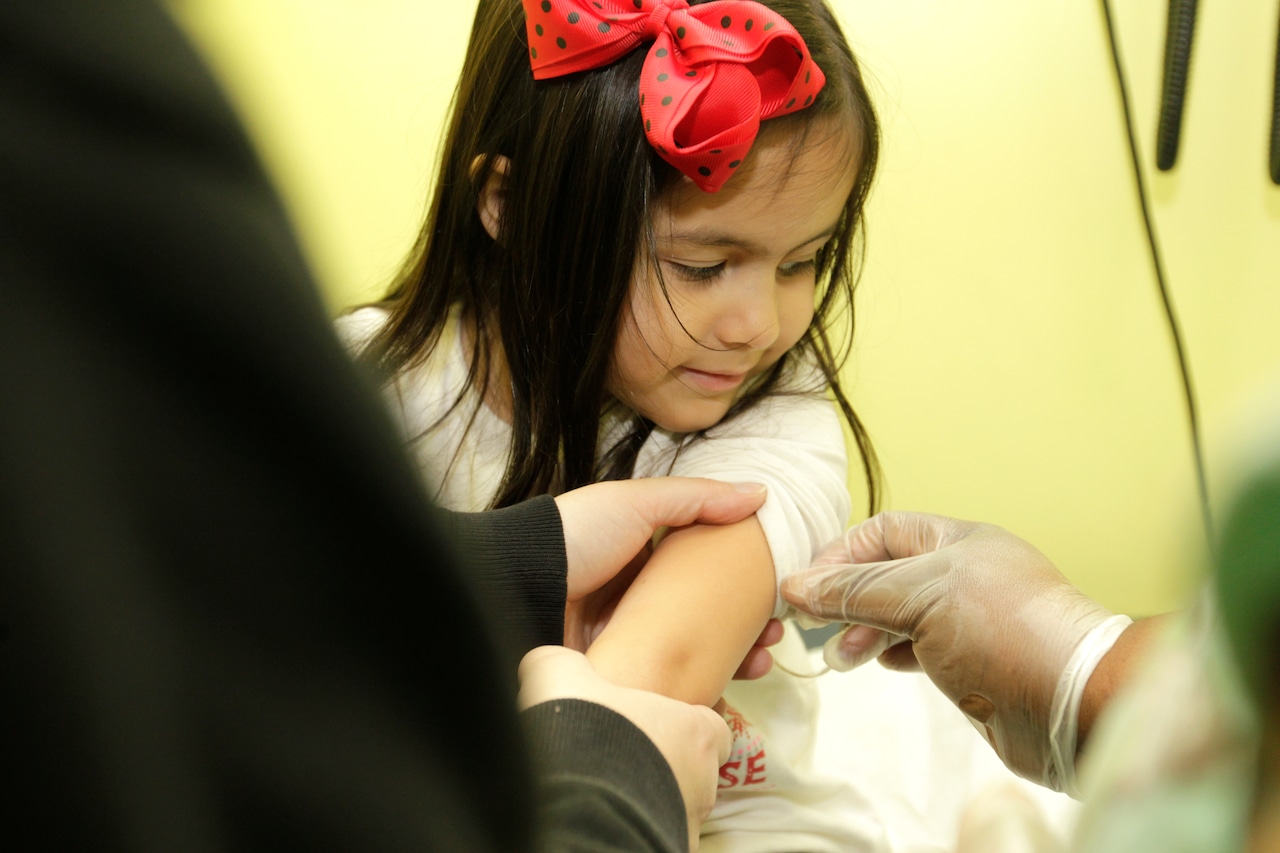
The Centers for Disease Control and Prevention may have reduced the number of routine shots it recommends, but New Jersey has no plans to do so.
On Monday, the CDC announced revisions to the U.S. childhood immunization schedule that cut the number of recommended shots from 17 to 11. The new guidance is controversial, but it isn’t expected to affect access in New Jersey.
Although certain vaccines are no longer recommended for all children, all vaccines covered by the previous immunization schedule will still be available to anyone who wants them through Affordable Care Act insurance plans and federal insurance programs, including Medicaid, the Children’s Health Insurance Program and the Vaccines for Children program, according to the federal government.
The CDC continues to recommend vaccines for diphtheria, tetanus, whooping cough, Haemophilus influenzae type b (Hib), Pneumococcal conjugate, polio, measles, mumps, rubella, human papillomavirus (HPV) and chickenpox.
However, vaccination for the following diseases is now recommended only for high-risk groups or based on shared clinical decision making: respiratory syncytial virus (RSV), hepatitis A, hepatitis B, dengue, meningococcal ACWY, meningococcal B, rotavirus, meningococcal disease, COVID-19 and influenza.
The changes were made at the request of President Donald Trump, who has previously said that the U.S. requires too many childhood vaccines.
In spite of the new guidance, health care providers in New Jersey can continue to vaccinate children according to the previous immunization schedule if that’s what their patients prefer.
Under the new guidance, “non-consensus” vaccines can still be given based on a shared clinical decision between physicians and parents, who know the child best.
The CDC’s recommendations won’t affect school immunization requirements either. States and local jurisdictions, not the federal government, set vaccine requirements for schools.
“The New Jersey Department of Health will continue its commitment to protecting the health of children, families, and communities across the state through evidence-based recommendations,” the state’s Acting Health Commissioner Jeffrey A. Brown said Monday.
“Our public health guidance and vaccine policies will remain grounded in the best available science and centered on access,” said Brown in a press release.
Although the CDC’s recommendations aren’t expected to affect vaccine access, New Jersey has taken precautionary steps to ensure availability and control vaccine messaging.
In September, New Jersey joined six other states in forming the Northeast Public Health Collaborative, a regional public health coalition that aims to bring together public health agencies to share expertise and resources.
The next month, Gov. Phil Murphy joined 14 other Democratic governors in creating a public health alliance to facilitate cross-state collaboration.
There’s also a proposed bill in the New Jersey Legislature that would give greater authority to the state Department of Health regarding vaccine recommendations. The bill wouldn’t eliminate the CDC or its vaccine panel as trusted authorities, but rather expand the number of medical organizations New Jersey turns to for vaccines guidance.
The bill states that in making recommendations on vaccines, the state Department of Health would consider the recommendations of the Advisory Committee on Immunization Practices, as well as the following organizations: the American Medical Association, the American Academy of Pediatrics, the American Academy of Family Physicians, the American College of Obstetricians and Gynecologists and the American College of Physicians.
It would also require insurers to cover the vaccines that the Department of Health recommends.
The legislation doesn’t mandate vaccines or eliminate religious exemptions, said state Sen. Joseph Vitale, D-Middlesex, chairman of the Senate Health, Human Services and Senior Citizens Committee and the bill’s primary sponsor.
“This bill doesn’t take away the ability for parents to make decisions for their children — when they get the vaccine, if they get the vaccine, which ones they’d like them to have — it doesn’t change any of that,” said Vitale during a Dec. 22 hearing at the Statehouse in Trenton.
Vitale said that parents like him will still “have the ability to tell my pediatrician that I don’t want my children to have vaccine or that vaccine. They may not be crazy about my decision, and I certainly consult them about that decision, but it’s my decision.”