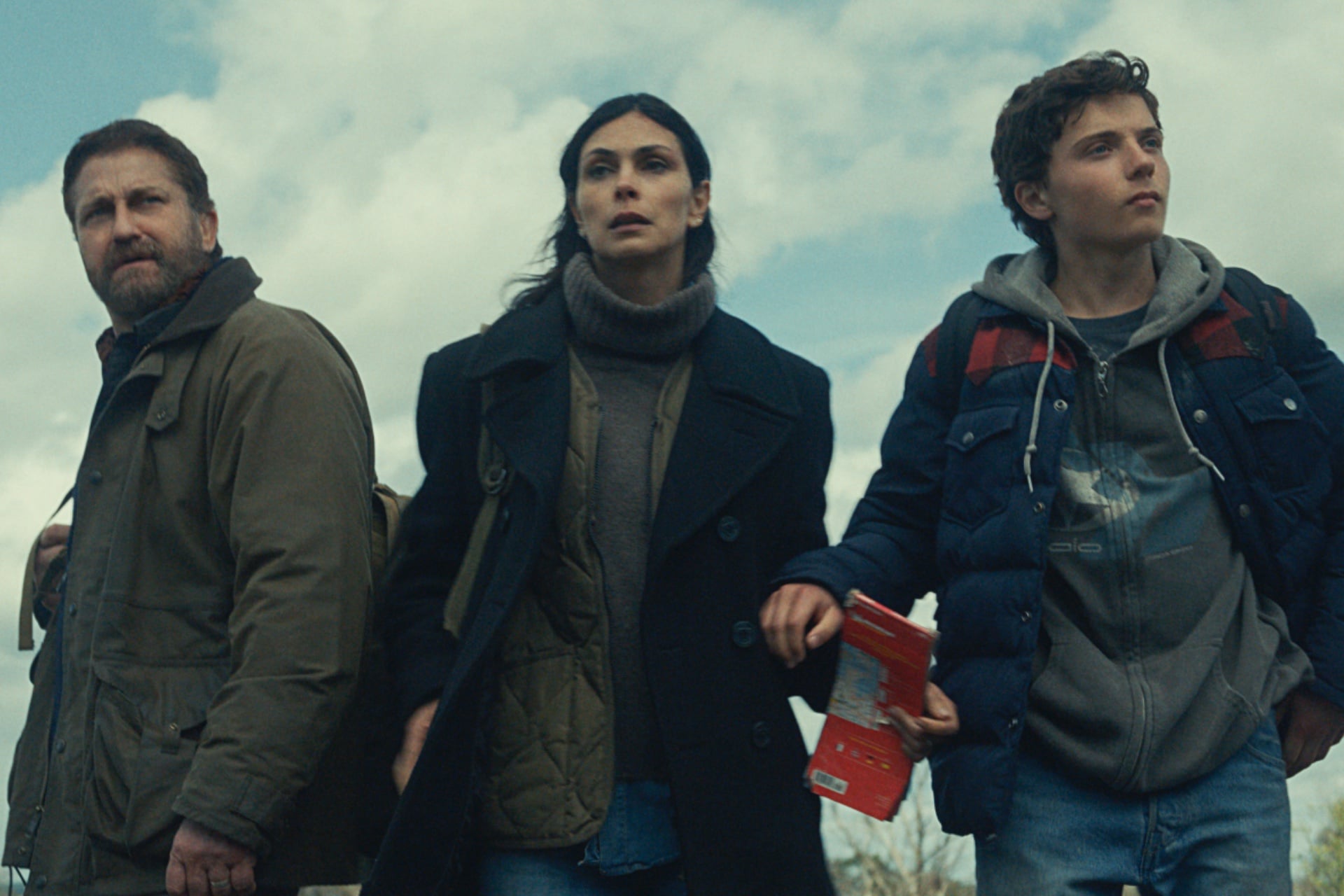
In 2020, Greenland was a surprise hit; pandemic-era audiences clicked with its tale of the Garrity family (led by Gerard Butler and Morena Baccarin) trying, against the odds, to reach a safe place to ride out a comet’s collision with Earth.
The existence of Greenland 2: Migration gives it away: they do make it through. But five years later, the planet is still unstable, rocked by storms, earthquakes, and other secondary catastrophes. On top of that, though humanity’s numbers have dwindled, the situation has made the surviving population a volatile one. The Garritys decide they’ll need to make another risky journey to find a permanent home—hence the “migration” of the title.
io9 recently spoke to Ric Roman Waugh, director of both Greenland and Greenland 2, to learn more.
Cheryl Eddy, io9: The timing of this sequel lining up with the 31/ATLAS comet flying by is sort of eerie. What do you think about that coincidence?
Ric Roman Waugh: The funny thing about that is when we made the first movie, I can tell you about the 400 other ATLASES that were flying very close to the earth that we were tracking as well. What is crazy is you don’t realize how many do fly by the Earth and have near-Earth experiences. They’re much more common than we know. You have to define what “near-Earth” means; some are still thousands, if not a million miles away, while others are much, much closer. But it’s a constant phenomenon.
io9: How much of the science is accurate in the Greenland movies?
Waugh: We’re not trying to make a documentary by any means; we’re grounding as much as we can in real scientific fact, and then we’re taking creative license. Nobody documented what happened [millions of] years ago during the last extinction event. So then you’re taking into account and theorizing on how fast Earth is rebounding when it’s been set on fire—you look at the Australian bushfires or what happened up in Paradise in the Northern California fires. You’re looking at the Red Forest around Chernobyl; we live in a world with nuclear power, and what happens when those safeguards go down and radiation is leaked and then it goes through the atmosphere? How does vegetation look? What is different? So you’re taking a lot of real-world situations and then trying to apply them in a way that feels grounded and feels realistic, but you’re still taking creative license.
 © Lionsgate
io9: Disaster movies don’t usually get sequels. What was it about Greenland that made you want to continue the story?
Waugh: Every single person that was involved with it was adamant about making the “inside out” movie. It had to be about the Garritys; it had to be about hope. It had to be the love story of this family. And yeah, you always want the second movie to be a bigger spectacle, have a bigger scope, and have bigger elements to it. But everybody was more interested in the characters and the dramatic narrative of what happened to this family that survived this extinction event. How did they carry forth, and how is the world rebuilt? Or at least the starting of it, and also this family’s journey in that.
io9: The first film was “We have to get to the bunker”; this time around it’s “We have to get to the crater.” Both require these dangerous journeys. What do you think keeps the main characters pushing toward that dream after everything they’ve been through?
Waugh: It’s really the thematic question that the movie brings up: do we want to survive, or do we want to live? There’s a difference. I think that’s what’s driven us through everything, all the different events that we’ve come across. [After] covid, [we asked ourselves], are we going to stay inside of our homes, or are we going to be brave and go out and start living our lives again [and remember] why we’re supposed to be here in the first place? And I think everything that drives Greenland 2 is all about that.
io9: The first film was just the comet. Now we have radiation and its associated illnesses, pollution, flooding, violent storms, tidal waves, earthquakes, comet fragments, and unrest among the human survivors. How did you balance those disaster moments so you could also make time for the more character-driven moments?
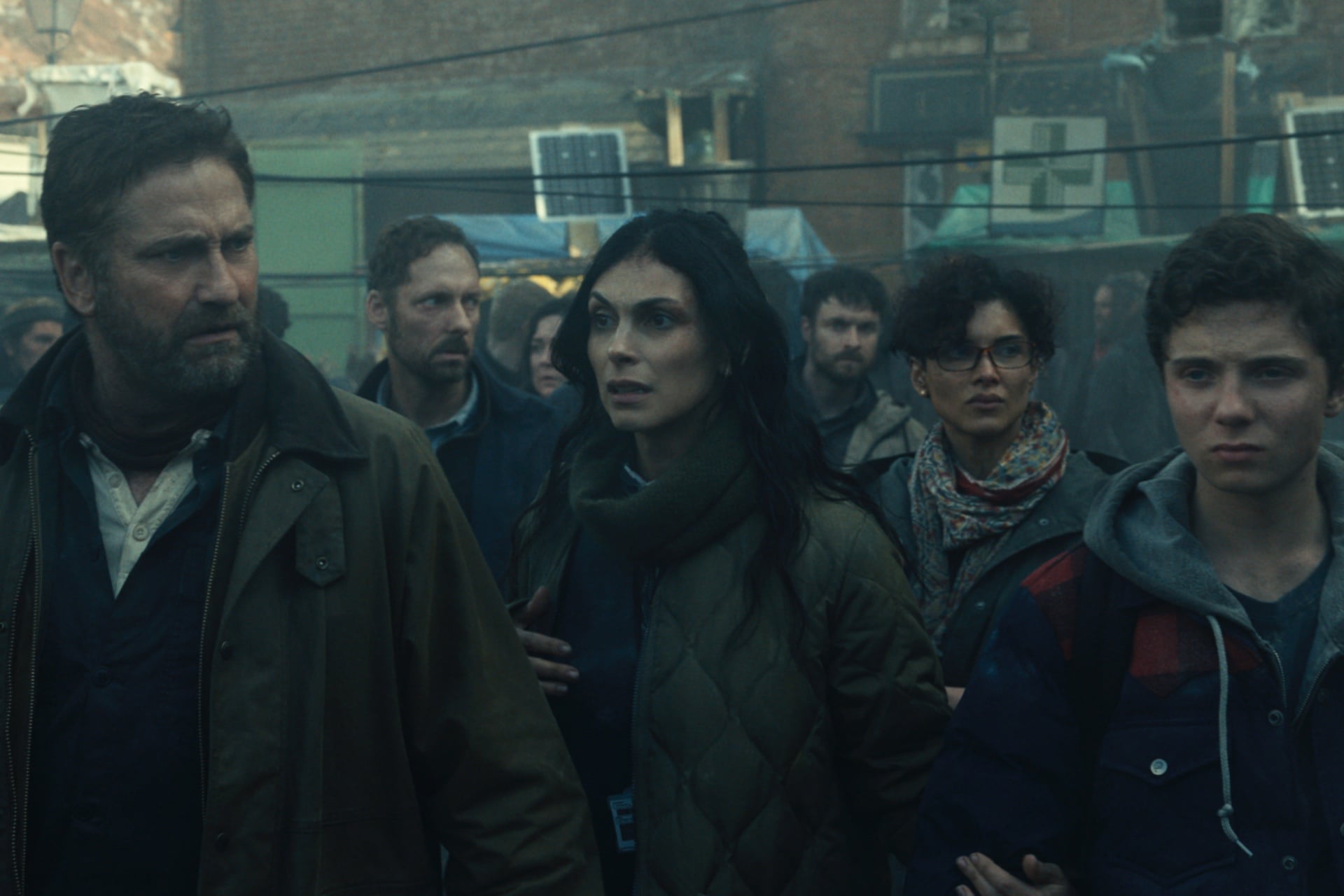
Waugh: Every single thing that you just brought up was all done through character. It was how the characters are always dealing with those situations—monsters from the sky, monsters underneath your feet. And then also, unfortunately, mankind against mankind, when it’s humans that are either being selfish and are out to take everything on their own, including your life, or people that are being selfless and are able to bring you in and help you and give you shelter. So everything is always done by character and from their point of view.
 © Lionsgate
io9: One of the things that I noticed throughout both movies is the way people act toward each other. We have some villains, but the Garrity family is also incredibly lucky, finding people capable of kindness. Do you think there’s ultimately an optimistic message about humanity to take away from the story?
Waugh: I’ve always said that I want this whole franchise to be about that—hopefully we’ll survive more than even the cockroaches, right? That human beings can actually endure anything, and we only do it by embracing each other. It’s always about that sense of hope. And we named the movie Greenland 2: Migration [because this family is] having to do this very thing that every species has done since the beginning of time, which is to migrate to survive. But they’re actually doing it to find a place to live and start a new life, and other people are coming together for a sense of community. It gives you that sense of hope that we’re all striving for.
io9: We love Gerard Butler as a hero, especially in disaster movies. What do you think it is about him that makes him such a great hero and a center for all the chaos?
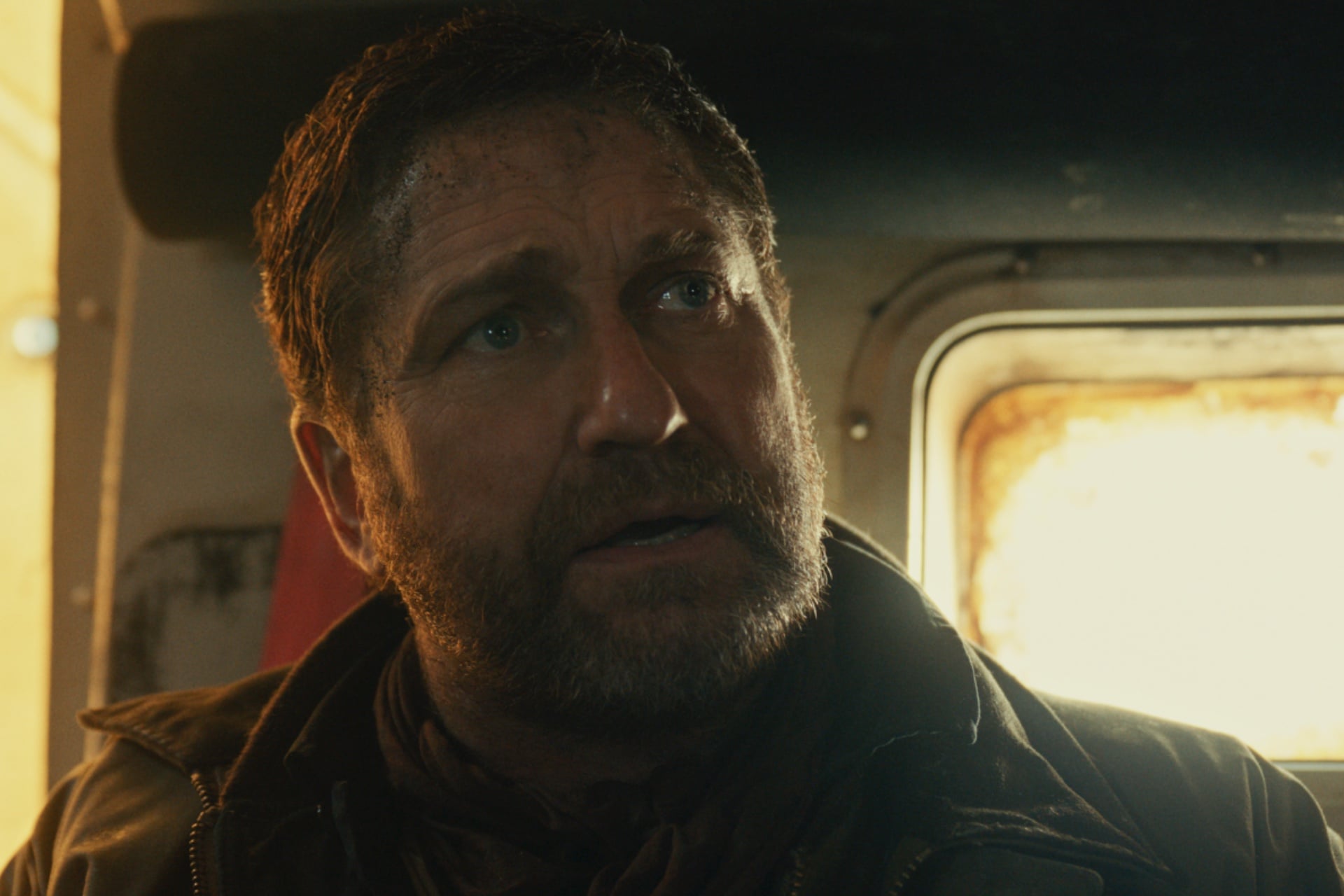
Waugh: He plays a real person. He allows himself as a movie star to be vulnerable on camera and play into the real sensitive things of being flawed—the demons that we all have. And that makes him relatable to us. We live in a world where a lot of characters—I feel like we’re coming out of that finally—[are really] plastic. They’re all 10 feet tall and bulletproof and impervious to pain, with no flaws, and we’re getting back to movies that feel like we’re seeing real people again. They have their own demons, their own flaws, and we might not be anything like them, but there’s something relatable about them that makes us feel we’re connected.
 © Lionsgate
io9: Why do you think the disaster movie genre is such an enduring one?
Waugh: Because we’re all scared shitless, whether we believe it or not, whether we say it or not. I think that we are all so afraid of how small we are and all the things that could actually put us in harm’s way. And why not live vicariously through other people and see how that situation develops versus having to go through it ourselves? I think that was what was interesting about the first movie. I was really afraid of, “I’m doing this very grounded version of a comet movie. Are people going to believe this comet? Is it really going to feel like a threat to them?”
Then to go through a pandemic afterwards and you’re like, who the heck is gonna watch a disaster movie in the middle of a disaster? And yet it became such a phenomenon. It’s really about how we operate. It doesn’t matter what the monster is; it doesn’t matter what the disaster is. It’s about us as human beings and how we will behave in those moments, how we survive, how we endure. For me it was really more about the human story inside of [the disaster] that attracted me, so hopefully that gives it that different point of view.
Greenland 2: Migration hits theaters January 9.
Want more io9 news? Check out when to expect the latest Marvel, Star Wars, and Star Trek releases, what’s next for the DC Universe on film and TV, and everything you need to know about the future of Doctor Who.