President Donald Trump’s decision to remove the head of a sovereign country over the weekend was a hugely significant operation. But it was perhaps even more significant as a statement of intent.
Ever since the capture of Venezuelan President Nicolás Maduro on Saturday, Trump and his administration have leaned in on his expansionist foreign policy agenda like never before.
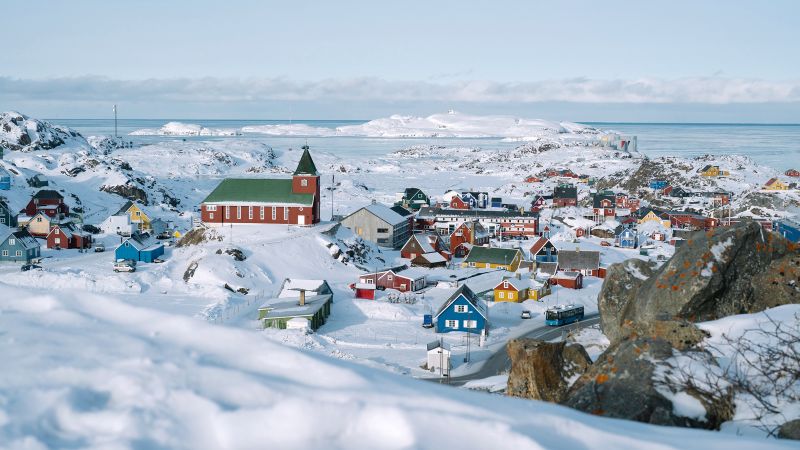
When Trump began previewing this shortly after his 2024 win — by teasing taking Greenland and making Canada the 51st state — it was often dismissed as unserious trolling or pie-in-the-sky hopes.
Today, it can no longer be shrugged off. Trump celebrated Maduro’s ouster by laying claim to Venezuela’s oil and threatening a series of other countries. His political and government social media accounts are depicting him as the conqueror of the Americas, with a State Department post Monday declaring, “THIS IS OUR HEMISPHERE.” By late Monday, top White House adviser Stephen Miller doubled down on the administration’s goal to take control of Greenland, suggesting the United States has more of a legitimate claim to it than its ruler, Denmark.
“Nobody’s going to fight the United States militarily over the future of Greenland,” Miller added. Days earlier, Trump said we “need Greenland from the standpoint of national security, and Denmark is not gonna be able to do it.”
It’s all rather stunning stuff.
It’s also decidedly at odds with the will of the American people. Everyday Americans — including large numbers of Republicans — seem to have almost no appetite for any of this.
Among the many unpopular things Trump has done in his second term, casting his eyes on dominating the Western Hemisphere might rank among the most politically dubious.
A Reuters-Ipsos poll released Monday afternoon bore this out.
It echoed an earlier Washington Post poll in suggesting Americans were about evenly split on the Venezuela operation. While 33% approved, 34% disapproved.
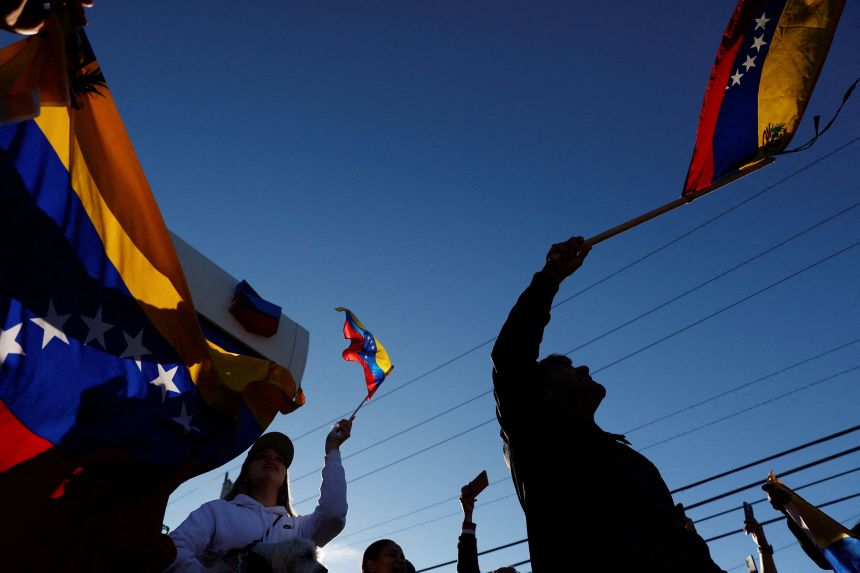
Not great, but not bad either. Those numbers are certainly a lot better than polls last month that tested a hypothetical strike on Venezuela. They suggest just removing Maduro — the extent of the mission so far — could be OK with Americans.
But the rest of the Reuters poll gets at just how little appetite Americans appear to have for an extended operation in Venezuela:
-
Nearly three-quarters (72%) expressed concern about becoming too involved in the country, and that included a majority of Republicans (54%).
-
Americans opposed governing Venezuela even just temporarily by double-digits (44%-34%).
-
They also opposed Trump’s apparent plan to control Venezuela’s oil by 17 points (46%-29%).
And perhaps most strikingly, the poll asked whether the “United States should have a policy of dominating affairs in the Western Hemisphere” — precisely the intention Trump has previewed.
Only 26% of Americans supported that. And only 43% of Republicans did.
This echoes early polling on Greenland and Canada
But this new data shouldn’t be surprising. After all, Trump’s expansionist ideas also polled very poorly when he lodged them a year ago.
On Greenland, a series of polls showed Americans opposed the US attempting to take the territory by large margins — 55%-28%, 54%-23%, and 73%-27%.
Even when it came to merely pressuring Denmark to cede control — as opposed to something like a military invasion — Americans opposed that by 49 points in a March poll.
Making Canada the 51st state was even more unpopular.
And Trump’s briefly floated idea of taking control of Gaza was a veritable albatross. As many as 74% of Americans opposed that.
About the only expansionist Trump idea that approached viability in Americans’ minds was reclaiming the Panama Canal. But even that generally polled well underwater.
Even in the cases in which Republicans leaned in favor of Trump’s ideas, they didn’t do so passionately. Just 8% of Republicans “strongly” favored getting Denmark to turn over Greenland in a January 2025 Reuters poll. Just 29% strongly favored reclaiming the Panama Canal.
Indeed, Reuters also asked a broad question back then.
With Trump playing up the concept of “manifest destiny,” the poll asked people whether the United States had the “right to expand its territory in the Western Hemisphere.”
Americans opposed that by 30 points (51%-21%). Even Republicans leaned only modestly in favor (39%-32%). And just 7% of Americans overall strongly agreed with that sentiment.
One thing you’ll notice about many of the numbers above is that they don’t add up to close to 100%. That’s because lots of Americans don’t offer opinions.
And that suggests Trump could convince people this is the way. Perhaps he could move some Republicans who don’t strongly favor owning the Western Hemisphere or controlling Venezuela’s oil fields more solidly into his camp. Maybe some independents might suddenly warm to the strategic benefits of owning Greenland.
But all signs show that could be a very difficult trick.

There is plentiful evidence that a big reason why Americans don’t favor these things is that they want Trump to focus on something else entirely: domestic matters and, more specifically, inflation.
It’s one thing to ask Americans to support this level of expansionism in the best of times. It’s another to ask them to support it when economic pessimism pervades and they don’t see Trump engaged on this issue.
The number I keep coming back to comes from CBS News and YouGov. The October poll showed 75% of Americans and even 57% of Republicans said the Trump administration wasn’t focused enough on lowering the costs of goods and services. That number has steadily crept up over the past year.
Similarly, other polls suggest foreign policy just isn’t close to being a priority for Americans. Even Trump’s Gaza ceasefire deal was largely shrugged off. Polls show large and historically high numbers of Americans don’t feel the need to get involved overseas unless it’s strictly necessary and involves an imminent threat.
It appears to be among the worst times for a US president to launch into an effort like this. Not even the oil companies appear particularly keen on Trump’s plans in Venezuela.
Trump, of course, generally doesn’t let unpopularity get in the way of what he wants — especially in his second term.
But using the US military to accomplish those goals and risking foreign clashes is certainly taking things to another level.