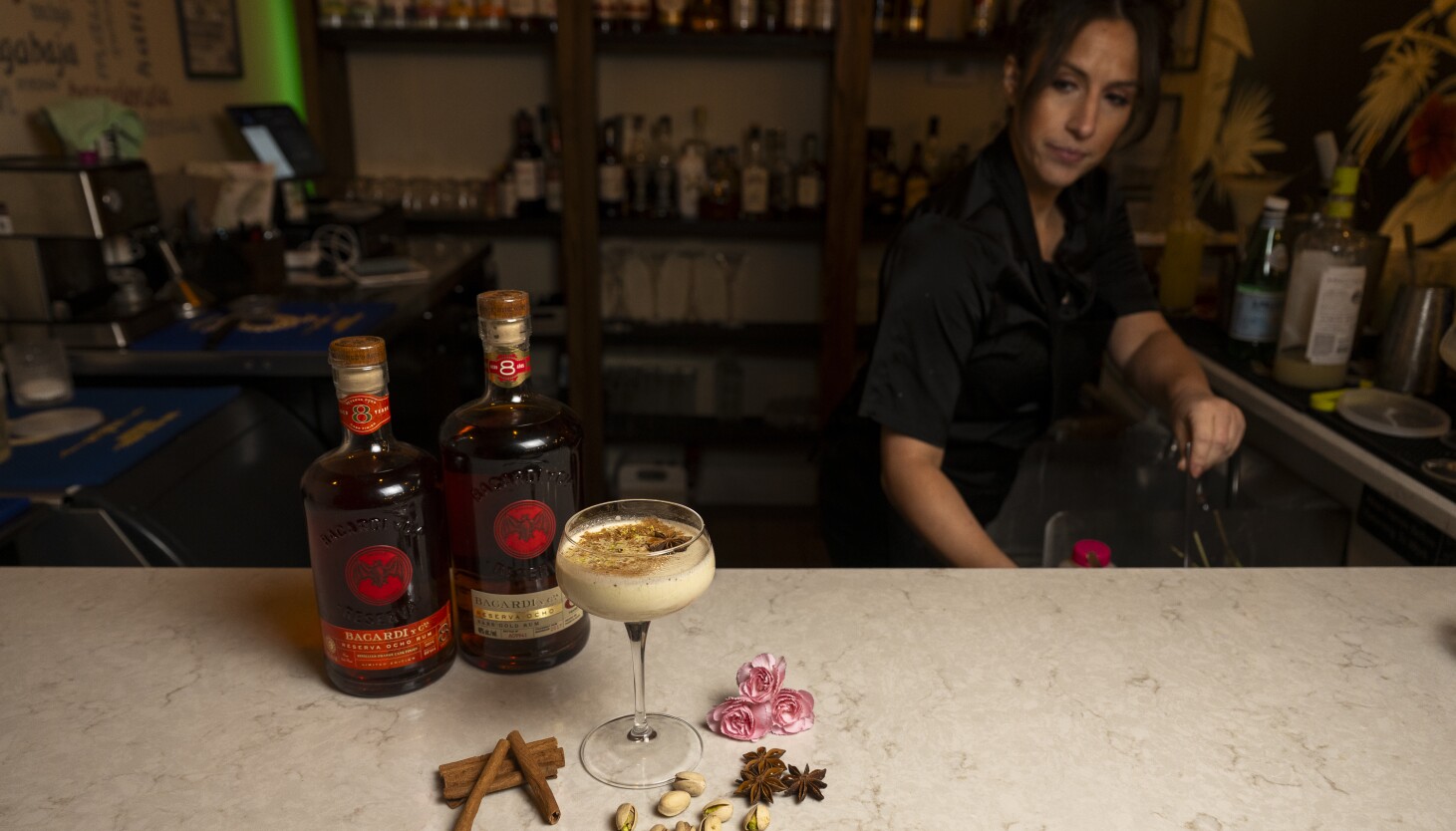
Christmas may be over, but coquito, the traditional Puerto Rican holiday drink, keeps the party going well into January. Made with cream of coconut and Puerto Rican rum, the rich cocktail typically features spices such as cinnamon, star anise, cloves and nutmeg.
But every family has its special recipes, passed down from generation to generation. My grandmother, Carmen Núñez, prepared hers from memory. I was 12 years old when I had my first taste at a family party, snuck by my great-aunt. Later, I learned how to make coquito from my dad and have, like many other Puerto Ricans, put my own twist on it.
For the third year, Tales of the Cocktail, a nonprofit based in New Orleans, has partnered with Bacardí to run a contest to find the best coquito in Chicago. More than 50 Chicago bartenders tapped into their roots to earn a spot among the ten finalists. At an event on Jan. 19 at the Royal Palms Shuffleboard Club (1750 N. Milwaukee Ave.) in Wicker Park, the winning bartender will walk away with a trip to Puerto Rico and a tour of the Bacardí rum distillery.
Last year’s event attracted approximately 500 people, said Pito Rodríguez, one of the event’s organizers, who also works as a brand ambassador for Bacardí. Attendees will taste two-ounce samples and vote for the People’s Choice Award, to be announced at the end of the night.
Here are the 10 coquito competition finalists and where you can try them:
Cantina Rosa, 5230 S. Harper Ave.
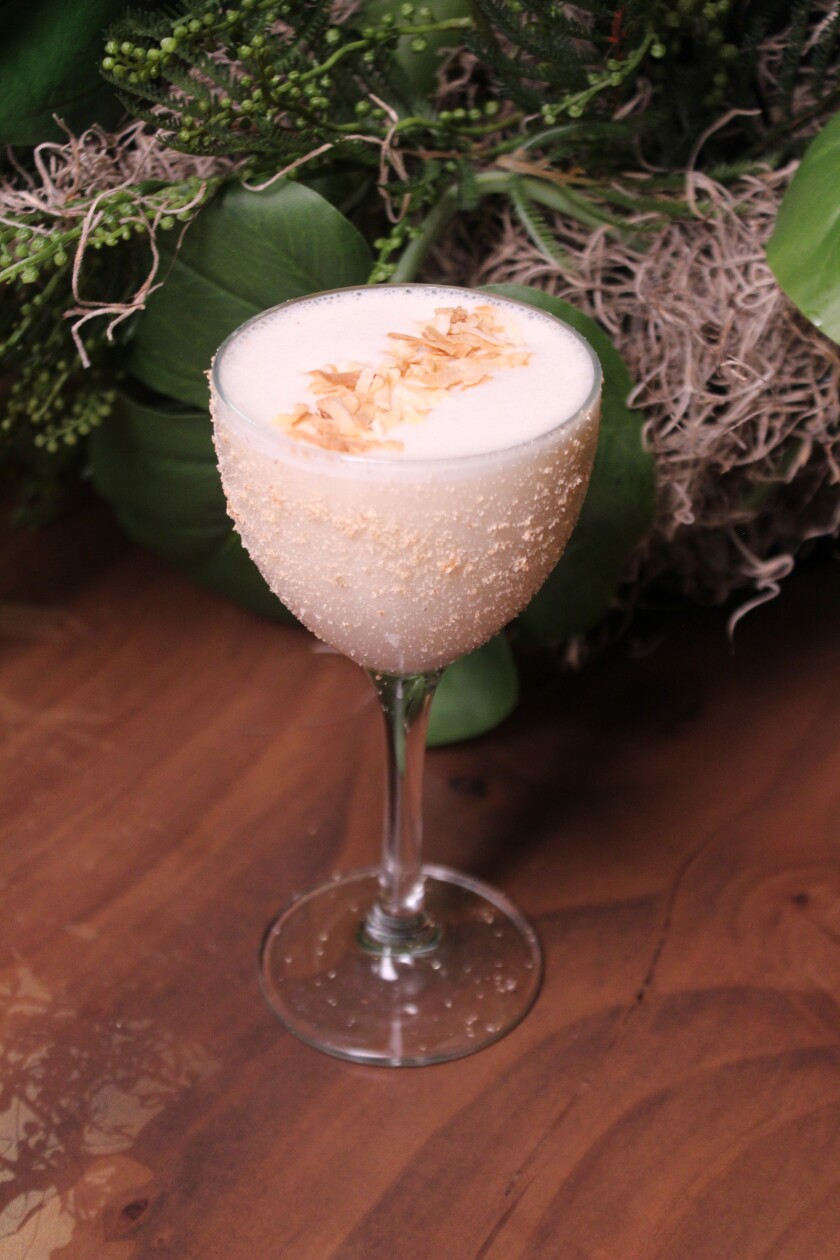
The coquito at Hyde Park’s Cantina Rosa incorporates allspice liqueur, cinnamon syrup and whipped coconut cream.
The creator behind Cantina Rosa’s coquito, Maria Rodríguez, is a 2026 Banchet Award nominee. Her take on coquito incorporates allspice liqueur, cinnamon syrup and whipped coconut cream for a smoother consistency, she said. Latino communities are “suffering during this time,” she said. “I think it’s the perfect way for us to keep that tradition alive and still be involved within the community and not be scared, because we’ve been around for generations.” Cantina Rosa opened a year ago with Rodríguez as head bartender. The competition also helps shine a positive light on the neighborhood, Rodríguez said. “We want to embrace that and let them know that the South Side really does have a lot of beautiful things to offer,” she said.
Celeste, 111 W. Hubbard St.
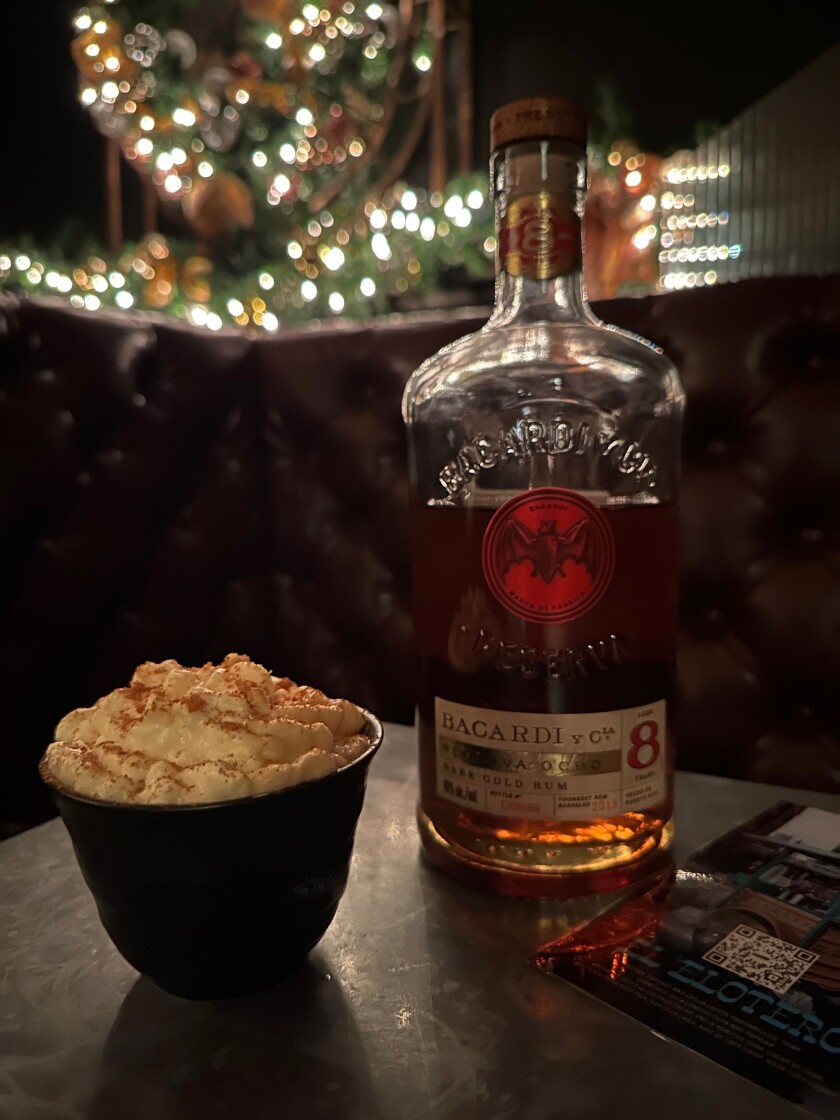
Samuel Medina, of Celeste, made a coquito inspired by elote for this year’s Tales of the Cocktail Foundation coquito competition. Medina’s recipe is an homage to the immigrant community of Chicago.
Last year’s People’s Choice Award winner, Samuel Medina of Celeste, is back in the running with a recipe that incorporates elote, with elements such as lightly roasted corn, a touch of mayonnaise, cream of corn, ancho chile, cotija cheese and Nixta corn liqueur from Jilotepec, Mexico. “I wanted to include all my Latino collaborators,” Medina said. “I had the idea, but they gave me the inspiration for the approach and the look and everything.” Medina is known in Chicago beverage industry circles for his sustainable and meticulous drink-making processes. He used several kitchen tools to craft his version: a rotary evaporator, an immersion blender, an iSi food whipper and a dehydrator. Medina credits his grandmother for teaching him how to make traditional Puerto Rican dishes. “She’s very independent,” he said. Because of her, Medina “took it upon myself to learn how to cook.”
Copper Club, 70 W. Madison St.
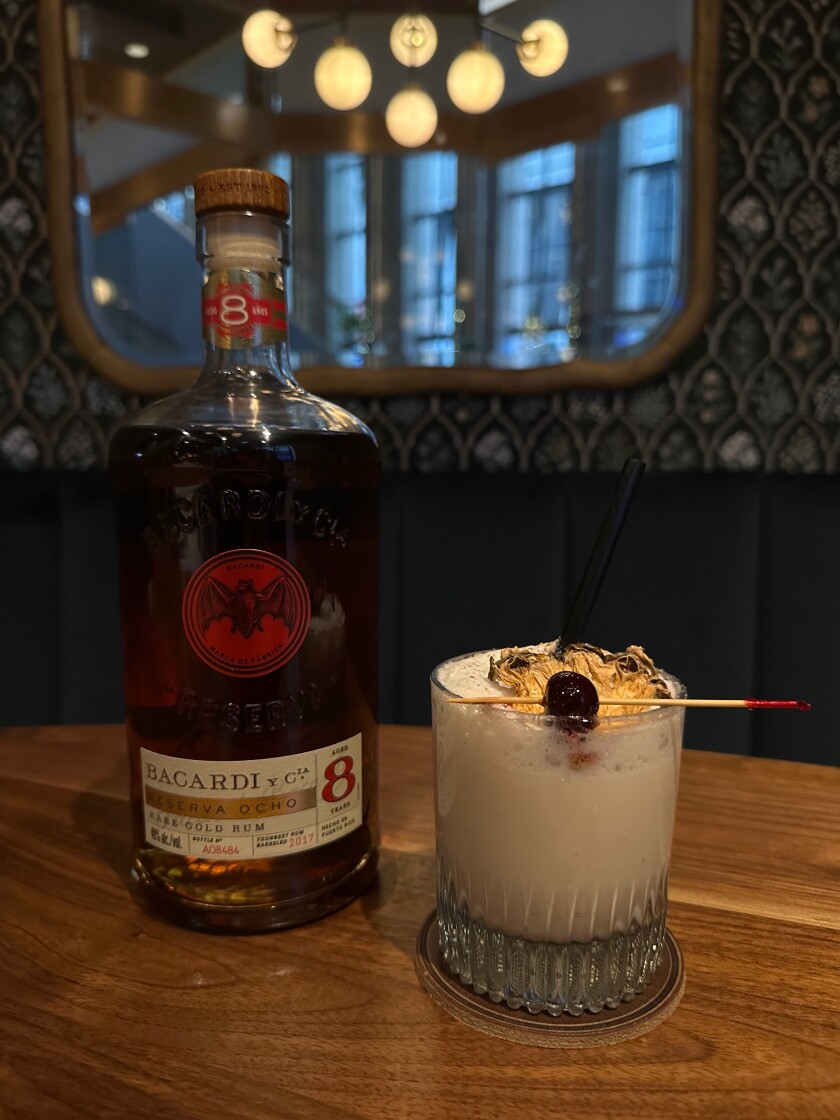
Mike Tsirtsis, of Copper Club, made coquito that marries the flavors of another classic Puerto Rican cocktail, the piña coloda, for this year’s coquito competition.
Mike Tsirtsis learned how to make coquito after experiencing his Puerto Rican wife’s family holiday traditions. With more than three decades of bartending experience, Tsirtsis did his research and crafted an original recipe. He put it on the menu at his former bar, Asadito Taco. That’s where he met Pito Rodríguez, the Bacardí ambassador, who encouraged him to enter the first competition in 2024. Last year, Tsirtsis’ coquito made the top eight finalists with his “mocaquito,” an espresso and dark chocolate coquito. This year, he landed on a hybrid of coquito and another classic Puerto Rican cocktail: the piña colada. The drink, available at Copper Club in the Loop, incorporates a traditional coconut base with a pineapple-infused coconut oil and fat-washed (the process of infusing spirits with flavorful fats) Cartier cream liqueur.
Demera, 4801 N. Broadway
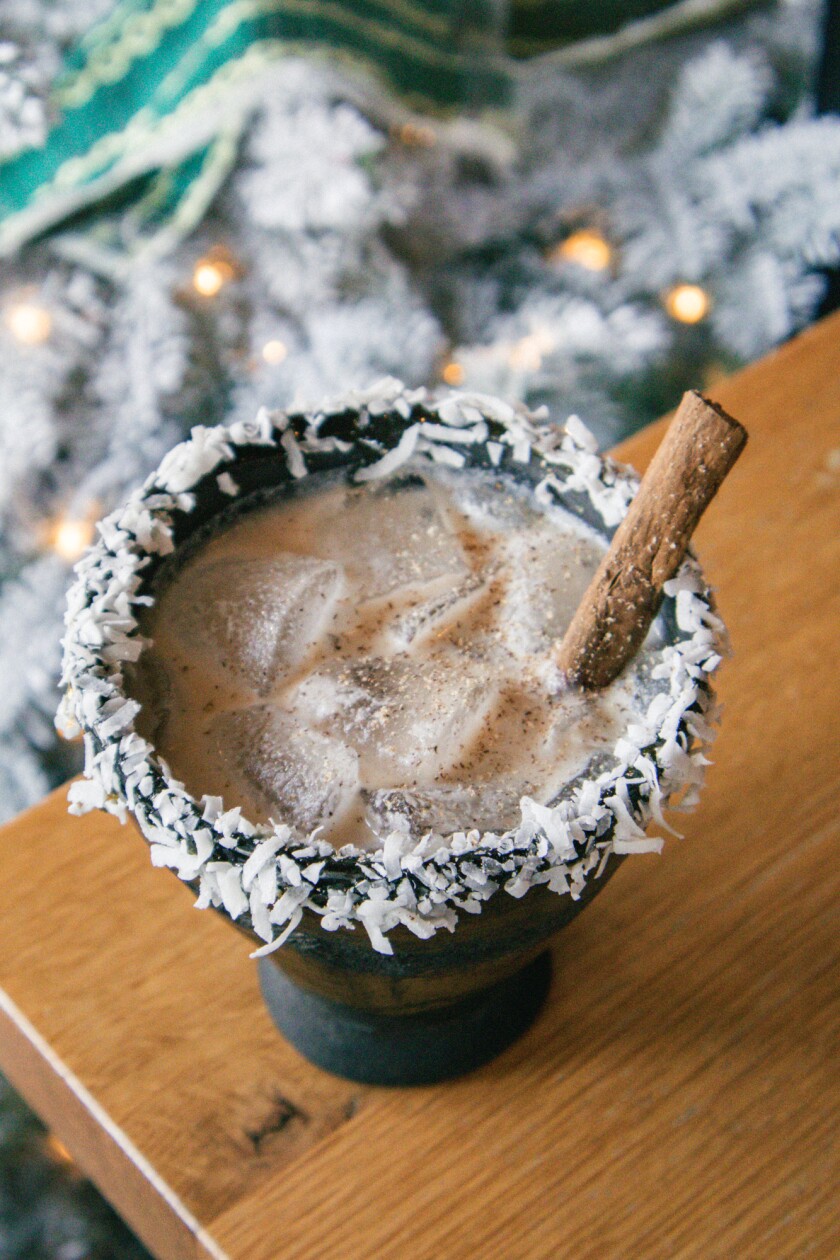
Tigist Reda, the owner of Demera in Uptown, used Ethiopian berbere, a blend of cayenne pepper and nine other spices, in her coquito recipe.
Although Ethiopian cuisine doesn’t at all feature a drink similar to coquito, Demera in Uptown is a finalist in this year’s contest. “I’ve read a lot about [coquito],” said the restaurant’s owner Tigist Reda, who researched the origins of the drink. “There are so many ways to make it.” Reda used berbere, a traditional Ethiopian seasoning blend consisting of cayenne pepper and nine other spices in Demera’s coquito. She turned the spice blend into a syrup and blended that with the coquito base and Santa Tereza rum. “It’s a perfect balance between traditional coquito and our spices and seasonings,” Reda said. “Honestly, I didn’t think we were gonna even be tapped. This is our first time doing it. … to be part of it is super, super exciting.”
Diego Chicago, 459 N. Ogden Ave.
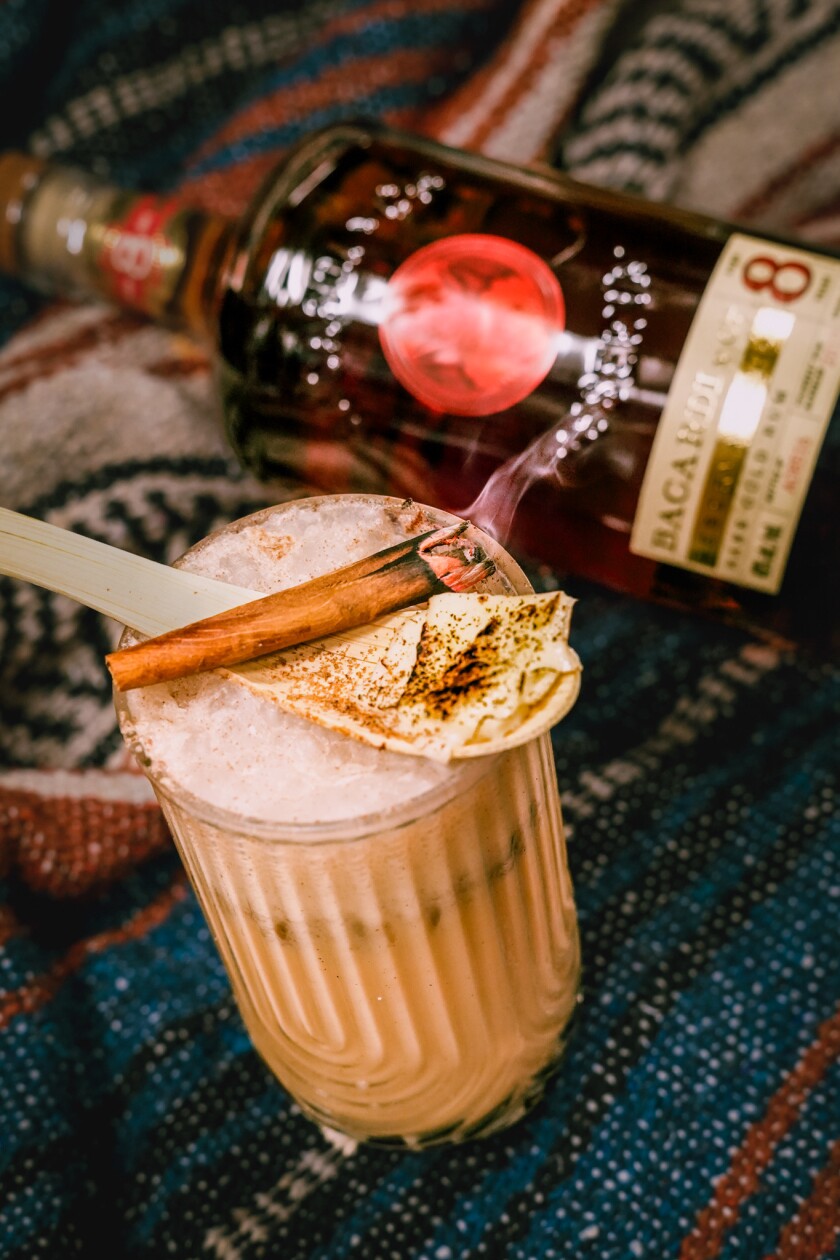
Yaneli Vazquez’s coquito recipe, called “Buen Dia Abuelita,” incorporates Abuelita brand drinking chocolate, coffee and Caribbean cheese.
Yaneli Vazquez, a bartender at Diego, jumped at the opportunity to participate in this year’s competition, especially as a young mixologist trying to gain recognition. Her coquito, the “Buen Dia Abuelita,” takes inspiration from her grandmother. Vazquez recalls childhood memories of sitting at the kitchen table with her grandmother and great-grandmother as they drank from styrofoam cups filled with coffee. “I was always told, ‘Oh no, you’re too little for coffee. It’s gonna stunt your growth,’” Vazquez recalls. Instead, she got a cup of hot chocolate with a piece of mild, salty white cheese inside, a common way of enjoying coffee or hot chocolate in Puerto Rico. “I wanted to bring that taste forward,” she said. “Don’t knock it till you try it.” Vazquez used Abuelita brand drinking chocolate, coffee and Caribbean cheese in her coquito recipe to land among the top ten.
The Hi-Lo, 1110 N. California Ave.
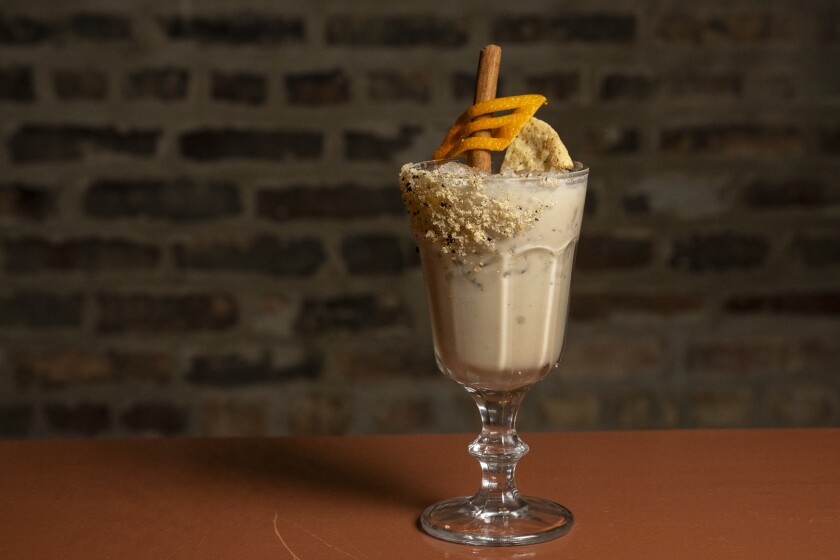
Nicole Castillo’s coquito, served at The Hi-Lo in Humboldt Park, takes inspiration from snickerdoodle cookies.
Tyler Pasciak LaRiviere/Sun-Times
At The Hi-Lo in Humboldt Park, bartender Nicole Castillo created her own tribute to the neighborhood with a recipe that incorporates brown butter and fat-washed arbol chile rum, snickerdoodle coconut cream, spicy coffee liqueur and white chocolate liqueur. Though Castillo has enjoyed coquito plenty of times, she has never made it herself. “Just reading what was in the traditional [version], what my brain right away went to is the same flavor profile as a snickerdoodle cookie,” Castillo said. To cut through the typical sweetness of coquito and “give it some more body,” she decided to spice up the coffee liqueur with arbol chiles. “To be a finalist in something that I do not have as much experience as some may is pretty exciting for me,” Castillo said.
Kayao Restaurant, 1252 N. Wells St.
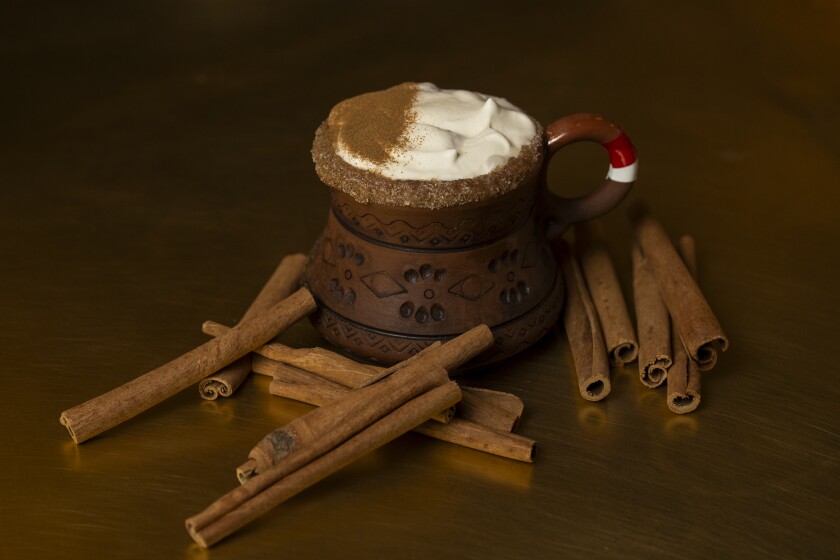
Created by Miguel Pérez, the lucuma coquito at Kayao in Old Town is a way of honoring his Peruvian roots. It incorporates an Andean fruit called the lucuma.
Tyler Pasciak LaRiviere/Sun-Times
Bartender Miguel Pérez at Old Town’s Kayao decided to blend his coquito with his roots. Lucuma, a fruit native to the Andes, tastes like a tropical butterscotch, Pérez said. In Peru, his home country, lucuma is typically made into ice cream — making the pairing for this competition “very seamless,” he said. But to help marry it to coquito, he sought the help of some of his Puerto Rican friends. “They were very adamant about the tea,” Pérez said, referring to a spiced tea that some coquito-makers prepare by simmering whole spices in water or coconut water. Along with the tea, Kayao’s coquito includes fat-washed Bacardí rum with brown butter and lucuma fruit puree. Pérez has been bartending since he was 19. During the pandemic, he and his wife moved from the East Coast to Chicago. Pérez figured it’d be a great place for him to grow.
Laberinto, 738 W. Randolph St.
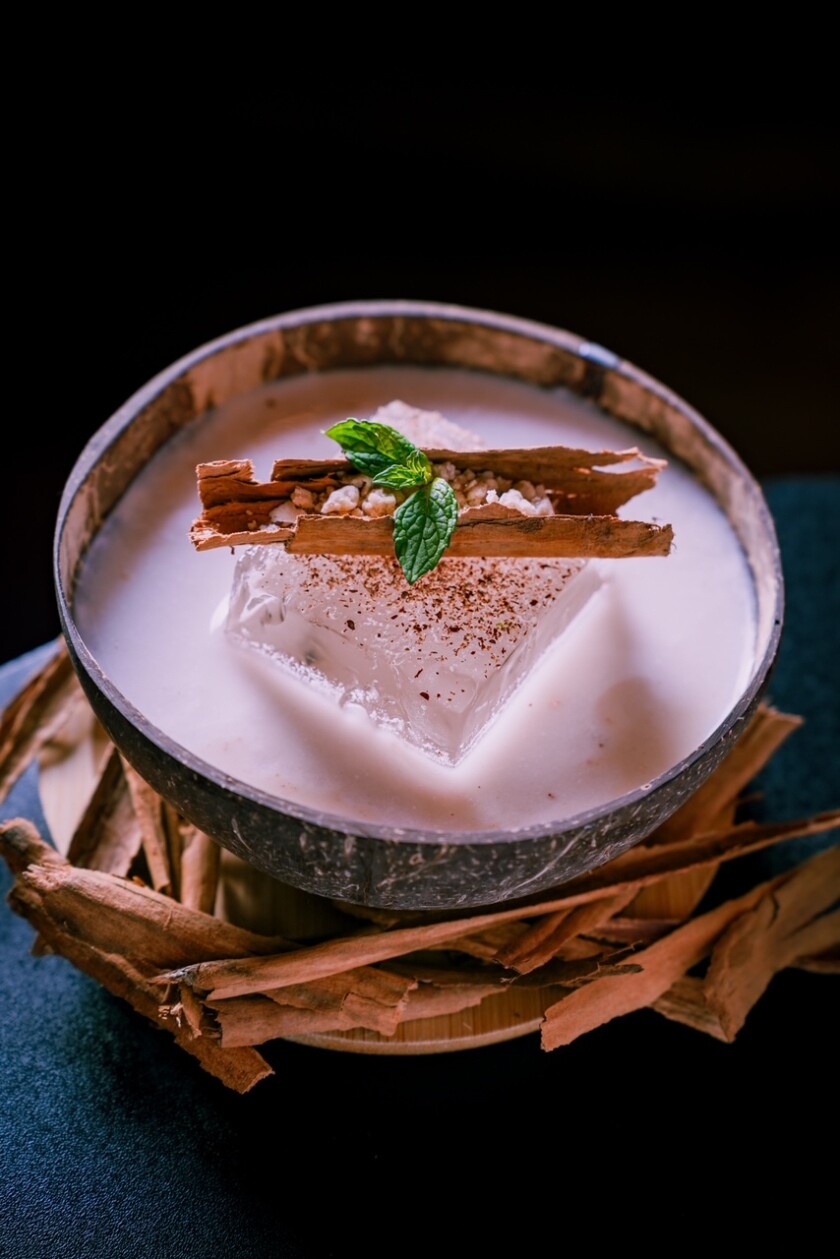
Created by Sebastian Martínez, the coquito at Laberinto, an intimate speakeasy nestled under a Chicago steakhouse, incorporates peanuts and marzipan candy.
At the 25-seat Latin-inspired speakeasy Laberinto (tucked inside Trino Steakhouse), finalist Sebastian Martínez’s coquito is on the menu. His recipe blends peanuts and marzipan candy (or mazapan) with a traditional base. Martínez grew up in Chicago, often lending a hand at his parents’ Mexican restaurants. “I got to learn a lot at a young age,” he said. That experience landed him at Stephen Sandoval’s now-closed SoHo House restaurant, Sueños. “I wanted to become a cook, but actually they needed me behind the bar,” Martínez said. Last year, he created a champurrado coquito as a way to pay homage to the traditions he grew up with. “Coquito is definitely a family thing. It’s about giving and bringing family together,” he said. The marzipan coquito is a tribute to the candies “me and my cousins or family would share.”
Marina’s Bistro and Rum Bar, 4554 N. Magnolia Ave.
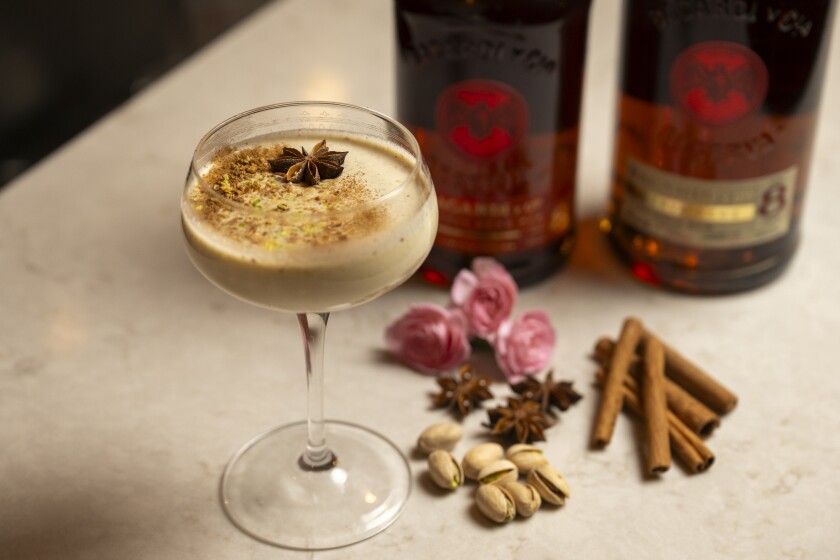
The pistachio coquito at Marina’s Bistro and Rum Bar is inspired by Eric Roldán’s mother, for whom the restaurant is named. The recipe is among the top ten finalists in the Tales of the Cocktail Foundation’s annual coquito contest.
Tyler Pasciak LaRiviere/Sun-Times
Last year’s coquito contest saw a traditional recipe from Marina’s in the top eight; this year, owner Eric Roldán is in it to win it: “I had to step up my game,” he said. Roldán’s pistachio coquito includes a house-made pistachio cream. “This is something that goes back to my family roots,” Roldán said. “But I’m still trying to elevate it and still make it personal.” The coquito at Marina’s includes all of the basics, such as cream of coconut, evaporated milk, condensed milk, cinnamon, anise, allspice, nutmeg and cloves, and a bit of vanilla extract. “Coquito has been kind of becoming a phenomenon, year by year,” Roldán said. “Just being part of that makes me so, so happy, because we’ve tried to keep our culture alive here in Chicago.”
The Press Room, 1134 W. Washington Blvd.
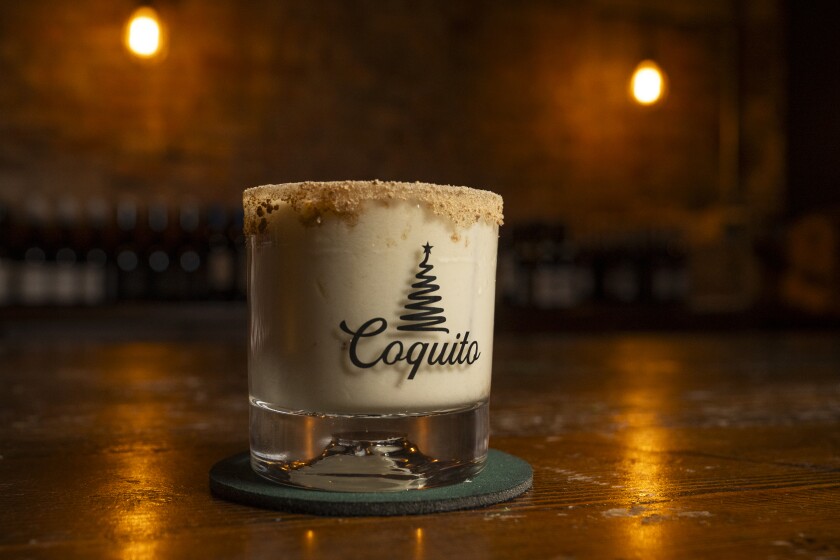
The coquito served at The Press Room located at 1134 W. Washington Blvd; in the West Loop, Wednesday, Dec. 31, 2025. | Tyler Pasciak LaRiviere/Sun-Times
Tyler Pasciak LaRiviere/Sun-Times
At the West Loop’s Press Room, Josue Mancero is honoring his Ecuadorian roots with a version of coquito that showcases the naranjilla — a fuzzy, citrusy member of the nightshade family that looks like a tomato but tastes like a passion fruit. Some might know it as the “lulo” fruit. For his recipe, Mancero incorporated a holiday drink from Ecuador called canelazo, a cinnamony, alcoholic beverage with lulo fruit served hot. The resulting cocktail includes naranjilla juice, cream of coconut, coconut water and a canelazo-inspired tea. “I wanted to do a drink that represents me and my culture but also pays respect to the coquito culture in the Puerto Rican community,” Mancero said.