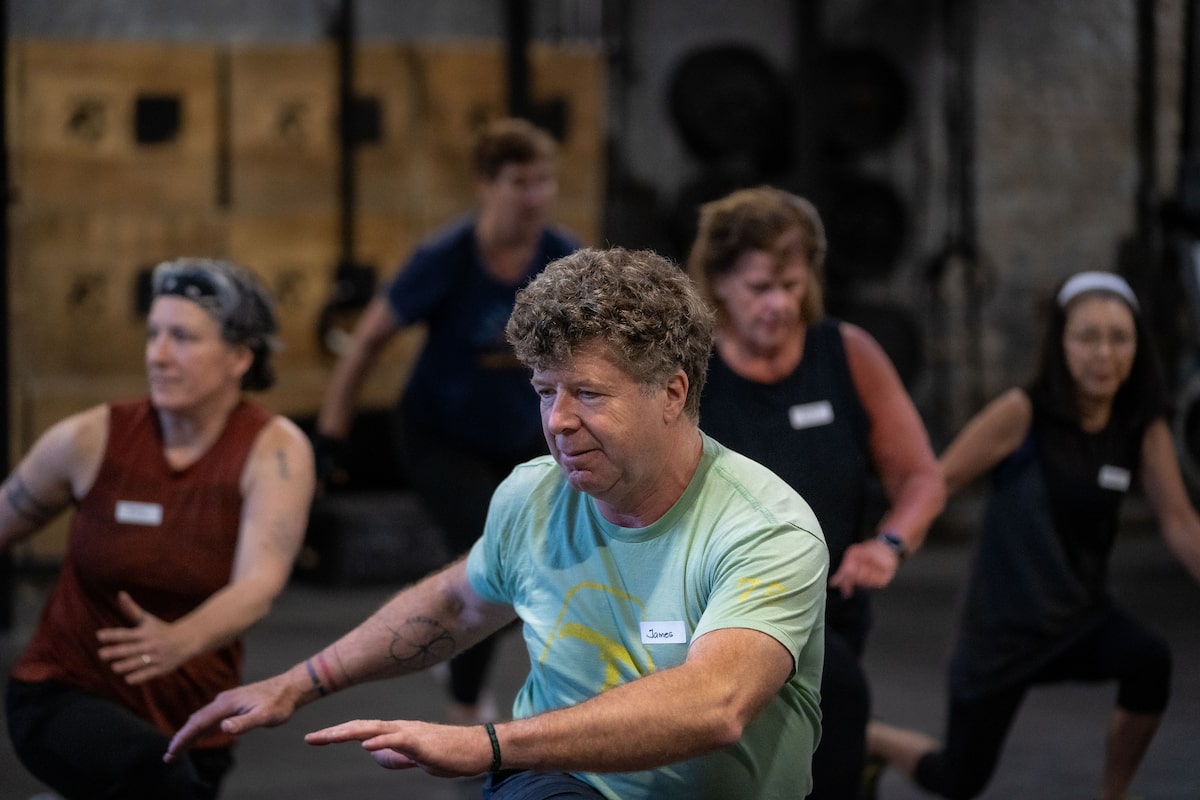
Alen Sadeh/Academy Of Lions
I was a little horrified when I stripped off my shirt to change in what I thought was a women’s locker room of a Toronto fitness studio – only to discover it was an all-gender space.
When I looked around, mortified, the young woman next to me tried to reassure me, “Don’t worry. No one noticed.”
At 61, I go most days to a cardio, weight, spin, bootcamp, yoga or power Pilates class. I love the endorphin rush and how much calmer I feel after a workout – and generally feel that I can keep up. But when the next older person in the class is often 20 years younger than me, and the locker room chatter is about clubbing, a relationship drama or looming exams, I become even more aware of my outlier status.
It’s not that people aren’t welcoming. But at spin classes, the instructors take one look at my grey hair and offer me ear plugs. Sometimes teachers will suggest I do lighter weights, or slow my treadmill speed. This could be the right advice, but I wonder whether it’s based on the overblown assumption that older people need to scale back from intense exercise.
Is it a myth that seniors need to slow down their fitness routines?
“There is some age-related decline and sarcopenia (muscle loss), but far less than people think,“ says Jill Tracey, associate professor of kinesiology at Wilfrid Laurier University. Older adults can see increases in lean muscle mass, slow bone density loss and build strength with continuing appropriate exercise.
The good news is that slowly the fitness culture is beginning to catch up, says Tracey. More studios offer programs specifically designed for older adults, or classes that work well for an older age group. So, I set out to find some of these inclusive spaces.
Build a foundationOpen this photo in gallery:
Personal trainer Lauren Shuster holds one-on-one training and virtual fitness classes for perimenopausal and menopausal women. Her programs focus on heavy-weight strength training, cardio conditioning, core work, postural training and pelvic floor exercises. When training older adults, she is thoughtful of building a strong foundation of good posture, functional breathing and deep core strength. “Once that is set, older adults can successfully participate in most types of training.”
For older women, Shuster says one key shift is also embracing heavy resistance training, to counter the effects of hormone changes on muscle mass. “Older women benefit more from fewer repetitions with heavier weights than more reps with lighter ones.”
Push yourself – with supportOpen this photo in gallery:
A fitness class at Academy Of Lions.Alen Sadeh/Academy Of Lions
Korina Besednik, who runs a fitness program for people 50-plus at Toronto’s Academy of Lions, says short bursts of high-intensity cardio, with recovery or rests in between, can be more effective than trying to sustain an elevated heart rate for long periods.
Her masters program classes involve slightly longer warm-ups, detailed explanations around form and technique, and gentle corrections. She makes a point of knowing everyone’s name, and remembering their injury history. And with a café, potlucks and competitions, there are many opportunities for connection.
Find a communityOpen this photo in gallery:
An exercise class at Winnipeg’s Fifty 5 Fitness.Supplied
Instructor and personal trainer Emily Parkes was inspired to establish her boutique fitness studio, Winnipeg’s Fifty 5 Fitness, by her mother who wanted to work out somewhere that wasn’t a big box gym and had people her age.
Here, staff at the front desk are all over 50 and the studio hosts monthly coffee gatherings, and a bimonthly book club.
Parkes offers a “55 all in one” class covering low-impact cardio, balance work, strength and flexibility training and mobility; a “55 strength,” which focuses on lower-and upper-body strength exercises, core work and short bursts of cardio; and an advanced “metabolic mixer” with heavy lifting and challenging cardio.
Try a mix of placesOpen this photo in gallery:
GoodLife Fitness doesn’t label classes specifically for women over 50, but they have many classes for that demographic, such as Les Mills Pilates, BODYBALANCE and cycling.
Some Canadian universities are also becoming hubs for fitness catering to older adults. The Canadian Centre for Activity and Aging (CCAA) at Western University has developed community-based exercise programs informed by research and led by CCAA-certified instructors. McMaster University’s Physical Activity Centre of Excellence offers research-based aerobic and resistance training, and their MacSeniors program, for people 55 years old and over, with a referral from their primary-care physician.
My take-away: Benefits extend beyond fitnessOpen this photo in gallery:
Emily Parkes with a client.Supplied
According to the experts I spoke with, fitness is being modified to meet the needs of women over 55 by incorporating heavier weights, jump training and mobility work (for bone density and preventing falls), and functional movement (exercises such as squatting, sit-to-stands, lunges and balancing on one foot).
For me, there are several benefits. I can hoist my own carry-on suitcase into the overhead bin on the plane. I can hike, cycle and do most of the other exercise I want to. Fitness lifts my mood and the classes are an important part of my social life.
While I may not get noticed by others with my shirt off – or on (!) – I feel stronger and more muscular than at many earlier points in my life, and the functional benefits of that far exceed what I could list.