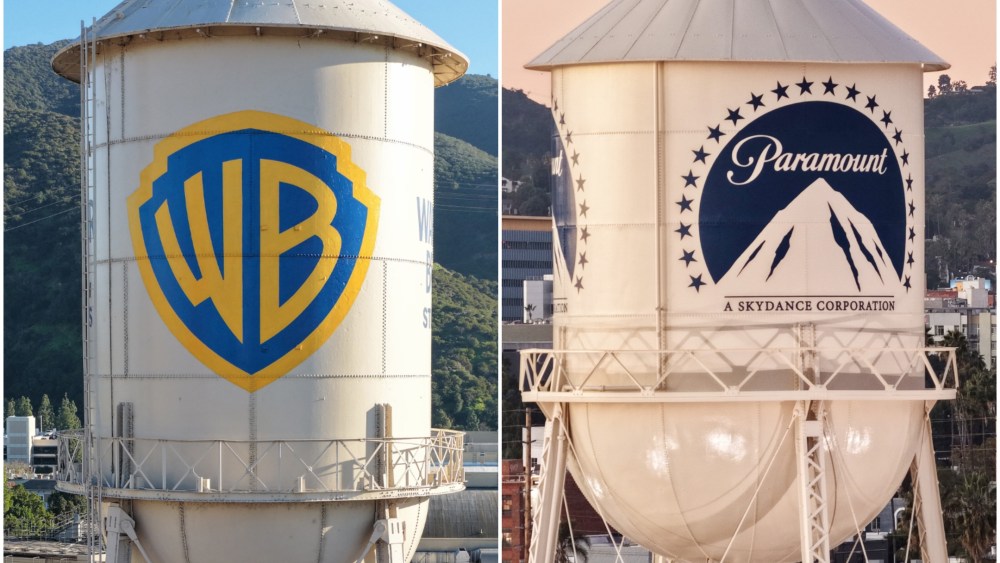
The song remains the same: Warner Bros. Discovery has turned down the latest acquisition offer by David Ellison’s Paramount Skydance, and WBD’s board is continuing to back the company’s deal with Netflix.
On Wednesday, WBD officially responded to Paramount’s latest $30/share all-cash bid for all of Warner Bros. Discovery — its eighth takeover offer to date.
Paramount Skydance’s offer “is not more favorable to WBD stockholders than the Netflix Merger and continues to be inadequate,” including because of its “insufficient value, taking into account price and numerous risks, costs and uncertainties,” WBD said in an SEC filing, referring to Paramount Skydance by its ticker symbol “PSKY.”
The WBD board reiterated its belief that Paramount’s proposal is much riskier and questioned Paramount’s ability to close such a deal. The board’s letter also noted that Paramount’s offer is nonbinding: “The Offer is entirely at PSKY’s discretion – PSKY can reduce the price, impose new conditions, or walk away entirely at any time prior to its acceptance of tendered shares,” WBD said in the filing.
WBD has repeatedly rebuffed Paramount Skydance’s takeover overtures. On Dec. 17, WBD’s board rejected Paramount’s seventh offer, maintaining the Netflix deal is better.
In its Jan. 7 letter to shareholders, the board of WBD called into question Paramount Skydance’s ability to close its proposed deal. “PSKY is a company with a $14 billion market capitalization attempting an acquisition requiring $94.65 billion of debt and equity financing, nearly seven times its total market capitalization,” the WBD letter says. “To effect the transaction, it intends to incur an extraordinary amount of incremental debt – more than $50 billion – through arrangements with multiple financing partners.”
In contrast, according to the WBD board’s letter, “Netflix is a company with a market capitalization of approximately $400 billion, an investment grade balance sheet, an A/A3 credit rating and estimated free cash flow of more than $12 billion for 2026. The merger agreement with Netflix also provides WBD with more flexibility to operate in a normal course until closing. Given these factors, the Board determined that the Netflix merger remains superior to PSKY’s amended offer.”
David Ellison’s Paramount Skydance on Dec. 22 had updated its offer to acquire for WBD for $30/share with certain new provisions. Among those, Larry Ellison (David’s multibillionaire father) made an “irrevocable personal guarantee of $40.4 billion” toward Paramount’s all-cash offer for WBD. Paramount also upped its breakup fee to match Netflix’s $5.8 billion figure, payable to WBD in the event that its deal does not clear regulatory review.
But WBD’s board was not swayed. Among other things, it said, the $5.8 billion regulatory termination fee from Paramount would be reduced to $1.1 billion — because WBD would be on the hook to pay the $2.8 billion upfront termination fee to Netflix, while it would also have $1.5 billion in financing costs and $350 million incremental interest expense. In addition, “PSKY’s proposed restrictions on WBD’s ability to refinance its $15 billion bridge loan would result in additional expense and business risk,” WBD said.
“PSKY has repeatedly failed to submit the best proposal for WBD shareholders despite clear direction from WBD on both the deficiencies and potential solutions,” the WBD board’s Jan. 7 letter says. “Yet PSKY has continued to submit offers that still include many of the deficiencies we previously repeatedly identified to PSKY, none of which are present in the Netflix merger agreement, all while asserting that its offers do not represent its ‘best and final’ proposal.”
The hostile takeover effort initiated by David Ellison came after WBD’s board entered into an agreement with Netflix in an $83 billion deal to buy Warner Bros.’s studios and HBO Max businesses. Netflix’s cash and stock transaction, announced Dec. 5, is valued at $27.75/share of WBD. That would take place following the planned spin-off of TV-centric entity Discovery Global, set for the third quarter of 2026. WBD shareholders would retain stock in Discovery Global under the Netflix pact.
Here is the letter from Warner Bros. Discovery board to shareholders issued Wednesday:
Dear Fellow Shareholders,
As you know, at the end of last year, your Board of Directors concluded its process to maximize shareholder value by entering into our merger agreement with Netflix. Since then, Paramount Skydance (“PSKY”), a bidder in that process, has commenced a hostile tender offer to acquire WBD which it recently amended on December 22, 2025.
As described further below, your Board unanimously determined that the PSKY amended offer remains inadequate particularly given the insufficient value it would provide, the lack of certainty in PSKY’s ability to complete the offer, and the risks and costs borne by WBD shareholders should PSKY fail to complete the offer. Accordingly, the Board unanimously recommends that shareholders not tender your shares into the PSKY offer. For a full discussion of the reasons for the Board’s recommendation, we urge you to read the full 14D-9 filing.
PSKY Offer’s Insufficient Value
PSKY’s offer is inferior given significant costs, risks and uncertainties as compared to the Netflix merger. Under the Netflix merger agreement, WBD shareholders will receive significant value with $23.25 in cash and shares of Netflix common stock representing a target value of $4.50 based on a collar range in the Netflix stock price at the time of closing, which may have substantial upside.
Additionally, WBD shareholders will receive value through their ownership in Discovery Global, which will have considerable scale, a diverse global footprint, and leading sports and news assets, as well as the strategic and financial flexibility to pursue its own growth initiatives and value creation opportunities.
The Board also considered the costs and loss of value for WBD shareholders associated with accepting the PSKY offer. WBD would be obligated to pay Netflix a $2.8 billion termination fee for abandoning our merger agreement; incur a $1.5 billion fee for failing to complete our debt exchange, which we could not execute under the PSKY offer; and incur incremental interest expense of approximately $350 million. The total cost to WBD would be approximately $4.7 billion, or $1.79 per share. These costs would in effect lower the net amount of the regulatory termination fee that PSKY would pay to WBD from $5.8 billion to $1.1 billion in the event of a failed transaction with PSKY due to regulatory reasons. In comparison, the Netflix transaction imposes none of these costs on WBD.
Lack of Certainty in PSKY’s Ability to Close the Transaction
The extraordinary amount of debt financing as well as other terms of the PSKY offer heighten the risk of failure to close, particularly when compared to the certainty of the Netflix merger. PSKY is a company with a $14 billion market capitalization attempting an acquisition requiring $94.65 billion of debt and equity financing, nearly seven times its total market capitalization. To effect the transaction, it intends to incur an extraordinary amount of incremental debt – more than $50 billion – through arrangements with multiple financing partners.
The transaction PSKY is proposing is in effect a leveraged buyout (“LBO”). In fact, it would be the largest LBO in history with $87 billion of total pro forma gross debt and an estimated gross leverage of approximately 7x 2026E EBITDA before synergies. The WBD Board considered that an LBO structure introduces risks given the acquiror’s reliance on the ability and willingness of its lenders to provide funds at close. Changes in the performance or financial condition of either the target or acquiror, as well as changes in the industry or financing landscapes, could jeopardize these financing arrangements. Many prior large LBOs illustrate that acquirors or their equity and/or debt financing sources can, and do, seek to assert failures of closing conditions in order to terminate a transaction or renegotiate transaction terms. This aggressive transaction structure poses materially more risk for WBD and its shareholders when compared to the conventional structure of the Netflix merger.
The risks inherent in the LBO structure are exacerbated by the amount of debt PSKY must incur, its current financial position and future prospects, as well as the lengthy period to close the transaction – which PSKY itself estimates to be 12-18 months following signing. PSKY already has a “junk” credit rating and it has negative free cash flows with a high degree of dependency on its legacy linear business. Certain fixed obligations that PSKY has incurred or may incur prior to closing, such as the multi-year programming and sports licensing deals, could further strain its financial condition.
Further, the operating restrictions between signing and closing imposed on WBD by the PSKY offer could damage our business, allowing PSKY to abandon the offer. The onerous covenants include, among others, restricting WBD’s ability to modify, renew or terminate affiliation agreements. These restrictions may hamper WBD’s ability to perform and could lead PSKY to assert that WBD has suffered a “material adverse effect,” enabling PSKY and its financing partners to terminate the transaction or renegotiate the terms of the transaction.
In contrast, Netflix is a company with a market capitalization of approximately $400 billion, an investment grade balance sheet, an A/A3 credit rating and estimated free cash flow of more than $12 billion for 2026. The merger agreement with Netflix also provides WBD with more flexibility to operate in a normal course until closing. Given these factors, the Board determined that the Netflix merger remains superior to PSKY’s amended offer.
Consequences for WBD Shareholders Should PSKY Fail to Close the Transaction
If PSKY fails to close its offer, WBD shareholders would incur significant costs and potentially considerable value destruction. In addition to potentially enabling PSKY to abandon or amend its offer, the operating restrictions that PSKY would impose on WBD between signing and closing could impair WBD’s financial condition and ability to maintain its competitive position in the markets in which it operates, and hinder its ability to retain key talent. This includes prohibiting WBD from pursuing the planned separation of Discovery Global and Warner Bros., which was designed to derisk our businesses by allowing each to focus on its own strategic plan. The PSKY offer would also prevent WBD from completing the contemplated debt exchange and refinancing our $15 billion bridge loan, which would limit our financial flexibility. If the PSKY offer fails to close, WBD shareholders would be left with shares in a business that has been restricted from pursuing its key initiatives for up to 18 months.
Further, WBD shareholders would receive insufficient compensation for the damage to our businesses should the PSKY offer not close. The $1.1 billion net amount of the regulatory termination fee that PSKY would pay to WBD for regulatory reasons represents an unacceptably low 1.4% of the transaction equity value and would not come close to helping WBD address the likely damage to our businesses.
In contrast, should Netflix fail to complete the merger for regulatory reasons, WBD would receive a $5.8 billion termination fee and WBD shareholders would still benefit from the initiatives that the Board and management team are implementing to secure the value of our businesses and ensure their long-term success, including the planned separation of Discovery Global and Warner Bros.
The PSKY Offer Is Not Superior, or Even Comparable, to the Netflix Merger
PSKY has repeatedly failed to submit the best proposal for WBD shareholders despite clear direction from WBD on both the deficiencies and potential solutions. The WBD Board, management team and our advisors have extensively engaged with PSKY representatives and provided it with explicit instructions on how to improve each of its offers. Yet PSKY has continued to submit offers that still include many of the deficiencies we previously repeatedly identified to PSKY, none of which are present in the Netflix merger agreement, all while asserting that its offers do not represent its “best and final” proposal.
PSKY’s transaction team, including many of their employees, several law firms, investment and lending banks and consultants, had several months to engage extensively with WBD. They are well aware of the reasons behind the Board’s determination that the Netflix merger agreement is superior to its offer. If on December 4 PSKY did not recognize the weaknesses of its proposal when the Board concluded the process, it has now had several weeks to study the Netflix merger agreement and adjust its offer accordingly. Instead PSKY has, for whatever reason, chosen not to do so.
Your Board negotiated a merger with Netflix that maximizes value while mitigating downside risks, and we unanimously believe the Netflix merger is in your best interest. We are focused on advancing the Netflix merger to deliver its compelling value to you.
Sincerely,
The Warner Bros. Discovery Board of Directors