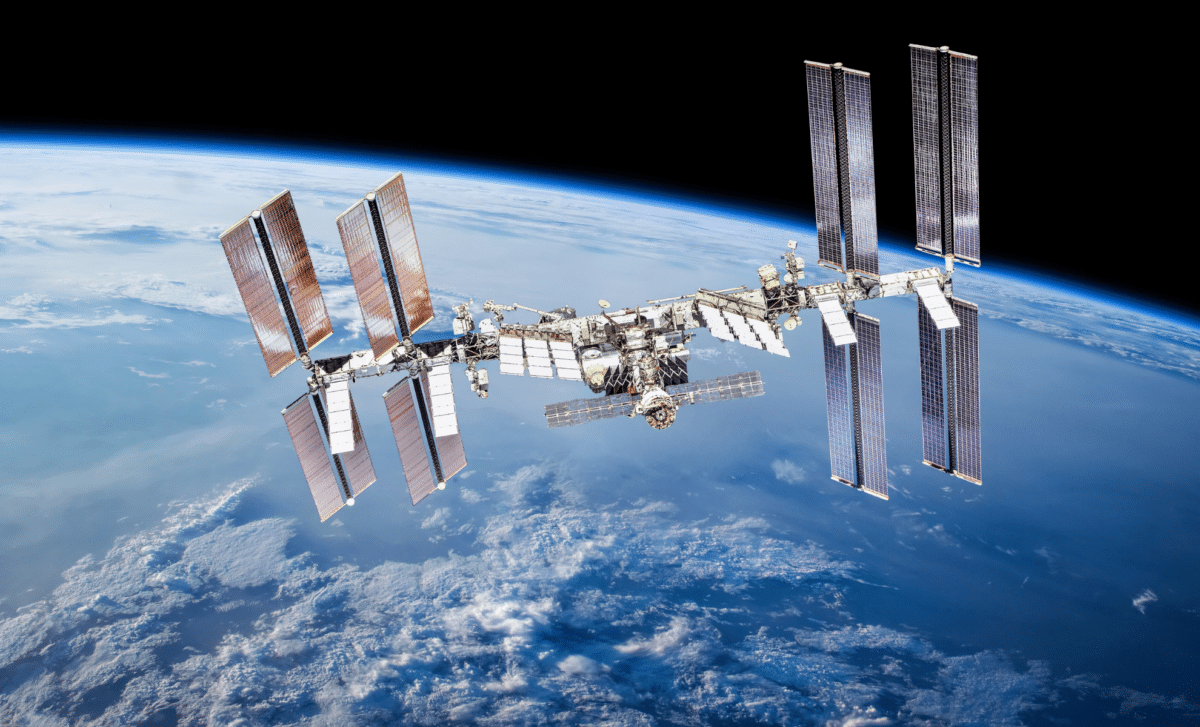
The era of commercial space stations is set to begin in 2026, marking a revolutionary change in the history of space exploration. For nearly three decades, the International Space Station (ISS) has been the sole destination for astronauts and experiments in low Earth orbit. However, as NASA prepares to deorbit the ISS by the end of the decade, private companies are stepping in to fill the void. These commercial space stations, which have been years in development, are set to begin operations in 2026, signaling the dawn of a new era in space.
The Rise of Commercial Space Stations
Commercial space stations are becoming a reality in 2026, a milestone that will fundamentally change the landscape of space exploration. For decades, the ISS was the only platform in low Earth orbit, hosting astronauts, experiments, and international cooperation.
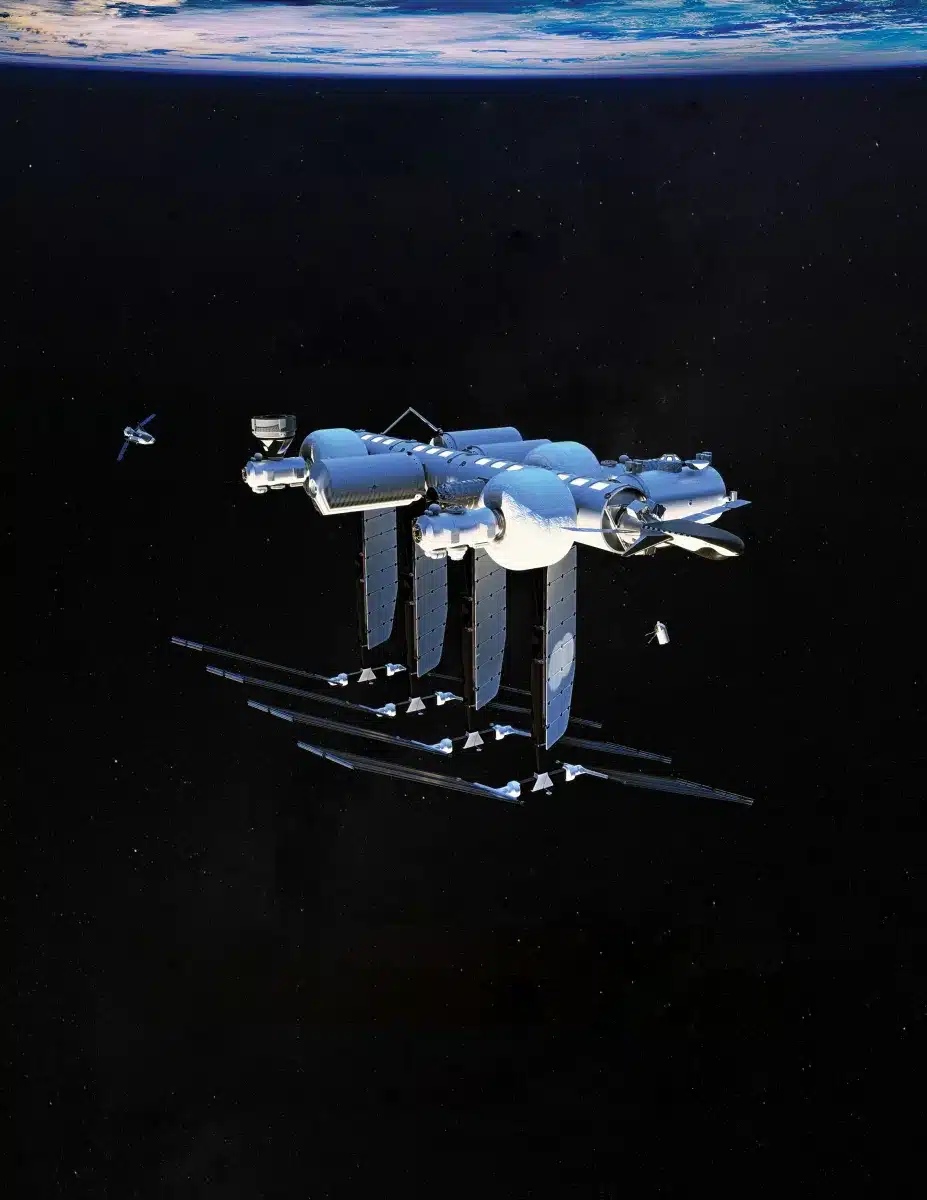 A digital rendering of Blue Origin’s free-flying station named Orbital Reef, which continues to be developed as part of a Space Act Agreement with NASA.
Credit: Blue Origin
However, with the ISS nearing the end of its operational life, NASA has begun to focus on new goals beyond low Earth orbit, opening the door for private companies to fill the gap. Mary Guenther, head of space policy at the Progressive Policy Institute, emphasizes the pivotal moment, stating,
“These have been in development for a number of years now, mostly in partnership with NASA, and 2026 is really going to be the start of hardware flying.”
This marks a significant shift in the space industry, as private companies take on a more prominent role in operating and managing space infrastructure.
While the ISS will remain in orbit for a few more years, commercial space stations are designed to take over the essential functions the ISS currently serves, including hosting astronauts and conducting research. This transition is part of NASA’s larger strategy to push the boundaries of human exploration into deep space, especially with the Artemis program aiming to return humans to the Moon and ultimately Mars.
The commercial sector, driven by companies like SpaceX, Blue Origin, and others, is seen as capable of filling the gap in low Earth orbit. The introduction of these private space stations could lead to a more cost-effective and sustainable model for space exploration.
The Economic Potential of Commercial Space Stations
The economic implications of commercial space stations are enormous. As private companies venture into space, they are also introducing new business models that could make space more accessible. Colin Smith, CEO of the space company Vast, acknowledges this shift, saying,
“I think everybody, Vast included, is driving towards 2030. The ISS is coming down at the end of 2030, so people are looking at their calendars going: ‘Uh-oh, it’s 2025, we should do something.’”
This growing urgency reflects the increasing recognition that space is no longer just for government agencies, but a vast new frontier for private industry.
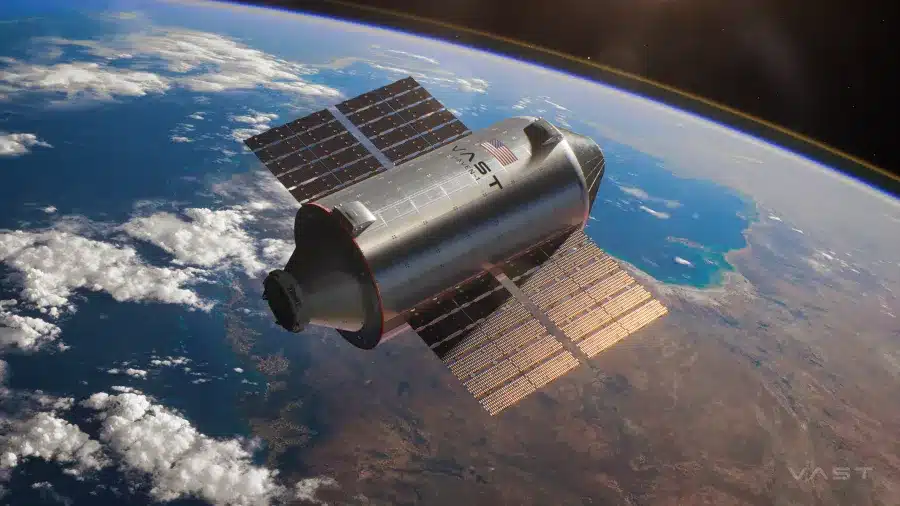 A digital rendering of Vast’s Haven-1 commercial space station, which will provide a microgravity environment for crew, research, and in-space manufacturing.
Credit: Vast
Vast’s long-term goal is nothing short of revolutionary.
“The ISS is the most expensive thing that humanity has ever built. It has just been a bonkers amount of money, and we are not going to attain a future with space commerce, space manufacturing, with people living and working in space, if it costs $150 billion to house seven people,” Smith explains.
The cost structure of the ISS is not sustainable in the long run, and commercial space stations are poised to offer more affordable alternatives. By reducing costs and increasing efficiency, these new stations could open up space for new industries, from manufacturing in microgravity to tourism and beyond.
NASA’s Shift Toward Commercial Space Stations
As reported by New Scientist, NASA shifts its focus to deep space exploration, it is increasingly turning to the private sector to manage low Earth orbit activities. This transition is part of a broader strategy to enable private companies to take over space infrastructure, allowing NASA to concentrate on its missions to the Moon, Mars, and beyond. According to Mary Guenther,
“It’s time for NASA to go further and do things that we’ve never done before, while leaving the rest – in this case, space stations in low Earth orbit – to commercial capabilities.”
This strategy is expected to stimulate innovation and competition in the space industry, ultimately leading to a more sustainable and dynamic space economy.
NASA’s approach also reflects its growing confidence in private spaceflight. The agency has already partnered with companies like SpaceX to ferry astronauts and cargo to the ISS, demonstrating the viability of private companies in space operations. As commercial space stations become a reality, NASA’s role will increasingly be that of a facilitator and collaborator, rather than a sole operator of space infrastructure.
Space Stations: The Stepping Stones to Human Civilization Beyond Earth
The advent of commercial space stations is not just about replacing the ISS. It is part of a larger vision for humanity’s future in space. As private companies prepare to launch their own stations, they are laying the groundwork for a future where millions of people live and work in space. Colin Smith of Vast highlights this long-term vision: “Our long-term goal is getting millions of people living and working in space, and everything else is working out the stepping stones we need to get to that point.” These early commercial space stations will serve as testing grounds for the technologies and systems that will be needed for more ambitious endeavors, such as building permanent colonies on the Moon or Mars.
The ability to live and work in space could transform industries ranging from pharmaceuticals to materials science, as microgravity offers unique conditions for research and manufacturing. Moreover, as space tourism becomes more feasible, space stations could offer a venue for both scientific research and leisure activities, creating a new economy in space.