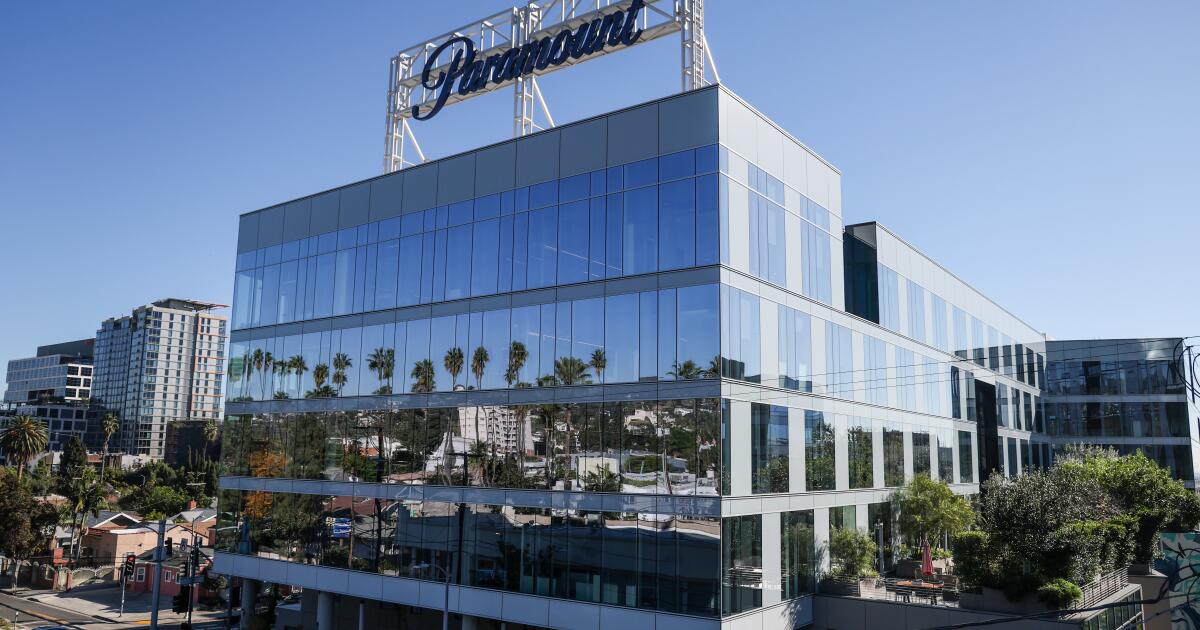
Paramount’s campaign to acquire Warner Bros. Discovery was dealt another blow Wednesday after Warner’s board rejected a revised bid from the company.
The board cited the enormous debt load that Paramount would need to finance its proposed $108-billion takeover.
Warner’s board this week unanimously voted against Paramount’s most recent hostile offer — despite tech billionaire Larry Ellison agreeing in late December to personally guarantee the equity portion of Paramount’s bid. Members were not swayed, concluding the bid backed by Ellison and Middle Eastern royal families was not in the best interest of the company or its shareholders.
Warner’s board pointed to its signed agreement with Netflix, saying the streaming giant’s offer to buy the Warner studios and HBO was solid.
The move marked the sixth time Warner’s board has said no to Paramount since Ellison’s son, Paramount Chief Executive David Ellison, first expressed interest in buying the larger entertainment company in September.
In a Wednesday letter to investors, Warner board members wrote that Paramount Skydance has a market value of $14 billion. However, the firm is “attempting an acquisition requiring $94.65 billion of [debt and equity] financing, nearly seven times its total market capitalization.”
The structure of Paramount’s proposal was akin to a leveraged buyout, Warner said, adding that if Paramount was to pull it off, the deal would rank as the largest leveraged buyout in U.S. history.
“The extraordinary amount of debt financing as well as other terms of the PSKY offer heighten the risk of failure to close, particularly when compared to the certainty of the Netflix merger,” the Warner board said, reiterating a stance that its shareholders should stick to its preferred alternative to sell much of the company to Netflix.
The move puts pressure on Paramount to shore up its financing or boost its cash offer above $30 a share.
However, raising its bid without increasing the equity component would only add to the amount of debt that Paramount would need to buy HBO, CNN, TBS, Animal Planet and the Burbank-based Warner Bros. movie and television studios.
Paramount representatives were not immediately available for comment.
“There is still a path for Paramount to outbid Netflix with a substantially higher bid, but it will require an overhaul of their current bid,” Lightshed Partners media analyst Rich Greenfield wrote in a Wednesday note to investors. Paramount would need “a dramatic increase in the cash invested from the Ellison family and/or their friends and financing partners.”
Warner Bros. Discovery’s shares held steady around $28.55. Paramount Skydance ticked down less than 1% to $12.44.
Netflix has fallen 17% to about $90 a share since early December, when it submitted its winning bid.
The jostling comes a month after Warner’s board unanimously agreed to sell much of the company to Netflix for $72 billion. The Warner board on Wednesday reaffirmed its support for the Netflix deal, which would hand a treasured Hollywood collection, including HBO, DC Comics and the Warner Bros. film studio, to the streaming giant. Netflix has offered $27.75 a share.
“By joining forces, we will offer audiences even more of the series and films they love — at home and in theaters — expand opportunities for creators, and help foster a dynamic, competitive, and thriving entertainment industry,” Netflix co-Chief Executives Ted Sarandos and Greg Peters said in a joint statement Wednesday.
After Warner struck the deal with Netflix on Dec. 4, Paramount turned hostile — making its appeal directly to Warner shareholders.
Paramount has asked Warner investors to sell their shares to Paramount, setting a Jan. 21 deadline for the tender offer.
Warner again recommended its shareholders disregard Paramount’s overtures.
Warner Bros.’ sale comes amid widespread retrenchment in the entertainment industry and could lead to further industry downsizing.
The Ellison family acquired Paramount’s controlling stake in August and quickly set out to place big bets, including striking a $7.7-billion deal for UFC fights. The company, which owns the CBS network, also cut more than 2,000 jobs.
Warner Bros. Discovery was formed in 2022 following phone giant AT&T’s sale of the company, then known as WarnerMedia, to the smaller cable programming company, Discovery.
To finance that $43-billion acquisition, Discovery took on considerable debt. Its leadership, including Chief Executive David Zaslav, spent nearly three years cutting staff and pulling the plug on projects to pay down debt.
Paramount would need to take on even more debt — more than $60 billion — to buy all of Warner Bros. Discovery, Warner said.
Warner has argued that it would incur nearly $5 billion in costs if it were to terminate its Netflix deal. The amount includes a $2.8-billion breakup fee that Warner would have to fork over to Netflix. Paramount hasn’t agreed to cover that amount.
Warner also has groused that other terms in Paramount’s proposal were problematic, making it difficult to refinance some of its debt while the transaction was pending.
Warner leaders say their shareholders should see greater value if the company is able to move forward with its planned spinoff of its cable channels, including CNN, into a separate company called Discovery Global later this year. That step is needed to set the stage for the Netflix transaction because the streaming giant has agreed to buy only the Warner Bros. film and television studios, HBO and the HBO Max streaming platform.
However, this month’s debut of Versant, comprising CNBC, MS NOW and other former Comcast channels, has clouded that forecast. During its first three days of trading, Versant stock has fallen more than 20%.
Warner’s board rebuffed three Paramount proposals before the board opened the bidding to other companies in late October.
Board members also rejected Paramount’s Dec. 4 all-cash offer of $30 a share. Two weeks later, it dismissed Paramount’s initial hostile proposal.
At the time, Warner registered its displeasure over the lack of clarity around Larry Ellison’s financial commitment to Paramount’s bid. Days later, Ellison agreed to personally guarantee $40.4 billion in equity financing that Paramount needs.
David Ellison has complained that Warner Bros. Discovery has not fairly considered his company’s bid, which he maintains is a more lucrative deal than Warner’s proposed sale to Netflix. Some investors may agree with Ellison’s assessment, in part, due to concerns that government regulators could thwart the Netflix deal out of concerns about the Los Gatos firm’s increasing dominance.
“Both potential mergers could severely harm the viewing public, creative industry workers, journalists, movie theaters that depend on studio content, and their surrounding main-street businesses, too,” Matt Wood, general counsel for consumer group Free Press Action, testified Wednesday during a congressional committee hearing.
“We fear either deal would reduce competition in streaming and adjacent markets, with fewer choices for consumers and fewer opportunities for writers, actors, directors, and production technicians,” Wood said. “Jobs will be lost. Stories will go untold.”