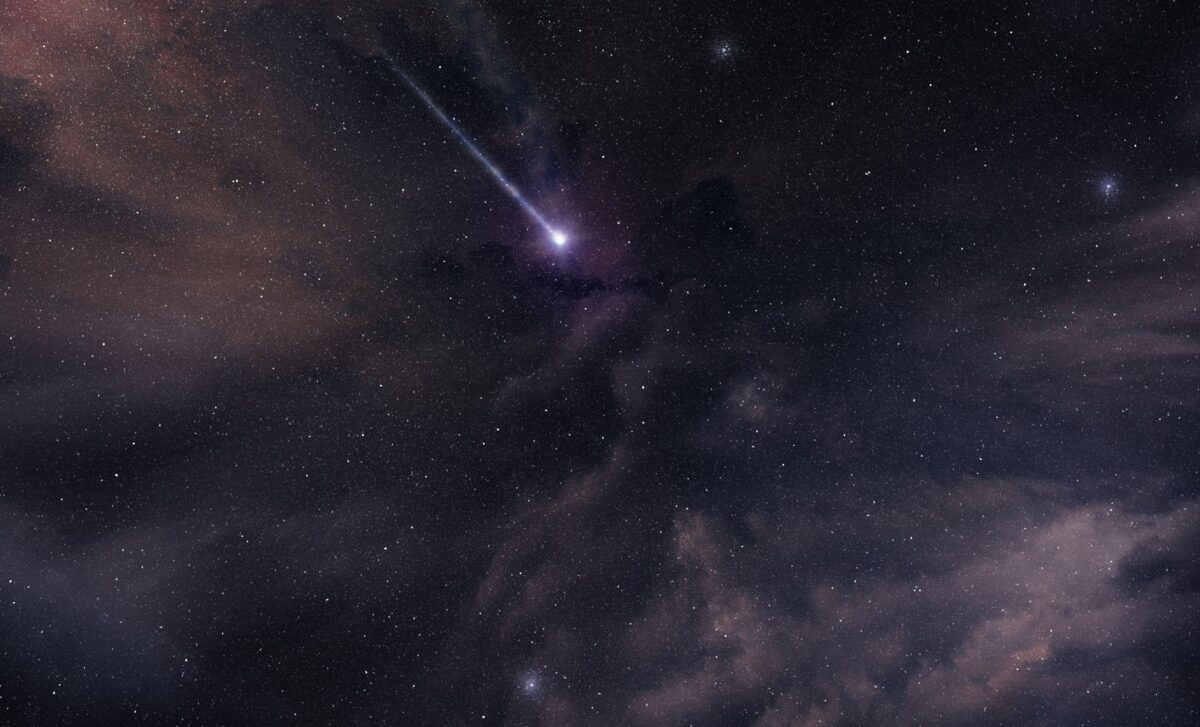
A meteor explosion has been captured from space for the first time ever, thanks to a team aboard the International Space Station (ISS). The dramatic event took place over the North Pacific Ocean. Recorded by SEN’s 4K Space-TV-1 camera system, the footage offers a fresh and stunning perspective on these cosmic events.
Meteors are a familiar sight from Earth, with dozens of meteor showers visible each year. This stunning footage was recorded in November 2025 as part of the company’s ongoing effort to stream live, ultra-high-definition footage of Earth from space.
A Close-Up of a Bolide Meteor
The meteor that exploded above the North Pacific Ocean is known as a bolide, a type of meteor that burns brightly as it enters the atmosphere. According to the Center for Near‑Earth Object Studies (CNEOS), a bolide is a massive meteor that bursts mid-air, causing a flash of light and, in some cases, sonic booms. The burst is triggered by the meteor’s high speed, which compresses and heats the air in front of it, causing it to fragment. This rapid disintegration of the meteor’s surface results in a bright flash, visible from the ISS.
The purple and white explosion was fleeting, lasting just a few seconds before the meteor disappeared from view. This phenomenon occurs because the fireball travels at such high velocities, compressing the air in front of it to the point where it breaks apart under pressure. The intense heat and friction generated during this process enhance the shooting star’s visibility from space.
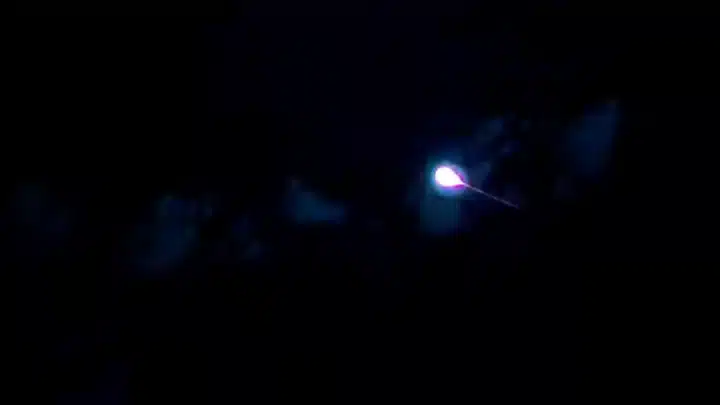 Sen’s live stream captures a rare meteor explosion moment. Credit: Sen
Streaming Footage from the International Space Station
The footage that captured the space rock explosion was made possible by SEN’s advanced camera system mounted on the ISS. The cameras, which provide live, Ultra High Definition streams of Earth, were able to capture the bolide in exquisite detail from a distance of 408 kilometers.
SEN’s cameras have been used to capture other significant events, including a solar eclipse in April 2025 and Hurricane Milton in October. As shown by SEN, the company’s cameras offer continuous footage of Earth for more than 20 hours per day, with brief interruptions due to routine signal loss. This live stream is available to the public on the SEN YouTube channel and website, where users can enjoy a unique view of Earth and outer space.
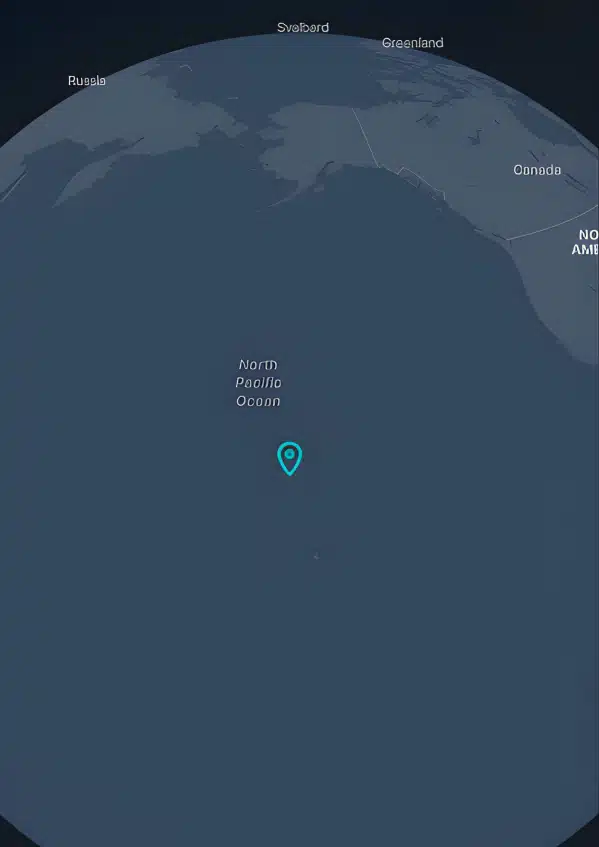 Map showing the location of a meteor explosion captured over the North Pacific Ocean. Credit: Sen
A New Frontier in Observation Is Here
Most meteor events go unseen, either burning up too quickly or occurring over areas where few people are looking. With advanced cameras on the ISS, we now have the ability to observe such events in real-time. Space enthusiasts have been quick to express their excitement online, with many remarking on the unique purple hue of the bolide.
“The few that I’ve been fortunate enough to witness firsthand have all been green,” one Reddit user commented. “This purple is striking. Must have been something to see.”
“I remember seeing it, thinking it was a plane or chopper”. One witness recalled, “Then it got a little brighter, and then… gone.”