
Listen to this article
Estimated 4 minutes
The audio version of this article is generated by AI-based technology. Mispronunciations can occur. We are working with our partners to continually review and improve the results.
B.C.’s GDP is forecast to increase by 1.6 per cent this year, according to a national report from audit and tax firm Deloitte, with the anemic growth tied directly to the crushing tariffs being faced by the province’s forestry sector.
“I’m not surprised to hear it,” said 100 Mile House Mayor Maureen Pinkney of the forecast and the forestry sector’s role in it.
“We have a resource that just automatically grows out of the ground that we can’t seem to manufacture and, and sell properly for that matter. You know, it’s a very sad state.”
The B.C. forestry sector has seen a wave of mill closures over the last few years, including the West Fraser Timber Co. mill in 100 Mile House in December.
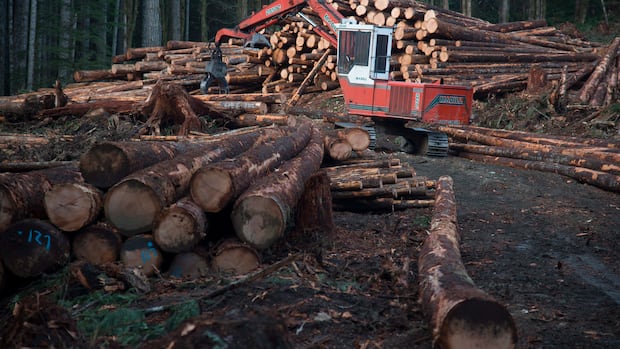
The hits to the industry have been compounded by escalating U.S. duties on softwood lumber imports — now at 45 per cent — along with challenges like a major beetle infestation, wildfires and a shrinking timber supply.
Together, they’ve led to thousands of job losses across the province.
 Maureen Pinkney is the mayor of 100 Mile House in B.C.’s South Cariboo region where West Fraser Timber Co. announced the shuttering of its mill at the end of 2025. (Jenifer Norwell/CBC)
The Deloitte report said B.C. “will struggle to withstand” tariffs imposed on its forestry sector by the U.S.
“Economic growth in B.C. is expected to remain weak this year relative to the prairie provinces as positive momentum on the major project front is offset in the forestry sector,” reads the report.
Deloitte said its financial forecast is based on the province securing federal support for the sector.
It also said that major infrastructure projects in the province such as the North Coast Transmission Line and the Ksi Lisims LNG project — both on a federal fast-track project list — set B.C. up for an improved economic outlook in future years.
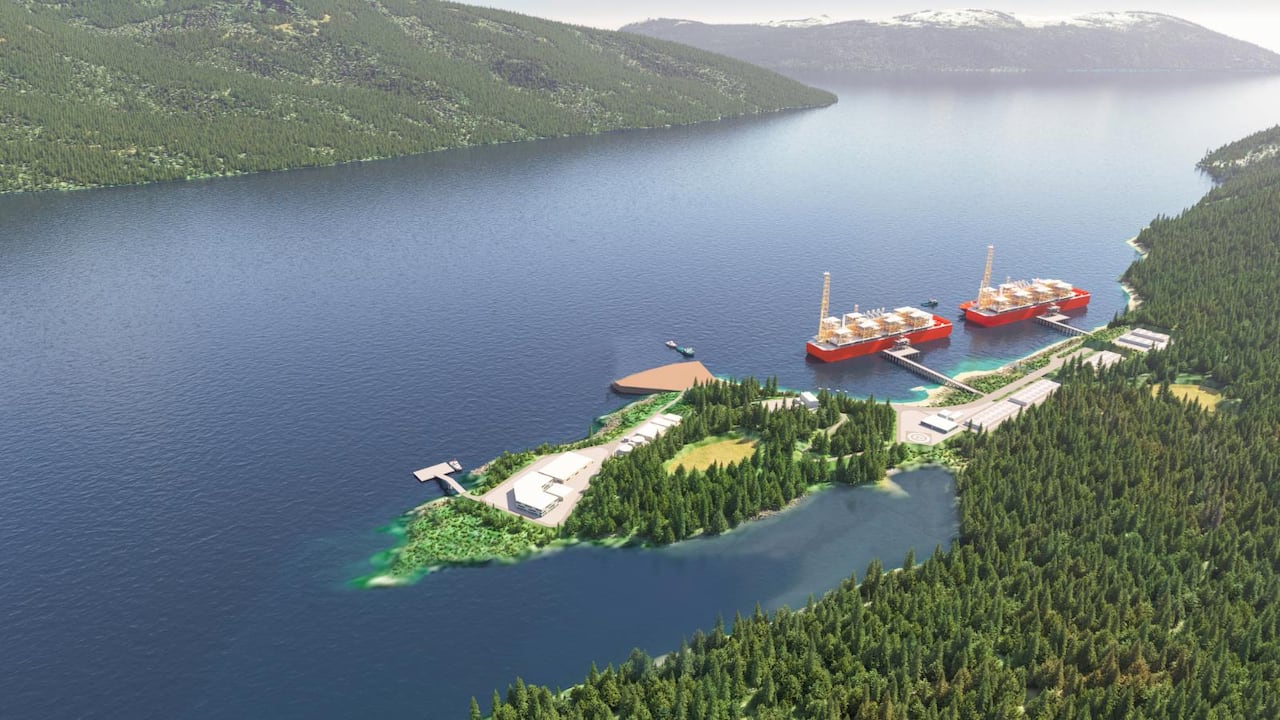 A rendering of the Ksi Lisims LNG project, which is planned to operate on Pearse Island on the northwest coast of British Columbia. Economic forecasters say it, along with other similar projects, are key to helping expand B.C.’s economy. (Submitted by Ksi Lisims LNG)
Deloitte’s economic prediction is a small increase from the province’s previous forecast of 1.3 per cent in growth for 2026, which it released last November.
Both it and the Deloitte report projected 2025’s growth would come in at 1.4 per cent. In 2024, B.C.’s GDP rose 1.2 per cent.
Minister of Finance Brenda Bailey said in November that “unjust and unpredictable” trade policies were behind the measured forecast.
She said strong consumer spending and steady residential construction were supporting economic growth in 2025, while major industrial projects would provide “good jobs for people and economic security, no matter what the world throws at us.”
The province approved eleven major projects between September and November 2025.
 B.C. Minister of Finance Brenda Bailey says the province’s plan to offset losses in B.C.’s forestry sector is to build key infrastructure and access more non-U.S. markets. (Mike McArthur/CBC)
Bailey also said B.C. would look to diversify its economy and increase access to non-U.S. markets to buoy the province.
Next week, Minister of Jobs and Economic Growth Ravi Kahlon will travel to India on a trade mission with Premier David Eby. He said U.S. tariffs were forcing the province to move faster on developing other international trade partners.
“It’s incredibly hard for any of our companies to be able to compete with that,” he said of the tariffs.
“It’s important for us to try to get markets in other jurisdictions. That’s what we’re doing in India. That’s what the prime minister is doing to reengage with China.”
As the province relies on the federal government to help out with the forestry sector in B.C., Kahlon said plans are underway to use more wood domestically. The province has a goal to triple the amount of B.C.-produced lumber in the province’s construction sector, he said.
National outlook
Across Canada, the new Deloitte report forecasts growth will slow to 1.5 per cent this year from 1.7 per cent in 2025.
It said two key trends to watch this year include trade and investment, with the review of the Canada-U.S.-Mexico free trade agreement scheduled for July, and the federal government’s plans to stimulate billions in investment from the private sector outlined in its latest budget.
The firm said in the report that Alberta and Saskatchewan would lead the province in economic growth in 2026.
Those two provinces are expected to have their GDPs rise by 2.1 per cent based on their resource sectors and construction activity.