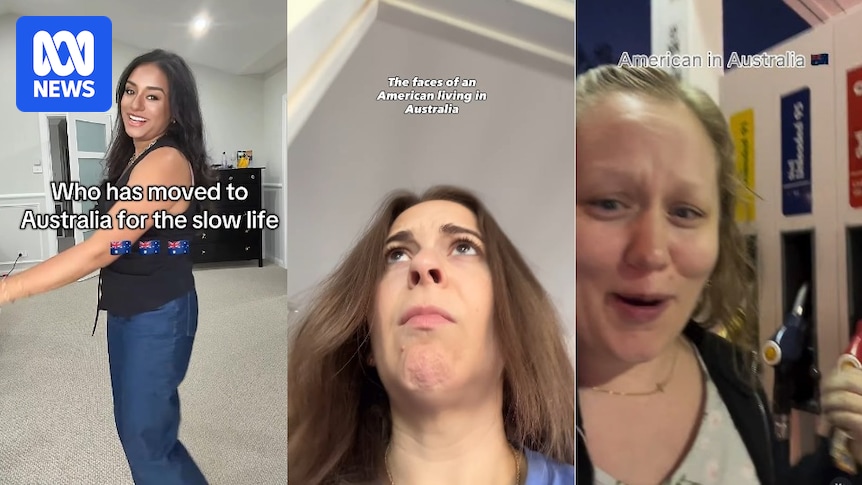
If you were even occasionally on social media over the past year, there’s every chance one of these videos has popped up in your feed.
A typically sun-drenched Australian setting, a blast of soaring algorithmically approved music, perhaps an exaggerated facial expression and a cheery voice offering some variation of the following:
“I’m an American living in Australia …”
What follows is often a litany of earnestly mundane observations — maybe that Australians love their coffee, or how you only pay for petrol here after you fill up.
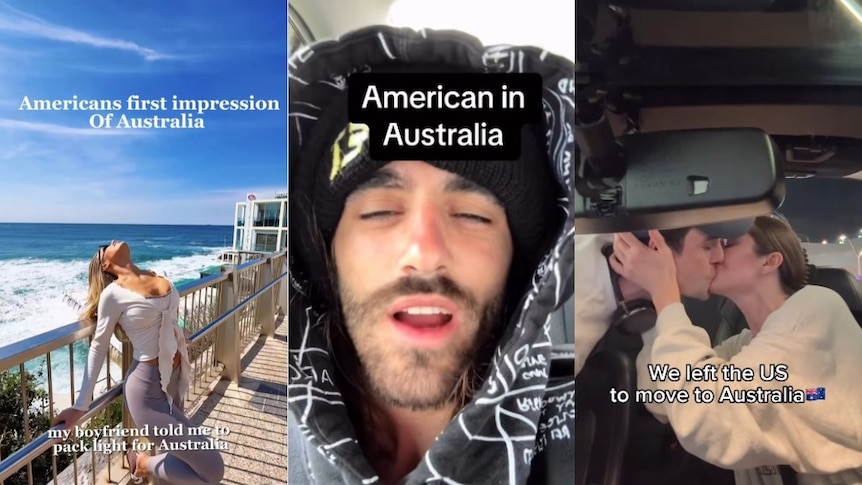
American content creators post about being in Australia. (Supplied: Instagram)
For users across Instagram, TikTok and YouTube, it has nonetheless made for compelling viewing.
“It’s ended up becoming much bigger than I thought,” says Lex B, an American content creator who has moved to Brisbane, posting under the profile Lex In Wonderland.
“It is definitely a wave of content that to me seems like it is ramping up.”
‘These are dark times’
It’s been one year since Donald Trump re-entered the White House for a second term — an anniversary he has marked by launching deadly strikes into Venezuela and capturing its president.
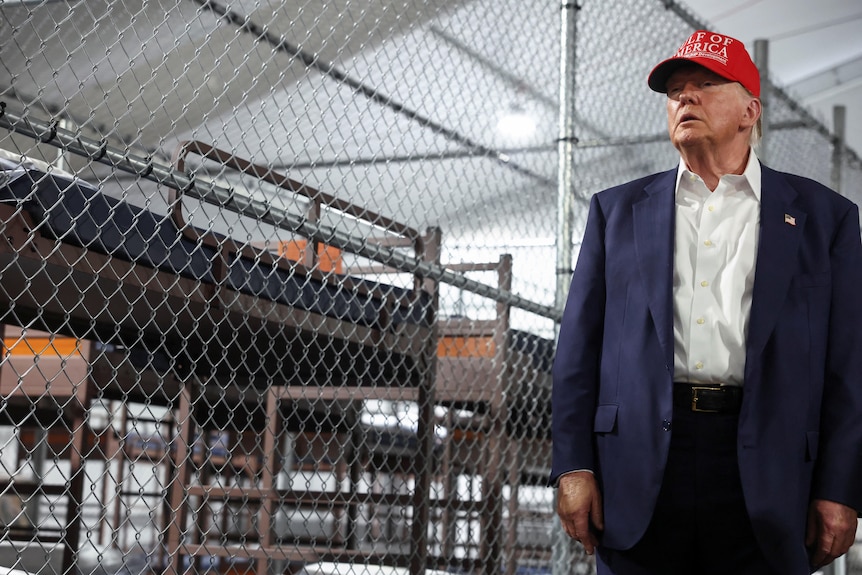
Donald Trump in 2025 at a temporary migrant detention centre informally known as “Alligator Alcatraz”. (Reuters: Evelyn Hockstein)
The chaotic nature of his presidency has routinely been cited in media reports as an animating factor for Americans seeking to leave the land of the free.
Over the past 12 months, similarly themed profiles have peppered the likes of CNN (“These Americans are done with Trump. So they’re leaving America”), Reuters (“Fearful of Trump, some Americans look to make a life in Europe”) and The New Yorker (“How to leave the USA”).
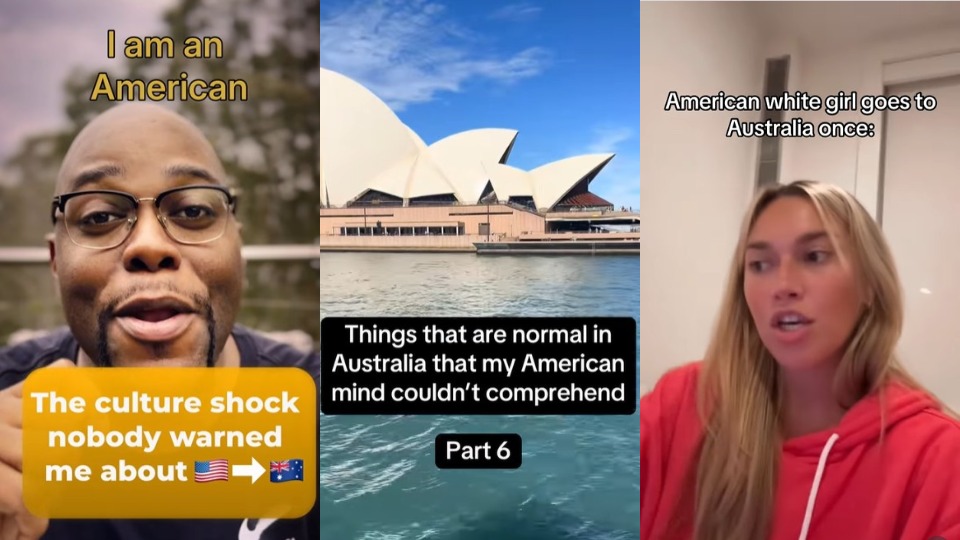
The “American in Australia” trend is starting to draw parodies. (Supplied: Instagram)
Such is the climate that an article titled The Case Against Leaving Trump’s America in New York Magazine felt compelled to argue the virtues of staying put, despite opening with a foreboding tone: “These are dark times for Americans who care about civil liberties.”
Whether this bears out in a meaningful rise in emigration is still to be calculated, but a recent Gallup poll found one in five Americans would leave the country permanently if they could — a figure that rises to 40 per cent among younger women.
A separate, long-running Monmouth poll found the American desire to leave the US has tripled since the 1970s.
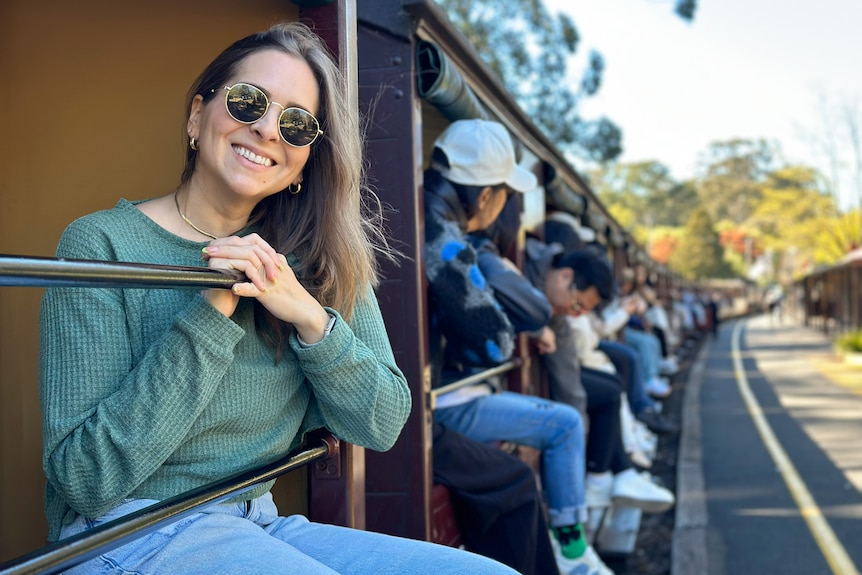
Brisbane-based US content creator Lex B rides Puffing Billy in Victoria. (Supplied: Lex B)
Lex B, who withholds her surname for reasons of personal privacy, moved to Australia from Texas a little over a year ago because of a work opportunity for her husband.
Like many in her content-creating cohort, the 38-year-old’s posts are decidedly non-political — though that is no accident.
“I want it to not be a place for conflict and debates and political crap,” she says.
“I want it to be light and fun and respectful to everybody and a place that we can just laugh and learn and support each other.”
Loading Instagram content
What started as an account reviewing Australian op-shops (“it didn’t do well,” she concedes) has become an often celebratory space for exploring Australian life, nature and culture.
There are videos of her trying Australian confectionery and pastries, attempting to dance the Nutbush, or making a cake for her son from the iconic Women’s Weekly Children’s Birthday Cake book (“I am so proud! Thank you for all your tips!” she beamed to her 35k Instagram followers).
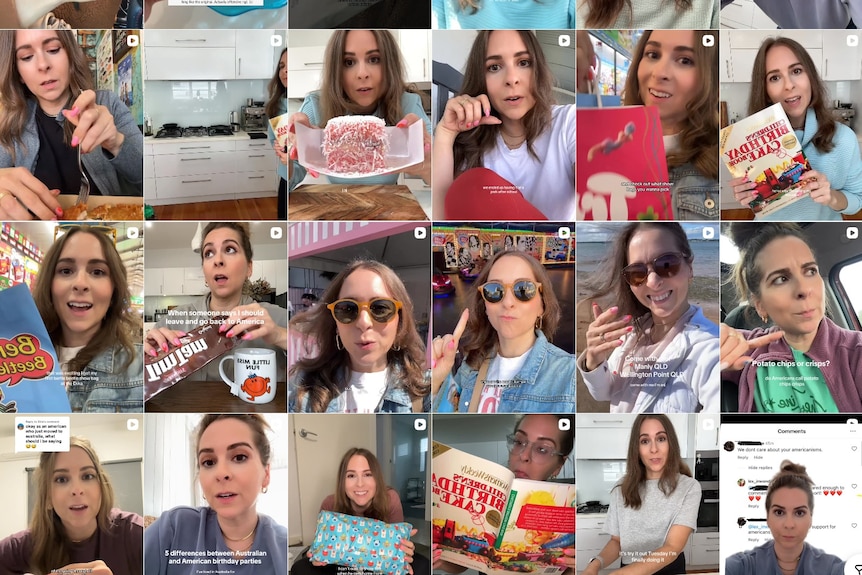
Lex B posts regular dispatches about her new life in Australia under her Lex in Wonderland profile. (Supplied: Lex B)
It might seem as sweet and fluffy as cake icing, but there’s an emotional heart nestled amongst it all that hints at how her family’s life is changing in real time.
“Our balance … has been restored significantly since being here,” she says.
“Our focus has shifted from perfection [to] connection with each other as a family and with our friends.
“There’s a large percentage of Australians who really focus on that work-life balance, that oftentimes is missing in the States.
“Generally speaking, Aussies have their priorities in the right spot.”
The American dream of escape
For more than 35 years, David Lesperance has helped high-net-worth Americans and their families move about the world.
For the most part, millionaires (and multi-millionaires) have called on the tax and immigration specialist to relocate them to financially friendlier settings.
Of late, their motivations are changing.

The East Wing of the White House was demolished in 2025 to make way for President Trump’s ballroom. (Reuters: Andrew Leyden)
“Before Donald Trump came down the golden escalator, nine out of 10 of my clients were driven by purely hard financial reasons,” Lesperance says.
“Now it’s completely reversed — I would say nine out of 10 of my clients are driven by non-financial reasons.”
Even for those living behind mansion walls and gated communities, there’s an inescapability to the country’s caustic cultural and political climate.
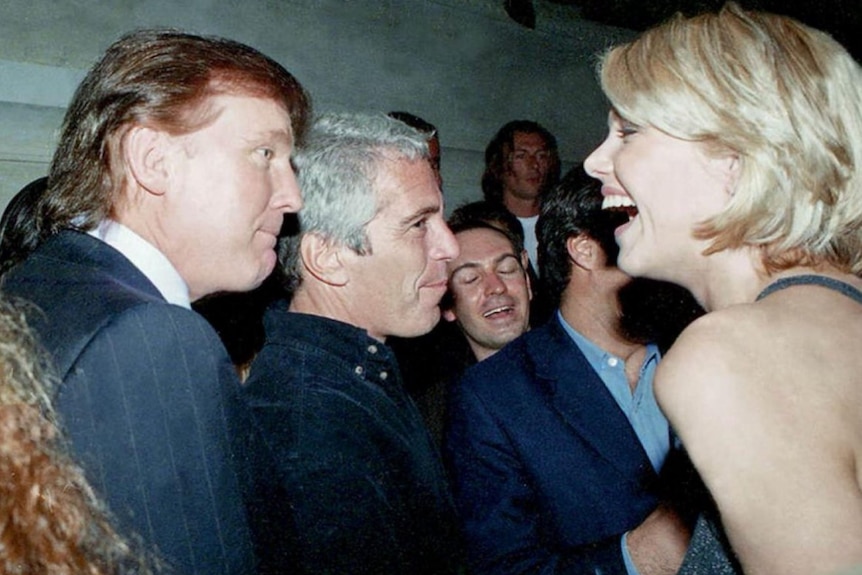
Donald Trump has not been able to shake his connections to deceased sex offender Jeffrey Epstein. (Supplied: House Oversight Committee Democrats)
“They have an emotional reaction to everything, from masked ICE agents sweeping people up on the streets to January 6 to the Epstein files,” he says.
“A lot of Americans are like, ‘I still think of myself as that American ideal, but the America I’m living in today is not that ideal.'”
Amid the disorientating daily blur of stories out of the Trump White House, 2025 saw the president deploy National Guard troops to the streets of American cities, a targeted erosion of LGBTQIA+ and reproductive rights, and a politically polarised country become more divided.
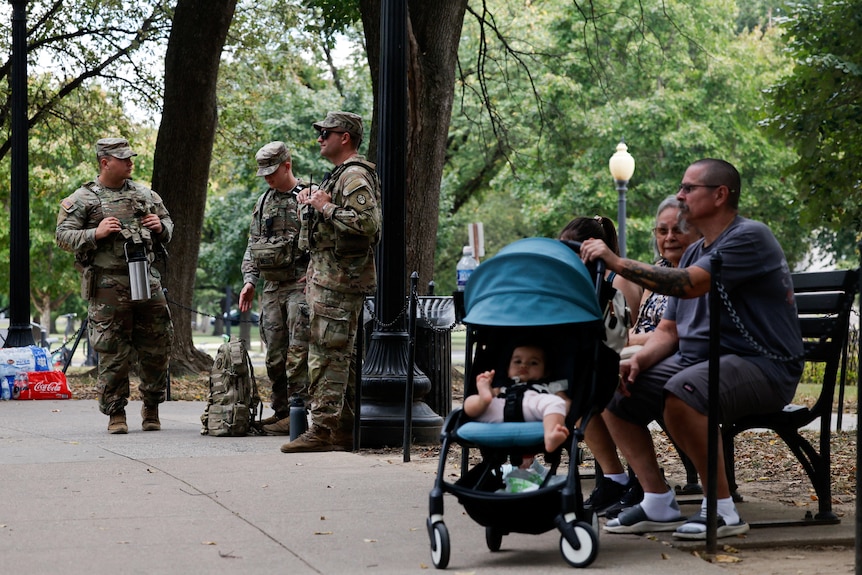
In 2025, the National Guard was deployed in Washington among other cities. (Reuters: Daniel Becerril)
Within three days of conservative activist Charlie Kirk’s assassination in September, Lesperance says six of his clients made the call to proceed with leaving the country.
All six were political donors — two to Trump, four to the Democrats.
Thousands of Australians in US hit by changes to visa process
“They just thought, ‘The level of political violence here has increased dramatically, I’m [a donor] on a list somewhere, so somebody who hates Democrats, or somebody who hates Trump supporters, hates me.’
“If somebody wants to start going after them, [the donors] don’t want to be home in the US when they come knocking on the door.
“So Australia, for a lot of them, is a top consideration — because they can effectively move and reproduce their lifestyle in any number of cities.”
‘What does this American think of Australia?’
When Ramya Vairavan and her family moved from San Francisco’s Bay Area to Sydney’s affluent Northern Beaches early last year, some in their life guessed it was due to the state of US politics and the social division surrounding it.
In reality, her husband — like Lex B in Brisbane — had been offered a job, but she understood why people “drew the connection”.
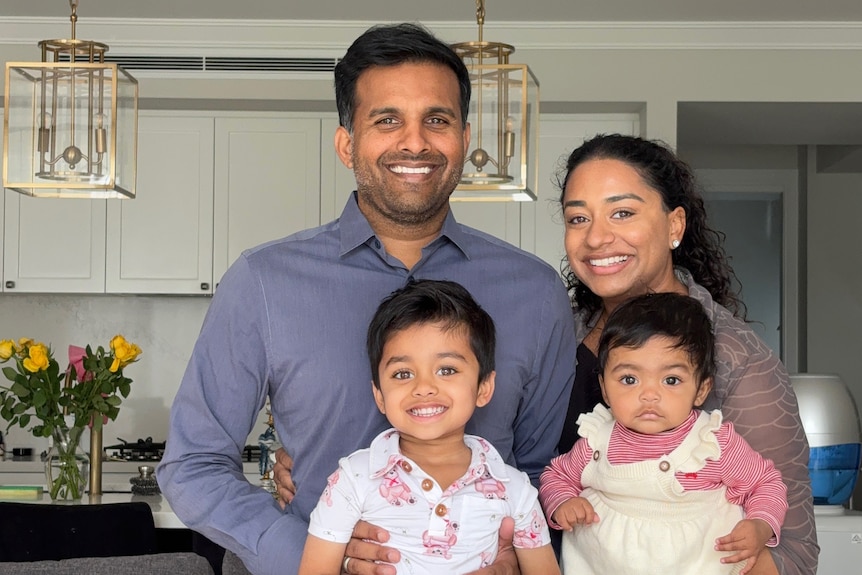
Ramya Vairavan and her family. (Supplied)
“In the States, people are exhausted by it,” Vairavan says.
“The rhetoric in politics really affects their experience. It seeps into what they think about the world and how they think about their relationships.”
Loading Instagram content
The 35-year-old now posts dispatches of her family’s new “more laid-back” life, using the “I’m an American living in Australia” format.
Videos of her eating fish and chips on the beach or exploring Sydney and its surrounds have a habit of finding a particular viewership.
“What I have found is, Aussies are interested in this story,” she says.
“They’re like, ‘Hmm, what does this American think of Australia?'”
‘It’s rage baiting’
It’s a similar story on Lex B’s accounts.
Though she regularly gets private messages from Americans wanting to move here, she estimates 90 per cent of her views come from within Australia.
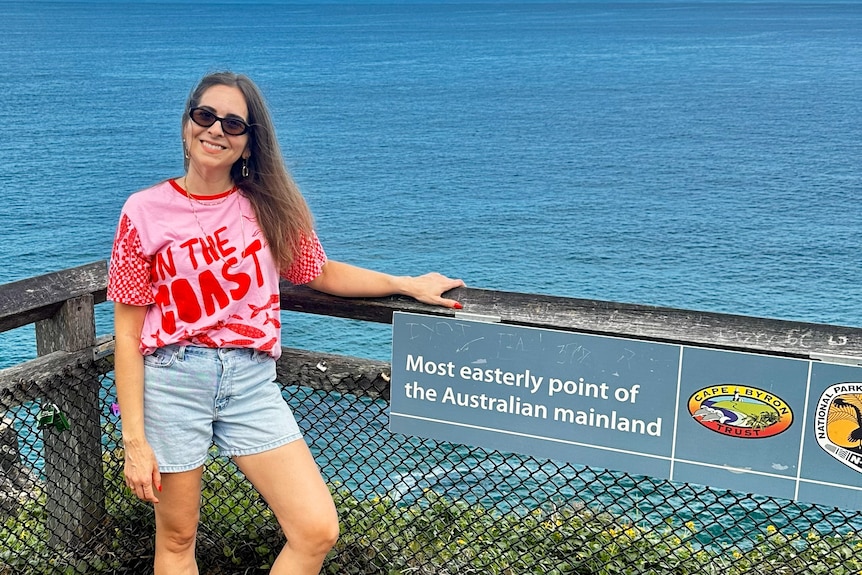
American content creator Lex B, who now lives and posts from Brisbane. (Supplied: Lex B)
Beneath a recent Lex In Wonderland post about the difference between American and Australian dog owners (153k views on Instagram, a further 32k on TikTok), the top comment read: “I love seeing our culture and kindness through your eyes, it’s not something we reflect on.”
If Australian users are curious about what people think about them (and eager for praise), Nikki Kelly believes they are also easily baited.
The 28-year-old from Utah, who is currently studying in Perth, is up-front about why she took to “American in Australia” style posting.
“The honest answer is, it’s easy content to make when you live in another country,” she says.
Rather than take a sunny lens to her time in the country, her most viewed posts typically feature her complaining about some minor, new-found grievance.
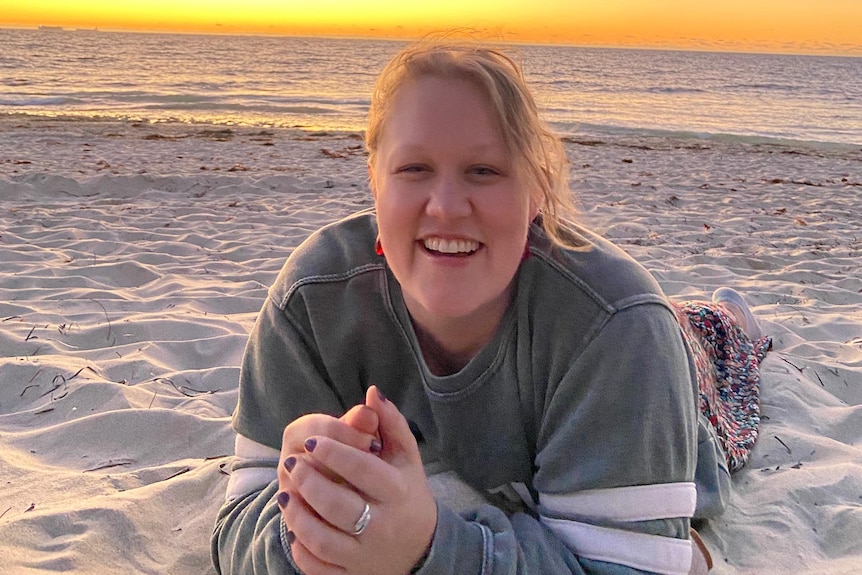
Utah resident Nikki Kelly is studying in Perth. (Supplied)
One such video on her Life According to Nikki Instagram page saw her accuse a road speed hump of being “mean”. It accumulated 33 million views.
“Gosh, all she does is complain!” reads a typical comment under one of her posts, which Kelly says she never reads.
She freely admits to cynically doing it all for views.
“I’m rage baiting. I am here to make content and grow my account,” she says.
“Thanks, all of Australia, for playing along.”
The Australia effect
In the closing months of 2025, a semi-viral trend emerged called “the Australia effect”.
Set to the strains of Don McLean’s American Pie, countless videos from content creators of different nationalities sought to celebrate the apparent aesthetic glow-up and more general restorative qualities that supposedly come with moving to Australia.
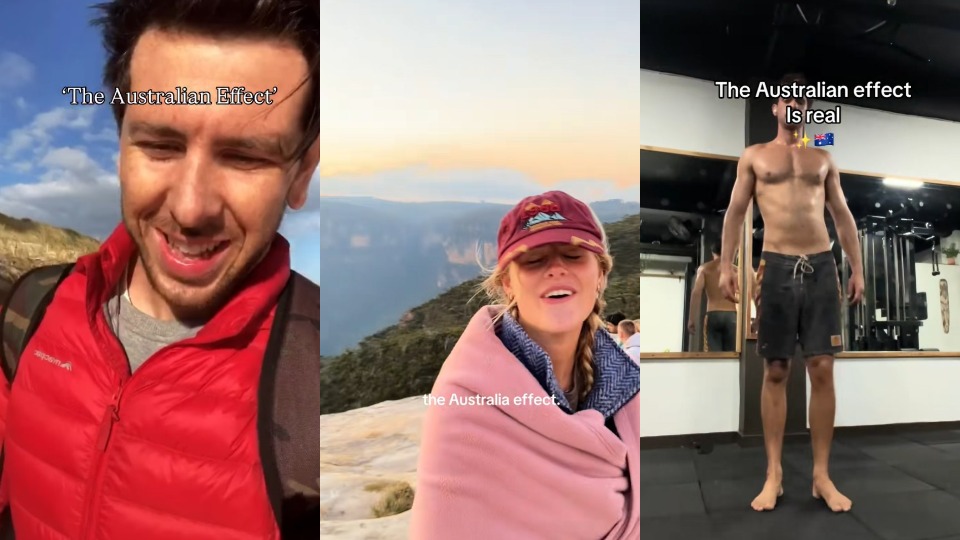
“The Australian effect” became a TikTok and Instagram trend near the end of 2025. (Supplied)
Elsewhere on YouTube, there is a growing subset of American travel bloggers reviewing Australian food, restaurants and destinations, often receiving hundreds of thousands of views.
Both could be accused of portraying a romanticised ideal of Australian life — one that likely jars with the experience of those beset by the generationally stressful effects of a cost-of-living and housing crisis.
At the same time, there is an evident appeal for Australian audiences in seeing once-outsiders like Lex B navigate local cultural quirks with a warm sense of curiosity.
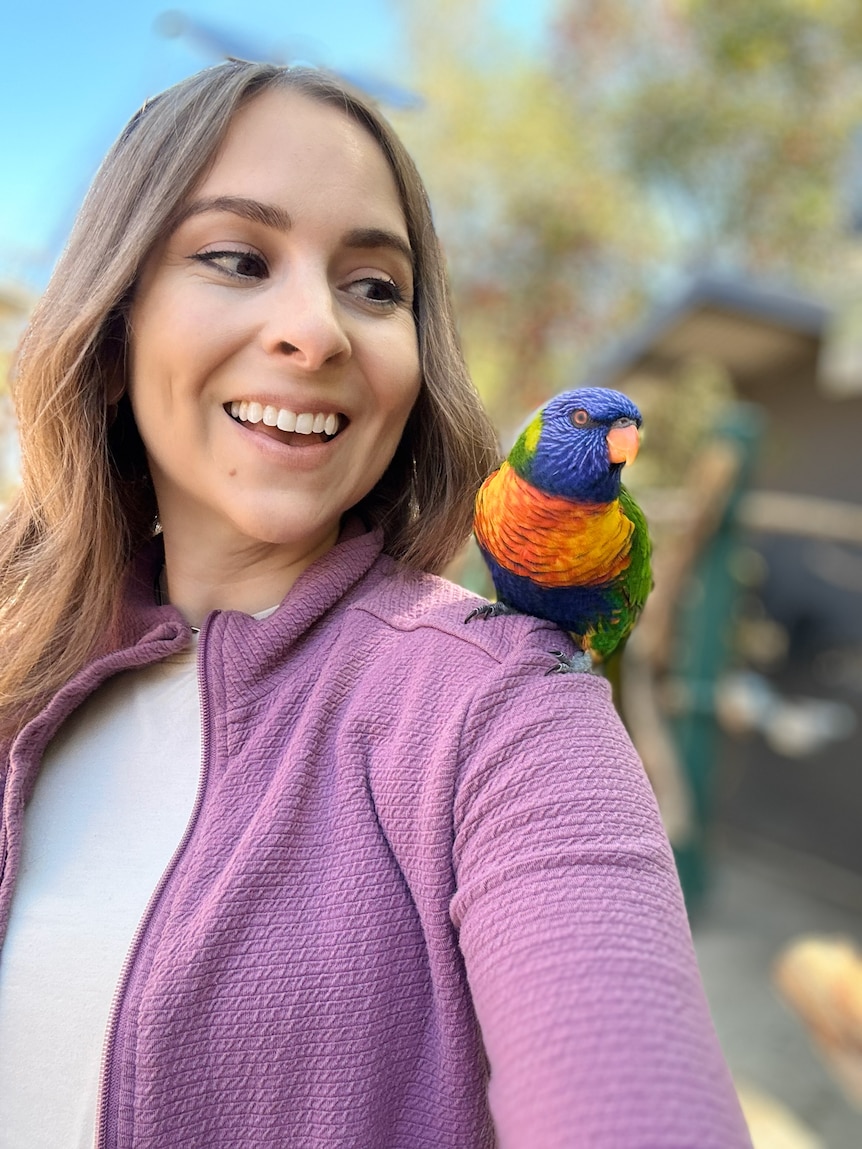
Lex B says she has been overwhelmed by the support and encouragement of Australians. (Supplied: Lex B)
“I do feel like I have this support of Australian strangers that go to bat for me in the comments,” she says with a Texas twang that occasionally threatens to give way to an Australian drawl.
“The love that I get from total random people, it just proves how warm and community-focused Australians are.
“They’re so supportive and encouraging of my being here, my family being here, and us exploring things. It just gives me that much more love for Australia.”
There is one video she says she almost didn’t post.
Sitting in her car outside an op-shop with a piece of deep-fried fish in her hand, she recounts a story from the night before.
It feels more spontaneous, more casual, more quietly reflective. She admits she is starting to feel truly Australian, whatever that means.
“Last night, we were at an event for our kids, and a kookaburra stole a hot chip from my friend’s son’s hand. I saw it! I saw it all,” she says.
“That is the most Australian shit I’ve ever seen.”