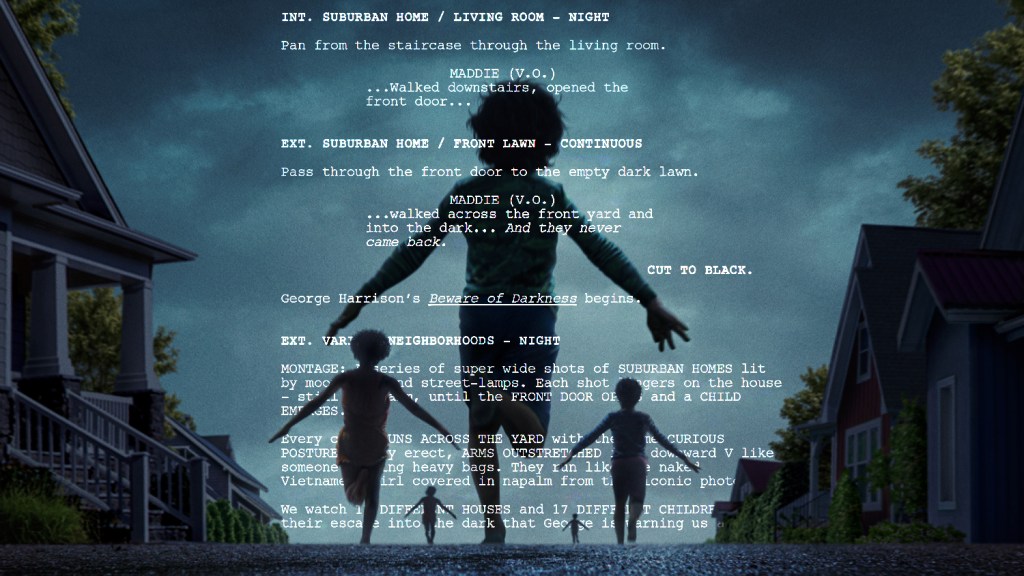
Deadline’s Read the Screenplay series spotlighting the scripts behind the awards season’s most talked-about movies continues with Warner Bros‘ Weapons. Writer-director Zach Cregger described the writing process for the horror mystery as “writing on a tightrope,” entering the script without knowing the ending to ensure the narrative remained unpredictable.
He said that while Barbarian proved he could direct, Weapons allowed him to trust his “small creative voice” amidst the chaos of a larger production.
The horror pic was released October 8 in the U.S. and opened to $43.5 million, with its current global gross at $269.1 million. The movie garnered an Original Screenplay nomination among four noms at the Critics Choice Awards, where star Amy Madigan (she plays Aunt Gladys) helped her Supporting Actress frontrunner status with a win at Sunday’s ceremony.
Weapons‘ central engine is a baffling event in the small town of Maybrook: at exactly 2:17 a.m., an entire elementary school class — except for one student — inexplicably walk out of their homes and vanish. The narrative follows the community as it fractures under the weight of the unknown, questioning if the disappearances are a prank, alien mind control, or a government conspiracy.
Unlike a traditional ensemble, Cregger described the film as having seven leads, with the story passing the baton between characters for 12-minute chunks, giving each a moment to be the star of the show.
The cast features an ensemble representing different facets of the town’s trauma. Justine Gandy (Julia Garner), the teacher of the missing class, feels immense guilt and responsibility, investigating the disappearance on her own to save her reputation. Garner describes Justine as seeking validation through her students; without them, she feels directionless and turns to alcohol. Archer (Josh Brolin), the father of a missing child, represents the “Everyman” who lives in potential resentment and sees the worst in humanity. Frustrated by the lack of progress, he investigates independently.
Meanwhile, Paul (Alden Ehrenreich), a police officer inadvertently drawn into the case, struggles with his own personal demons. Paul is newly sober and unhappy, navigating a life he doesn’t want, and his horror elements feel like a nightmare born of his mind rather than generic scares. Aunt Gladys Lilly is the central antagonist, a parasitic witch who claims to be a relative of the Lilly family and is responsible for the mass disappearance.
Cregger has been open about how Gladys and her witchcraft represent alcoholism and the effects of living with an addicted parent, a dynamic he called “straight-up autobiographical” to his own childhood. She is the foreign substance that changes everyone’s behavior, turning the home into a scary place and forcing the child (Cary Christopher’s Alex) to become the caregiver to his parents.
Cregger carefully guarded the identity of the literal antagonist, framing the central conflict around the question of “who or what” is behind the disappearances. While the nature of the threat remains hidden, he assures that the film obeys the rules of its own universe and avoids spiraling into a bizarre, hallucinogenic nightmare, suggesting a concrete, albeit hidden, logic behind the villainy.
Despite being a horror film, Garner describes Weapons as a “love story” — specifically about “people having the desire to connect but not knowing how.” Ehrenreich observes that the characters are isolated in their trauma; they are rarely seen sitting at a table talking through conflict with a spouse, but rather navigating the disaster completely alone.
Read the screenplay below.