After more than 25 years of service, the International Space Station is nearing the end of its operational lifespan. NASA plans to safely deorbit the space lab in 2030, but in the meantime, the astronauts on board will stay busy with upkeep while also taking steps to ready the station for its fiery death.
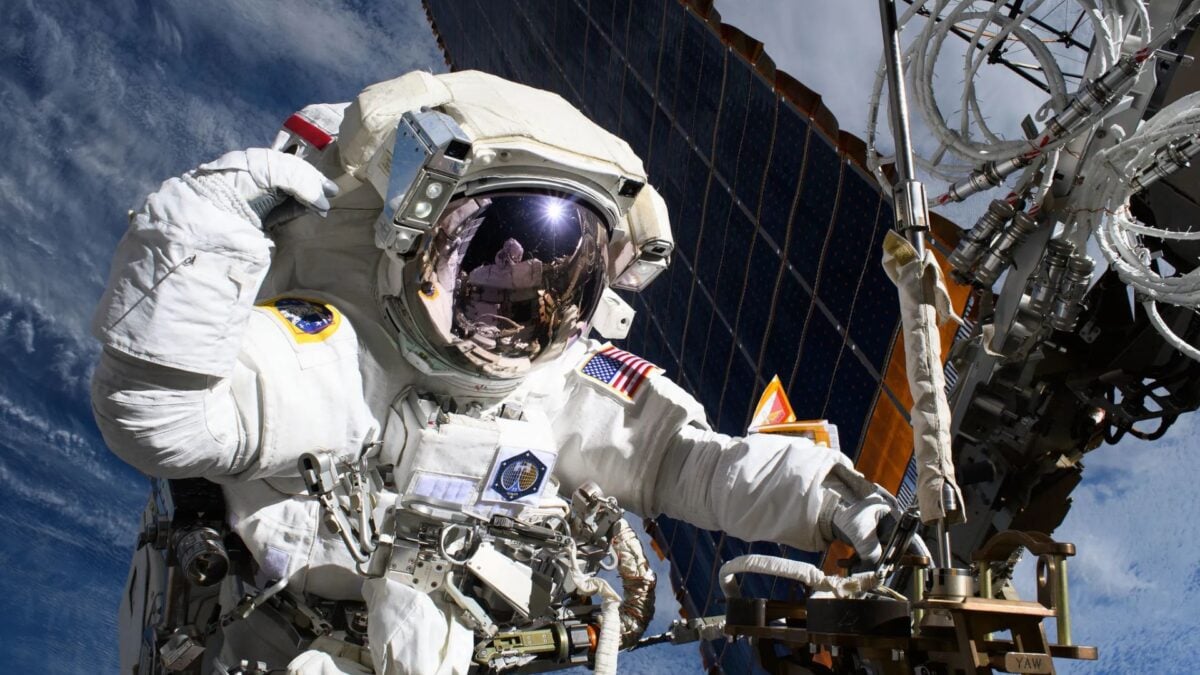
Two upcoming spacewalks are aimed at those goals. The first will be conducted by NASA astronauts Mike Fincke and Zena Cardman, who will emerge from the station’s Quest airlock at approximately 8 a.m. ET on Thursday, January 8. This will be Cadman’s first spacewalk and Fincke’s 10th, tying him with Peggy Whitson for the most spacewalks by a NASA astronaut.
During the six and a half hours they spend outside the station, Fincke and Cardman will prepare the 2A power channel for future installation of a roll-out solar array. This array will provide additional power to support the last few years of operation and, ultimately, the lab’s deorbit. NASA will begin live coverage of the event at 6:30 a.m. ET on NASA+, Amazon Prime, and the agency’s YouTube channel.
A week later, on Thursday, January 15, another pair of NASA astronauts will venture outside the space station to replace a high-definition camera, install a new docking aid for visiting spacecraft, and relocate several cooling hoses. This spacewalk is scheduled to begin at 7:10 a.m. ET, with live coverage provided via the same channels. The names of the participating astronauts will be announced after the January 8 spacewalk.
Powering ISS through to the end
The Roll-Out Solar Array (ROSA) and its larger version, the ISS Roll-Out Solar Array (iROSA), are lightweight, flexible solar power sources for spacecraft designed and developed by Redwire Space.
They serve as alternatives to existing solar array technologies, which can be expensive, heavy, and complex to operate. By comparison, ROSA and iROSA are more compact and affordable and offer autonomous capabilities that are highly useful for both scientific and commercial missions, according to NASA.
Since 2021, six iROSAs have been installed on the space station to supplement its aging power supply. An upcoming cargo mission will deliver another array to be added onto the station’s port side truss structure, which Cardman and Fincke will prepare by installing a modification kit and routing cables. They will also install jumper cables, photograph station hardware, and swab the exterior of the space station to collect potential microorganism samples, according to NASA.
Adding this new iROSA will help ensure that the space station has enough reliable power to remain fully operational and controllable through the end of its life, allowing NASA to safely guide it during deorbit rather than risk an uncontrolled reentry. The agency plans to add another iROSA to the ISS before its scheduled demise in 2030, bringing the total number of arrays to eight.
How NASA will deorbit the ISS
The deorbiting process will begin with lowering the space station’s orbit by canceling the periodic orbit-raising burns that maintain its altitude 250 miles (400 kilometers) above sea level. Over the course of several months, atmospheric drag will cause the ISS’s orbit to naturally decay below 150 miles (250 kilometers). That’s where SpaceX comes in.
NASA has contracted Elon Musk’s spaceflight company to build a deorbit vehicle that will dock to the ISS and perform a series of deorbit burns to further lower the space station’s orbit. This will ultimately allow the space station to make a controlled reentry into Earth’s atmosphere. Only an estimated 40% of its hardware will survive the fiery descent, landing in a designated splashdown zone in the ocean.
But the ISS still has a few good years left in it, and these spacewalks will help ensure that remains the case. As we near the end of the decade, opportunities to watch astronauts conduct maintenance and upgrades outside the station will serve as reminders that the ISS is very much alive and productive, for now.