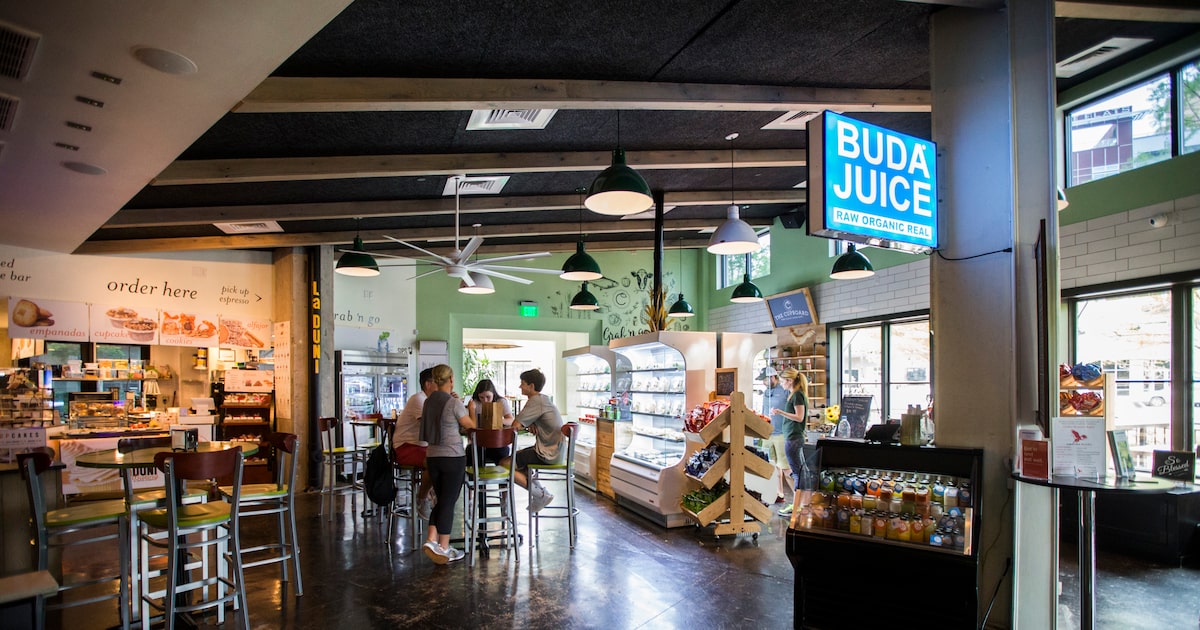
Buda Juice, a Dallas-based maker of juices, lemonades and wellness shots, revealed more details on its plans to go public.
The juice maker seeks to raise $20 million through an initial public offering on the NYSE American Exchange. Shares are priced at $7.50, the company announced in a news release on Wednesday, Jan. 7. It will begin trading shares on Jan. 8, and the offering will close on Jan. 9.
Buda Juice’s portfolio of juices, which are distributed to Texas retailers under its own label and under private labels, include fresh citrus juice, line of fresh citrus-based lemonades and wellness shot offerings.
With the new funding, the brand will create new production facilities in South Carolina and the Arizona and Nevada area to service both the East and West coasts. It will also use the new funds to expand its Dallas production capabilities and bolster business expenses, such as the costs associated with being a public company.
Eat Drink D-FW
The company hopes to tap into the opportunities it sees in the juice space.
“Nearly two-thirds of Americans consume juice weekly, with Generation Z and Millennials representing the largest consumer segments prioritizing health, fresh, convenience, and flavor variety,” according to Buda Juice’s August filing with the Securities and Exchange Commission.
Buda Juice’s strategy to reach consumers through supermarkets and other retailers shifted after its initial foray into brick-and-mortar stores.
“Initially, we expanded through our own retail stores, building a loyal and passionate customer base who loved both the taste and health benefits of our juices,” said CEO and co-founder Horatio Lonsdale-Hands in a letter in the company’s SEC filing. “However, we quickly realized that to achieve broader impact, selling to established retailers was key. This strategic pivot allowed us to fully concentrate on perfecting our juices and the rigorous processes that ensure their freshness.”
The brand launched in 2014 as a kiosk within a coffee shop in Plano. Buda Juice’s Dallas facility alone serves 45 million consumers in Texas and across other states, according to the SEC filing.