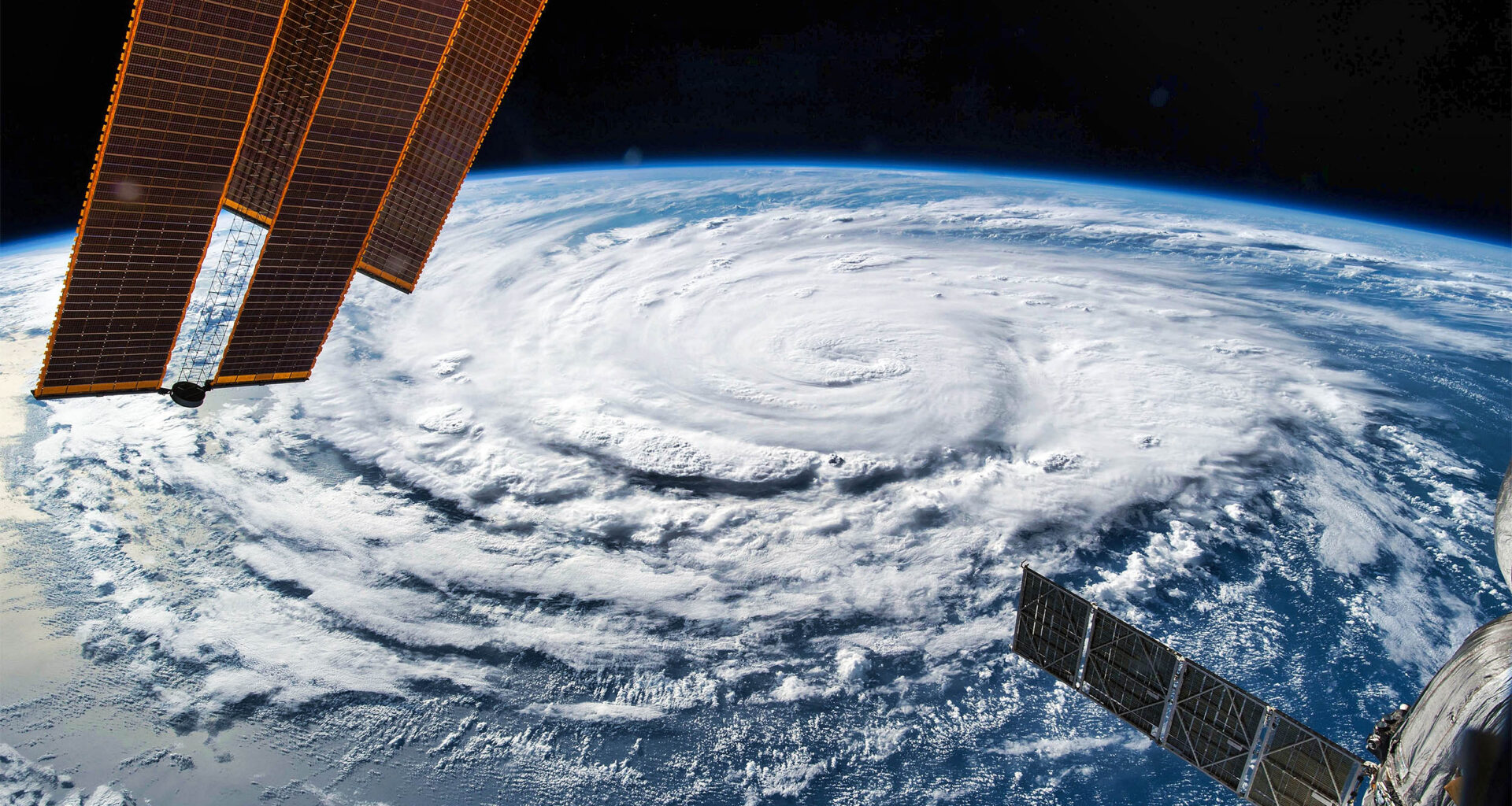
Hurricane named Helene smashed the Florida coast, bringing devastating rain and fierce winds. The havoc caused by that powerful event did not stop at ground level, however.
According to NASA, the International Space Station detected a previously unknown phenomenon surging through Earth’s atmosphere, roughly 55 miles above the planet.

These “atmospheric waves” were not visible to anyone looking up from their backyard, but they were there, proving that powerful ground-based weather events can have a direct connection to different layers of the atmosphere.
Invisible atmospheric waves
One layer of the atmosphere is called the mesosphere. It is located between 31 to 55 miles above ground.
The mesosphere might seem pretty far removed from everyday concerns. Still, it can be disturbed by severe weather far below.
On the day Helene hit, NASA’s instruments captured signs of a type of atmospheric wave formed by events like hurricanes.
According to Michael Taylor from NASA, this unexpected observation gives a new dimension to the way in which people think about how storms affect even the thin air at tremendous heights.
The Atmospheric Wave Instrument
The equipment responsible for detecting this phenomenon is the Atmospheric Wave Instrument, known as AWE.
Installed outside the International Space Station in 2023, it was built to observe “atmospheric glow,” a faint light from gases at high altitudes.
When Helene struck, AWE’s sensors picked up a pattern reminiscent of “ripples,” that revealed how the hurricane stirred the air so far above.
This observation extended westward from the coast, showing that the disturbance traveled far beyond the main storm zone.
It is not a surprise that this kind of insight emerged from a view point perched high above Earth. The ISS is an ideal spot for catching details that would never show up in ordinary weather measurements closer to home.
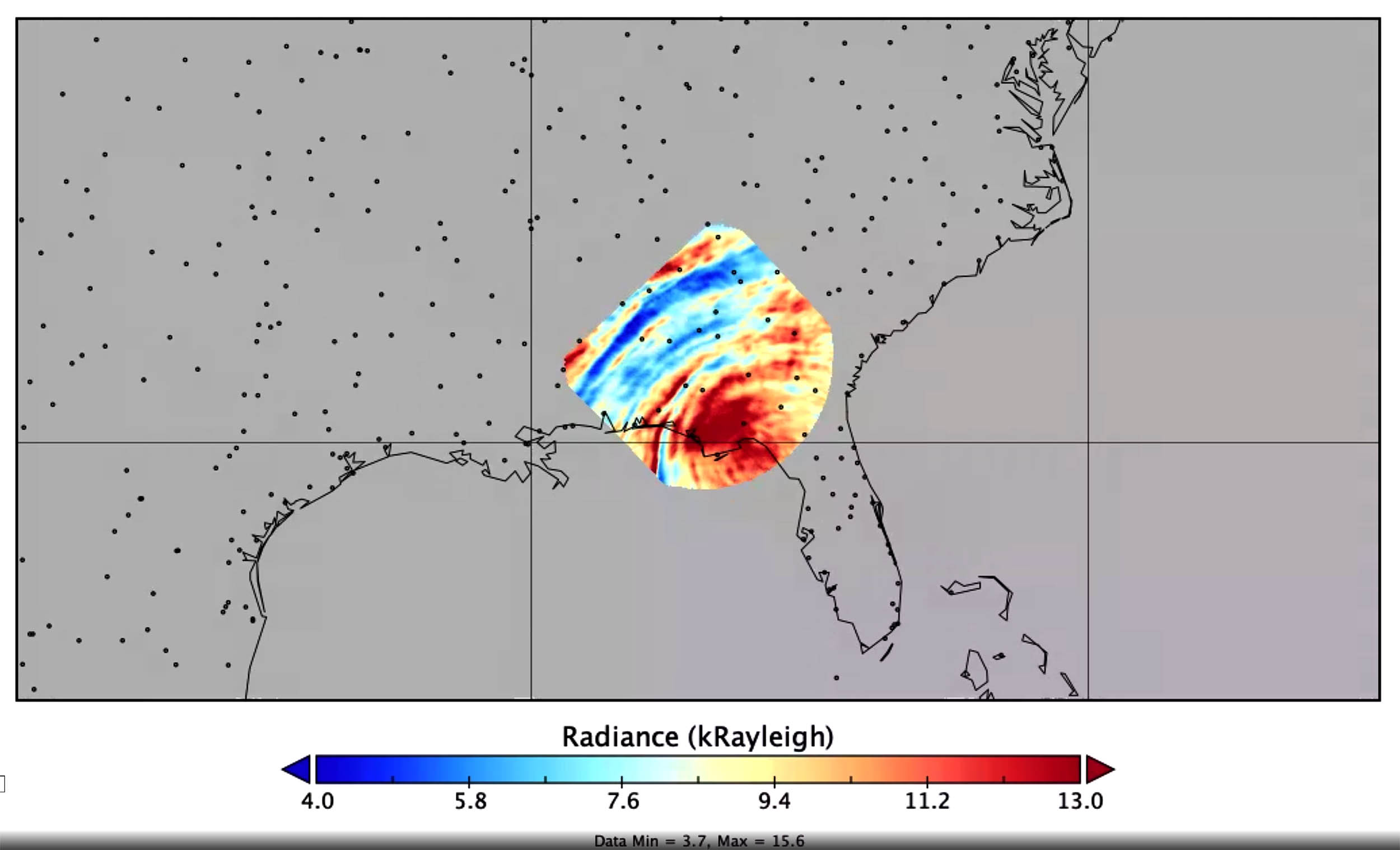 AWE observed atmospheric gravity waves generated by Hurricane Helene as the storm slammed into the gulf coast of Florida. The curved bands extending to the northwest of Florida, artificially colored red, yellow, and blue, show changes in brightness (or radiance) in a wavelength of infrared light produced by airglow in Earth’s mesosphere. Credit: Utah State University. Click image to enlarge.Science of the AWE instrument
AWE’s role is to reveal connections between surface storms and the upper atmosphere. Instead of looking at just the turbulent weather patterns people know – winds, rain, and lightning – it looks upward. It tracks how changes below might ripple upward into the mesosphere and beyond.
By doing this, it can help figure out what knocks the atmosphere off its usual balance. Before AWE, these subtle patterns might have gone unnoticed, leaving big questions about a very important component driving Earth’s weather and climate.
The air up there is thin, but it still matters. When these small waves appear, they can influence conditions that matter for satellites.
Engineers worry about anything that might shift or change the density of air at high altitudes because satellites can run into unexpected resistance.
The variations are slight, but in space technology, even a tiny adjustment can mean the difference between a satellite staying safely in orbit or drifting into trouble.
Now, with AWE’s observations, there is a tool to help understand these subtle shifts before they become a headache.
Importance of atmospheric waves
Communication satellites, weather satellites, and even the GPS signals people rely on for navigation all depend on stable atmospheric conditions to work properly.
Some might think the harsh environment of space operates independently from Earth’s weather. However, that’s not always true. A strong hurricane, like Helene, can trigger changes that bubble all the way up.
By having instruments that keep an eye on these patterns, researchers can plan better. They can figure out if a future storm might rearrange the air enough to cause problems.
Observing these waves was made possible by a set of telescopes known as the Advanced Mesospheric Temperature Mapper (AMTM).
NASA has indicated that AMTM is sensitive enough to catch details that might slip past ordinary sensors.
The mesosphere’s cold temperatures, around -150°F (-101°C), do not stop AMTM from seeing the subtle infrared signals that reveal hidden activity.
Thanks to this technology, a little-known part of the atmosphere is now more accessible than ever.
ISS, atmospheric waves, and the future
Data from AWE and AMTM provide a new piece of the puzzle about how Earth’s upper atmosphere and surface weather connect.
Before, much of this was speculation. Now, there is something solid to rely on, even if it involves phenomena not visible to the naked eye.
NASA says that, with these early findings in hand, the AWE can keep recording subtle signals during different types of storms.
Each new piece of data helps build understanding, potentially giving everyone better tools to keep communications stable and satellites safe.
That kind of information may seem far removed from daily life, but it has a subtle impact on the technology and networks people rely on every day.
—–
Like what you read? Subscribe to our newsletter for engaging articles, exclusive content, and the latest updates.
Check us out on EarthSnap, a free app brought to you by Eric Ralls and Earth.com.
—–