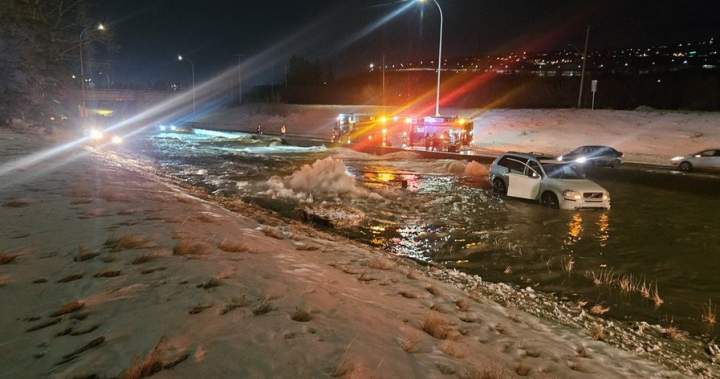
An independent report into the June 2024 failure of the Bearspaw feeder main is recommending significant action to fix several decades-old systemic issues within the city’s water system that resulted in the rupture as Calgary’s mayor vows to act on each of the panel’s recommendations.

The independent report was commissioned after the rupture forced the city to spend millions of dollars on emergency repairs and implement weeks of strict water conservation measures.
The findings of the six-member independent panel were supposed to be released later this year, but the release was expedited after the Bearspaw feeder main ruptured for a second time on Dec. 30.
Although the report was written prior to the pipe’s second failure, it noted the recommendations remain relevant.
The Bearspaw feeder main carries 60 per cent of the city’s drinking water, and the report found the line will “continue to be unreliable” no matter how many repairs are conducted; the report noted it must be replaced.
Story continues below advertisement
“Had we perhaps recognized this problem sooner, we could have averted some of the negative implications that have arisen,” said Siegfried Kiefer, a retired ATCO executive who was tapped to chair the independent panel. “We have a piece of critical infrastructure that is failing us, and we need to move as quickly as we can to repair it and fix the organization so that it doesn’t let itself fall into that state of disrepair again.”
“You can see from the post-incident reporting that was done at that time, that the city was alerted to the fact that this vintage of pipe had issues around corrosion and failure as a result of the soil chemistry surrounding the pipe and it managing to penetrate the concrete barriers to actually embrittle the coil wrapping the pipe,” Kiefer told reporters.
More on Health
More videos
The report noted subsequent studies and assessments “repeatedly confirmed the risk” to the Bearspaw feeder main, and despite “repeated identification of this risk, the city prioritized other “critical needs and initiatives” and deferred inspection, monitoring and risk mitigation on the Bearspaw line.
“This deferral was a function of underestimated likelihood of failure, not appreciating the significant impact of a failure, emphasis on other priorities and occasional periods of operating budget constraints,” the panel said in its report.
Kiefer noted investments in response to city growth often “overtook” resiliency and redundancy investments “that should have been undertaken at the time.”
Story continues below advertisement
The Bearspaw feeder main was also designated for inspection in 2017, 2020, and 2022, but the report found none occurred.

Get weekly health news
Receive the latest medical news and health information delivered to you every Sunday.
The report found the issues are a symptom of “systemic gaps” uncovered by the feeder main’s failure, including external pressures, risk and asset integrity processes, ineffective management, and a lack of effective governance oversight.
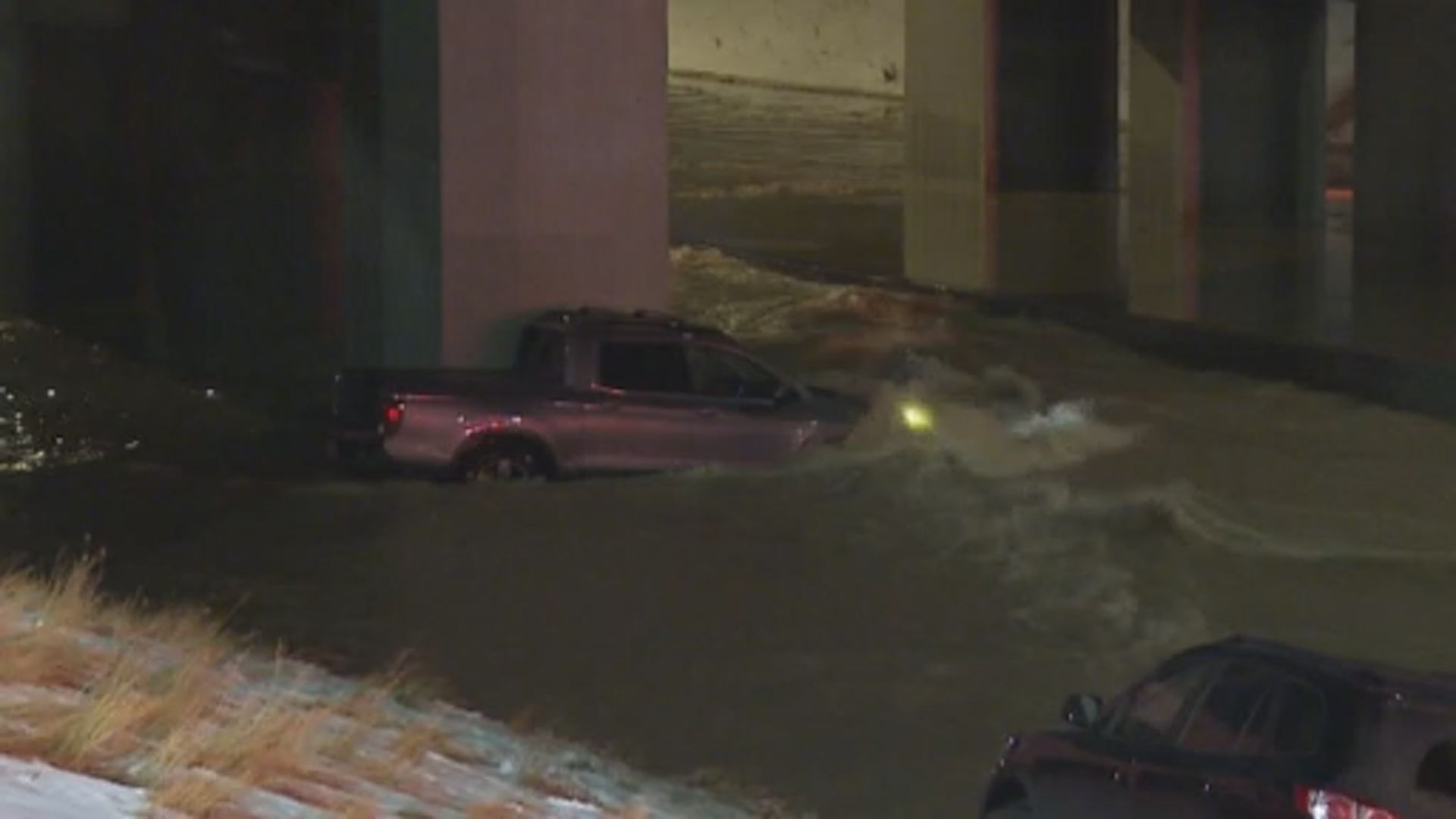
2:15
Calgary drivers trapped, work underway after another water main break
Calgary mayor Jeromy Farkas told reporters city council is “duty-bound” to execute the panel’s list of recommendations.
“We cannot cherry pick, we cannot choose. The work has been done for us,” Farkas said. “We need to fund proper maintenance, we need to fund essential infrastructure like it is essential.”
The independent panel recommends the city’s management structure be changed so there is a chief executive officer of the utility who is responsible to a board of directors, similar to the management structure of the water utilities in other Canadian cities.
Story continues below advertisement
“This is a major utility. It’s one of the largest in Canada, $3 billion in assets, $1 billion a year in revenue. This is not an inconsequential operation. And so it needs to have a dedicated management team focused solely on operating the water utility and making the right investment decisions for it,” added Kiefer.
Related News
-
‘No guarantee’ Bearspaw South Feeder Main will not break again: City of Calgary
-
Failure of Bearspaw feeder main was assessed as ‘low probability’ ahead of rupture
It also recommends an overhaul of the city’s risk management and asset integrity processes.
The report stated the water utility “lacked traditional planning safeguards” required for critical infrastructure, as the city’s last Asset Management Plan in 2017 did not include an integrated resource plan, which left the system “without coordinated, long-term renewal and redundancy planning.”
Its findings also included an environment of “unclear accountability and a culture of risk tolerance and decision deferral.”
The report doesn’t place blame on any one individual or city council, Kiefer said, because management was underinformed of the implications of decision-making due to a weak process that was not corrected.
However, the city’s chief administrative officer, David Duckworth, said he personally takes responsibility and accountability for the services the city delivers.
“We take this very seriously. We apologize to Calgarians for getting to where we are. We don’t want to be where we are,” Duckworth said. “We have a plan to get out of this emergency as quickly as possible and build a resilient water system.”
Story continues below advertisement
Among the shorter-term recommendations, the report said the entire length of the Bearspaw feeder main is corroded and should be replaced with a new steel pipe.
“We’ve made recommendations to accelerate the install of that piece of infrastructure as quickly as we possibly can, which is an emergency situation,” said Kiefer.
While the report does not provide any cost estimate, he said the project will have a lifespan of 50 plus years, so the cost to Calgarians can be amortized “over a very long period of time.”
Farkas told reporters he is pushing for “sparing no expense” for the replacement line, which is set to begin construction this spring.
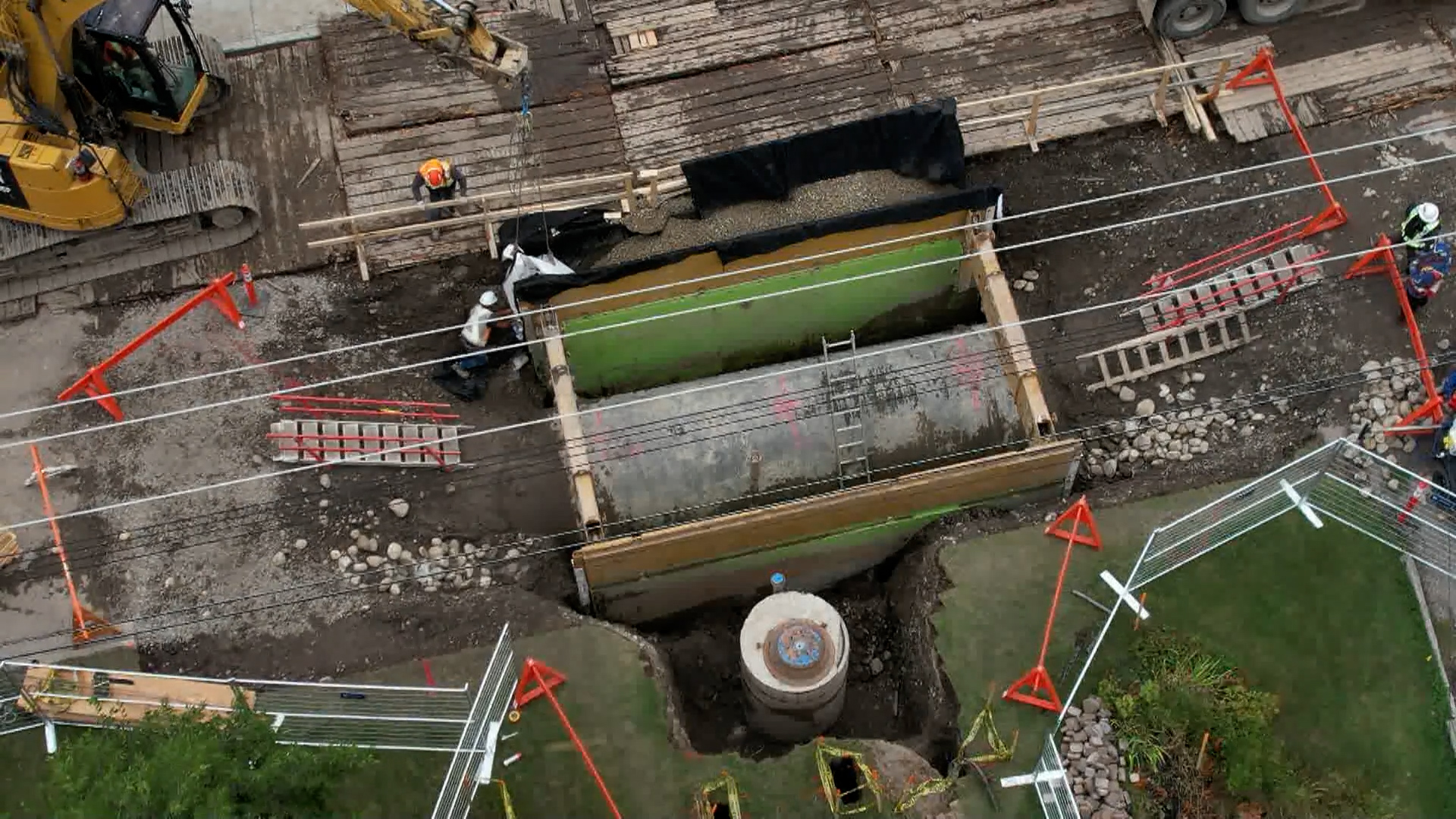
1:51
Work underway to twin Calgary feeder main that ruptured
Calgary city council went late into the evening asking questions of the panel on its fundings as well as city administration during a special meeting Wednesday.
Story continues below advertisement
At least one city councillor took issue with the timing of the report’s release, as the city continues to grapple with water supply challenges amid emergency repairs to the feeder main.
Ward 2 Coun. Jennifer Wyness said the focus should be getting the feeder main back into operation before determining what happened.
“While the pipe is still broken and still being fixed, we are being distracted by a report,” Wyness told reporters. “The messaging needs to be ‘please conserve water.’”
Farkas, however, said the report’s release Wednesday was “completely appropriate,” and urged Calgarians to reduce water consumption.
“Everything we know about this problem, we need to share it with Calgarians so that we can rally together to be able to solve it,” he said.
In its daily update on the situation, the city said Calgarians used 511 million litres of water on Tuesday, which is above the target zone of 485 million litres; it’s the fourth day in a row city water consumption surpassed that target.
The situation prompted the province to issue an emergency alert Wednesday due to water supply levels remaining in a “critical state.”
City council is being asked to direct administration to return to them in February with an implementation plan for the panel’s recommendations, including resource requirements.