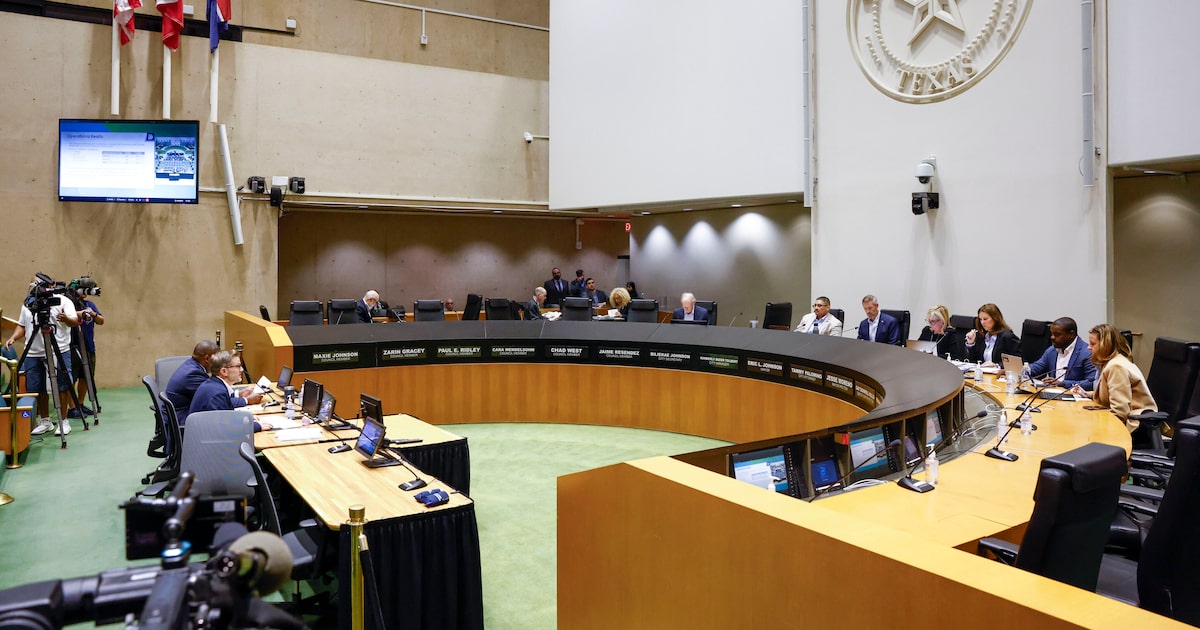
The city of Dallas is working on its annual community survey, with comments from council members due Friday. The draft survey includes 162 city-related items — and 23 of those actually have two parts — and 13 demographic questions.
That’s overkill. A shorter, more focused questionnaire could be more informative and valuable to decision-makers and residents.
The stated purpose of the survey is to “assess resident satisfaction to help improve the quality of city services and to determine priorities for the community,” according to a city presentation. Dallas decides the questions, and a private firm, the ETC Institute of Olathe, Kan., conducts the survey. It is, essentially, a standard customer satisfaction survey, with valid methodology and appropriate statistical analysis.
But that’s one of the inherent weaknesses of the typical city satisfaction survey. Residents aren’t merely customers, they’re collaborators in the enterprise of civic life. Their actions and attitudes help create the community they inhabit, and standard customer satisfaction surveys don’t capture that.
Opinion
Government decision-making is a series of trade-offs, and the survey should reflect that. A few brief, scenario-based questions could be useful. For example, include a pie chart of the city’s budget and ask where new revenue should be directed or what could be cut in a lean year. Explain the infrastructure budget and ask whether some street repair money should be moved into sidewalk repairs or vice versa.
Methodologies need to adapt to the digital age. Last year’s surveys were sent via U.S. Postal Service, though the cover letter included a link to an online version, according to ETC’s 2025 report. The postal service has become less reliable, and many younger residents do almost all their official business electronically. Despite the methodological challenges, an all-electronic alternative is imperative.
Because the survey reflects perceptions as much as actual experience or knowledge, it should ask where respondents obtain information about local events and issues. Legacy news outlets? Websites? City news releases? Texts? Social media? Word of mouth? This could help city leaders understand how residents’ perceptions are shaped.
Ask a few open-ended questions; residents often have useful information. What are the three best things about living in Dallas? What are the three worst things? Have you thought about moving out of Dallas recently? If yes, why and where would you move?
It may be too late to make major changes to the 2026 survey, but council members should at least shorten it. Do most residents have feelings about storm drainage, ambulance service, or volunteer disaster response programs? How do respondents react to this: “I am pleased with the direction City Government is taking to provide opportunities for residents to seek economic opportunities.” What does that even mean?
Focus questions on the core services that are perennially important to residents: public safety, streets and infrastructure, code compliance and parks.
We welcome your thoughts in a letter to the editor. See the guidelines and submit your letter here.
If you have problems with the form, you can submit via email at letters@dallasnews.com