
January 8, 2026 — 4:36pm
Save
You have reached your maximum number of saved items.
Remove items from your saved list to add more.
Save this article for later
Add articles to your saved list and come back to them anytime.
Got it
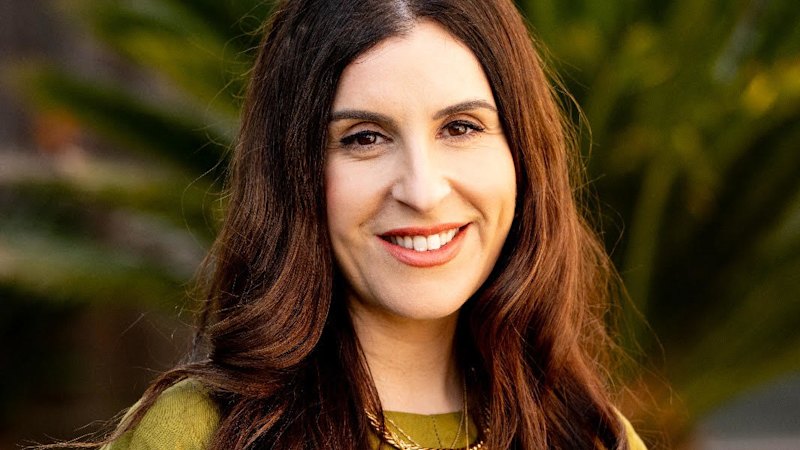
The Adelaide Festival has pulled Palestinian-Australian writer Dr Randa Abdel-Fattah from the Adelaide Writers’ Week program, citing concerns about “cultural sensitivity” after 15 people were killed in the Bondi shootings last month.
In a statement, the Adelaide Festival board said: “Whilst we do not suggest in any way that Dr Randa Abdel-Fattah’s or her writings have any connection with the tragedy at Bondi, given her past statements we have formed the view that it would not be culturally sensitive to continue to program her at this unprecedented time so soon after Bondi.”
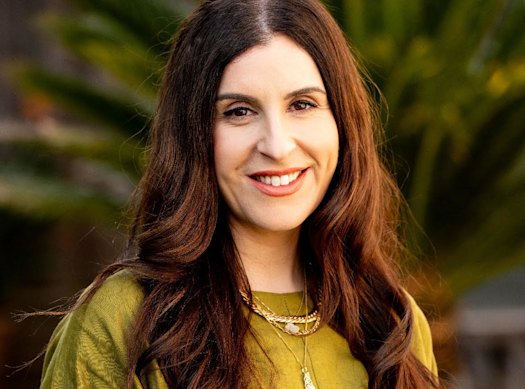 Palestinian-Australian writer Dr Randa Abdel-Fattah.Tom Toby
It continued: “In this shared time of both mourning and reflection, we have spent the last weeks commencing a review across our current and planned operations and interactions through the lens of the current national community context and the role of Adelaide Festival in promoting community cohesion.”
Abdel-Fattah had been programmed to speak about her new book, Discipline.
Responding to the news via a statement, the Sydney-based Macquarie University academic said “this is a blatant and shameless act of anti-Palestinian racism and censorship and a despicable attempt to associate me with the Bondi massacre”.
“What makes this so egregiously racist is that the AF board has stripped me of my humanity and agency, reducing me to an object onto which others can project their racist fears and smears. The Board’s reasoning suggests that my mere presence is ‘culturally insensitive’; that I, a Palestinian who had nothing to do with the Bondi atrocity, am somehow a trigger for those in mourning and that I should therefore be persona non-grata in cultural circles…”
As previously reported by this masthead, concerns were raised with Bendigo Writers Festival ahead of Abdel-Fattah’s scheduled appearance last year over her previous social media commentary by lobby group 5A. It referenced a series of posts from Abdel-Fattah, including ones it asserted had said Jews had “no claim to cultural safety” and that institutions that considered “fragile feelings of Zionists” were “abhorrent”.
Adelaide Writers’ Week (AWW) sits under the banner of the Adelaide Festival but has its own director, Louise Adler; it is held in late February/early March annually. Adler was not able to be reached for comment on Thursday.
Prominent authors have withdrawn from the program in solidarity with Abdel-Fattah, including Michelle de Kretser, Professor Yanis Varoufakis, Professor Peter Greste, Dr Evelyn Araluen, Dr Melissa Lucashenko, Dr Amy McQuire, Professor Clare Wright, Professor Chelsea Watego, Dr Bernadette Brennan, Hannah Ferguson and Amy Remeikis.
The festival statement said the board had established a sub-committee to oversee an ongoing board-led review, and to guide decisions about Adelaide Writers’ Week in the near and longer terms. “This includes ongoing engagement with relevant government agencies and the appointment and/or advice of external experts.”
“We understand these Board decisions will likely be disappointing to many in our community. We also recognise our request to Dr Abdel-Fattah will be labelled and will cause discomfort and pressure to other participants. These decisions have not been taken lightly.”
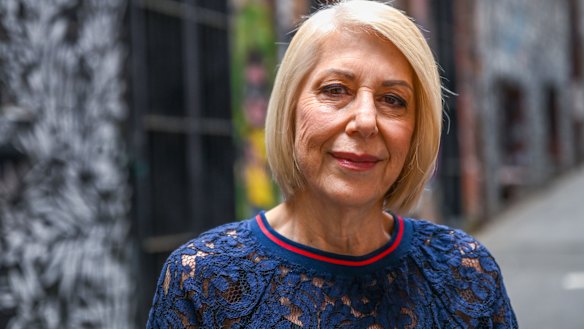 Adelaide Writers’ Week director Louise Adler.Eddie Jim
The office of the premier of South Australia, Peter Malinauskas, told this masthead the premier supported the decision of the Adelaide Festival board.
Following Abdel-Fattah’s removal, The Australia Institute withdrew its support and sponsorship of events from the literary festival.
Related Article
“The Australia Institute has valued being part of discussions at the event, which in the past have promoted bravery, freedom of expression and the exchange of ideas,” it said in a statement. “Censoring or cancelling authors is not in the spirit of an open and free exchange of ideas.”
Ahead of last year’s Adelaide Writers’ Week, festival director Louise Adler told this masthead she had brought together writers “who have thought more deeply than most of us can in our ordinary lives about issues, be they personal or public”.
“I would hope that as citizens of Australia and of the world we would care deeply about the horrors we are witnessing internationally, that our collective and individual voices would in fact be loud and clear in defence of humanity,” Adler said at the time.
Get the day’s breaking news, entertainment ideas and a long read to enjoy. Sign up to receive our Evening Edition newsletter.
Save
You have reached your maximum number of saved items.
Remove items from your saved list to add more.
From our partners