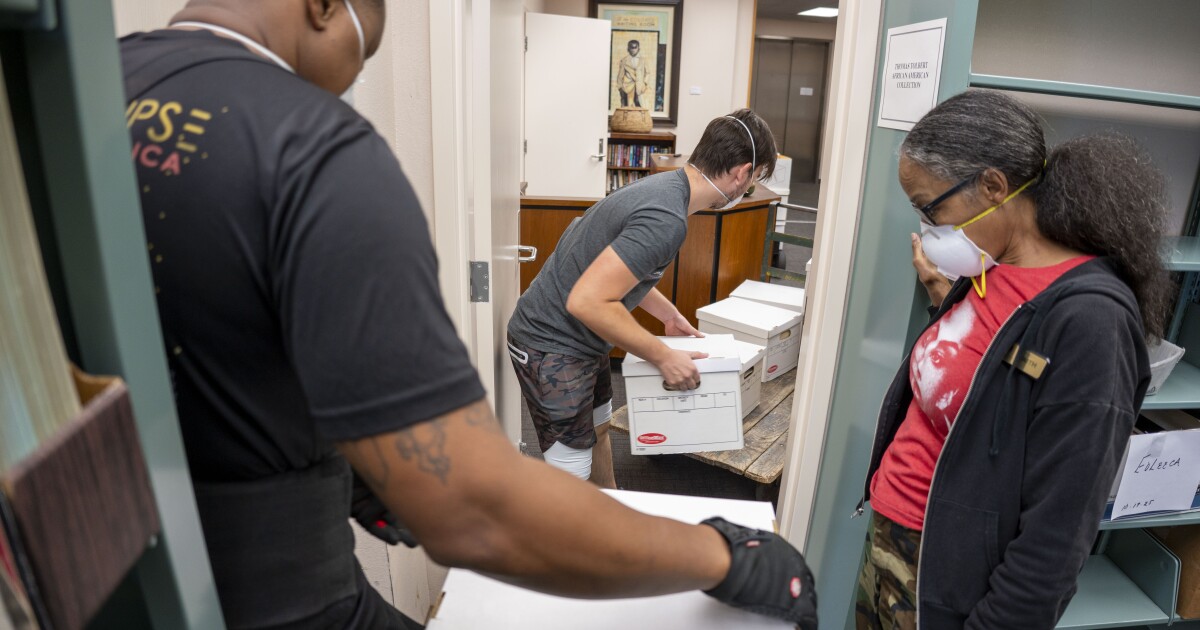
The African American Museum, Dallas got a $250,000 grant from Communities Foundation of Texas to begin a major multi-year project to preserve thousands of archival materials documenting Black history.
The funding will support the first phase of a three-year conservation project focused on stabilizing the museum’s archival collection, which includes photographs, rare books, oral histories, historic documents and recordings. And it will establish the Harry Robinson Jr. Research and Conservation Lab, expected to open in February 2026.
“Before I can build a conservation lab, which is underway, I have to rescue the material,” said Margie J. Reese, chief program officer.
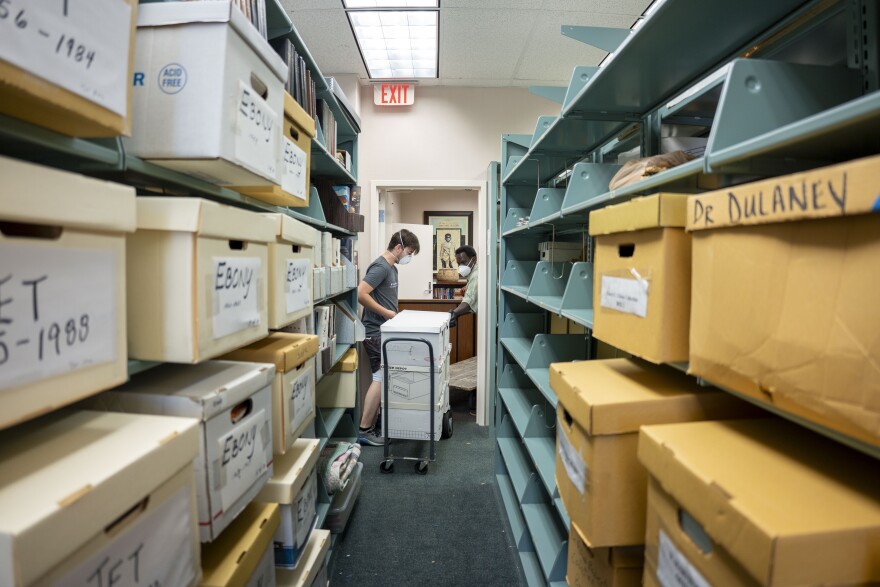
The museum holds more than 1,000 boxes of fragile archival material that had been stored in conditions that put them at risk of deterioration. Reese said those materials will be relocated in phase one, stored in acid-free containers and documented, before deeper conservation work and digitization continues.
Using the grant, the museum has hired interns and archival staff, purchased collections management software and moved the materials into temporary safe storages in a nearby Fair Park building formerly known as the Natural History Museum.
Courtesy
/
African American Museum
A $250,000 grant will support phase one of a three-year conservation project focused on stabilizing the museum’s archival collection — including photographs, rare books, oral histories, historic documents and recordings.
“Phase one is the get ready to be ready phase,” Reese said.
Communities Foundation of Texas, which has supported nonprofits across North Texas for more than seven decades, said the project stood out for its focus on long-term preservation rather than short-term programming.
“It addresses systemic inequalities in cultural preservation, and it strengthens conservation infrastructure for the museum, improves environmental controls,” said Candace Thompson, community philanthropy officer at the foundation. “I would say it trains staff but also it trains future conservationists of said history.”
The project aligns with the foundation’s mission to preserve cultural and historical assets, promote equity and build institutional capacity.
“I don’t think anything like this has been done,” Thompson said.
Even with the new funding, Reese estimates this process will take about a year, though digitization and conservation will continue for years.