Many San Diego experts are taking a cautious view of what the economy holds for 2026, citing tariff concerns and slowed job growth.
We asked our Econometer panel of San Diego business leaders and economists to predict what the economy will look like roughly 12 months from now. Forecasts were mixed this year, with some optimistic, but others had lingering concerns about consumer sentiment, massive investments in artificial intelligence and trade deficits.
Detailed forecasts are listed at the bottom of the article. On average, the panel predicted a higher unemployment rate for San Diego County by the end of 2026 and higher home prices. The panel said the price of oil would stay about the same and the stock market would have another strong year.
At the start of 2025, the panel also made predictions — and came close to calling how the year would end.
For the price of oil ($58 per barrel, as of Dec. 29), Chris Van Gorder was closest with his prediction of $60. James Hamilton correctly guessed on two categories: $880,000 for the median home price ($875,000 as of October) and 4.9% for the San Diego County unemployment rate (the exact rate in September). The Dow Jones Industrial Average ended the year at 48,063 and Kelly Cunningham was closest with a prediction of 48,000.
Question: What economic indicator will you monitor most closely in 2026?
Economists
Norm Miller, University of San Diego
Jobs: Job growth or decline, even with dubious data, is a critical indicator for the average household. Hopefully we will have more stable economic policies, reduced tariffs and no new wars, all of which could throw a monkey wrench into oil prices (now declining). I expect artificial intelligence-related spending to continue in 2026, helping to keep the GDP up, even if this is skewed toward the tech industries.
David Ely, San Diego State University
Consumer sentiment: While the University of Michigan’s index of consumer sentiment improved slightly in December, it dropped 28% in 2025. This suggests consumers enter 2026 with continuing concerns over high prices and weakening labor market conditions. Consumers’ perspective of their own financial situation and their outlook for the broader economy will impact their spending decisions in 2026. For the U.S. economy to be robust, consumers need to feel optimistic and be willing to spend.
Ray Major, economist
AI investment: Although not a classic indicator, I’ll be tracking AI investment as it drives nearly 1.6% of U.S. GDP through more than half a trillion dollars of infrastructure spending. AI could generate $1.2 trillion in labor cost savings globally and make workers three times more productive. If successful, high stock valuations and continued investment will occur. If not, the AI bubble could burst, leading to significant market instability, job losses, decline in the stock market and loss of consumer confidence.
Caroline Freund, UC San Diego School of Global Policy and Strategy
Trade deficit: President Trump promised tariffs would shrink it; economic theory says they won’t. The verdict is still out. The deficit — exports minus imports — narrowed in the latest monthly data (September 2025), but widened year-to-date compared with the previous year. This year — 2026 — will be the real test: Can tariffs actually reduce the trade gap or will the deficit persist despite higher trade barriers? And, if it does fall, will it deliver the promised revival in U.S. manufacturing?
Kelly Cunningham, San Diego Institute for Economic Research
Gross domestic product: GDP is the most comprehensive measurement of national, state and local economic production. Encompassing monetary value for all final goods and services produced within the designated region, GDP includes an area’s total investment, including government spending, to indicate “real” change (after adjustment for inflation), gauging an economy’s growth or contraction. Recessions are generally identified by a decrease in GDP over two successive quarters. The change will show whether residents and businesses are better off or not.
Alan Gin, University of San Diego
Job growth: Employment growth at the national level has slowed to a crawl, if it hasn’t turned negative. Some economists are calling this a “hiring recession.” Employment growth is key to the economy as it drives things such as consumer spending and the housing market. While the tax cuts scheduled for 2026 may give a boost to the labor market, they could be offset by cuts in programs such as Medicaid and the Affordable Care Act.
James Hamilton, UC San Diego
Unemployment rate: Many analysts look at the number of people working as the most reliable labor-market indicator. But interpreting this statistic has become more complicated with the crackdown on immigrants. I think the unemployment rate will be a better indicator than total nonfarm payrolls in 2026 of whether the economic expansion is losing steam. As long as the national unemployment rate remains below 5%, the economy will keep growing.
Executives
Phil Blair, Manpower
Unemployment rate: I am concerned about our K-shaped economy. The rich are getting richer, the middle class is frustrated, and the poor are struggling. While the economy looks good in the aggregate, the Dow is hitting new highs based on speculation around AI and technology stocks, and the economy is mostly growing due to the spending of high-net-worth individuals. Neither of these trends results in a tide that raises all boats. The unemployment rate tells us the true story.
Gary London, London Moeder Advisors
Chaos (Part two): Rinse and repeat from last year, a year that was mostly defined by unpredictability and instability. Maybe the mad dash to tariffs will be quieted some this year, only to be replaced by geopolitical turmoil, greatly impacting trade, and domestic economic chaos egged on by migrant raids, unemployment, affordability, Social Security, inflation and national debt. Time to focus on sports, maybe the World Cup, to take our minds off of all of this.
Chris Van Gorder, Scripps Health
Unemployment rate: Labor conditions will have an impact on wages, on consumer spending, on housing demand and on inflation. There has been a lot of coverage of the impact of AI on employment, and it will be important to see what impact — if any — these technological advances have on people.
Jamie Moraga, Franklin Revere
Federal funds rate: This benchmark interest rate set by the Federal Reserve is one to watch in 2026. The rate is designed to signal the Fed’s outlook on inflation and economic health, but internal tensions, leadership uncertainty and political pressures could cloud its purpose and direction. Regardless of any drama, it remains an important rate that influences everything from mortgages and auto loans to credit cards and savings.
Bob Rauch, R.A. Rauch & Associates
Inflation: If inflation is in check, it will shape interest rates, potentially leading to more substantial investment and hiring, increased consumer spending (which accounts for 70% of the economy), and business investment. Mortgage rates will track inflation-driven Fed decisions, and equity valuations depend heavily on inflation expectations. In my many years on this panel, I have never picked inflation, but this year it is more critical than ever
Austin Neudecker, Weave Growth
Housing inventory: Housing is the biggest driver of affordability in our city. Availability of housing for sale drives transactions, prices and time on market metrics more than interest rate improvements. A sustained rise in listings would ease the current holdback, increase tax collections and might improve affordability.
Predictions for 2026
San Diego County unemployment rate
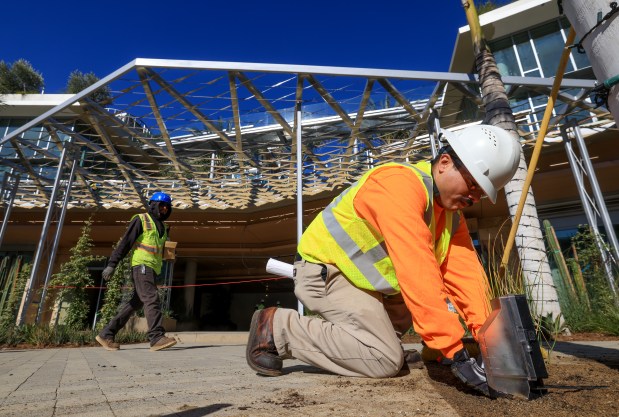 Eric Rodriguez works to put in plants in front of the main entrance to the new 222 North City apartment building in mid-December. (Hayne Palmour IV / For The San Diego Union-Tribune)
The San County jobless rate was 4.9% in September, down from an annual high of 5.2% in July. Data was delayed because of the government shutdown, so economists and analysts are still somewhat in the dark about unemployment numbers for the last half of 2025. Most of the panel predicted the jobless rate would slightly increase.
Ray Major: 5%Caroline Freund: 5.2%Kelly Cunningham: 5%Phil Blair: 5.2%Gary London: 5.1%Alan Gin: 5.5%Bob Rauch: 4.7%James Hamilton: 5%Austin Neudecker: 5.5%Chris Van Gorder: 5%Norm Miller: 5%Jamie Moraga: 4.8%David Ely: 4.9%
San Diego County median home price
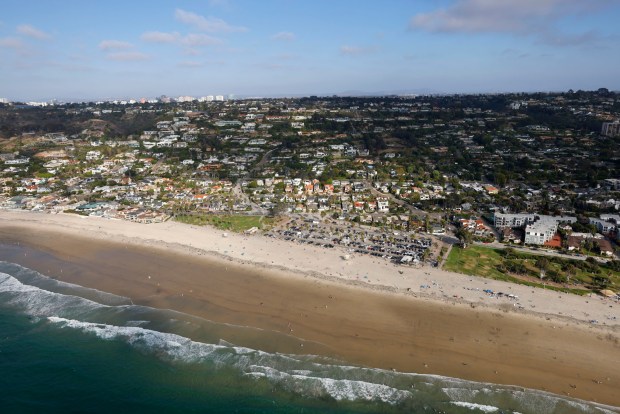 Homes in La Jolla in October. (K.C. Alfred / The San Diego Union-Tribune)
The latest figures on the region’s median home price, as of October, put it at $875,000 — down from a high of $915,000 in June 2024. The median combines sales of single-family homes, townhouses and condos. Almost all panelists are predicting that home prices will be higher a year from now.
Ray Major: $885,000Caroline Freund: $875,000Kelly Cunningham: $900,000Phil Blair: $900,000Gary London: $850,000Alan Gin: $950,000Bob Rauch: $900,000James Hamilton: $950,000Austin Neudecker: $925,000Chris Van Gorder: $975,000Norm Miller: $975,000Jamie Moraga: $905,000David Ely: $885,000
Dow Jones Industrial Average
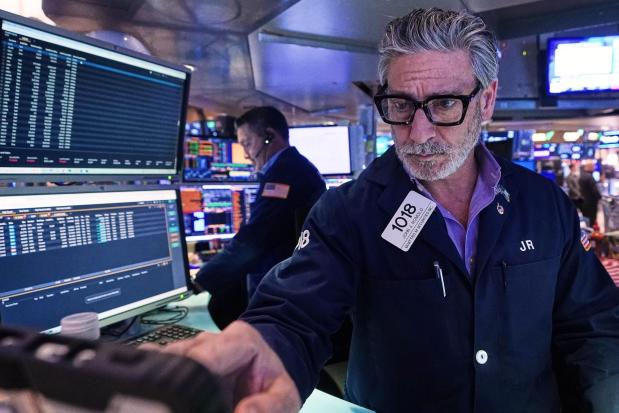 Trader John Romolo works on the floor of the New York Stock Exchange in December. (AP Photo/Richard Drew)
The stock market continued to defy expectations in 2025, ending the year at 48,063. The panel was less cautious with predictions this year, whereas in the past several years, they mostly forecast downturns.
Ray Major: 55,000Caroline Freund: 53,000Kelly Cunningham: 53,000Phil Blair: 51,000Gary London: 44,000Alan Gin: 52,000Bob Rauch: 52,000James Hamilton: 51,000Austin Neudecker: 52,000Chris Van Gorder: 45,000Norm Miller: 50,000Jamie Moraga: 52,250David Ely: 52,200
Oil prices
 Evana, an oil tanker, is docked at El Palito port in Puerto Cabello, Venezuela, Sunday, Dec. 21, 2025. (AP Photo/Matias Delacroix)
The panel’s predictions for oil prices received a big shock as the U.S. captured Venezuela’s president, which could potentially open up the Latin American nation’s vast oil reserves. Energy stocks rose in the days following the military action. Oil ended 2025 around $58 a barrel, and much of the panel predicted it would be around the same level or lower in a year.
Ray Major: $52Caroline Freund: $57Kelly Cunningham: $50Phil Blair: $49Gary London: $55Alan Gin: $65Bob Rauch: $50James Hamilton: $62Austin Neudecker: $59Chris Van Gorder: $90Norm Miller: $52Jamie Moraga: $54David Ely: $59
Have an idea for an Econometer question? Email me at phillip.molnar@sduniontribune.com. Follow me on Threads: @phillip020