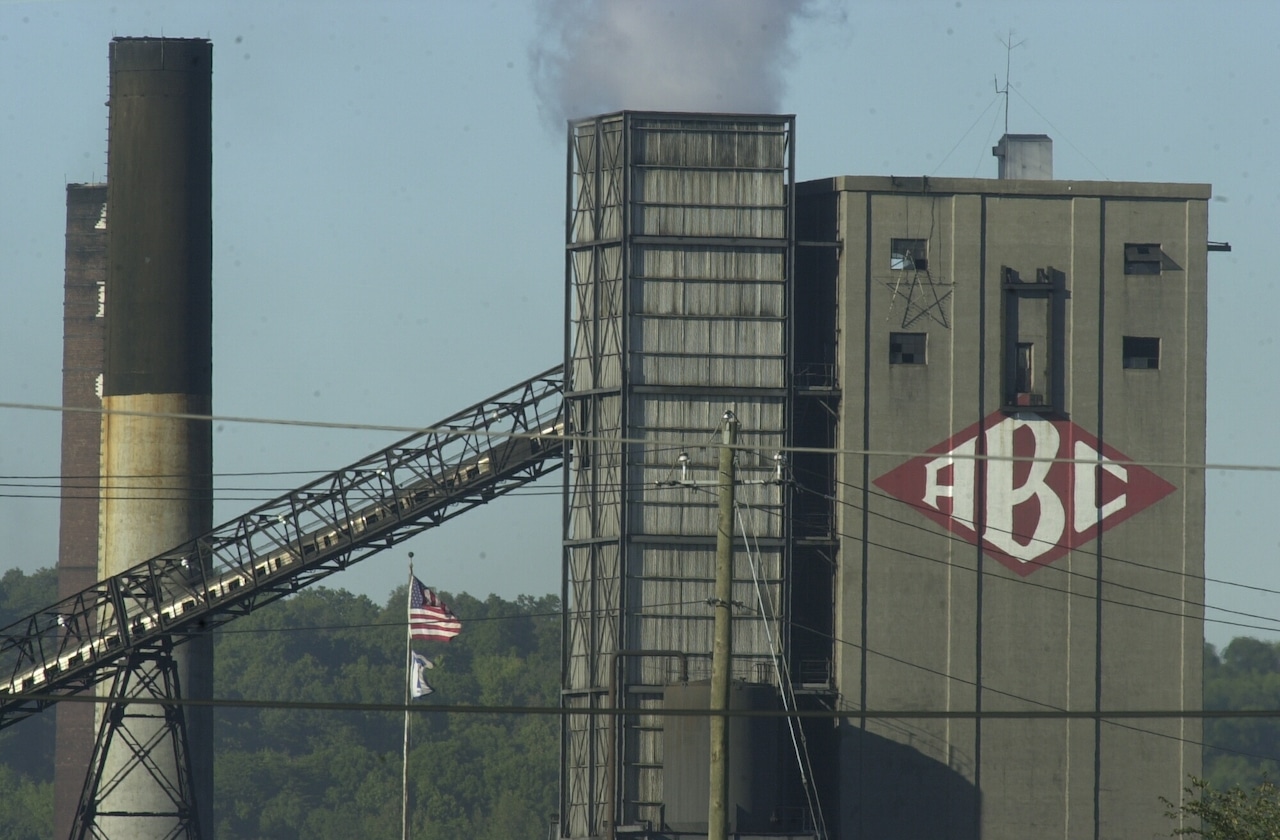
A local environmental advocacy group is asking federal judges to reinstate air pollution rules that would apply to ABC Coke in Tarrant. The request comes after President Donald Trump recently ended those rules.
“For generations, communities surrounding ABC Coke here in Alabama have endured exposure to toxic pollution from one of the dirtiest industrial practices in our country,” said Jilisa Milton, executive director of the Greater-Birmingham Alliance to Stop Pollution (GASP), in a news release. “Folks who have not visited metro Birmingham may not understand what being surrounded by polluting industries does to a community’s health and spirit. We’re tired of suffering so dirty industries like ABC Coke can get a pass.”
GASP is one of eight environmental advocacy groups that filed a lawsuit against Trump, the EPA, and EPA Administrator Lee Zeldin in D.C. District Court in December, looking to have air pollution regulations for coke ovens reinstated.
Coke ovens are plants that turn coal into coke—fuel used in the process of making steel—by heating it to extremely high temperatures to remove impurities.
The process is known to release benzene, mercury, lead, and arsenic, according to the EPA. Coke oven emissions are likely to cause cancer, according to the lawsuit, in addition to other adverse health effects.
ABC Coke in Tarrant is one of just 11 coke oven facilities in the U.S. In 2024, the EPA updated the air quality regulations for coke ovens, requiring stricter monitoring and limiting the amount of hazardous air pollutants emitted.
But in November, Trump issued a proclamation that exempted all of the coke oven plants from the new rule for two years, arguing that the emissions control technology that would be needed to meet these standards is “not practically available.”
The Drummond Company, which operates ABC Coke, did not respond to a request for comment.
Trump is the first president to use his authority to exempt certain facilities from air quality regulations under the Clean Air Act, according to the lawsuit. In addition to exempting coke ovens, Trump has also issued exemptions for more than 180 facilities, including one-third of all coal-fired power plants in the U.S. from mercury and other air quality standards.
GASP and the other environmental groups argue that Trump’s proclamation exceeds his presidential authority and want the court to invalidate it.
“The scope, content, and context of the Coke Ovens Proclamation show it for what it really is: a pretext to relieve these polluters from complying with the Coke Ovens Rule and its critical public-health protections while EPA reconsiders it, even though Congress explicitly prohibited that sort of delay pending administrative reconsideration,” the lawsuit states.
A report from the Environmental Integrity Project found that the six-month average levels of benzene emitted and recorded at the perimeter of ABC Coke between 2022 and 2023 were more than four times the chronic, long-term health threshold identified in the group’s report.
In the last five years, ABC Coke has been subject to four enforcement actions and fined nearly $530,000, according to the report.
In 2021, the Drummond Company, which owns ABC Coke, the EPA, and the Jefferson County Department of Health reached a settlement to resolve benzene air pollution violations at the site. As part of the settlement, ABC Coke had to install more air quality monitoring at the site.
The EPA estimates that coke ovens release around 2,400 tons of hazardous air pollutants every year, according to the lawsuit.
ABC Coke is adjacent to the 35th Avenue Superfund Site in north Birmingham. The site is a mix of historic industrial areas and residential neighborhoods. The EPA is continuing to work to remove contaminated soil from the neighborhood.
Bluestone Coke, a closed coking plant within the 35th Avenue site, is facing a lawsuit from GASP and Black Warrior Riverkeeper, alleging the plant contaminated Five Mile Creek, which flows into Locust Fork and eventually the Black Warrior River. That lawsuit remains pending.