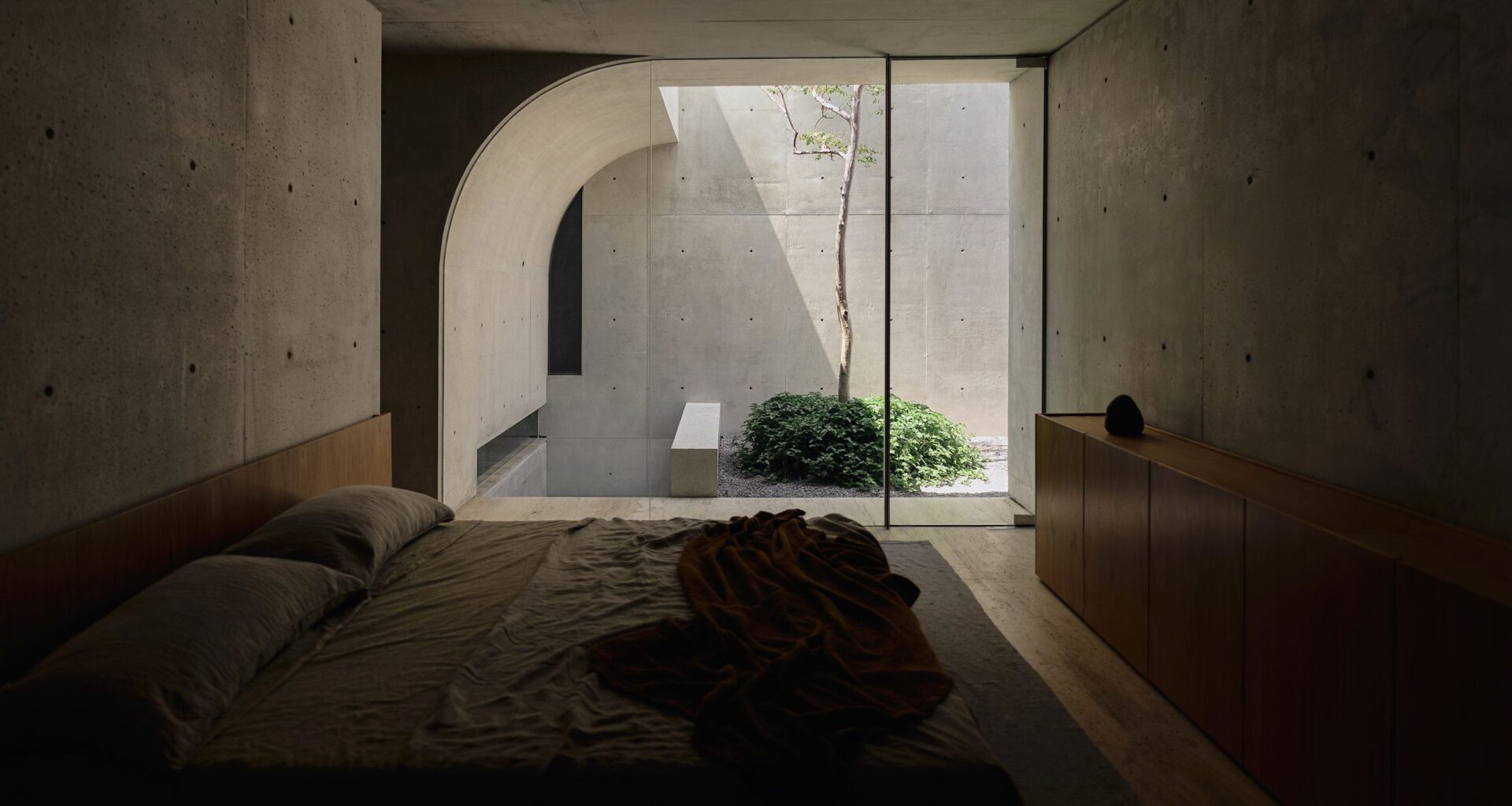
Mexican architecture practice HW Studio has created a concrete house on the Pacific coast of Puerto Vallarta, Mexico, with a semi-elliptical wall that frames multiple levels of contemplative courtyards.
The Morelia, Mexico-based studio completed the 472 square metre (5,080 square feet) Casa Tao in 2025. It was designed through conversations with the clients about their humble upbringings and the importance of shade in the coastal regions.
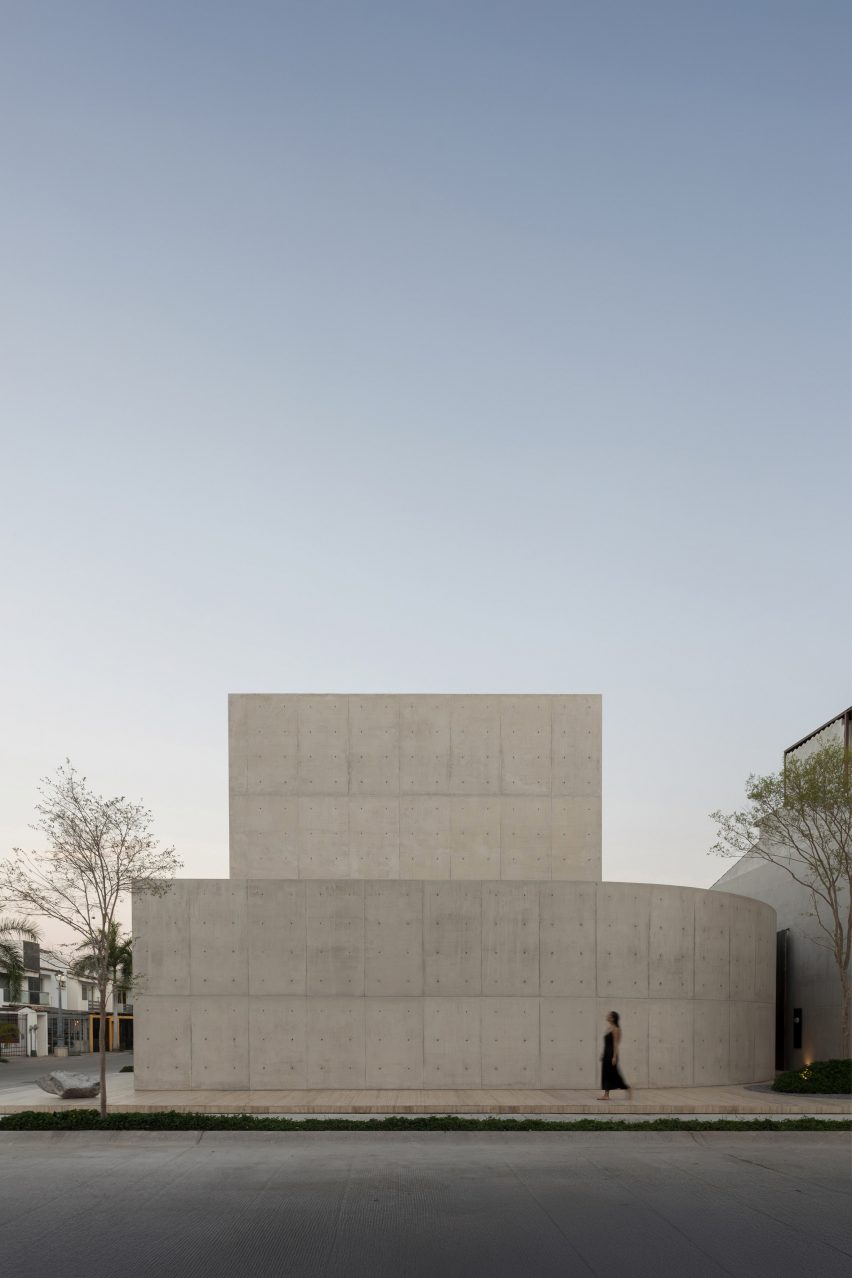 Casa Tao is a concrete house on the Pacific coast of Puerto Vallarta, Mexico. Photo by Hugo Tirso
Recalling the resident’s childhood home, the design centres around a need for shelter, seclusion and the asset of shade that provides both physical protection from the extreme sun and emotional refuge in a sense of calm, stillness and protection from the chaotic world, the studio explained.
“Some houses are not designed – they are remembered,” the studio told Dezeen. “Casa Tao was not born from a technical drawing, but from the silent memory of those who inhabit it.”
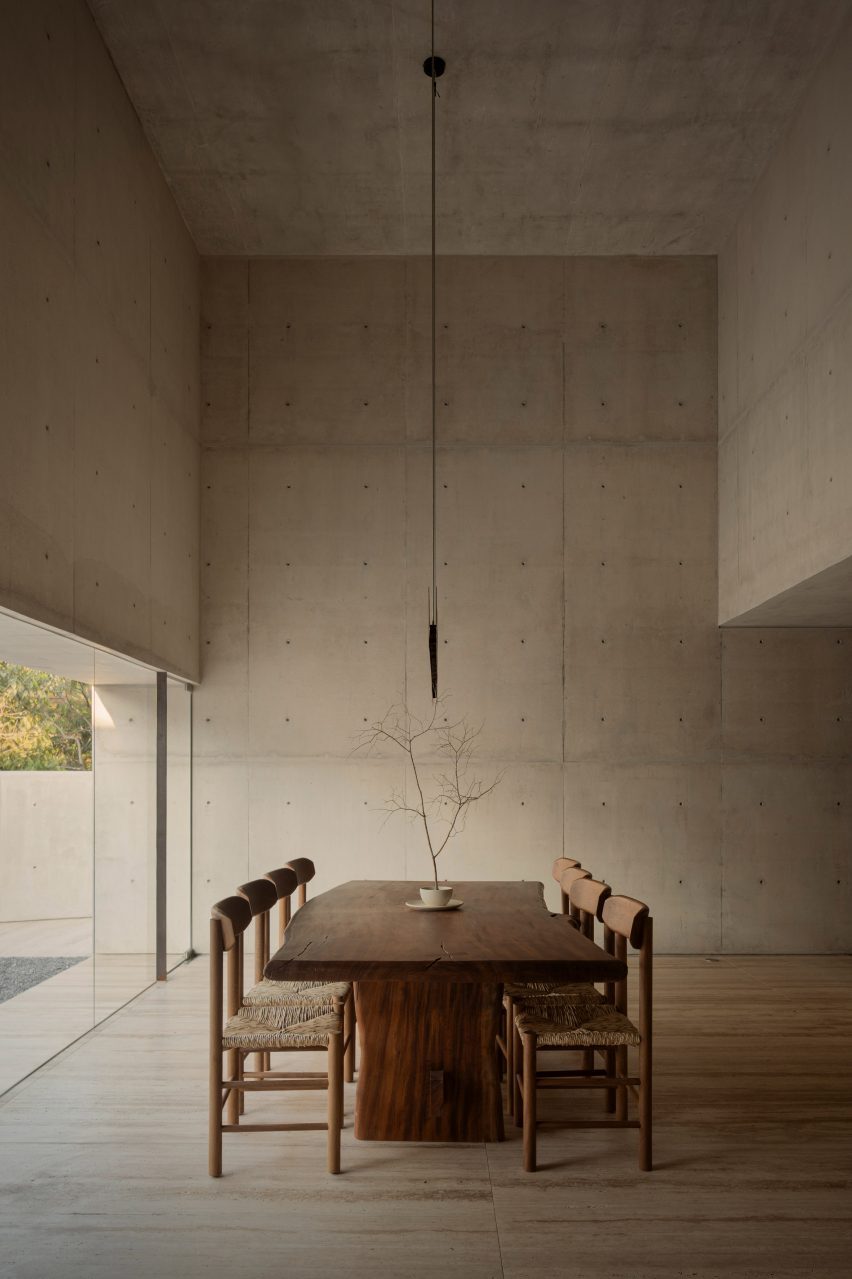 The design centres around a need for shelter, seclusion and the asset of shade. Photo by Cesar Belio
“It is a house that does not seek to respond to an image, but to a life. Or rather: to a way of living,” the studio continued.
Before the beginning of the project, the clients travelled to Japan, bringing back an affinity for “the aesthetics of emptiness, compositional cleanliness and the stillness contained in every architectural gesture”. The studio took this heading and aimed for a space where time slows down and light filters gently through the rooms.
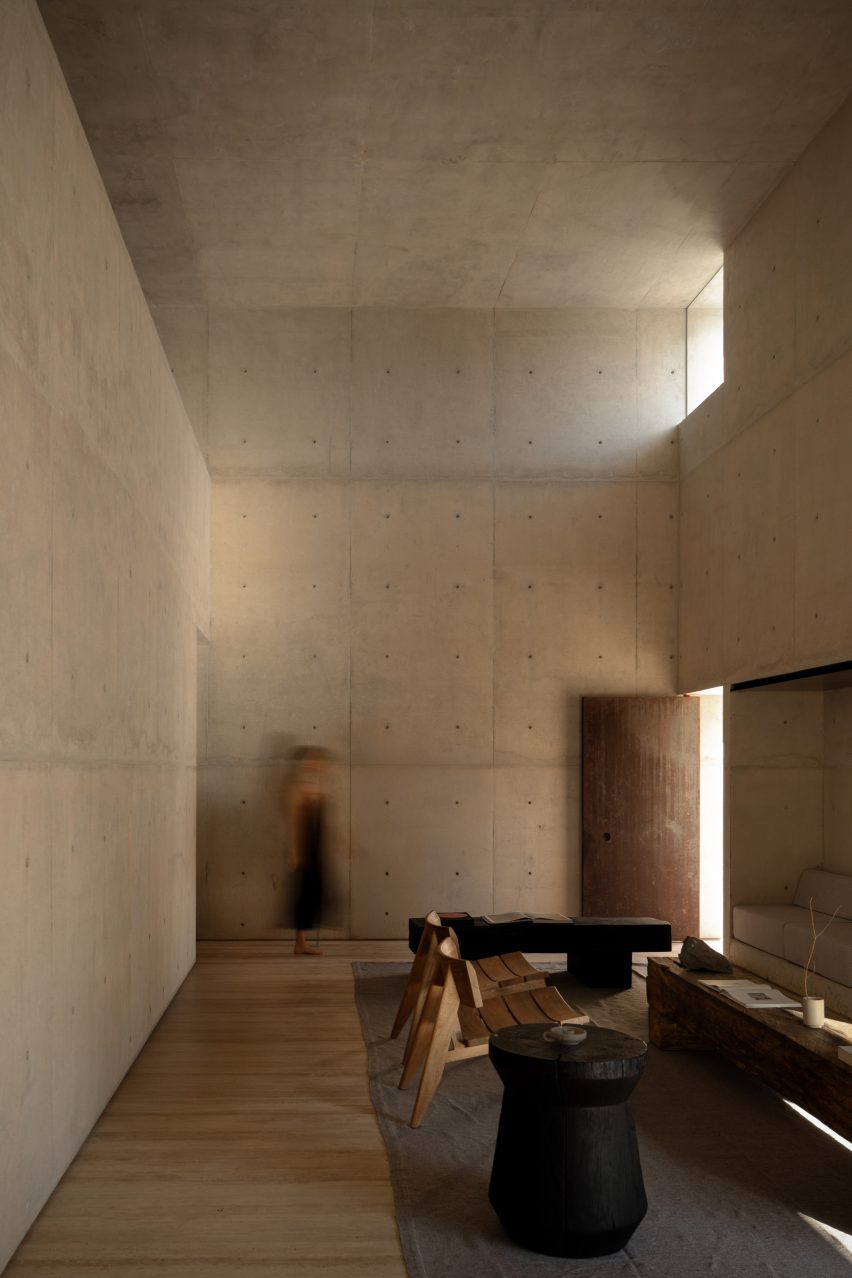 The project was informed by the clients’ trip to Japan. Photo by Hugo Tirso
Rather than turning the space outwards toward a specific view, the designers oriented the house obliquely towards a tree-lined plaza.
The angle provides a connection to the community space and draws in sea breezes without exposing the residents to heat and unguarded sunlight.
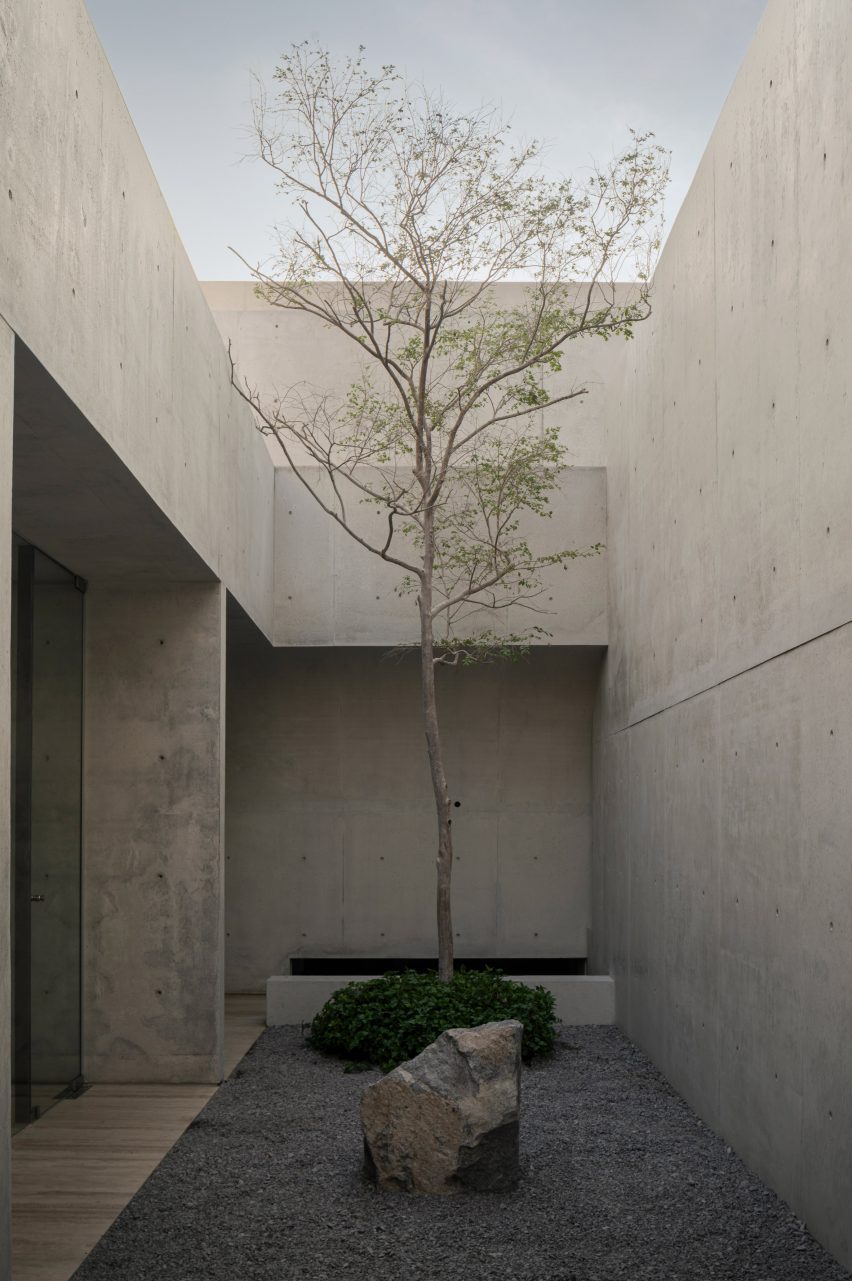 The smooth, poured-in-place concrete “absorbs the light with delicacy”. Photo by Cesar Belio
The smooth, poured-in-place concrete “absorbs the light with delicacy,” allowing it to settle into the material of the house delicately, the studio said.
Set within a square lot, a curved wall provides privacy from the street and provides the form for a series of interior and exterior courtyards. The bedrooms, garage and service areas make up the ground level, oriented around a patio.
Adjacent to the garage is an additional courtyard filled with a subtle reflecting pool.
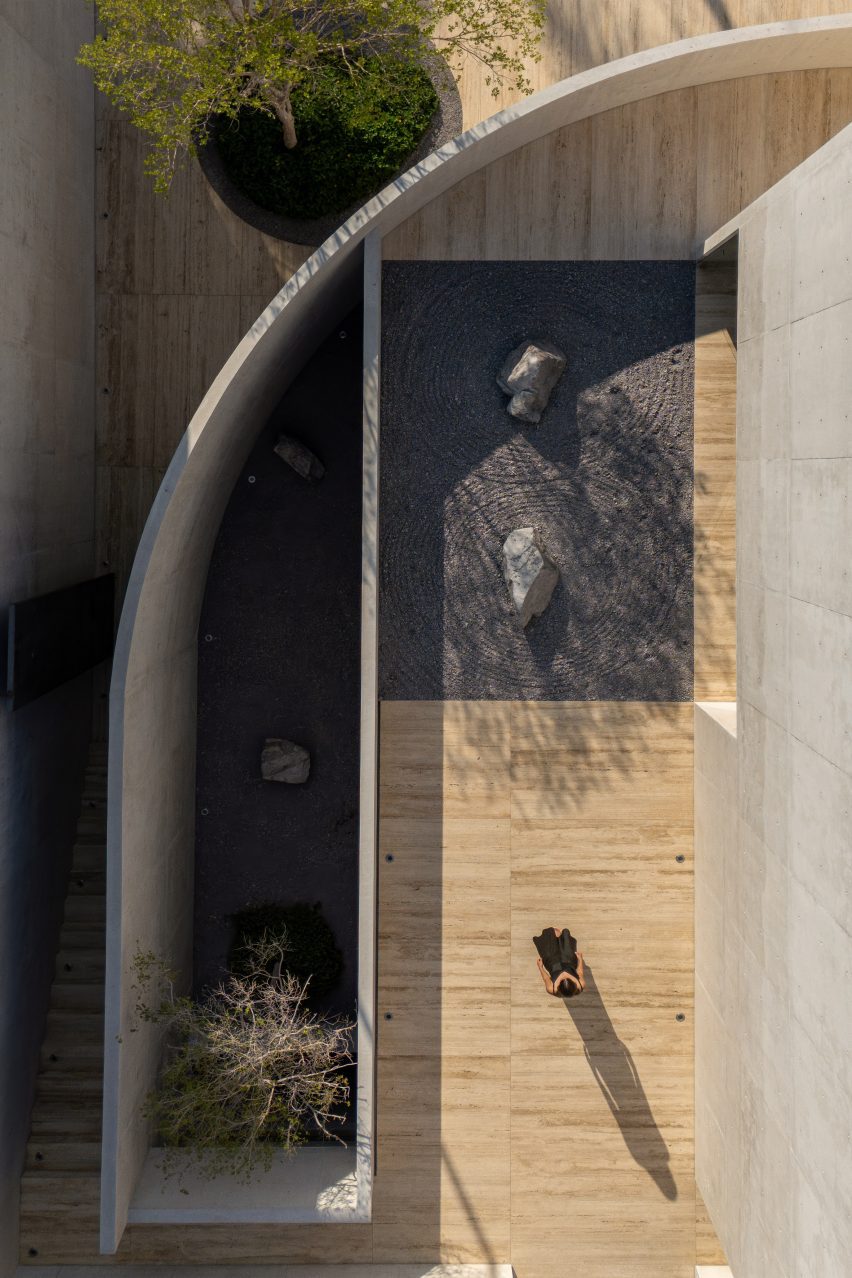 Elevated terraces feature on multiple levels for contemplation. Photo by Hugo Tirso
Meanwhile, the social areas are raised to the second floor in a split-level box with mezzanines. These spaces are almost entirely closed off from the street, with a square clerestory window that opens to the elliptical courtyards.
“This strategy allowed us to raise social life above street level, surround it with air and open it toward the trees and the salty breeze that crosses the plaza,” the team said.
The first level of the box has dining and living elements, while the second has a study, with light wells.
HW Studio carves pyramidal lightwell into Mexican house
“Everything is arranged so that living happens in a slower, fuller way – more open to the invisible.”
Following the spatial theories of Junichirō Tanizaki in In Praise of Shadows, the studio emphasised a nuanced use of light.
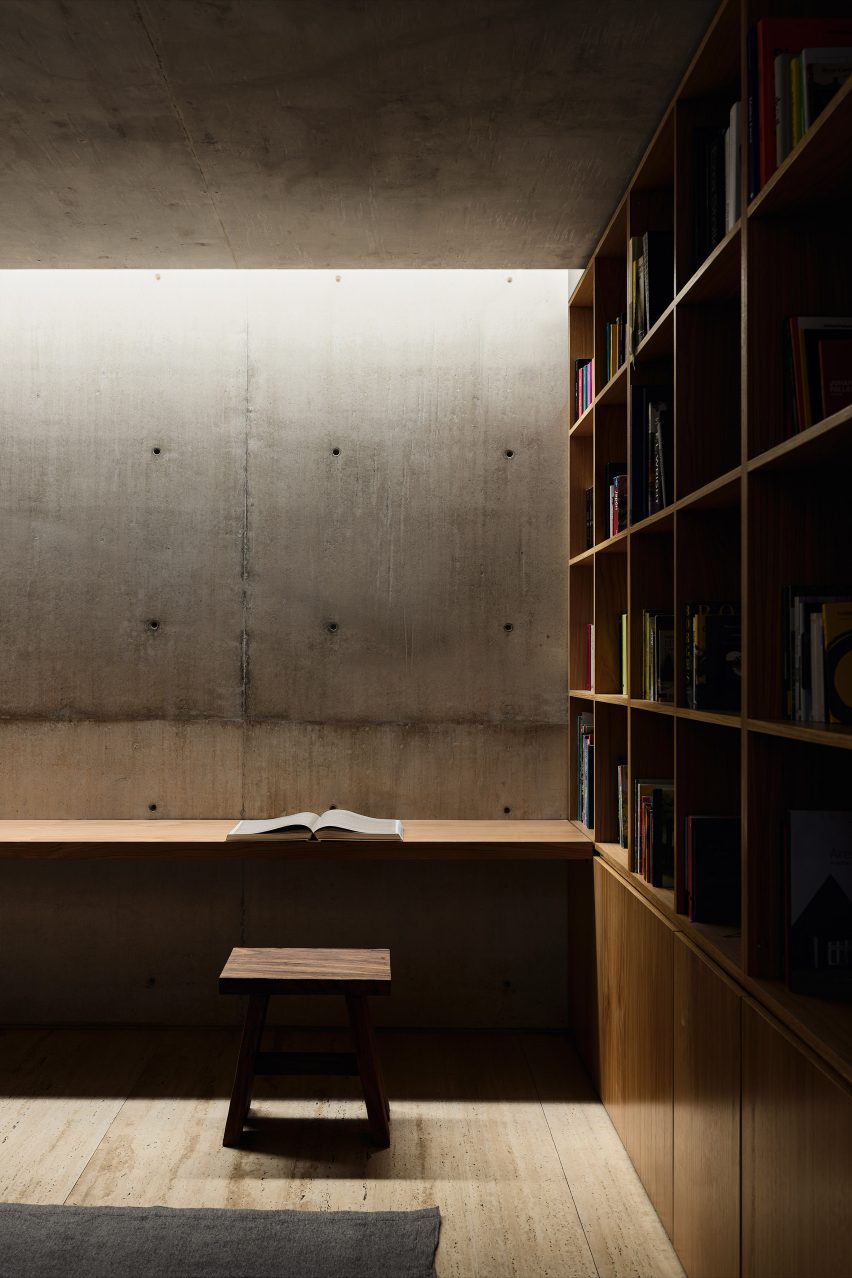 A study at the top of the house has subtle light wells
“Casa Tao is, ultimately, an architecture born of the desire to inhabit the world with greater attention,” the studio said.
“It is a house that withdraws discreetly and offers its spaces as atmospheres for contemplation and memory.”
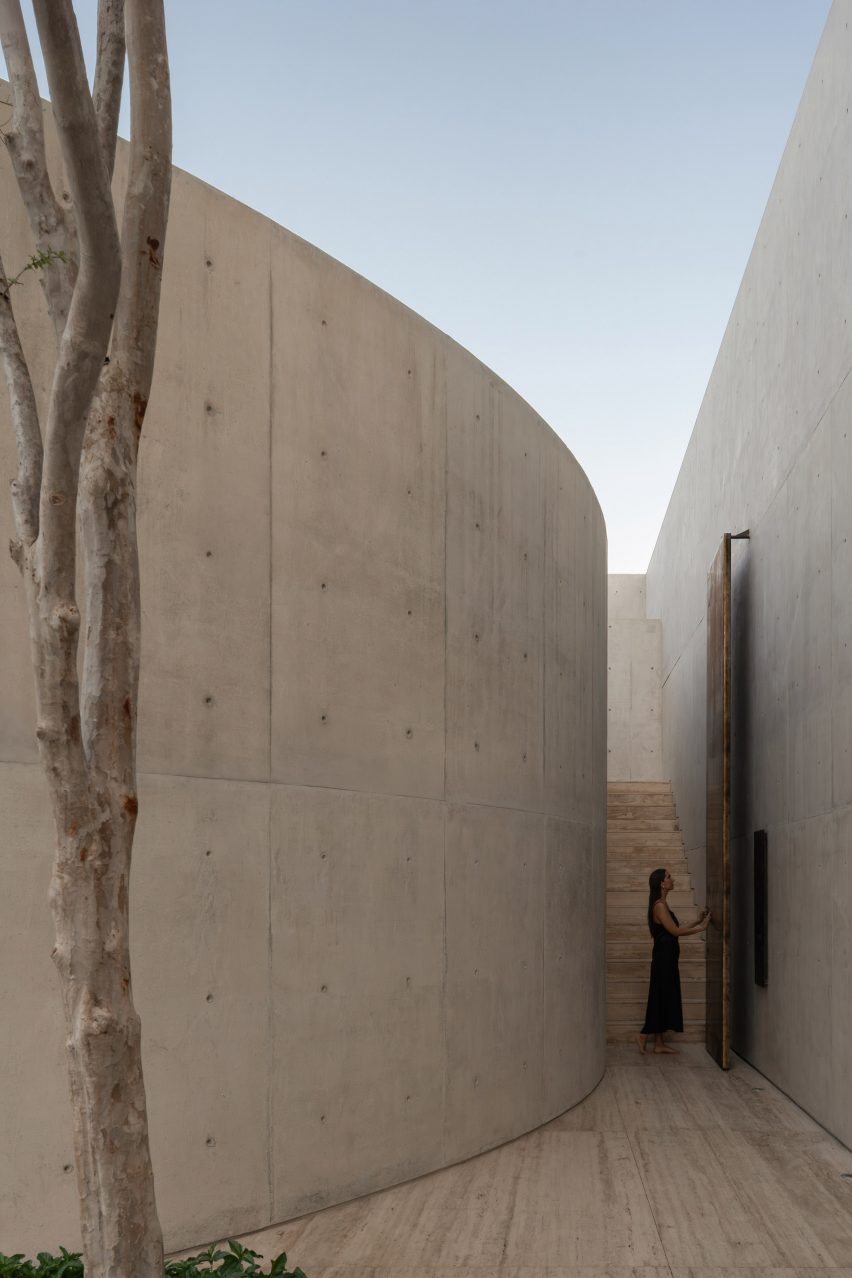 A curved wall provides privacy from the street. Photo by Hugo Tirso
“In it, dwelling becomes a form of study, of pause, of gratitude,” it continued.
“Every corner invites one to remain, not to pass through, and every shadow is a promise of wellbeing.”
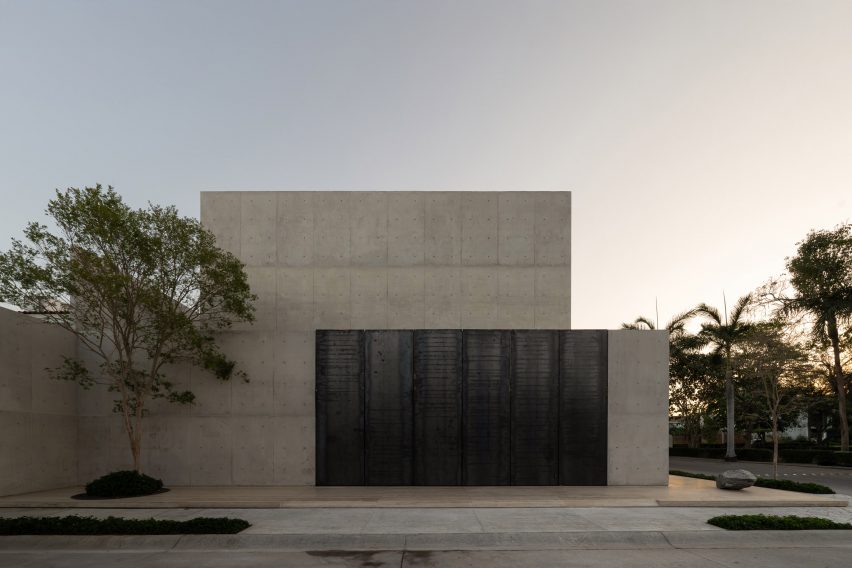 Casa Tao “withdraws discreetly”
Recently, HW Studio completed an infill house with a pyramidal lightwell in Morelia, a low-profile, cantilevered house in Mexico City, and a residence with cruciform stone walls in San Miguel de Allende.
The photography is by Gustavo Quiroz, Hugo Tirso and César Belio.
Project credits:
Leads Architects: Rogelio Vallejo Bores
Architects: Oscar Didier Ascencio Castro & Nik Zaret Cervantes Ordaz
Team: Juan Pablo Camacho Ayala
Structural engineering: ARGA Constructora
Construction company: COMAQSO