
Kevin
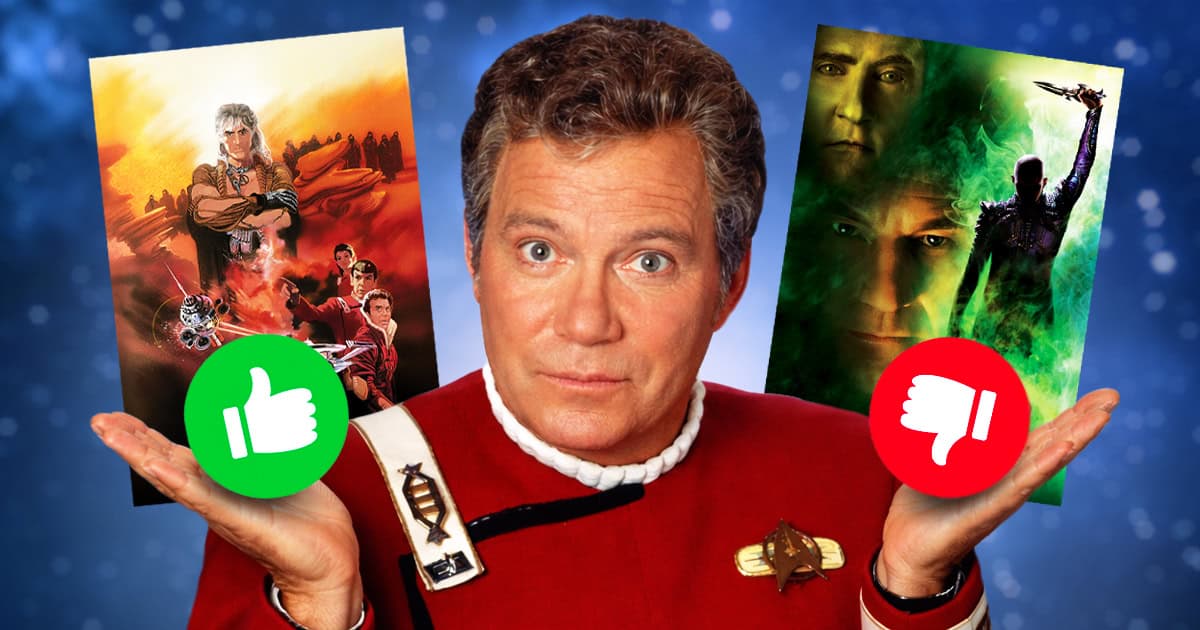
I’ve been a Star Trek fan for nearly my entire life. My father introduced me to the franchise through the original films, and I still remember him telling me about the infamous Star Trek odd/even movie curse. The theory is simple: the odd-numbered entries in the theatrical series are supposedly weaker than their even-numbered counterparts. But does that reputation actually hold up across all 13 Star Trek movies? Let’s break them down one by one and see if the critics’ verdict proves whether the curse is fact or fiction.
Star Trek: The Motion Picture (1979)
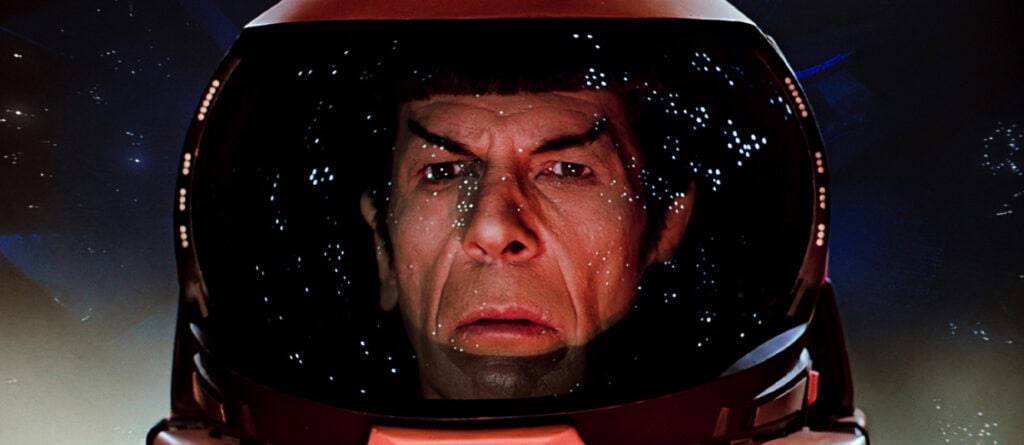
A mysterious, immensely powerful alien entity called V’Ger heads toward Earth, forcing Admiral Kirk to reunite the Enterprise crew to uncover its origins and stop it before Earth is destroyed.
In the decade following the cancellation of The Original Series, Star Trek had only grown in popularity. Syndication turned it into a cultural phenomenon, and with the massive success of Close Encounters of the Third Kind and Star Wars, Paramount decided the time was right to bring the franchise to the big screen. Unfortunately, while Star Trek: The Motion Picture boasted stunning visuals and an iconic Jerry Goldsmith score, it was also glacially paced and sorely lacking in urgency. Reviews were mixed, and the film currently holds a 51% rating on Rotten Tomatoes. Still, it performed well enough at the box office for Paramount to greenlight a sequel—otherwise, we might not even be talking about the infamous odd/even movie curse today.
As a kid, The Motion Picture felt every bit like the “motionless picture” critics joked about. With age, though, I’ve come to appreciate it more. There’s something undeniably special about seeing the original cast reunited, soaking in those gorgeous, lingering shots of the Enterprise, and listening to Goldsmith’s all-timer score. There’s a lot to admire here, but there’s no denying that there was plenty of room for improvement.
Star Trek II: The Wrath of Khan (1982)
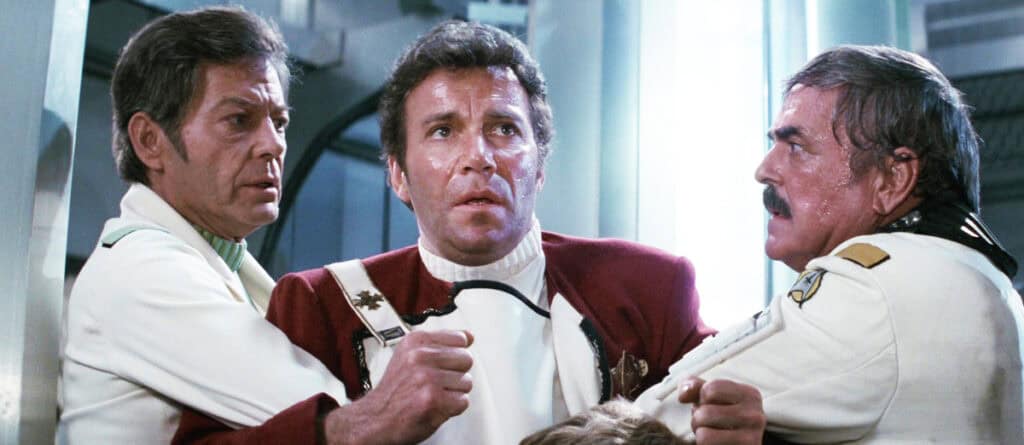
Kirk faces his greatest enemy when Khan Noonien Singh seeks revenge, leading to a deadly showdown that tests leadership, sacrifice, and the cost of command.
Thankfully, Star Trek came roaring back with its first sequel. The Wrath of Khan isn’t just one of the best Star Trek movies ever made—it’s one of the greatest sci-fi films, period. Stripped of excess and packed with emotion, the film plays like a lean, mean submarine thriller set in space, with the cast delivering some of their finest work. Ricardo Montalbán returned as Khan, reprising the role he first played in The Original Series episode “Space Seed,” and absolutely devoured the screen. His performance was so iconic that nearly every Star Trek movie that followed spent years chasing that same lightning in a bottle.
Critics embraced The Wrath of Khan, hailing it as everything The Motion Picture should have been. The film currently sits at an impressive 87% on Rotten Tomatoes, and just like that, the infamous odd/even movie curse was born.
Star Trek III: The Search for Spock (1984)
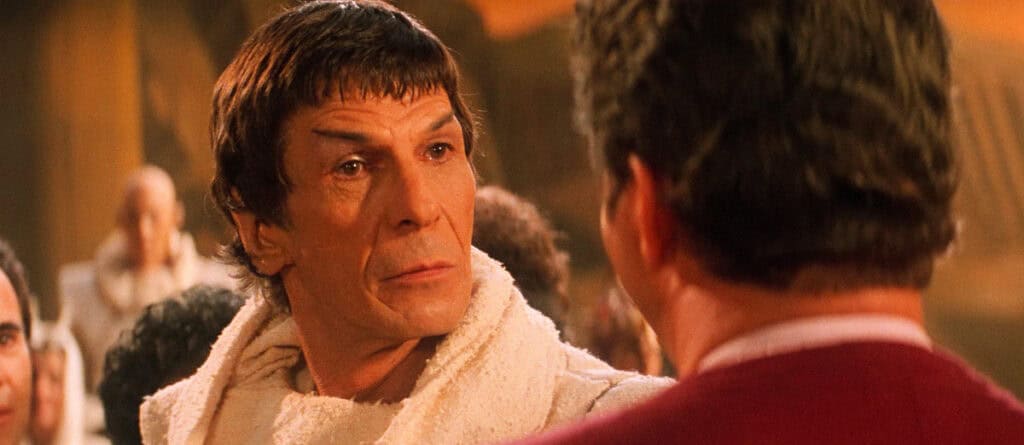
After Spock’s death, Kirk defies Starfleet orders to recover his friend’s body, risking everything to reunite Spock’s mind and soul.
Picking up directly after the events of The Wrath of Khan, The Search for Spock can’t help but feel like a step down by comparison. It never reaches the same highs as its predecessor, but—much like The Motion Picture—it’s a sequel I’ve come to appreciate more with time. The film is slower and more intimate, driven less by spectacle than by themes of loyalty, friendship, and sacrifice. The destruction of the Enterprise and the death of Kirk’s son, David, remain landmark moments for the franchise, underscoring just how much is lost in the name of devotion.
Notably, audiences don’t see Leonard Nimoy’s Spock until the film’s closing moments, a choice that makes his return all the more powerful. “Jim. Your name… is Jim.”
I’d argue that The Search for Spock is one of the franchise’s most underrated entries. While it holds a respectable 78% rating on Rotten Tomatoes, it’s still widely viewed as a comedown from The Wrath of Khan, meaning the odd/even curse remains firmly intact.
Star Trek IV: The Voyage Home (1986)
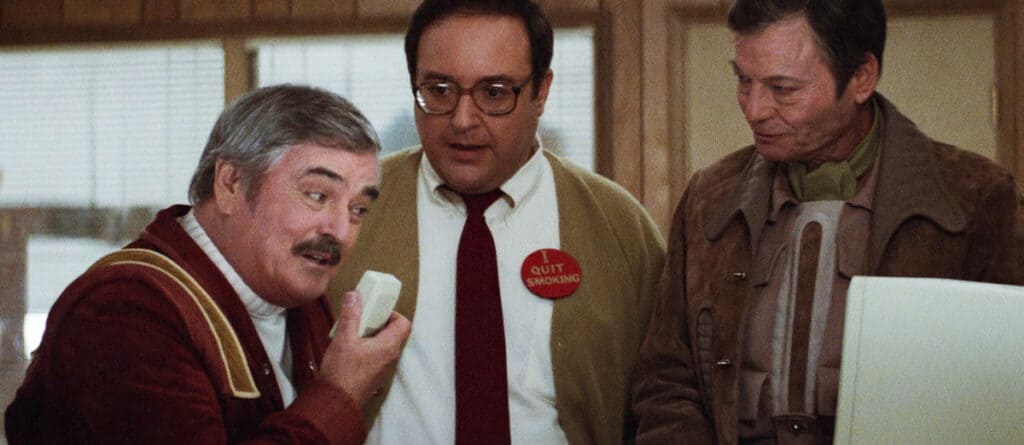
To save Earth from an alien probe, the Enterprise crew travels back to 1980s San Francisco to retrieve humpback whales.
With no space battles, phaser fights, or even a traditional villain, The Voyage Home takes a sharp turn toward lighter, more comedic territory—but it’s packed with memorable moments and features a cast clearly having the time of their lives. Star Trek has no shortage of time-travel stories, but The Voyage Home remains one of the franchise’s most accessible entries, especially for newcomers, since much of the action unfolds in what was then the present day. At the same time, it never forgets longtime fans, smartly continuing threads from the previous two films and bringing the Genesis Trilogy to a satisfying close.
The movie is also genuinely hilarious, embracing a full-on fish-out-of-water vibe as the Enterprise crew grapples with money, annoying punks, and “barbaric” 20th-century hospitals. Critics and audiences alike embraced the film, which currently holds an 81% rating on Rotten Tomatoes, an improvement over The Search for Spock and enough to keep the odd/even curse going.
Star Trek V: The Final Frontier (1989)
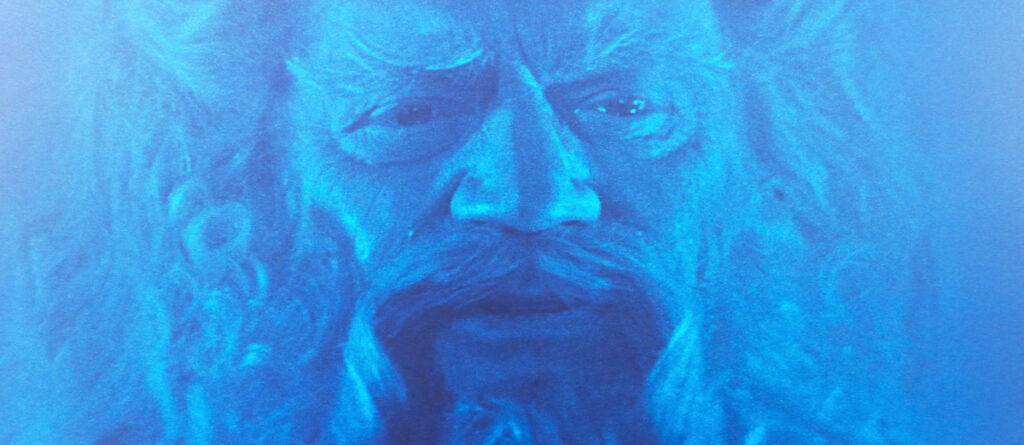
Spock’s half-brother hijacks the Enterprise in a quest to find God at the center of the galaxy, forcing Kirk to confront faith, friendship, and free will.
With The Final Frontier, Star Trek finally arrived at its first genuinely bad movie. After Leonard Nimoy successfully helmed the previous two films, William Shatner stepped behind the camera for his turn in the director’s chair—but the result is a mess buried under shoddy effects, weak villains, and extensive behind-the-scenes turmoil that prevented Shatner from fully realizing his vision. The film aims to explore profound ideas about faith and meaning, but it often fails to engage effectively. That’s a shame, because there are sparks of something worthwhile here.
The opening campfire scene with Kirk, Spock, and Bones—campy as it may be—perfectly captures how close these characters have become. Even when the movie falters, it’s that camaraderie that keeps things watchable. That said, it’s definitely the Star Trek sequel I revisit the least.
Sitting at a dismal 22% on Rotten Tomatoes, The Final Frontier is the lowest-rated theatrical Star Trek film—but hey, at least it does its part to keep the odd/even curse alive for another entry.
Star Trek VI: The Undiscovered Country (1991)
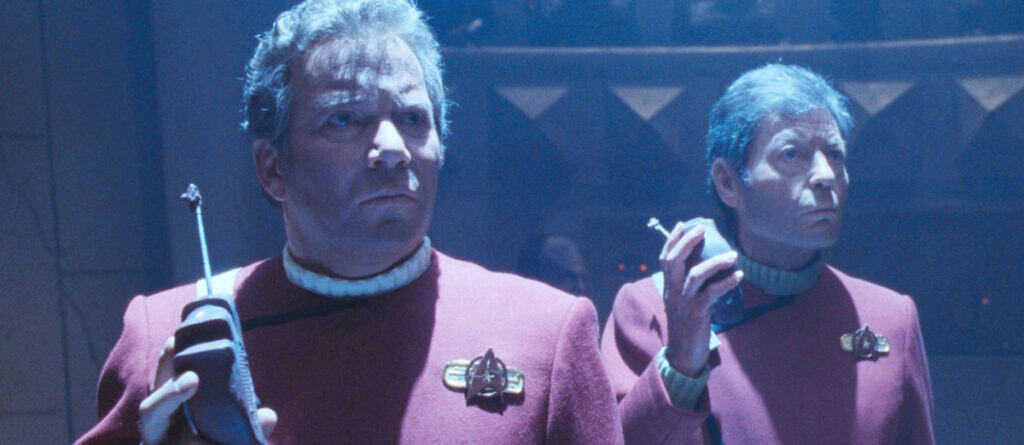
With peace negotiations underway between the Federation and the Klingons, Kirk and McCoy are framed for assassination, threatening to plunge the galaxy into war.
The Final Frontier very nearly marked the end of the line for the original cast. After that film crashed and burned, Paramount began exploring a Starfleet Academy movie that would have recast Kirk, Spock, and McCoy with younger actors. Thankfully, cooler heads prevailed, and the decision was made to give these beloved characters a proper send-off. Bringing The Wrath of Khan director Nicholas Meyer back into the fold proved to be the smartest move possible. The Undiscovered Country emerged as a sharp, politically charged thriller that also functioned as a classy and emotional farewell.
My dad always loves to quote the warden at Rura Penthe. “Work well, and you will be treated well. Work badly… and you will die.”
The film delivered everything fans could want from a Star Trek movie: suspense, adventure, rich character moments, and one of the franchise’s great villains in Christopher Plummer’s Shakespeare-quoting General Chang. The Undiscovered Country marked a major rebound, earning rave reviews and sitting at 84% on Rotten Tomatoes, while also becoming a solid box-office hit with nearly $100 million worldwide. Can you imagine if The Final Frontier had been the franchise’s final word? No thank you.
Alongside The Wrath of Khan and The Voyage Home, The Undiscovered Country remains one of my all-time favourite Star Trek films, and its success, coming after such a low point, only helped cement the legend of the odd/even movie curse among fans.
Star Trek Generations (1994)
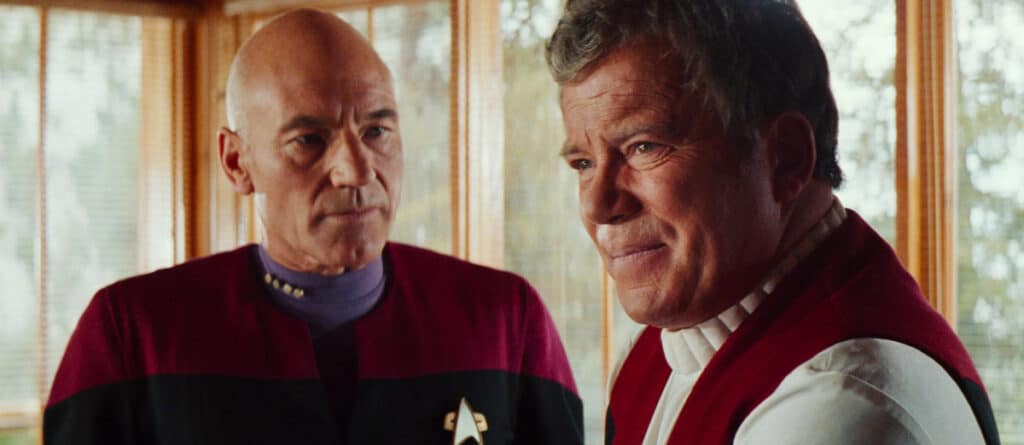
The original crew passes the torch to The Next Generation as Picard teams up with Kirk to stop a madman seeking godlike power within the Nexus.
The studio wanted Generations on screens as quickly as possible, with production kicking off while the cast of Star Trek: The Next Generation was still finishing the series finale, “All Good Things.” A little breathing room might have helped, if only to give them time to reset before jumping straight into a feature film. On paper, the idea of bringing Jean-Luc Picard and James T. Kirk together is irresistible, but when the movie finally reaches that historic meeting, it feels oddly rushed and underwritten, never delivering the epic clash of philosophies fans had been promised. And then there’s the death of Kirk. Rather than going out in a blaze of glory, the legendary captain is reduced to dying beneath a collapsing bridge. Yes, his actions save an entire solar system, but it still feels like Kirk deserved a better send-off.
That said, Generations isn’t a bad movie, at least in my eyes. Patrick Stewart delivers some of his most vulnerable work as Picard grapples with personal loss, and seeing the TNG cast finally get their moment on the big screen is every bit as exciting as it was when the original crew made the jump to cinemas with The Motion Picture. And much like that first original-cast outing, the Next Generation crew would fare far better the second time around.
Sitting at 48% on Rotten Tomatoes, Generations lands squarely in mid-tier Star Trek territory, with the odd/even curse marching on.
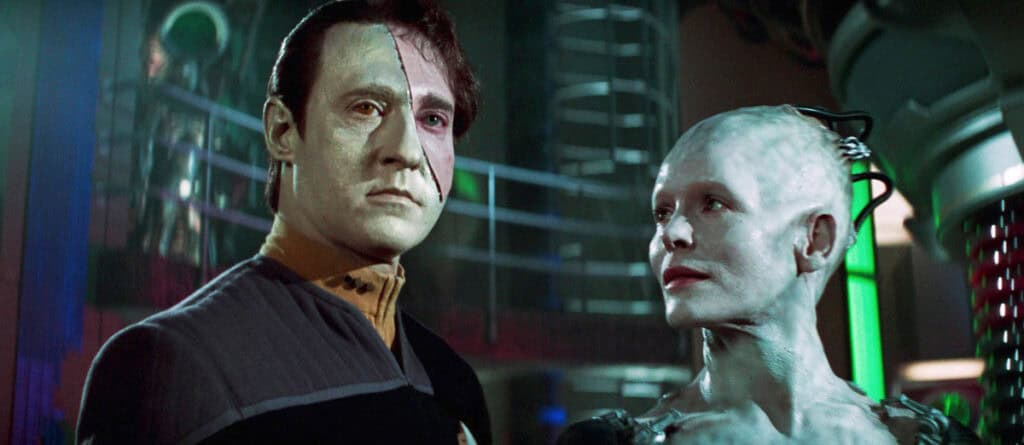
The Borg travel back in time to prevent humanity’s first contact with aliens, forcing Picard to confront his past trauma while defending Earth’s future.
With First Contact, the Next Generation cast absolutely knocked it out of the park. The film leans heavily into action without ever losing sight of the characters we know and love. The Borg are reintroduced as a genuinely terrifying threat, the stakes are immediate, and once the movie kicks into gear, it never lets up. Where First Contact truly excels, though, is with Jean-Luc Picard. Patrick Stewart delivers one of his strongest performances as Picard confronts the lingering trauma of his assimilation, pushing the character into darker, angrier territory than we’d ever seen before. His obsessive need to stop the Borg — even at the cost of his own principles — gives the film real emotional weight. And then there’s Alice Krige as the chilling, seductive Borg Queen, easily the most memorable villain of the TNG films.
Despite its darker edge, First Contact is ultimately uplifting, with the entire crew working together to protect humanity’s future and ensure that we’ll all continue to boldly go where no one has gone before. The film was a genuine blockbuster, embraced by critics and audiences alike. Sitting at an impressive 93% on Rotten Tomatoes, First Contact is one of the highest-rated Star Trek movies in the franchise, and once again, the odd/even curse holds true.
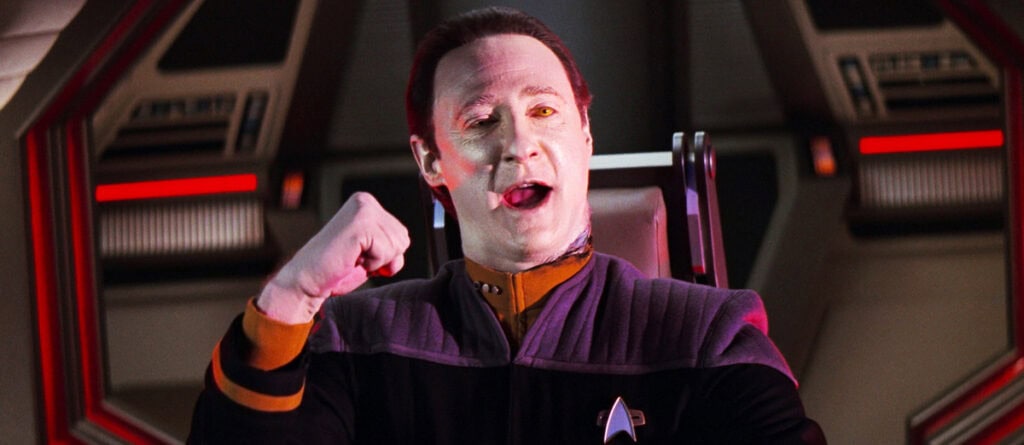
Star Trek: Insurrection (1998)
Picard rebels against Starfleet when a peaceful alien race is threatened, turning the Enterprise into a symbol of moral resistance.
Coming off the high of First Contact, Insurrection had an almost impossible act to follow, and unfortunately, it couldn’t rise to the challenge. The film feels less like a cinematic event and more like an extended two-part episode of The Next Generation. That isn’t inherently a bad thing, but it’s a tough sell for audiences expecting another big-screen spectacle. At its core, Insurrection presents a classic Star Trek moral dilemma, pitting Starfleet’s ideals against political compromise. Picard’s decision to rebel against the Federation in order to protect the Ba’ku taps directly into the franchise’s ethical backbone, and Patrick Stewart once again reminds us why Picard remains one of Trek’s greatest captains.
The movie also finds time for smaller, genuinely heartfelt moments, including a lovely scene in which LeVar Burton’s Geordi La Forge briefly regains his sight and witnesses a sunrise for the first time.
Unfortunately, the stakes feel oddly low, the villainous Son’a are underwhelming, and Picard’s romantic subplot lands awkwardly at best. Insurrection is pleasant enough, but ultimately forgettable. Sitting at 54% on Rotten Tomatoes, it once again lands in mid-tier Star Trek territory. Still, if the odd/even curse continues, that means the next film should be great… right?
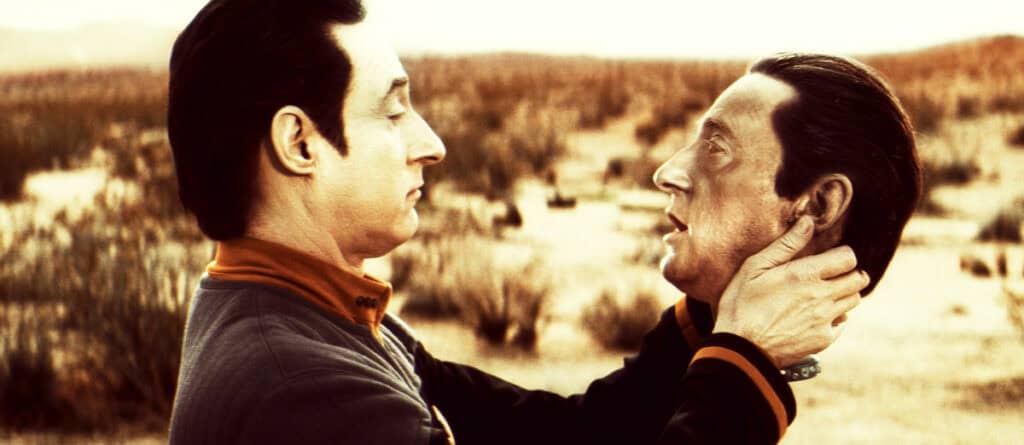
Star Trek: Nemesis (2002)
Picard faces Shinzon, a deadly clone with ties to his own past, leading to a personal and tragic final mission for the TNG crew.
Well, folks, this is where the odd/even curse finally comes to an end. Nemesis arrived promising something darker, more personal, and more cinematic — and on paper, it should have worked. The idea of Picard confronting a clone of himself is a strong hook, raising questions about nature versus nurture, identity, and the thin line between hero and villain. Tom Hardy, in his first major role, brings genuine intensity to Shinzon, and early on, there’s a sense that the film is aiming to be the Next Generation crew’s answer to The Wrath of Khan.
Unfortunately, the execution falls short. The tone is relentlessly grim, draining the warmth and camaraderie that defined The Next Generation, while much of the supporting cast is sidelined. Troi, in particular, is given some painfully ill-conceived material that feels out of step with the series’ values. Nemesis didn’t just fail as a sequel — it fundamentally misunderstood what The Next Generation was.
Worst of all, Nemesis feels oddly embarrassed to be Star Trek. The optimism, curiosity, and moral clarity that once defined the franchise are replaced with bleakness and generic sci-fi. The emotional sacrifice of Data does tug at the ol’ heartstrings, but by the time the credits roll, it doesn’t feel like a grand farewell; it feels like a franchise running out of steam. Sitting at 37% on Rotten Tomatoes, Nemesis wasn’t just a critical disappointment; it effectively brought the TNG film series to a halt… while finally snapping the odd/even curse.
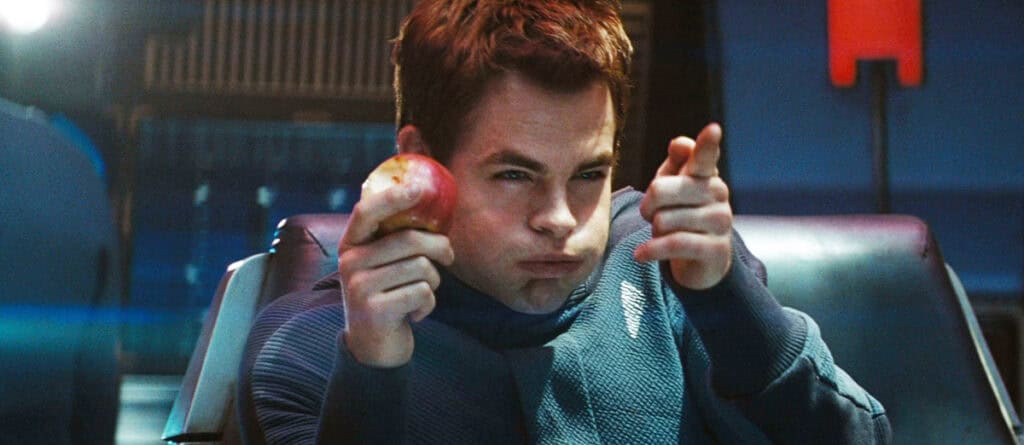
Star Trek (2009)
A time-travelling Romulan alters history, creating an alternate timeline as a young James T. Kirk and Spock rise to command the Enterprise.
With Nemesis finally bringing an end to the odd/even curse, the question became: what do we make of J.J. Abrams’ Star Trek reboot? Is it the franchise’s 11th film, or is it a fresh starting point? Either way, it’s technically an odd-numbered entry — yet it defies the odds by becoming the highest-rated movie in the entire series. From here on out, the curse stops being useful. Say what you will about the obsession with lens flares and over-the-top action, one thing is undeniable: the casting was absolutely spot-on.
Chris Pine’s James T. Kirk is effortlessly charismatic; Zachary Quinto gives Spock a sharp, emotionally guarded edge; Karl Urban is uncannily perfect as Bones; and Zoe Saldaña’s Uhura emerges as a fully realized character rather than just a voice on the bridge. By introducing a time-travel twist that creates a branching timeline, the movie cleverly rebooted the franchise without erasing what came before, honouring established canon while freeing itself from decades of continuity. That connection is further reinforced by the deeply emotional return of Leonard Nimoy as Spock from the Prime Universe. Seeing Nimoy as Spock on the big screen again for the first time in almost thirty years is one of my favourite moments of the entire franchise.
The film isn’t without its flaws. The lens flares were… a lot. Character development occasionally takes a backseat to action, Kirk’s rapid rise through the ranks strains credibility, and Eric Bana’s Nero is an underutilized villain. Still, these shortcomings are easy to overlook given the movie’s accomplishments. Star Trek injected the series with a much-needed shot of adrenaline and opened the door for an entirely new generation of fans. It’s no surprise the film sits atop the franchise with an impressive 94% on Rotten Tomatoes.
Star Trek Into Darkness (2013)
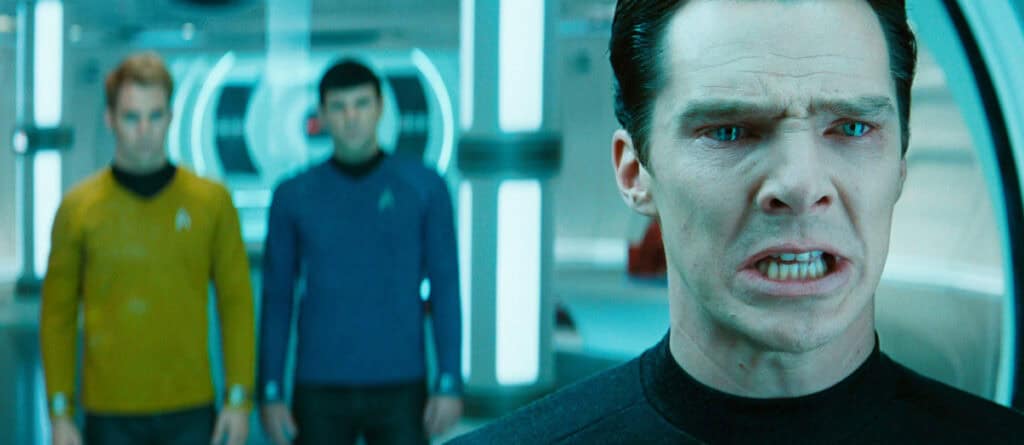
The crew confronts the genetically enhanced terrorist John Harrison—revealed to be Khan—in a story of vengeance, loyalty, and sacrifice.
Like many sequels, Into Darkness arrived burdened with expectations of a bigger budget, bigger action, and higher stakes, and on a surface level, it delivers precisely that. The film is slick, fast, and aggressively polished, with returning director J.J. Abrams leaning even harder into full-blown blockbuster spectacle. The cast remains terrific across the board, and Benedict Cumberbatch brings a cold, commanding presence as John Harrison, the villain eventually revealed to be none other than Khan Noonien Singh.
Unfortunately, that reveal is where the movie begins to wobble. After Abrams and Cumberbatch spent months publicly denying Harrison’s true identity, audiences not only saw the twist coming — they were already irritated by it. Since this version of Kirk and Spock has never encountered Khan before, the reveal carries little narrative weight and exists almost entirely for the audience. Rather than becoming The Wrath of Khan for a new generation, Into Darkness plays like an awkward remix, right down to the inverted death scenes that mimic iconic moments without earning the same emotional impact, despite the strength of the new cast.
While fans were divided, critics and general audiences largely enjoyed the ride, with the film earning a solid 84% on Rotten Tomatoes. Personally, I would’ve preferred to see Into Darkness stand on its own instead of leaning so heavily on callbacks to a better movie. As for the odd/even curse? At this point, we’re officially off the rails. The film takes a dip from the 2009 reboot, but no matter how you slice it, it’s still an even-numbered entry — albeit one that refuses to play by the old rules.
Star Trek Beyond (2016)
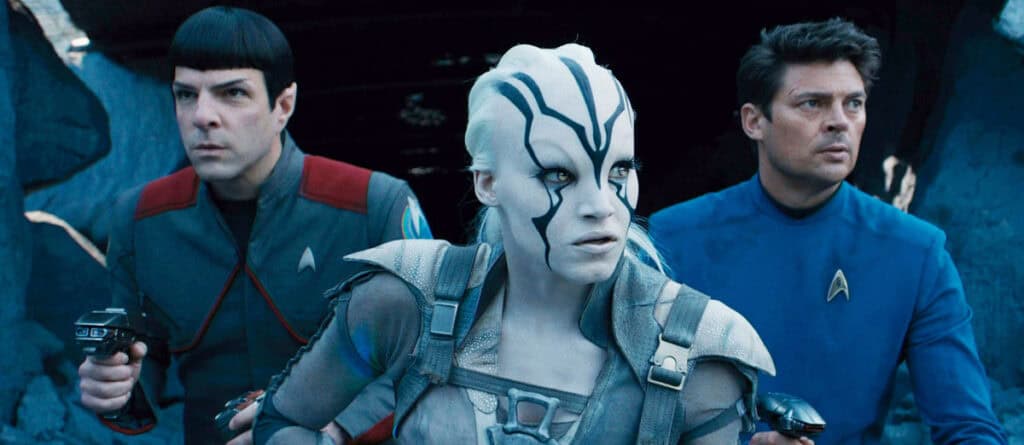
Stranded on a hostile planet, the Enterprise crew must reunite and outthink a vengeful enemy while rediscovering the meaning of exploration.
We’ve arrived at the final — for now — film in the franchise, and it’s easily the most Star Trek-like entry in the Kelvin Universe. Beyond scales things back compared to its predecessors, but in doing so, it becomes more thoughtful, character-driven, and genuinely adventurous. Sofia Boutella’s Jaylah is a terrific new addition to the crew, injecting fresh energy into the mix. Idris Elba’s Krall, however, is more of a mixed bag. A late-film reveal adds some depth, but for much of the runtime, he plays like a fairly generic monster, which is a shame, given Elba’s considerable talent.
Like the previous two films, Beyond still delivers its share of blockbuster action, which certainly isn’t a bad thing. That said, it does make you wonder what a Kelvin Universe take on something like The Voyage Home or The Motion Picture might have looked like, a more purely sci-fi story driven by exploration, curiosity, and a sense of wonder. With the long-discussed fourth film now officially shelved in favour of yet another reboot, that particular “what if” may remain unanswered.
Still, Star Trek Beyond was warmly received, earning an 86% rating on Rotten Tomatoes and widely viewed as a decent course correction after Into Darkness. It may have faltered at the box office, but it thankfully closed out the Kelvin era on a surprisingly heartfelt note.
What Did We Learn?
So, after all that, what have we actually learned? Does Star Trek’s infamous odd/even curse hold any real weight? I’d argue… yes, to a point. Up until Nemesis threw a wrench into the whole theory, the pattern was pretty straightforward: after a weaker entry, the franchise usually course-corrected with something stronger. For a while, it even felt like “every other movie is a letdown” might be the more accurate rule — but the back-to-back disappointments of Insurrection and Nemesis put that theory to rest pretty quickly.
Now it’s your turn. Did you ever buy into the odd/even curse to begin with? Do you secretly prefer some of the more divisive odd-numbered films over their beloved even-numbered counterparts? Let us know in the comments — and try not to start a Klingon blood feud while you’re at it.

Subscribe to our weekly newsletter
Source:
JoBlo.com
Tags: Star Trek, Star Trek Beyond, Star Trek I: The Motion Picture, Star Trek II: The Wrath of Khan, Star Trek III: The Search for Spock, Star Trek Into Darkness, Star Trek IV: The Voyage Home, Star Trek V: The Final Frontier, Star Trek VI: The Undiscovered Country, Star Trek: First Contact, Star Trek: Generations, Star Trek: Insurrection, Star Trek: Nemesis