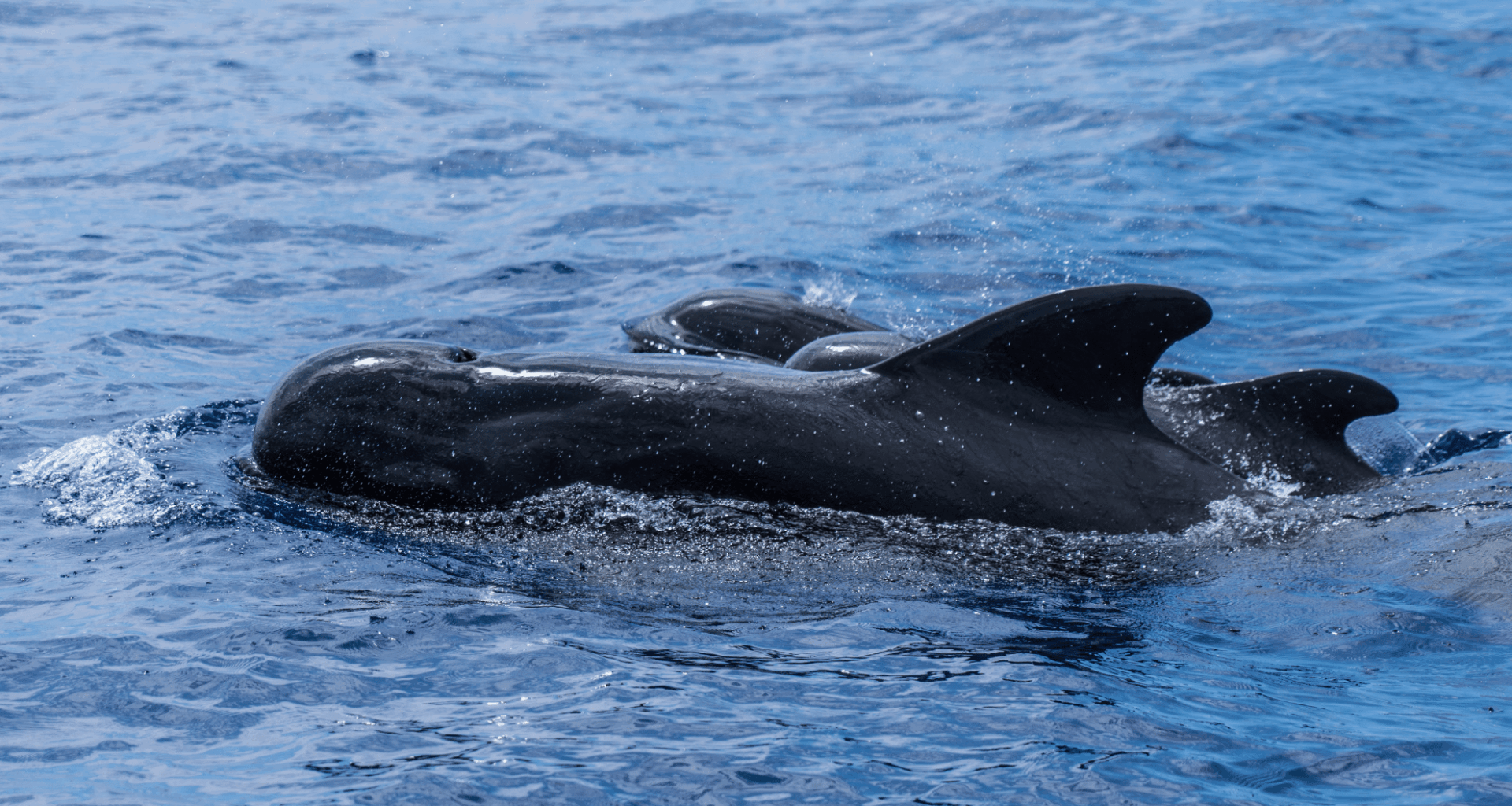
The ocean is home to some of the most fascinating and elusive creatures, each more remarkable than the last. Among them is a sleek, dark marvel, known for its astonishing speed and powerful presence. Despite its impressive size, this creature moves with the grace and agility of a much smaller animal, earning it a nickname that compares it to the fastest land predator. With complex social structures and strong family bonds, this deep-sea wonder captivates anyone who takes the time to learn about it. It is none other than the pilot whale, a species that continues to amaze researchers and ocean enthusiasts alike.
What Are Pilot Whales? Understanding Their Physical Traits
Pilot whales, known for their robust and sleek body, are easily distinguishable from other marine mammals. Despite the name “whale,” they are actually a species of dolphin, belonging to the family Delphinidae. These animals typically have a thick-set, streamlined body that helps them move swiftly through the water. Their most striking feature is their prominent, curved dorsal fin, which is often described as being hooked. Pilot whales also have bulbous heads, giving them a somewhat “smiling” look due to the lack of a pronounced beak. Their skin ranges from a deep black to dark grey, often with lighter markings near the dorsal fin and an anchor-shaped patch on the underside.
What sets pilot whales apart from other dolphins is their sheer size. Males can grow up to 6.7 meters (about 22 feet) long, while females tend to be a bit smaller, reaching up to 5.7 meters (about 19 feet). These whales are far from small, with the males weighing around 2,300 kilograms (over 5,000 pounds) and females weighing around 1,300 kilograms (about 2,866 pounds). These features make them one of the most recognizable marine mammals, capable of impressive speeds and agility.
The Pilot Whale’s Social Structure: A Close-Knit Family
Pilot whales are among the most socially structured species of marine mammals. They form tight-knit family pods that can range from a few individuals to several hundred. What’s particularly fascinating is the multi-generational nature of these pods. Each pod is typically composed of mothers and their offspring, with older females, even those not giving birth, helping care for the younger ones. This sense of family loyalty and cooperation is essential for the survival and well-being of the group.
The bond within these pods is incredibly strong. Pilot whales do almost everything together, resting, hunting, and traveling as a unified group. Their social interactions extend beyond basic survival needs; they also engage in playful behaviors, further strengthening their communal ties. The males in these pods often form relationships with females from different pods during large gatherings, ensuring genetic diversity. The loyalty and cohesiveness of pilot whale pods have earned them a reputation for being among the most socially complex animals in the marine world.
Pilot Whale Diet: The Cunning Hunter of the Deep
Pilot whales are primarily squid hunters, with cephalopods forming the bulk of their diet. They dive deep into the ocean, sometimes reaching depths of over 600 meters (about 2,000 feet), in search of their prey. Their specialized adaptations, such as enhanced echolocation abilities, allow them to detect these elusive creatures in the dark, deep waters. Pilot whales are often seen diving for 10 to 16 minutes at a time, hunting nocturnally using their acute sonar capabilities.
While squid is their main food source, pilot whales are also known to occasionally feed on fish such as mackerel, hake, and cod. Their feeding strategy involves using echolocation to locate prey and then ramming and sucking it into their mouths. This method is well-suited to their powerful jaws, which are adapted for sucking rather than grasping. Their highly efficient hunting techniques, combined with their intelligence, make them formidable predators in the marine food chain.
The Mystery of Mass Strandings: Why Do Pilot Whales Beach Themselves?
One of the most perplexing aspects of pilot whale behavior is their tendency to mass strand on beaches. These strandings, often involving entire pods, have baffled scientists for years. While the exact causes remain unknown, several theories suggest that pilot whales may be navigating incorrectly while following prey or migrating. The strong social bonds within the pods likely play a role in these strandings, as members of the group may follow one another, even when it leads them into danger.
Some researchers believe that environmental factors, such as irregularities in the Earth’s magnetic field or parasitic infections affecting the whales’ navigation abilities, could contribute to these tragic events. Another theory is that the stranding might occur when a sick or injured whale leads the pod off course, with the rest of the group following in support. In any case, when pilot whales do strand, the situation is dire, as their social structure often compels them to return to the shore, even after attempts at refloating. These mass strandings remain a significant conservation challenge.
Pilot Whales: Are They Endangered?
While pilot whales are not considered endangered, their populations are not without threats. According to Discover Wildlife, these marine mammals face numerous risks, from human activities such as hunting and pollution, to accidental deaths from entanglement in fishing gear. Pilot whales are still hunted in some parts of the world, most notably in the Faroe Islands, where around 850 long-finned pilot whales are killed each year in controversial hunts. Despite the fact that whale meat is no longer a necessity for survival, the practice continues, raising concerns over animal welfare and conservation.
Pollution, particularly plastics and toxic chemicals, poses another significant risk to pilot whales. The accumulation of harmful substances in their bodies can affect their health, reproductive capabilities, and overall survival. Noise pollution from human activities, including shipping and naval exercises, is also known to disrupt the whales’ delicate communication and navigation systems. Thankfully, pilot whales are currently classified as “Least Concern” by the IUCN, though the lack of data on specific populations leaves the species vulnerable to future threats.
Pilot Whales’ Intelligence: More Neurons Than Humans
One of the most remarkable aspects of pilot whales is their extraordinary intelligence. Recent studies show that pilot whales possess an astonishing number of neurons in their forebrain, surpassing even humans in terms of brain power. The long-finned pilot whale, in particular, has the most neurons of any marine mammal studied to date, except for the orca. This suggests that these whales may have cognitive abilities far beyond what we typically associate with non-human animals.
Pilot whales’ high intelligence is believed to be one of the reasons behind their complex social structures and cooperative behaviors. Their ability to communicate with one another using a variety of vocalizations, including clicks, whistles, and buzzes, further supports the idea that these animals possess sophisticated cognitive functions. Their capacity for social learning, problem-solving, and coordination when hunting highlights their advanced mental capabilities.
Pilot Whale Conservation: Protecting These Incredible Creatures
Protecting pilot whales requires addressing the many threats they face in the wild. Conservation efforts must focus on mitigating the dangers of hunting, pollution, and accidental bycatch in fishing gear. Raising awareness about the issues facing pilot whales and the importance of preserving their habitats is crucial for their long-term survival. The marine community, along with organizations like Whale and Dolphin Conservation (WDC), is working hard to ensure that these majestic creatures are safeguarded for future generations.
In addition to direct conservation measures, there is a need for more research into the behaviors and populations of pilot whales. Understanding their migration patterns, social dynamics, and the causes behind their mass strandings is key to developing effective conservation strategies. The plight of pilot whales is a reminder of the urgent need to protect our oceans and the diverse species that depend on them.