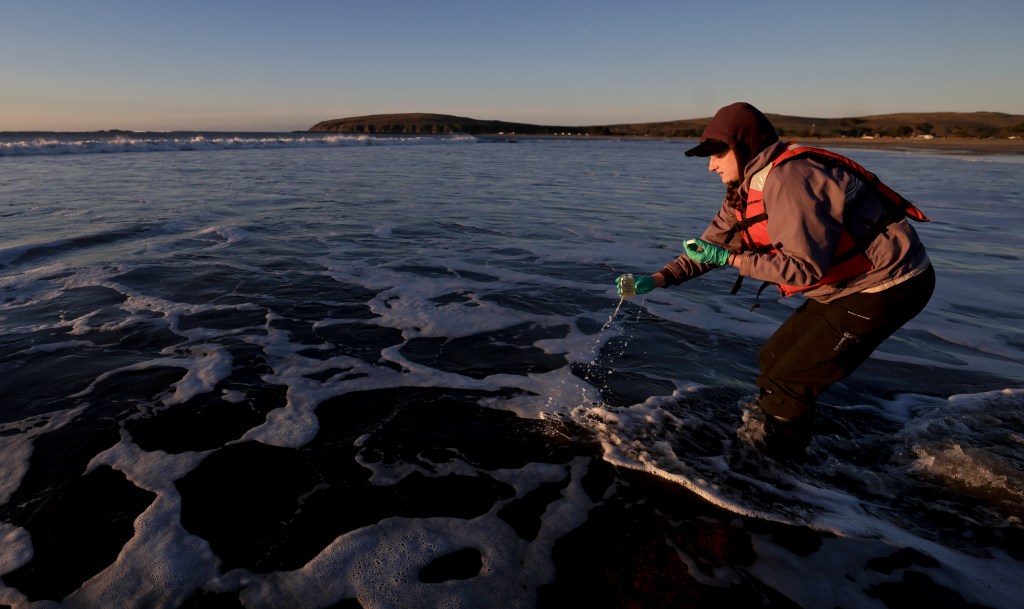
Early Thursday morning just after sunrise, Ellyse Cappellano, a Sonoma County environmental health specialist, snapped on green rubber gloves, donned waterproof boots and snapped on her orange life vest before venturing into the surf to collect samples.
Amid the whipping wind, in knee-high water, Cappellano dipped a glass testing jar into the ocean, filled it and sealed it.
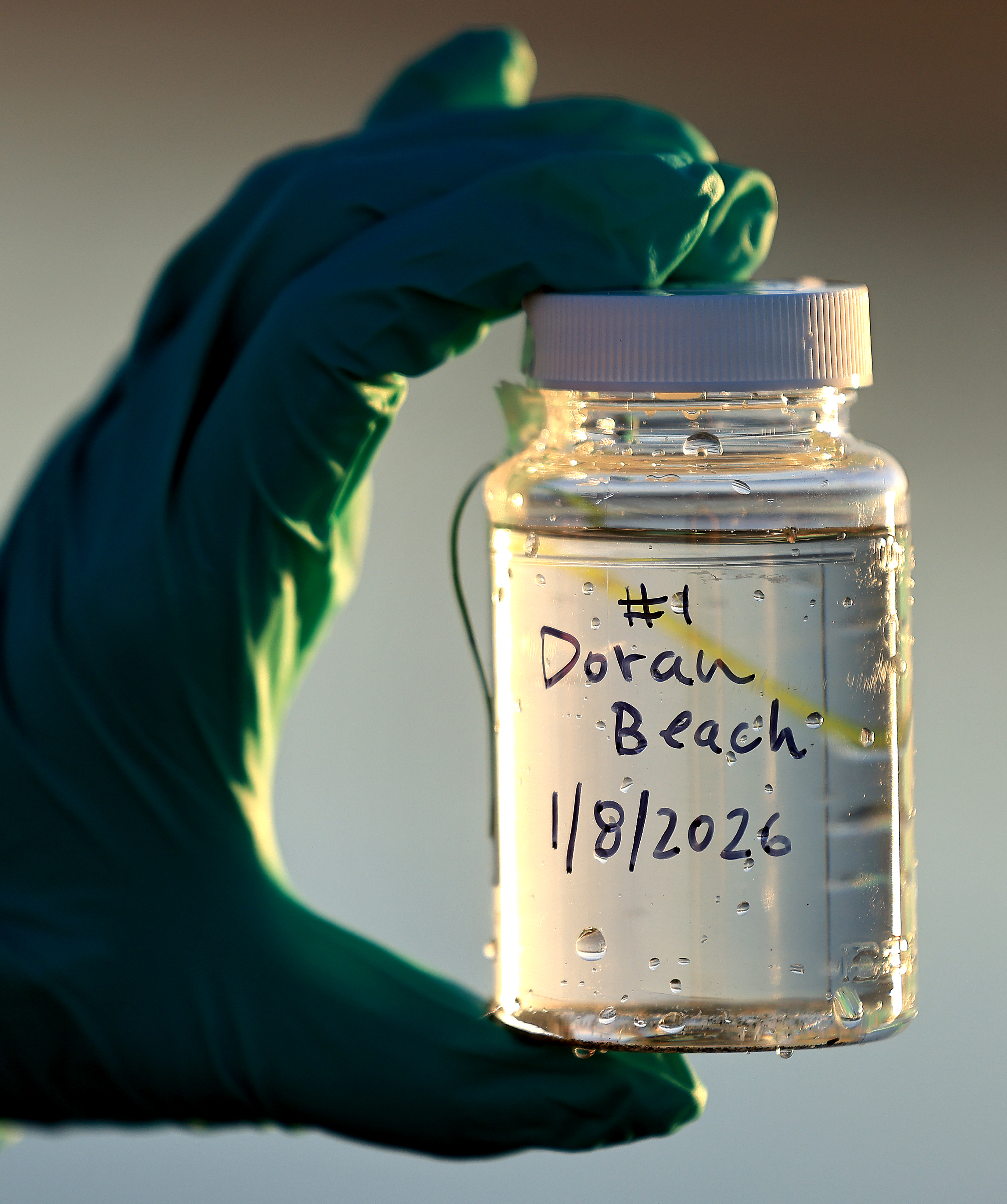
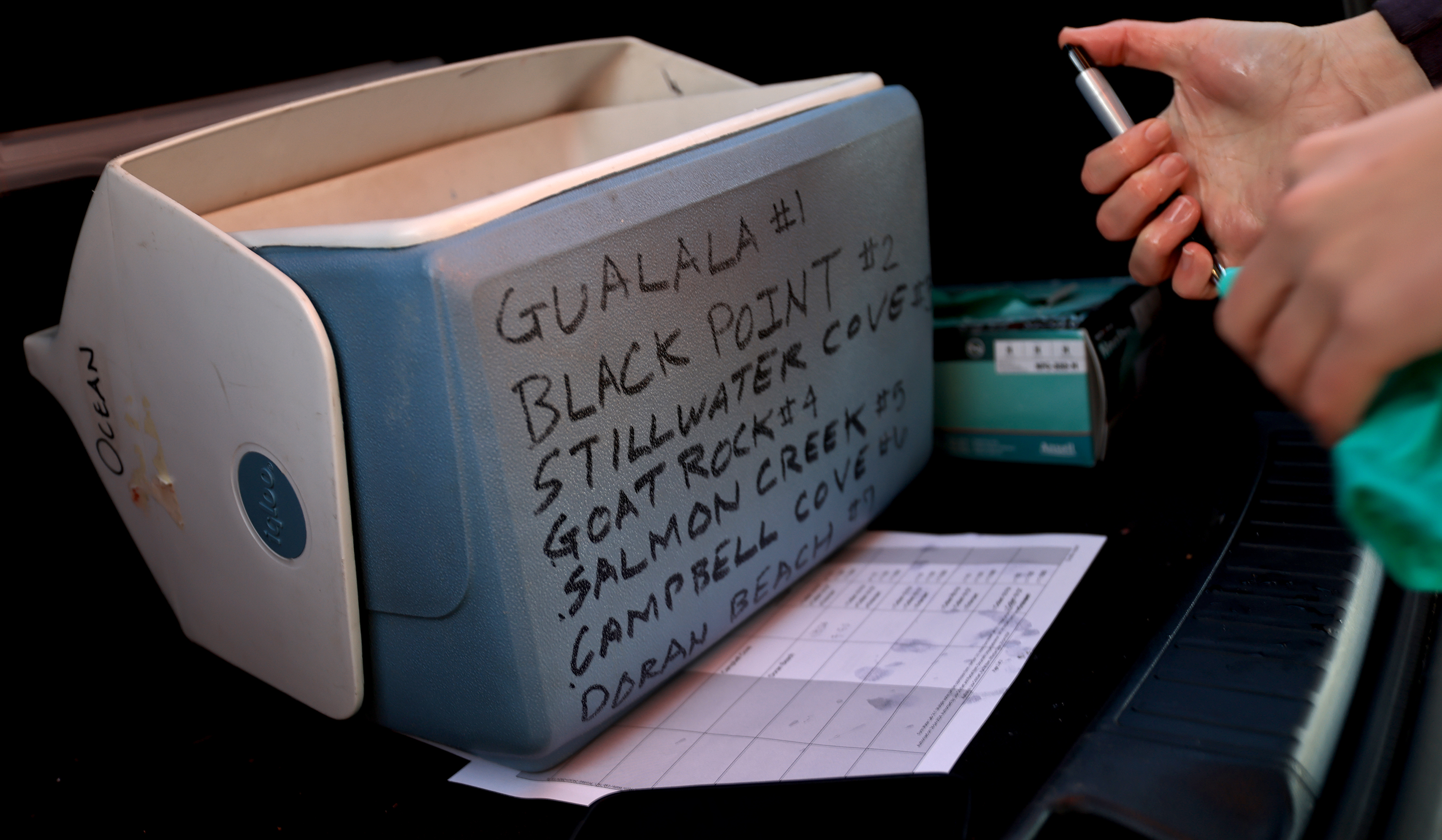
She and her colleagues repeated the process along Sonoma County’s most popular ocean beaches, including Doran Beach, Goat Rock Beach and Salmon Creek Beach – a necessity after untreated wastewater, including sewage from a treatment plan in Guerneville, spilled into the Russian River over two days starting early Tuesday.
The spill, which came to an end before 7 a.m. Thursday, resulted from overflow at the Russian River Treatment Plant due to recent storms. County officials have urged people to avoid contact with water in the river and along Sonoma Coast beaches.
Sonoma County Environmental Health Director Christine Sosko said sewage was detected in the ocean following the spill, requiring testing. In partnership with Sonoma Water, which operates the Guerneville plant, the environmental health department also continued to conduct tests of the storm-swollen Russian River, which have been ongoing since Tuesday morning.

Ellyse Cappellano, county environment health specialist, prepares to take a water sample from Doran Beach which will be retested for contaminates, in Bodega Bay, Thursday, Jan. 8, 2026, in response to the sewage spill in Guerneville. (Kent Porter / The Press Democrat)

Show Caption
1 of 4
Ellyse Cappellano, county environment health specialist, prepares to take a water sample from Doran Beach which will be retested for contaminates, in Bodega Bay, Thursday, Jan. 8, 2026, in response to the sewage spill in Guerneville. (Kent Porter / The Press Democrat)
“When you have a severe weather pattern like we just had, you get a lot of turbulence and it stirs up a lot of the sediment, causes runoffs and washing off of hillsides,” Sosko said. “All these different things will influence water quality so when we are testing the river, we try to test the entire river and see if we can find any correlation to the discharge.”
The county is screening for many of the bacteria they regularly test the river for during busier spring and summer months, including e. coli and enterococcus, both which can cause serious infections.
Results from the ocean water samples are expected to come back Friday and Saturday, offering a clearer picture of the impacts from the spill, Sosko said.
Along the lower river, county parks and beaches remain open, though signs are posted advising visitors to avoid contact with the water. No timeline yet exists for when river or beach conditions will become safe for humans or pets again, but conditions at the plant are expected to improve as the river’s level continues to drop, said Stuart Tiffen, a Sonoma Water spokesperson.
County officials said drinking water should not be affected by the spill. Individuals with wells that have been in contact with flood water should disinfect their well. Well water systems may be disinfected by adding chlorine bleach to the water in the well, according to the environmental health officials. Visit the health department’s website for a dosage guide.
The volume of spilled wastewater and sewage isn’t yet known, but it’s likely to be in the millions of gallons based on the wide gap between the 710,000-gallon daily capacity at the Guerneville plant and the peak inflow of 4 million gallons it was reporting on Tuesday.
The resulting overflow traveled a quarter of a mile through a forested area before it reached the mainstem of the river, officials said. The wastewater did not reach any neighborhoods or houses.
Sonoma Water crews have taken advantage of clearer weather this week to begin cleanup.
“The treatment plant relies on beneficial bacteria to help clean wastewater,” Tiffen said. “Heavy rains, like we just had, can wash out these bacteria. Because they grow slowly, it can take days or even weeks for the plant to fully recover.”
Compared to previous storm-related spills at the plant — and there have been a series at the facility — Sosko said the spill was “unusual.”
“Our advisory went out of an abundance of caution,” Sosko said. “We really want to protect the community. As we see more data and have a better understanding of exactly what happened, we’ll be making those changes appropriately.”
Contact Staff Writer Anna Armstrong at anna.armstrong@pressdemocrat.com. On X (Twitter) @annavarmstrongg.