Dallas officials warn the emerald ash borer could impact hundreds of thousands of trees, forcing removals while the city works to slow the spread and replant.
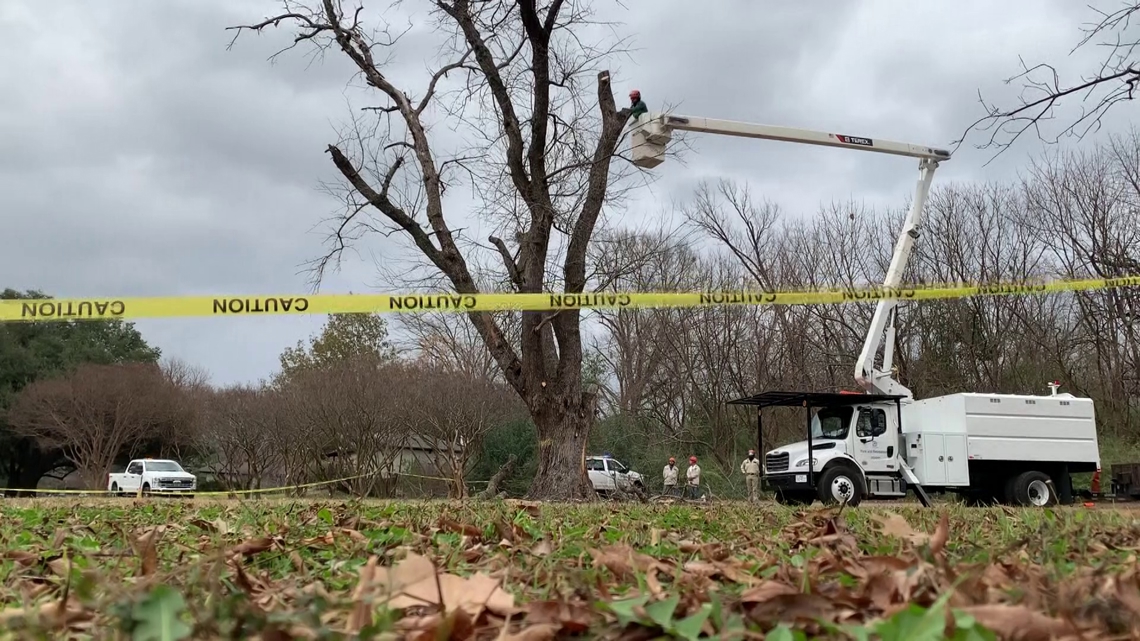
DALLAS, Texas — After standing for decades, the ash tree came down in just a few hours.
The 60-foot-tall tree in Norbuck Park was nearly 80 years old, but city officials say it was already dead before crews began removing it, cutting it down limb by limb.
“I hate to take trees out,” said Jared Farley, the city forester. “However, when the risk outweighs the reward, it has to be done.”
Dallas officials say the tree was one of many lost to the emerald ash borer, a tiny, metallic green beetle that has spread across North Texas and is now reshaping the city’s urban tree canopy.
“Sadly, you know, most of these trees are already beyond the point of no return,” Farley said.
The city says at least 50 more ash trees are expected to be removed in the coming months.
According to Brett Johnson, a conservation manager, the emerald ash borer attacks ash trees throughout its life cycle.
“The emerald ash borer is this little, tiny green metallic beetle,” Johnson said. “The beetles will eat the leaves. Their larva will actually bore into the side of the bark. It does what they call girdling the tree, but it’s inside the tree, so at every life stage, the emerald ash borer is attacking these trees.”
The beetle was first discovered in North Texas in 2018 in Tarrant County. It appeared in Dallas three years ago, and officials say its long-term impact will be significant.
“It is a very tough one to wrap your head around,” Johnson said. “We may be looking at anywhere between a quarter million and a million plus trees that will eventually have to be dealt with in the city.”
Some ash trees can be treated with insecticides, but city officials say those treatments are expensive and don’t always work. In many cases, infected trees are removed to prevent future generations of beetles from spreading.
“So this is our way of fighting back, right? That’s how you got to look at it,” said Carlos Gomez, the city arborist.
The city says replanting different types of trees will help soften the long-term loss to the urban canopy, though officials acknowledge the process will take time.
“We are mitigating these losses,” Farley said. “It’s just going to take time.”
For most of the ash trees in Dallas, city officials say time is running out.