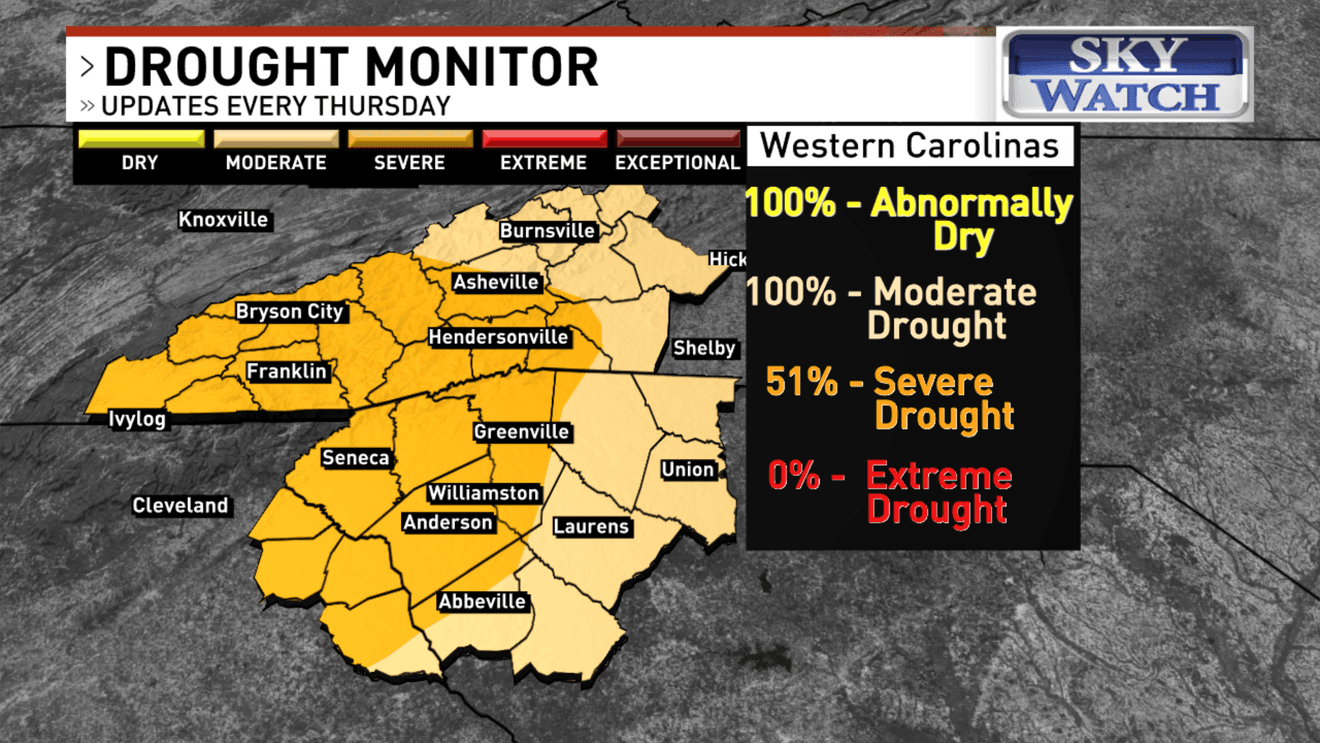
Drought conditions increase across western North Carolina and the Upstate, according to the latest U.S. Drought Monitor.
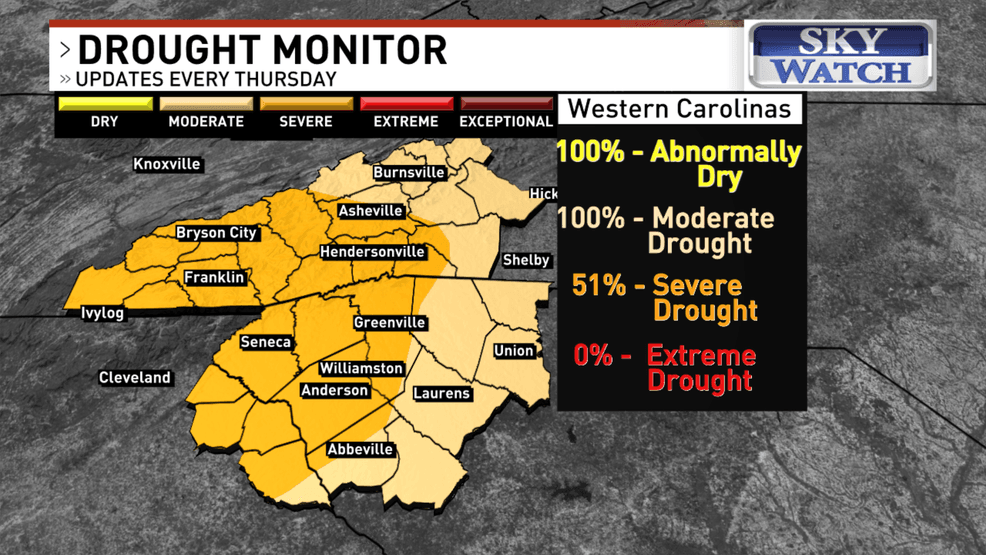
Drought conditions increase across western North Carolina and the Upstate, according to the latest U.S. Drought Monitor. (WLOS)
All areas in the region are currently classified as abnormally dry, with 100% in moderate drought.
In addition, 51% of the region is now experiencing severe drought. While no locations are currently in extreme or exceptional drought, the map shows dry conditions continuing to expand across the mountains and foothills.
These drought classifications are the result of a prolonged lack of rainfall over the past several weeks.
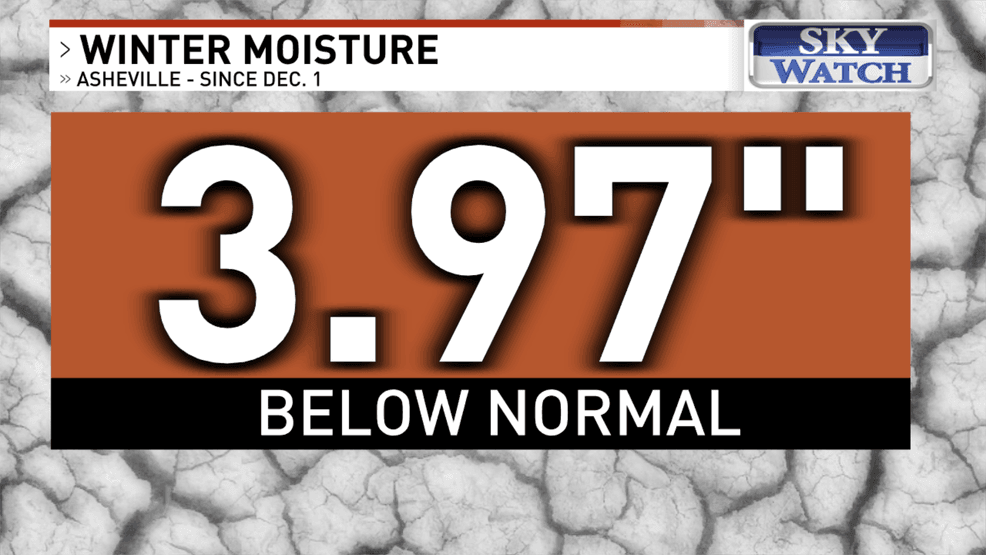
Under normal conditions, the city would typically see 5.16 inches by this point in the season. That puts Asheville 3.97 inches below normal. (WLOS)
From Dec. 1, 2025, to Jan. 7, 2026, Asheville has received 1.19 inches of rain.
Under normal conditions, the city would typically see 5.16 inches by this point in the season. That puts Asheville 3.97 inches below normal.
For comparison, rainfall totals at this time last year were higher at 5.41 inches.
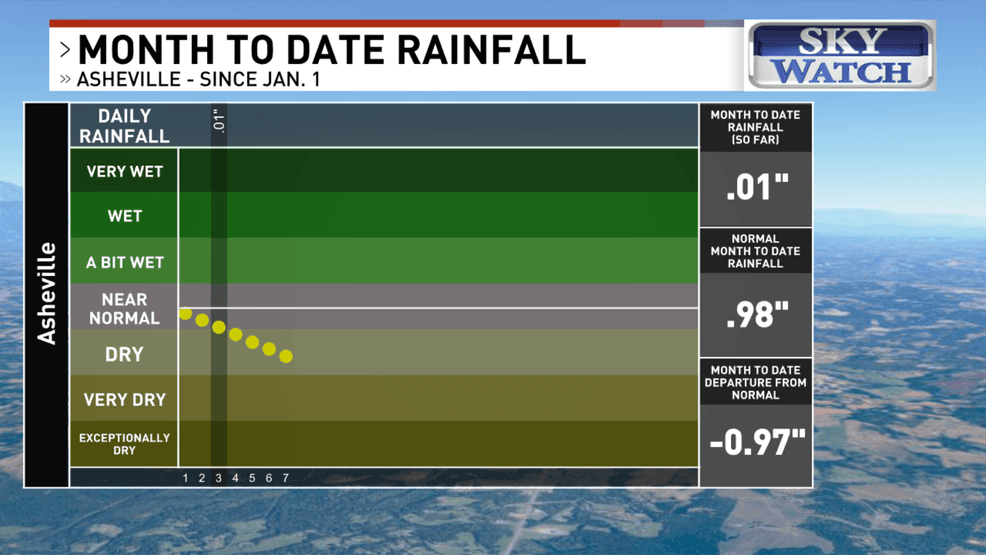
January has done little to improve conditions. Month to date, Asheville has recorded just 0.01 inches of rain. By early January, average rainfall would normally be close to 0.98 inches, leaving the city 0.97 inches below normal already. (WLOS)
According to data from the Asheville Regional Airport, the first seven days of January 2026 became the 10th driest start to the year, based on records dating back to 1946.
January has done little to improve conditions. Month to date, Asheville has recorded just 0.01 inches of rain. By early January, average rainfall would normally be close to 0.98 inches, leaving the city 0.97 inches below normal already.
The month-to-date rainfall graphic highlights how consistently dry conditions have been, with daily values falling into the “dry” category, departing further from the normal rainfall amount.
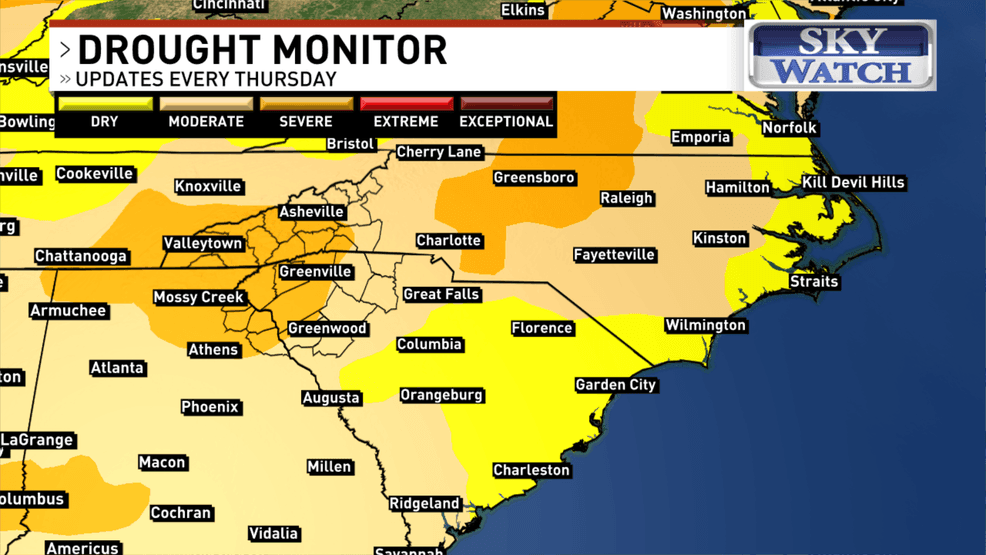
When the drought map is viewed on a larger scale, the pattern becomes clearer. Much of the Southeast has been drier than usual in recent weeks, with severe drought expanding across parts of western North Carolina, the Upstate, and northeast Georgia. Moderate drought has also expanded across both Carolinas, showing that the lack of rainfall is part of a broader regional trend rather than a localized issue. (WLOS)
When the drought map is viewed on a larger scale, the pattern becomes clearer. Much of the Southeast has been drier than usual in recent weeks, with severe drought expanding across parts of western North Carolina, the Upstate, and northeast Georgia. Moderate drought has also expanded across both Carolinas, showing that the lack of rainfall is part of a broader regional trend rather than a localized issue.
Winter is typically a key season for rebuilding moisture in soils, streams, and reservoirs. Continued monitoring of rainfall trends will determine whether drought conditions begin to ease or persist as the season moves forward.