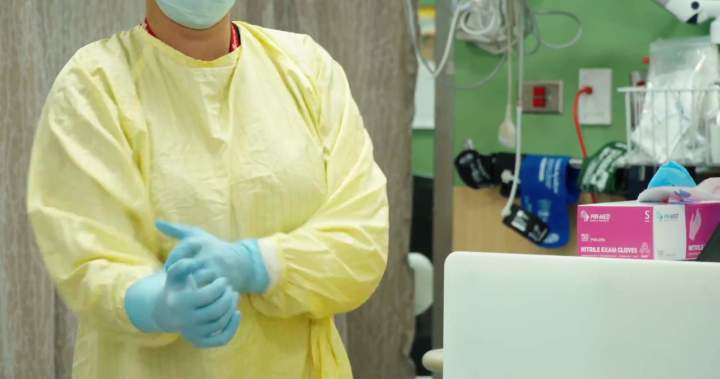
Doctors want the Alberta government to declare a state of emergency for hospitals across the province, as more people come forward with stories of nearly dying while waiting to be seen.

“It’s very difficult to deliver safe and timely care in all of our emergency departments and hospitals across the province right now,” said Paul Parks, president-elect of the emergency physicians’ section of the Alberta Medical Association.
He spoke out on behalf of hundreds of emergency and internal medicine doctors across the province.
Physicians are using concerning language, saying they have never seen Alberta’s emergency departments as overwhelmed as they have been this winter.
“This isn’t just Dr. Paul Park saying the sky is falling,” he said.
“This is actually a plea for help to our government from our front-line health-care workers in our hospitals, saying it is getting impossible to deliver safety and timely care to all of patients and we need help — we need a provincial response.”
Story continues below advertisement
Long wait times in the E.R., code reds when there are no ambulances available, lengthy waits for surgeries and tests, situations where four people are put in hospital rooms designed for two, and more sick patients than beds to put them in is, sadly, nothing new in Alberta — it’s been a growing issue for over a decade.
2:06
Alberta’s plan to increase access to health care ‘doomed to fail,’ critics say
Parks said the increasing population is only exacerbating the pressure.
At the same time, the province has spent recent years dismantling the province-wide, all-encompassing Alberta Health Services provider into four different agencies — which Parks said hasn’t helped.
“For months and months, we’ve been pleading for help. And for the last three years, it’s been constant reorganization, constant chaos.”
1:57
Edmonton paramedics exhausted amid long response times, fewer staff: ‘It’s heartbreaking’
Parks says the situation at hospitals is dire and it’s not just in emergency rooms — there just isn’t the space to safely care for people in all areas.
Story continues below advertisement
“All of these stressors and all of this chaos is now leading to where we’re hearing about patients dying in our waiting rooms — and it’s not just one case that makes it public, it’s many,” Parks said.
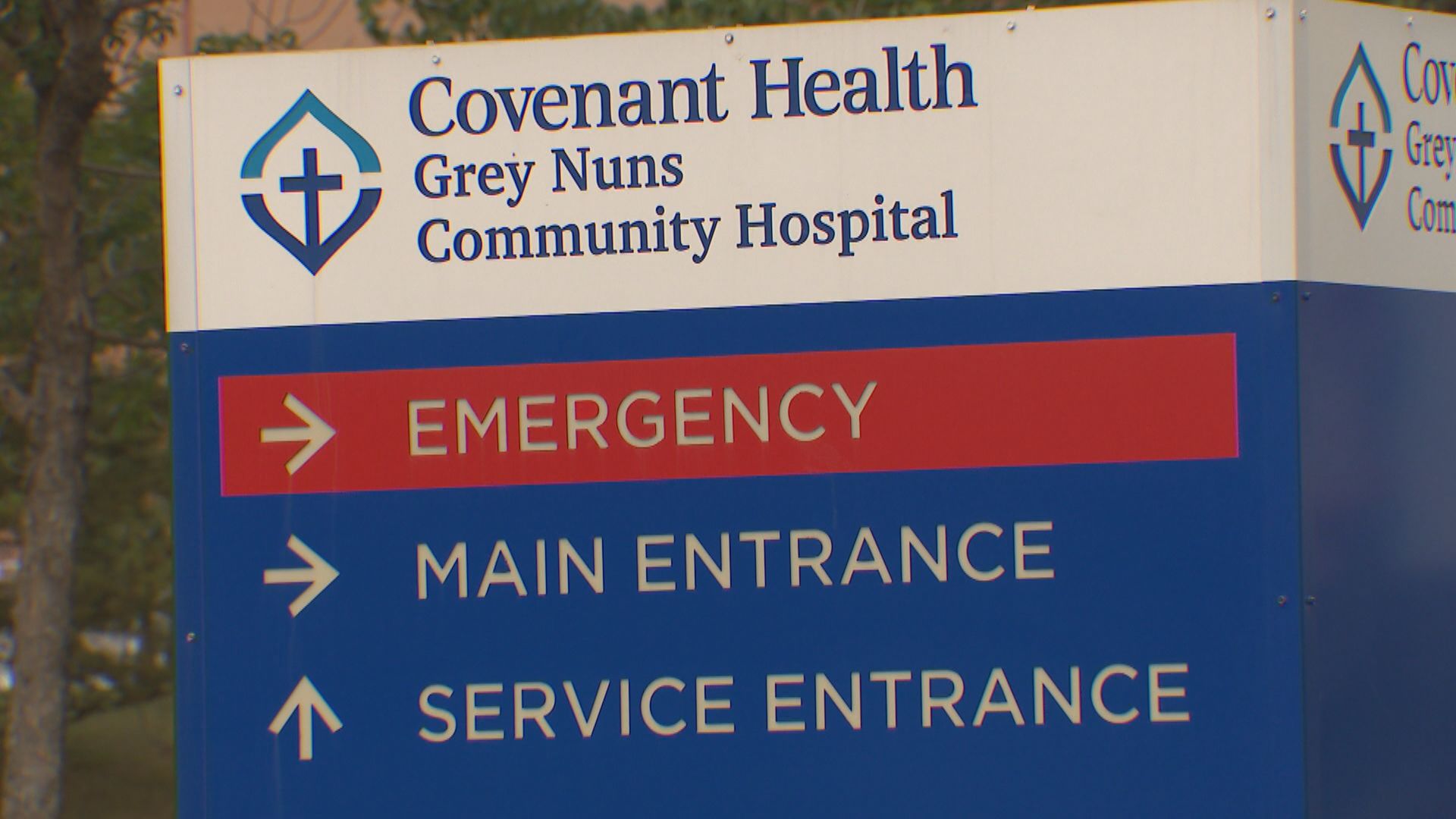
Parks’ plea comes after an Edmonton father died just before Christmas in the Grey Nuns Hospital emergency room, where he waited for eight hours and never saw a doctor.
Prashant Sreekumar, 44, went to the south Edmonton hospital with chest pains and died of apparent cardiac arrest while waiting for care.

2:06
Edmonton father dies waiting to see a doctor in hospital E.R.
Previous Video
Next Video
Other Albertans are coming forward with similar stories.

Get weekly health news
Receive the latest medical news and health information delivered to you every Sunday.
On Dec. 20, 2025 — two days before Sreekumar died — retired nurse Kelly Marlow was taken to Grey Nuns in an ambulance with similar symptoms.
Story continues below advertisement
She was throwing up, had chest pains, numb hands and has a history of heart problems. She said it isn’t the first time she’s had a sudden-onset hypertensive crisis.
“I have gone by EMS to the hospital twice for this,” she said, adding those times she was triaged to be seen quickly.
This time — not so much.
Marlow said she waited seven hours before being seen by a doctor. She was left alone in a wheelchair in the waiting room, she said, because her paramedics said they were being sent back out to a different call.
“I communicated to the nurses that I really did think I was dying. I was having chest pains. My vision wasn’t great, I couldn’t feel my hands, I knew my blood pressure was still severely high. I could not stop throwing up.”
Marlow knew from her 33 years of professional experience as a nurse that something was wrong.
“I was alone, I was scared, I did worry that I was going to die there in the E.R. that night.”
Eventually, she was able to get a nurse’s attention and things progressed.
“At that point she did check my blood pressure again and was quite alarmed — and I was in, within a few minutes from that time.”
Story continues below advertisement
2:16
Will Alberta’s public-private health approach reduce wait times? A deeper look into dual-model practice
Marlow was later told by her cardiologist she likely only survived because her heart is strong — but next time she may not be as lucky.
“Honestly, it was probably one of the worse nights of my life.”
Every day across Alberta, Parks said there’s hundreds of sick or injured people sitting in pain in waiting rooms or laying on stretchers in hospital hallways, waiting their turn for desperately-needed care.
“There’s lots of patients that are suffering for 10, 12, 14 hours with severe pain that we can’t get pain meds or comfort to. It’s day in, day out in every one of our emergency departments.
Trending Now
-

WestJet passenger says he was ‘fat-shamed’ by staff on flight to Mexico
-

Congresswoman plans to impeach ‘incompetent’ DHS Secretary Kristi Noem
“So what we’re pleading for is: just acknowledge that this is a provincial crisis.”
Story continues below advertisement
Parks said with AHS now splintered off into four different agencies — Acute Care Alberta (hospitals, surgeries), Primary Care Alberta (day-to-day health), Recovery Alberta (mental health/addiction), and Assisted Living Alberta (long-term care/support) — there are more government ministers, CEOs, administrators and bureaucrats in the mix.
That’s left doctors, nurses, EMS and others on the front lines unsure who it actually in charge during a health crisis.
“Right now, what I’m hearing again and again from my front-line colleagues and my front-line leaders, is they have no clue who’s running this, who’s coordinating this, or how to navigate our disintegrated system right now. And so they’re just pleading for help: please, help the frontline health-care workers do their job,” Parks said.
“Who is actually accountable to lead our province-wide response to it? We don’t have a clue.”
Parks says there needs to be a plan for short-, medium- and long-term solutions and it needs to happen now.
“No one hospital can dig their way out of this. No one corridor can dig their way out this. We need a provincial response.”
6:42
Health care expert concerned about patient care amid looming AHS restructuring
Previous Video
Next Video
Story continues below advertisement
Parks said the province’s announcement of more hospital beds will help – eventually. Hospital spaces are complex to build and won’t come online for the better part of a decade.
He said Alberta can’t wait and help is needed now.
“Let’s work together on provincial solutions that we know we can implement,” he said. “Let’s not keep quibbling about how bad the crisis is.”
In a statement Thursday, the province thanked doctors for their input. It also acknowledged long emergency department wait times remain a serious concern.
More on Health
More videos
The government said respiratory virus and flu season has led to more patients in hospitals, but staff have made changes to help.
“An early and unusually large flu spike in mid-December added pressure to hospitals with more patients requiring care and hospitalization that we’re currently seeing,” said a statement from the Ministry of Hospital and Surgical Health Services.
“We are cautiously optimistic that demand may ease as cases in the community stabilize especially in Calgary and Edmonton, but hospitals will remain busy throughout the season.”
The ministry said changes are being implemented such as:
- Accelerating discharges and transfers where appropriate
- Limiting non-essential inbound transfers
- Dedicating 336 beds specifically for respiratory virus season
- Opening designated surge spaces to manage increased demand
- Transitioning patients who no longer require acute care out of hospital into the community
The province says those efforts are working and conditions should improve more once the flu season winds down.
Story continues below advertisement
1:59
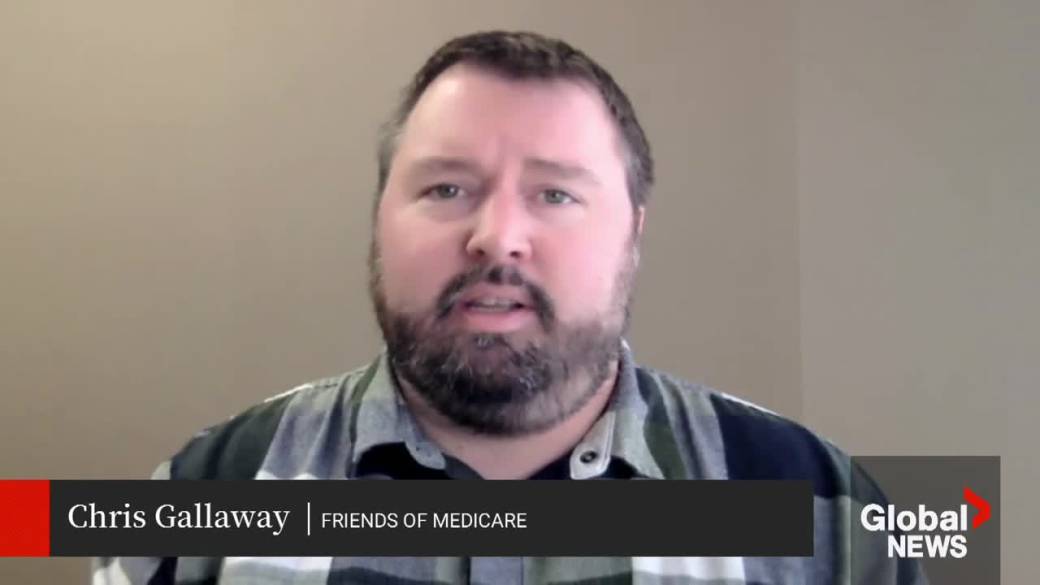
Edmonton families facing long health care wait times
Parks said the province needs a reality check to how bad it is on the ground.
“If the ministers and the premier and their PR teams want to say, ‘Oh, it’s not so bad. It’s just a little bit of influenza and we’ll get better.’ That is absolutely not true.
“What will it take for them to acknowledge the state we’re in? Do they need more and more publicized tragic deaths?”
Late Thursday afternoon, the Alberta government issued an updated statement:
“The system is using all available resources; calls for a ‘public health state of emergency’ are misguided and would add nothing to what is already being done. Comparisons to the pandemic emergency of 2020 are not based on evidence.”