
Listen to this article
Estimated 4 minutes
The audio version of this article is generated by AI-based technology. Mispronunciations can occur. We are working with our partners to continually review and improve the results.
As Premier David Eby continues to reject the idea of a new pipeline to B.C.’s northern coast, he’s now suggesting that building a Canadian refinery would be a better use of taxpayer dollars — but some experts doubt the proposal’s merits.
While Eby dismissed Alberta Premier Danielle Smith’s calls for an expedited pipeline in the wake of U.S. military intervention in Venezuela, he said the conversation should turn toward increasing Canadian refining capabilities.
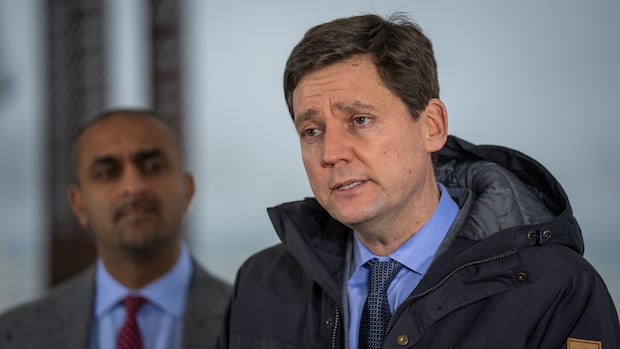
“If we’ve got tens of billions of dollars to spend, I think we should spend it on a refinery and we should develop oil products for Canadians and for export, instead of being reliant on American and Chinese refineries to do it for us,” Eby said at a news conference Tuesday.
He said building refining capacity would be better than shipping raw resources out when the Trans Mountain pipeline is still not at capacity.
“I don’t understand why, if we’re talking about massive public investment into supporting Albertans in this fragile global time, we can’t talk about supporting all Canadians with oil and gas products that are made right here at home while we transition.”
B.C. Energy Minister Adrian Dix said such a project would generally be built near oil reserves, which would “imply Alberta,” although he acknowledged there have been proposals for a B.C.-based refinery in the past.
Dix also stressed the premier was responding to suggestions about the potential northern pipeline, which does not have a private backer at this point. He added the provincial government’s focus remains on existing projects, such as LNG and the North Coast Transmission Line.
Little consensus on refinery benefits
Adam Pankratz, a lecturer at the University of B.C.’s Sauder School of Business, said a new refinery makes no economic sense.
“Refining in Canada is frequently suggested by politicians because it sounds good politically, but it’s not an economically justifiable or feasible idea.”
He said the endeavour would be extremely expensive — in the tens of billions of dollars range — and risky.
“We don’t know what the market is going to be for all of the various products that a refinery might produce.”
Petroleum products have an expiration date, Pankratz said, unlike crude oil.
“Gasoline needs to be sold within a few months, otherwise it goes stale. And so if you’re refining it and don’t sell it now, you have a worthless product.”
Marg McCuaig-Boyd, a senior adviser for Counsel Public Affairs and former energy minister for the NDP in Alberta, said refineries are very expensive and take a long time to build.
“But you know, once they’re built, they’re there for a long time and they do provide money back,” she said.
McCuaig-Boyd said she believes governments should diversify and consider all options: pipelines and refineries.
Environmental response
Isabel Siu-Zmuidzinas, climate campaigner at the Wilderness Committee, said the framing of energy sovereignty as simply pipeline versus refinery presents a false dichotomy.
“The idea that we should be putting any public money into fossil fuel infrastructure at this point is pretty ridiculous,” she said.
“We know that fossil fuels are driving climate-related weather disasters … across the country.”
Siu-Zmuidzinas said governments should focus on investing in clean energy — and not unpredictable fossil fuel markets associated with pipelines, refineries and LNG.
She said public money should go toward “infrastructure or services that actually make our lives better,” like an east-to-west electricity grid, more public housing and public transit.
“Pretty much anything would be a better investment at this point than fossil fuels.”