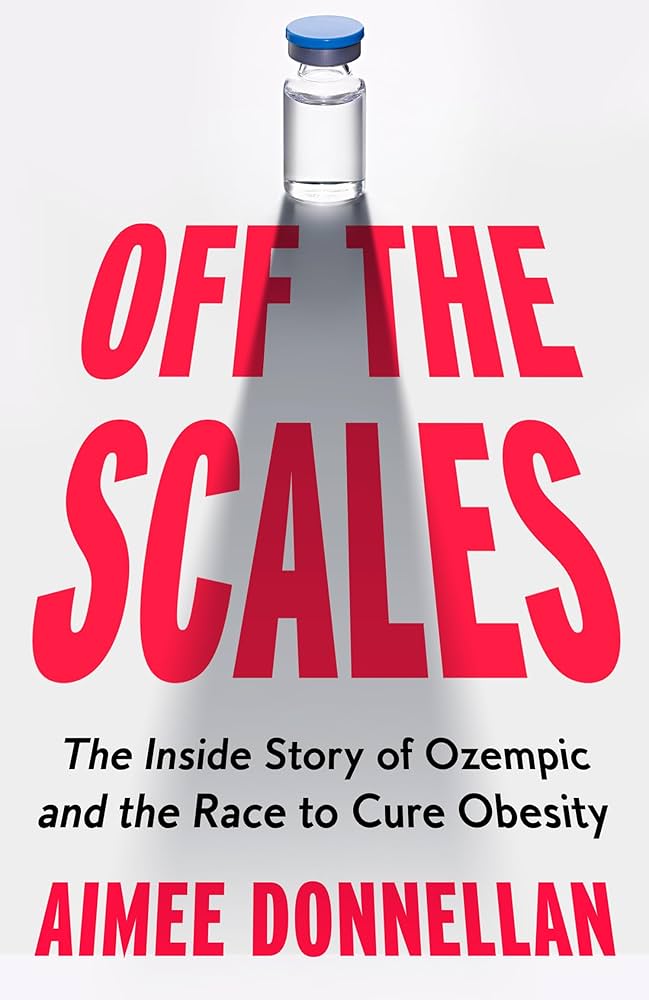
The signs have been there for a while. Take, for instance, a meeting organised by Nestlé executives in the winter of 2024. There in the Alps the multinational’s top team discussed a new line of products. These products were, Aimee Donnellan explains in Off the Scales, engineered to deal with a very specific, very new and very worrying threat: the growing chunk of consumers for whom the once-reliable trifecta of sugar, fat and salt no longer appealed.
Or you could point to the letter a UK fund sent a little later to investors after dropping all its alcohol stocks. The fund too had heard ill tidings: it feared alcoholism might not be the bankable investment it once had been. It thought addiction could soon have an effective treatment.
This was probably also about the time that in your own office you started noticing the people with the oddly gaunt expression, and the new wardrobe.
But if that didn’t tip you off to what was going on, there was the US Centers for Disease Control and Prevention and its 2024 National Health and Nutrition Examination Survey. In the middle of this regular publication, without fanfare, was what could well be the most important table in modern public health. It was the table outlining how fat the country was.
The US was — spoiler alert — still extremely fat. More than four in ten people were obese. But what was important was that that number of fat people was just a little bit lower than it had been. For decades the western waistline had been increasing — flabbily, inexorably, unstoppably. Now it had stopped. For the first time in a generation the national belt needed tightening rather than expanding. Why?
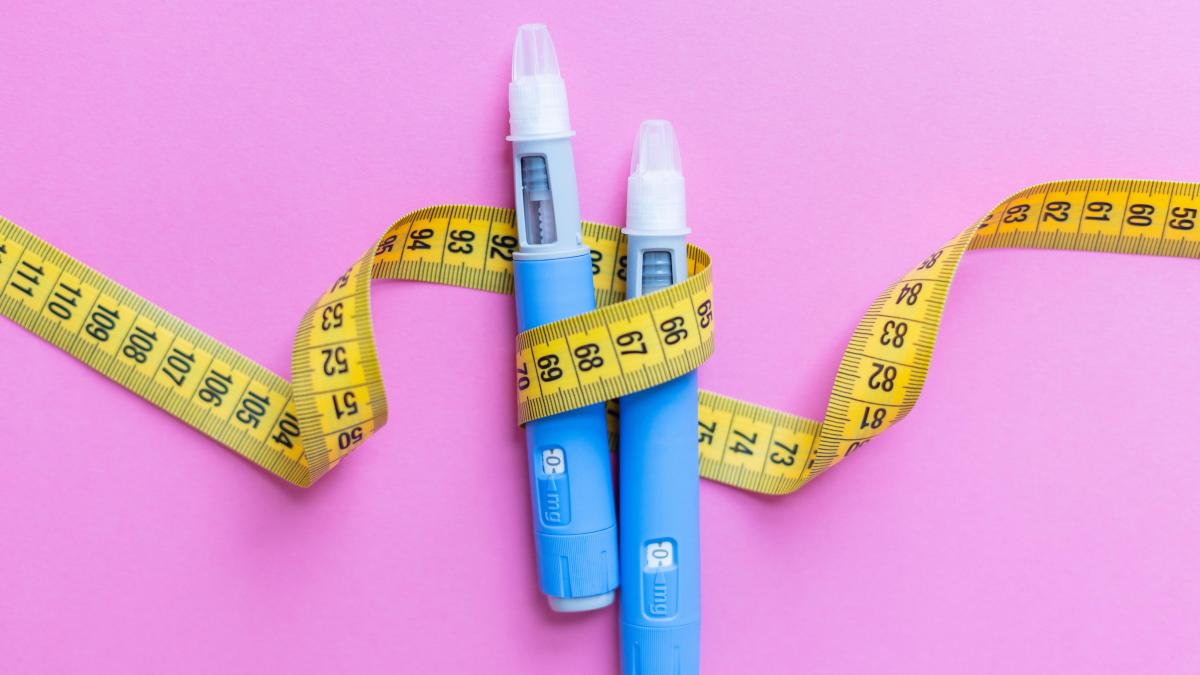
Well, you know the answer, just as you know the secret behind your colleagues’ svelter but saggier faces. Eight years ago a new medication for diabetes appeared. It worked pretty well and did pretty well. It was marketed in the US using a song. The chorus was: “Oh, oh, oh, Ozempic.”
• Tim Spector: Weight-loss jabs are fine… if we stop eating junk
The most significant bit of that advert wasn’t the song, though. It was actually the bit that most people barely noticed: the bit where they listed the side-effects. One of those side-effects was “weight loss”. For the benefit of the regulator as much as patients there was also a warning. On the screen stern letters read: this is not a weight loss drug. But it was.
As Donnellan, a columnist for Reuters, outlines in her meticulously reported account, the inventors of Ozempic always realised that the “side-effect” would really be the main effect. Diabetes was just the start for the class of drugs known as GLP-1 agonists. The target was the biggest disease of all: obesity. And the rewards were — still are — vast. In 2023, unlike much of Europe, Denmark’s economy grew. The reason was almost entirely that Novo Nordisk, which makes Ozempic, is based in Denmark.
What will the world look like when fat drugs can be taken as pills rather than injections, when the (unwanted) side-effects are minimised and, perhaps most significantly of all, when the drugs are off patent?
We don’t know the answers. We don’t, as Donnellan makes clear, even completely know what these drugs do. We know they interfere with a hormonal mechanism to suppress appetite. There is evidence that they might not just deal with food cravings, but alcohol cravings too — hence the move away from drinks company investments.
To give a sense of the range of conditions being investigated as potential benefits, there is some evidence that they might aid everything from getting pregnant to preventing Alzheimer’s.
• Ozempic side-effects: what weight-loss drugs do to your body
Donnellan is not the first to write a book about what this means. What she adds, though, is a reporter’s eye. She takes us to the conferences where pharmaceutical companies face off. She takes us to the labs where star scientists retrospectively battle it out over patents and credit.
She takes us inside the boardrooms where European executives suppress their squeamishness about advertising medication to Americans using a catchy jingle — and get rewarded for their boldness/unprincipledness (delete as appropriate) with soaring stock prices. She takes us to the dinners and deals where pharma reps woo doctors over arugula and eggplant salads.
There is the good and the bad. She takes us to the women who had spent their lives loathing their bodies and now find they can move freely — physically and in society. Then she unflinchingly describes some of the more unpleasant rare side-effects. Such as the woman whose gut essentially stopped working. Food just got stuck, with very smelly results.
She also talks about the problem highlighted by a report this week that if you come off them, the weight piles back on. To the concern of public health officials, and the delight of pharmaceutical investors, these may well be drugs for life.
You can tell Donnellan is a journalist. The book is reported non-fiction, and it is done very well — briskly and brightly and with lots of shoe leather. It is also the sort of book where you tend to meet interviewees alongside brief precis of an arbitrarily chosen body part. One man is tall and brawny. Another has soft brown eyes that crease at the edges. One scientist will learn on reading the book that — perhaps to her surprise — she has “darting blue eyes that appear to be always scanning and observing”.
• Read more book reviews and interviews — and see what’s top of the Sunday Times Bestsellers List
If I have a criticism, though, it is not the creased and darting eyes, but the eggplants. One of the oddities, for me, was how US-centric Off the Scales is. Too many chapters involve Oprah or some TV medic I’d never heard of called Dr Oz. If it were written by a US journalist, this would still be a weakness. Donnellan, though, is based in Ireland. I accept that, for authors as much as drug companies, the US is the biggest market. But this is a global story in which the most famous pharmaceutical protagonist is from Denmark. At the very least, readers in these isles should have an expectation of rocket and aubergine rather than arugula and eggplant.
But this is a minor issue. Obesity drugs are a big story that is only getting bigger — even as we are getting smaller. Donnellan has performed a public service by taking down the first draft of history: by speaking to the main players and untangling the rivalries and disputes. This is not, though, the final word. The story of Ozempic has only just begun.
Off the Scales: The Inside Story of Ozempic and the Race to Cure Obesity by Aimee Donnellan (4th Estate £20 pp320). To order a copy go to timesbookshop.co.uk. Free UK standard P&P on orders over £25. Special discount available for Times+ members