
Before the sun had even risen on the first Monday of the new year, a text message lit up my phone with the news no one wanted but everyone expected eventually: AT&T would be decamping from its downtown Dallas digs for Plano sprawl come 2028. Shortly thereafter, downtown developer Shawn Todd asked to meet. At first, he didn’t say why, only that it was important – that the time had come, he said, to “rip off the Band-Aid.”
Todd then explained the need for the sit-down: He was turning over his celebrated 52-story downtown Dallas high-rise, The National, to the lender at week’s end. Come Friday, the 1.5 million-square-foot pinstriped monolith will be posted for foreclosure, with the lender, Starwood Capital Group, taking possession the first Tuesday of next month.
At which point Todd will no longer have ties to or money in downtown – where his company, Todd Interests, which includes sons Philip and Patrick, has over the last two decades invested some $1.5 billion.
“And successfully invested,” Todd would say during follow-up conversations. “We’ve had a good run downtown.”
But for now, that run is over, with the largest adaptive reuse project in state history – a $465-million makeover of the 1965 First National Bank Tower on Main Street – in foreclosure.
Opinion
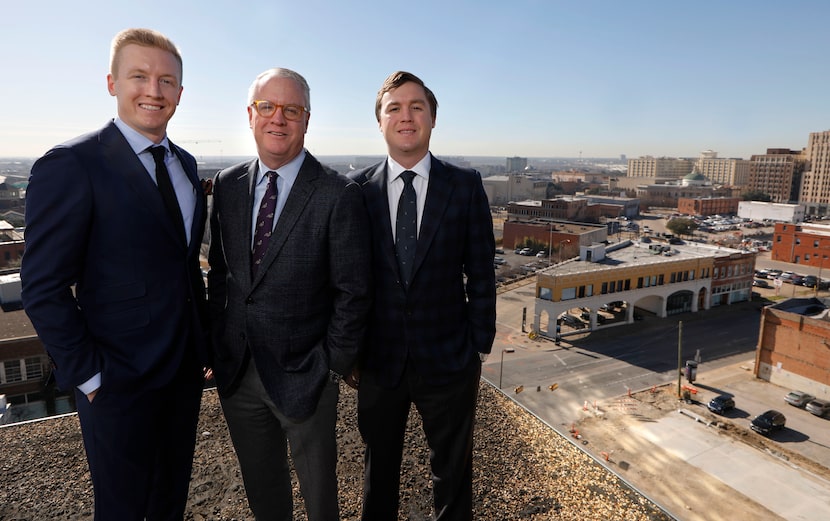
Shawn Todd, founder and CEO of Todd Interests, center, with his sons, Patrick, left, and Philip of Todd Interests, atop one of the East Quarter buildings with which they parted in December 2025.
David Woo / Staff Photographer
Todd said he wanted to talk before the news broke because he didn’t want The National’s foreclosure “to tarnish downtown, to be misconstrued that downtown was a failure.” Over the course of two days’ worth of interviews, he would insist, again and again, he did not believe that. He knew, too, few would believe him.
After all, news of The National’s foreclosure – and Todd’s exit from downtown – comes at the worst possible moment for a central business district whose recent resurrection has begun to yellow like old newsprint.
As recently as the spring of 2014, this newspaper ran a headline, “Who knew: Downtown Dallas is running out of empty buildings,” spurred by investments in First National and the Statler Hilton, long eyed for demolition by mayors who threatened razing the historic hotel and replacing it with a park. Just a decade ago, downtown was no longer a lifeless crater in the city’s center. You could again walk down its streets without wondering what that smell was.
Yet now AT&T has begun its long goodbye. A newly merged Comerica weighs likely layoffs amid a near-certain move to Uptown. Saks Global steers into a bankruptcy that could again imperil Neiman Marcus’ downtown flagship, which Todd helped save from closure last year. And Dallas may well scrap City Hall for a megasportsarenacasinoplex.
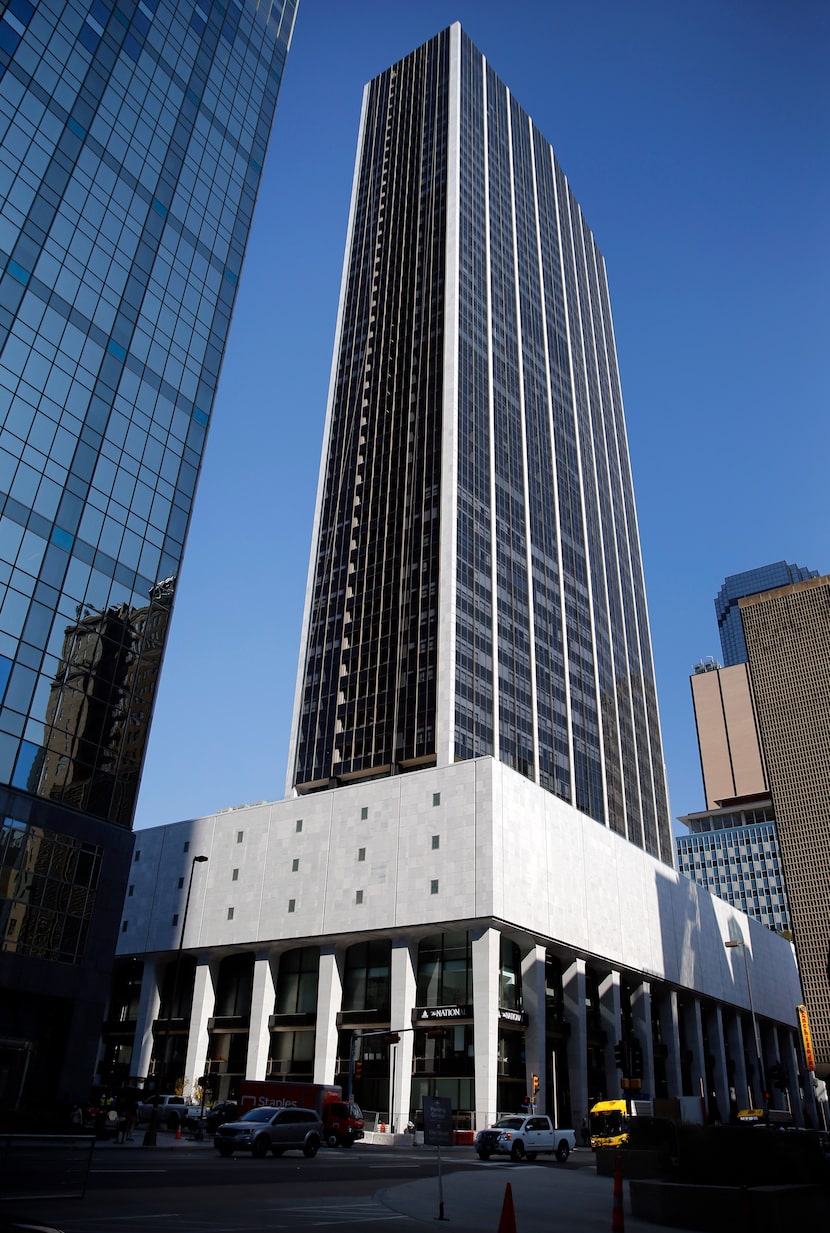
The National, the 52-story former First National Bank Tower, is the biggest adaptive reuse project involving a historic Texas property. As of Friday. it’s in foreclosure.
Tom Fox / Staff Photographer
Todd, that guy you’d call whenever you needed a good quote from “a downtown developer,” is going Uptown – like everyone else, it seems, back to where he began in 1990. I told him that isn’t going to make people feel good about the state of things.
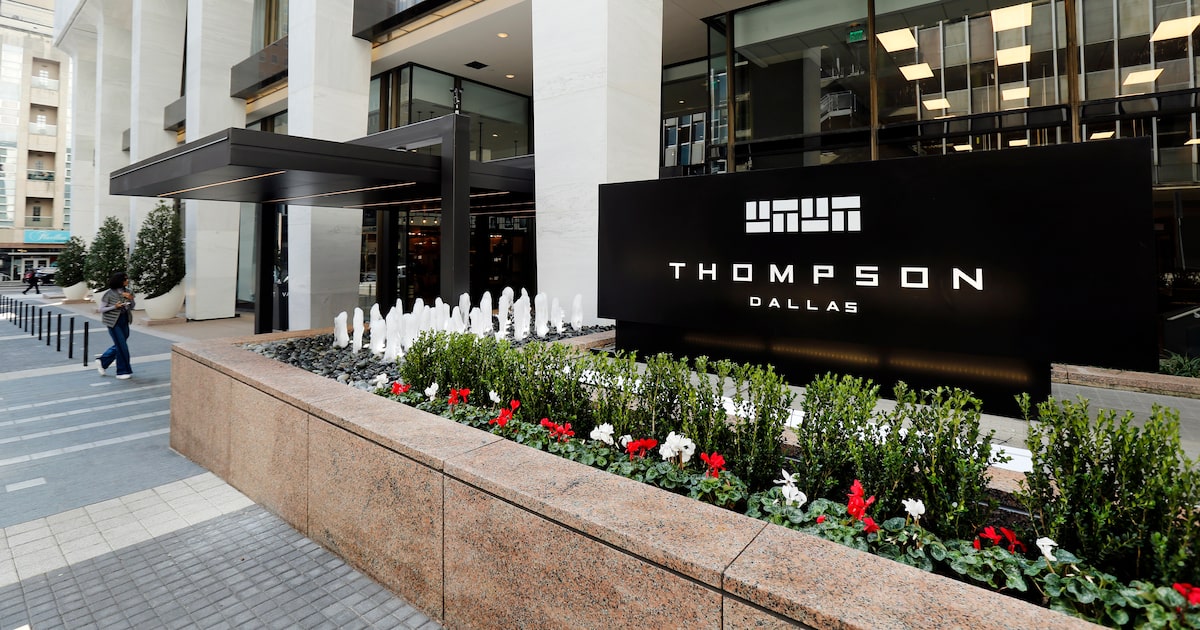
“The asset just didn’t work for us,” he said, referring to The National, which is also home to, among other things, the Thompson Hotel, the Michelin Guide-recommended Monarch, a Lucchese store, White Rhino Coffee and Downtown Dallas, Inc.
He said occupancy in The National’s apartments has fallen in recent years, from nearly 95% to 71% – the result, he said, of an uptick in violent crime that went largely unchecked until last year’s launch of the private-public Safe in the City initiative that resulted in some 120 Dallas Police officers assigned to the city’s center.
“When people don’t feel safe, whether an environment’s safe or not, if they don’t feel safe, they’re not going to lease an apartment, they’re not going to eat at a restaurant, they’re not going to occupy office space,” he said. “Perception is reality. But we’re not throwing in the towel. I don’t want it to be misconstrued that we’re throwing in the towel on our city. I believe in our city.”
What he really means is that he believes in Downtown Dallas Inc. President and CEO Jennifer Scripps, who, starting in 2022, began asking then-Dallas Police Chief Eddie Garcia and then-City Manager T.C. Broadnax to send more officers to the city’s center, to protect its 15,000 residents and some 130,000 workers.
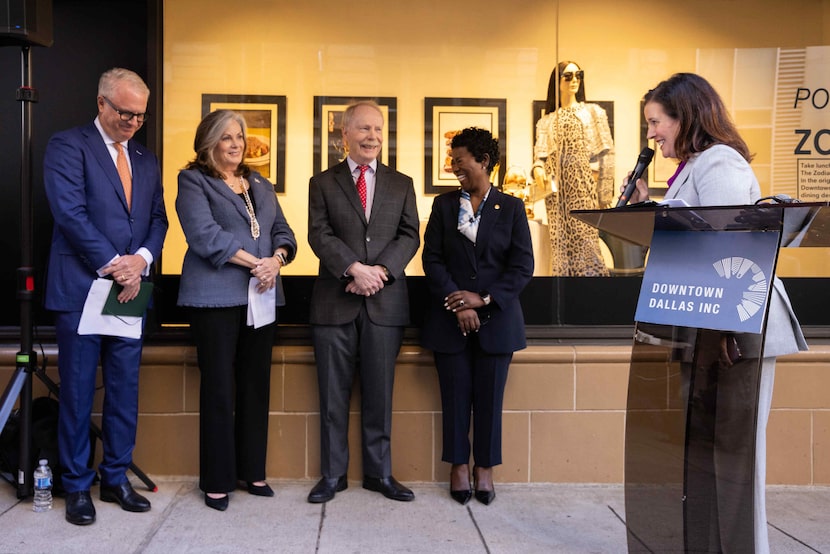
From left: Shawn Todd, founder of Todd Interests; Linda McMahon, CEO of the Dallas Economic Development Corporation; District 14 council member Paul Ridley and Dallas City Manager Kimberly Bizor Tolbert shared a laugh last February as Jennifer Scripps, CEO of Downtown Dallas, Inc., spoke during a Downtown Dallas Inc. press conference at the downtown Neiman Marcus they fought to keep open when Saks Global threatened to turn out the lights.
Juan Figueroa / Staff Photographer
What he really means is that he believes in City Manager Kimberly Bizor Tolbert, who, with Scripps and Todd, fought to keep Neiman’s open and did what Broadnax and Garcia wouldn’t when she launched Safe in the City, which Dallas Police Chief Daniel Comeaux credited Thursday with helping reduce downtown crime.
“I’m a strong believer in Kim Tolbert, and I can’t imagine what mayhem would exist without DDI – I’m just being candid,” Todd said. “They’re executing well. But that being said, it’s a lot to catch up on. The timing now for Dallas is good. The National is still thriving. It just isn’t working economically for us.”
Todd wouldn’t say how much he lost on The National, only that until the last 12 months, he’d never lost money “on any transaction of any kind, and I am deeply disappointed for our investors.”
Beginning with an old federal courthouse and post office tucked away on Ervay Street, the 1985 Baylor University graduate has rescued and resurrected vacant towers that once hovered over a desolate downtown, among them the 30-story One Dallas Center and the 49-story tower formerly known as Energy Plaza since rebranded The Sinclair – each designed by I.M. Pei. Ironically, Todd recently wrote a piece for this paper calling for the demolition of Pei’s Dallas City Hall, deeming it “too costly to occupy” and “virtually unusable.”
Todd Interests’ catalog also filled with stagnant landmarks, including 2020 Live Oak Street, dating back to 1938, and, most notably, the 20-acre East Quarter, whose structures include the 1920 Magnolia Oil service station (and former KLIF-AM studios) that in 2021 became restaurateur Nick Badovinus’ National Anthem on Commerce Street.
But days before Christmas, Todd Interests exited the East Quarter, returning that assemblage to partner J.P. Morgan Asset Management for an undisclosed sum. That was the beginning of the end of Todd’s time in downtown.
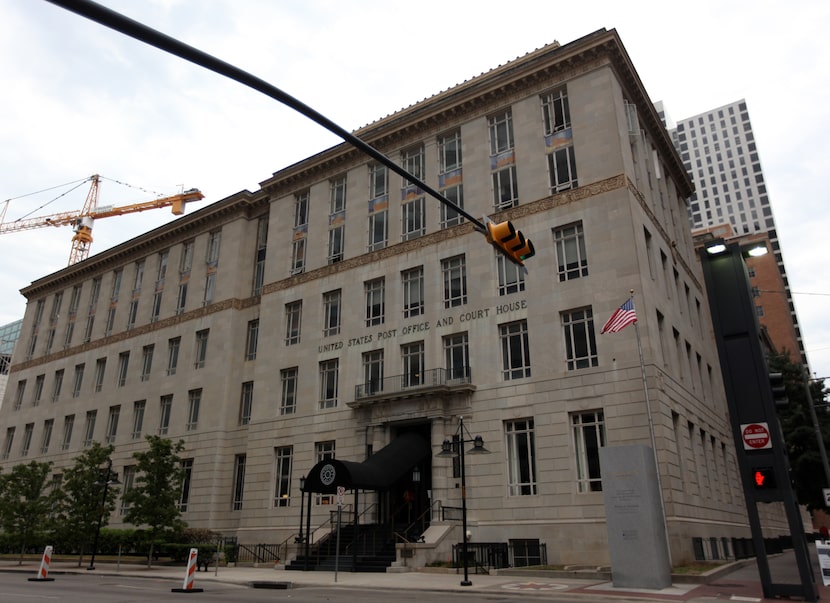
Developer Shawn Todd’s first downtown project involved turning the historic Post Office and U.S. Courthouse on Ervay Street into 78 luxury apartments.
Sonya N. Hebert / Staff Photographer
Around the same time, Todd called Scripps to tell her The National’s foreclosure was imminent. She was cooking for Christmas when he called.
“It’s very disappointing, because Shawn has been a real champion,” Scripps said. “Every meeting he is in, he raises the standards for everyone – city development people, other developers. He has been generous with his time, energy and passion. We’re losing that kind of vision, and that’s a real loss.”
I first met Todd some 20 years ago, around the time he started eyeing the long-dormant Post Office and Court House, built in 1929. It was a storied property that included the courtroom where Roe v. Wade was first argued in 1970. It also proved to be a nightmare introduction to downtown redevelopment.
Initially, Todd intended to retrofit the limestone-and-marble landmark into what he called in 2005 “a boutique office building,” which he hoped to have completed in two years. The City Council approved some $250,000 in historic property tax abatements, over the objections of then-Mayor Laura Miller, but in the midst of the makeover, the economy collapsed.
So the project was tabled until January 2011, when it was announced, again, this time as a 78-unit apartment building. Preservationists and elected officials hailed the project, with then-downtown City Council member Angela Hunt noting that it would help “create a vibrant downtown with a great mix of retail and residential.”
Todd had a chance to offload the building in 2014, but held onto it until 2016, when he sold it to an out-of-town investor.
Todd Interests continues to office in his first downtown do-over, but only until the spring. Meanwhile, 400 North Ervay is, again, for sale, with JLL promising that “investors can acquire a distinguished piece of Dallas history at a significant discount to replacement cost.”
Has a real feel of: Everything must go!
Including, I guess, Shawn Todd, who will leave downtown far better than he found it as he goes off to develop other parts of Dallas from his Uptown office.
“Look, if I ever put my identity into something we’ve built or worked on, that’s a failure,” Todd said. “When you attach your success to your projects, that’s an empty place. That said, I am very proud of what our team has created over the last 20 years.”