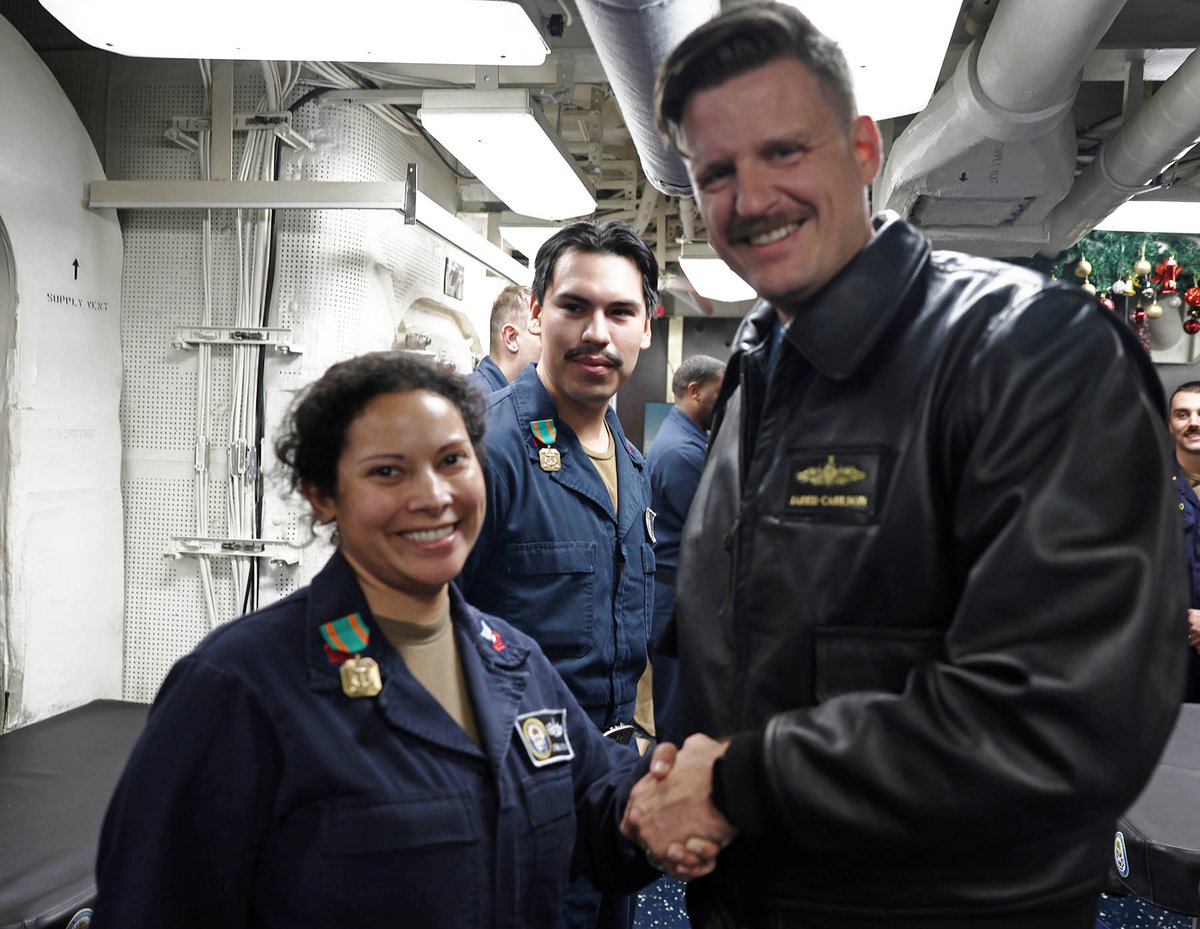
On a wavy stretch of ocean thousands of miles from North Texas, Petty Officer 1st Class Jessica Ryan was doing what the Navy often asks of its best sailors — fixing something critical, quickly, and without much fanfare. The Fort Worth native, now serving aboard the USS Roosevelt, recently earned a Navy and Marine Corps Achievement Medal for repairing the destroyer’s radar, a task that sits at the quiet intersection of technical skill and national security.
Ryan’s path to that moment began far from the steel decks and humming electronics of an Arleigh Burke-class destroyer. She graduated from Forreston High School in 2008, at a time when the future felt wide open, and the Navy was deep into a new era of global deployments. Eleven years ago, she raised her right hand and joined the service, eventually becoming a cryptologic technician (technical) — a role that demands patience, precision, and a comfort with systems most people never think about unless they stop working.
A ship’s radar is one of those systems. It is the unseen sense that allows a destroyer like the Roosevelt to track aircraft, surface vessels, and potential threats far beyond the horizon. When it fails, the consequences ripple outward, affecting not just the ship but the larger force it supports. Destroyers routinely operate alongside carrier strike groups, NATO partners, and allied navies, providing air, surface, and subsurface defense in some of the world’s most strategically sensitive waters. Keeping that radar online is not just a technical accomplishment — it is a contribution to the Navy’s ability to project stability across the globe.
The USS Roosevelt itself is built for that kind of work. As one of the Navy’s Arleigh Burke-class destroyers, it is designed to be a multi-mission platform, capable of shifting from missile defense to anti-submarine warfare to escort duty as the situation demands. It is a floating reminder that modern naval power depends as much on the people who maintain complex systems as on the hardware itself.
This year, the Navy is marking a milestone that stretches back long before radar screens and fiber-optic cables. As the United States celebrates 250 years of independence, the service is commemorating more than two and a half centuries of sailing the globe in defense of the nation. Navy officials often point out that roughly 90% of global commerce travels by sea and that modern internet access relies on secure undersea fiber-optic cables. In that sense, the prosperity of the United States is tied directly to maritime security — and to the sailors who make it possible.
That broader mission is why individual stories like Ryan’s matter. Recruiting and retaining talented people from across the country has become a central concern for Navy leaders, who see technical expertise as just as vital as seamanship. A sailor from Fort Worth repairing a radar system on a destroyer halfway around the world is not an anomaly; it is the model the modern Navy depends on.
For Ryan, the recognition is less about the medal than about the people and the shared purpose that come with the job. Life aboard a destroyer is demanding, marked by long hours, close quarters, and the constant awareness that the ship’s readiness depends on everyone doing their part. It is also, for many sailors, a source of pride — a way to serve something larger than themselves while carrying a piece of home with them wherever they deploy.
As the USS Roosevelt continues its missions and the Navy looks toward its next 250 years, sailors like Ryan remain at the center of that story — quietly maintaining the systems that keep ships safe and operations moving forward, far from the headlines and even farther from Texas soil.
“This award means a lot because I get to spend time working with great people.”