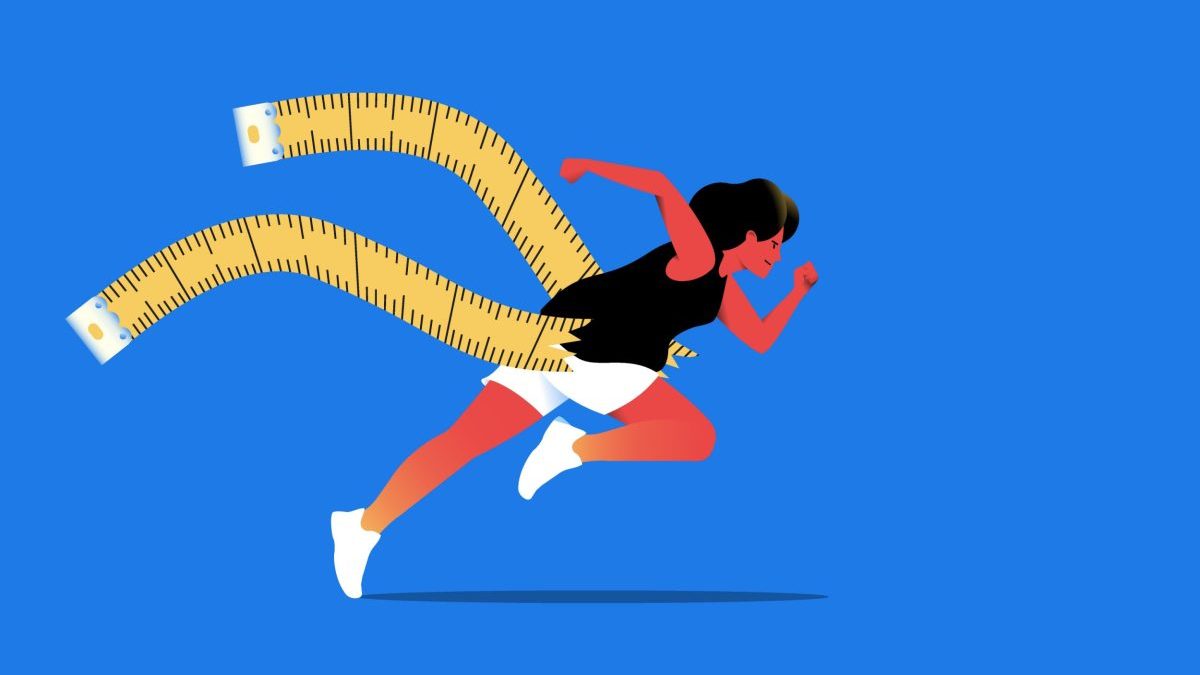
Tailoring your movement and recovery to your age can supercharge your health. Here’s how to do it
From relationships to nutrition, the way we approach many aspects of our health and wellbeing changes as we age – and that should also include our exercise. While moving regularly is the best goal for sustainable health across every decade, our bodies and lifestyles evolve across the years, which means we need to tackle our fitness in different ways.
As both a health journalist and qualified fitness trainer, I know that there is no one-size-fits-all approach when it comes to working out. However, I’ve drawn on scientific research and spoken to fellow personal trainers and health experts to find out the best fitness tips to help supercharge every decade, from childhood to older age…
New FeatureIn ShortQuick Stories. Same trusted journalism.
Ages 0-10
What with screens, schedules and safety fears, many children are simply moving less than their bodies need. In fact, a study published last year found that only 23 per cent of pre-school children in the UK meet the recommended activity guidelines. Researchers didn’t speculate as to why so few move as much as they should – but there is one science-backed tip to get children to do so more: play.
In fact, studies have found that free play was just as good – if not better – than structured activity for helping children to get moving. And it can lead to huge benefits, from better developed language skills to improved attention.
They also enjoy it more: a survey by psychologists at Rider University in the US found that nearly 57 per cent of children say they prefer unstructured activities, such as running around, to organised games.
What to do
Swap screen time in favour of unstructured play. That can be anything from darting about the playground and climbing at the park to using toys or make-believe games with other children or adults in the home.
“Progress and pressure aren’t important – finding something fun, exciting and enjoyable is what matters most,” says personal trainer Eleanor Heaton-Armstrong.
The goal is for children aged one to four to move for at least 180 minutes a day, and children aged five to 10 to do at least 60 minutes of moderate-to-intense activity a day, which could look like adding a few extra minutes to the cycle home from school each day or letting them run wild with a friend on the weekend.
 Build the foundations of fitness (Photo: Tang Ming Tung/Getty)
Ages 11-20
The teenage years are a decade when exercise can become a habit – or something we learn to avoid altogether. According to research, those who are active in adolescence are 3.7 times as likely to be active in adulthood, so it is important to support and gently encourage this generation to exercise. “These years are formative and can shape our adult attitude towards exercise,” says Heaton-Armstrong.
Behavioural research shows the biggest predictor of sticking with exercise later in life is enjoyment and autonomy, not intensity. Researchers of a study in the International Journal of Behavioural Nutrition and Physical Activity even suggested that a “utilitarian approach to exercise, like that often found in exercise or sports clubs, could be partially responsible for the high dropout rate among children”.
What to do
Avoid pushy parenting – let them choose how they move. “Having autonomy over our own time means we can choose something that stimulates both our minds and bodies – and we will stick with it for longer,” says Heaton-Armstrong.
It is a good idea to let adolescents try lots of different activities, rather than pushing them to pick up certain sports or shaming them when they drop them. Find open days at local fitness centres or clubs so they can explore a variety of ways of moving, from ballet to football, until they find what works for them.
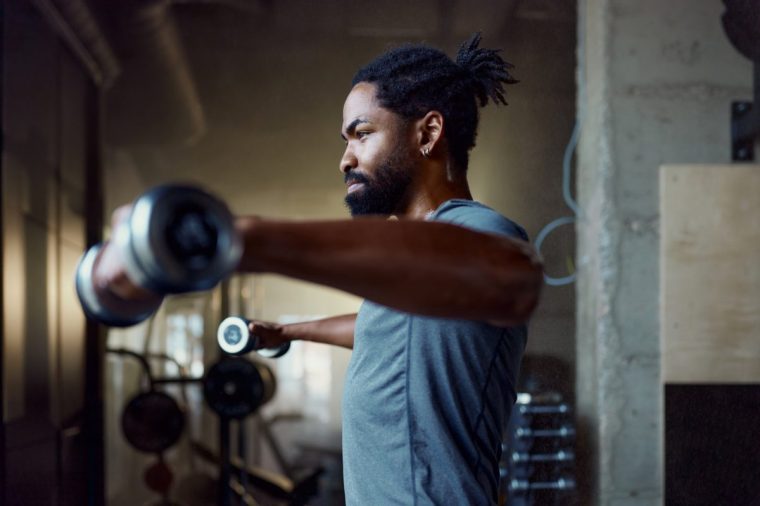 Exercise for fitness, not appearance (Photo: Skynesher/Getty)
Ages 20-30
Your twenties are often the most active decade on paper, though that doesn’t always mean it is for the right reasons. Surveys suggest that around 63 per cent of Gen Z exercise at least twice a week, but despite the headlines around modern-day wellness, their motivations are old school: a recent global report found that nearly half list improving their appearance as a reason to exercise. It’s not a surprise when you realise that 48 per cent of Gen Z check social media multiple times a day, according to a McKinsey study, which 50 per cent said led to a lack of confidence and 37 per cent reported led to bad body image.
With fitness influencers setting standards for bodies and movement, and complicated conversations around weight loss thanks to the rise in GLP-1s such as Ozempic and Wegovy, it can be easy to exercise for reasons outside of yourself. But higher levels of physical activity are linked to better psychological wellbeing, according to a study on 18- to 35-year-olds – particularly when the motivation is intrinsic (your own desire or enjoyment, rather than pressure from outside).
What to do
Get off social media and stop comparing your body and results. Remember that exercise is there to support your physical and mental health – don’t let comparison or competition derail it.
Try to get to the bottom of the kind of movement you actually enjoy. Fitness trends come and go, but there is no shame to sticking with what you love: don’t run a half-marathon if you know you will wish you spent all those training hours stretching in a yoga studio instead.
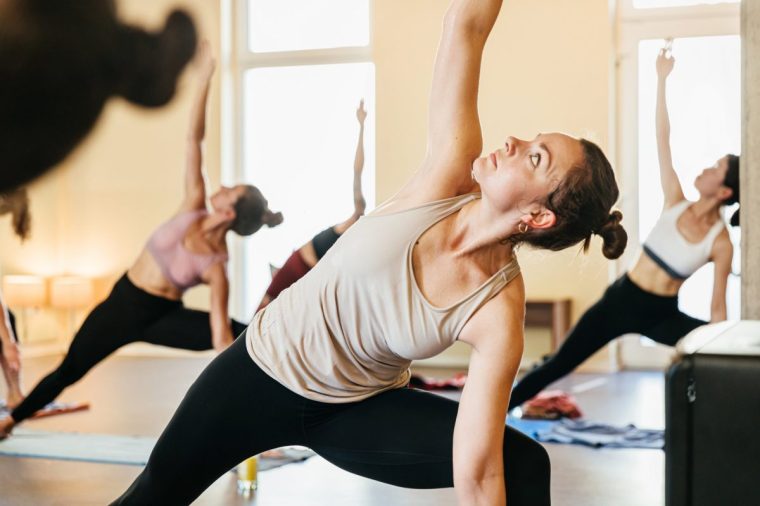 It can be hard to find tie for fitness (Photo: Tom Werner/Getty)
Ages 30-40
By the time we reach our thirties, there is only one question that seems to be on the mind: who has time for exercise? “Time can often be our biggest issue at this stage in our lives,” agrees Heaton-Armstrong, noting that many people are juggling demanding jobs, a growing family and other pressures.
But despite what you might think, you don’t need to exercise for hours every single day to improve your health. For instance, new research shows that just 30 minutes of strength training twice a week can build muscular strength, endurance and power.
And when it comes to your cardio, “exercise snacks” are the perfect tool. These are small bursts of movement, such as climbing the stairs or doing squats, done a couple of times throughout the day for up to five minutes – and can lead to a 17 per cent increase in cardiorespiratory fitness, according to a British Journal of Sports Medicine review.
What to do
Keep it simple – short workouts are enough when you are juggling family and work. “When it comes to exercise, consistency is key – a simple routine that incorporates both strength and cardio,” says Heaton-Armstrong.
She recommends two short full-body workouts a week, which can be done at home or in the gym. Build these around the key movement patterns of pushing and pulling, across the upper and lower body. For instance, squats (lower-body push), deadlift (lower-body pull), shoulder press (upper-body push) and bent-over rows (upper-body pull). Pair that with twice-daily stair climbs at the station or office, and you are already hitting major fitness disciplines without training for hours.
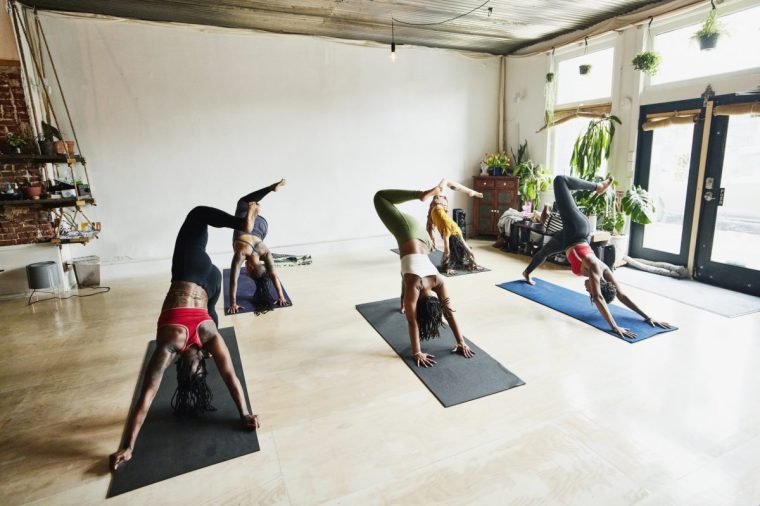 Move away from just doing cardio (Photo: Thomas Barwick/Getty)
Ages 40-50
If you have reached your forties and begun to feel that the workouts you used to do no longer have the desired effect, you are not imagining it. “This is often when we start to notice that what used to ‘work’ fitness-wise suddenly doesn’t,” says midlife personal trainer and founder of CLC Fitness Carly Corrigall. “The biggest tip I can give here is to move away from purely cardio-based training and make regular strength training a part of your weekly routine.”
We hit peak muscle mass in our thirties, and without regular maintenance and growth, it will continue to decline over our life. That has an impact on your metabolism, heart health, disease risk and likelihood of injury. Research shows that women who were physically active in midlife had significantly higher muscle mass in later life compared with those who were inactive in the decade, showing that strength training halts the natural decline of muscle loss.
What to do
Get serious about strength training, aiming to lift weights two to three times a week. “Consistency matters: getting three short, effective workouts in is going to benefit you so much more than haphazardly managing a single longer session only once in a while,” says Corrigall.
Strength training requires resistance. At first, that can be your body – pushing your own weight off the floor in a press-up. But eventually, it will require progressing to additional weights, either at home or in the gym.
“Confidence can dip if exercise has been avoided for a while, so starting small and building gradually is far more effective than jumping into overly ambitious programmes,” says Corrigall.
If you have the money and time, investing in a personal trainer for one-to-one sessions or buying a guide you can follow in the gym is a great way to move effectively without fear. It can also help with your technique, as avoiding injury is essential for creating a lasting routine.
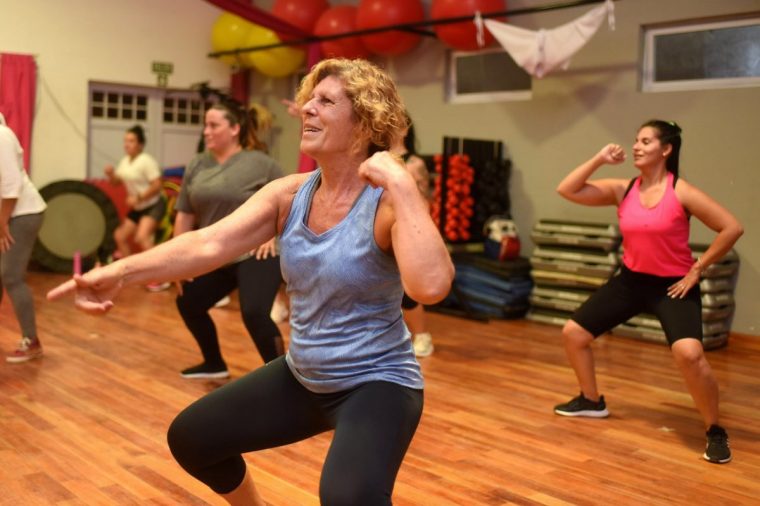 Don’t slow down! (Photo: Valeria Blanc/Getty)
Ages 50-60
The idea that fitness should slow down in your fifties is tempting – but it is also one of the biggest myths of the decade. Muscle and strength are just as important in your fifties as they are in your forties, with hormonal changes that speed up the rate of muscle loss and bone weakening.
“The biggest mistake I see is people thinking they need to ‘go easier’ simply because they’re getting older,” says Corrigall. “Smart, progressive strength training, regular cardio and a sprinkling of plyometric (jump training) are some of the most powerful tools we have in this decade to quite literally put a spring in our step.”
But if you are training hard, this age is the time to focus more on recovery. Research shows that it takes longer when you are older for the nervous system to relax, and muscles and joints to rebuild, after tough training sessions.
“There is no decade I’d say that rest is unimportant, but avoiding burnout is essential for fewer complications in later life,” says Corrigall.
Heaton-Armstrong agrees: “At this age, we’re often juggling poor sleep, stress and fluctuating energy, so recovery needs to be treated with as much respect and importance as training. Rest is where the magic happens.”
What to do
Keep pushing – and recovering. There are a few steps to focus on during recovery, including adequate nutrition. You need more of some key nutrients as you age, including protein, due to changes in how the body metabolises the macronutrient. Active people over the age of 50 should aim for around 1.2-1.6g of protein per kilogram of bodyweight per day to aid muscle health (for a 70kg person, that’s 84-112g of protein a day).
Muscles rebuild at rest, not during your workout, so good sleep is also important for recovery. Prioritise winding down before bed to ensure you fall into a restorative sleep by putting your phone away, dimming the lights in the evenings to signal night-time and keeping a calm evening routine.
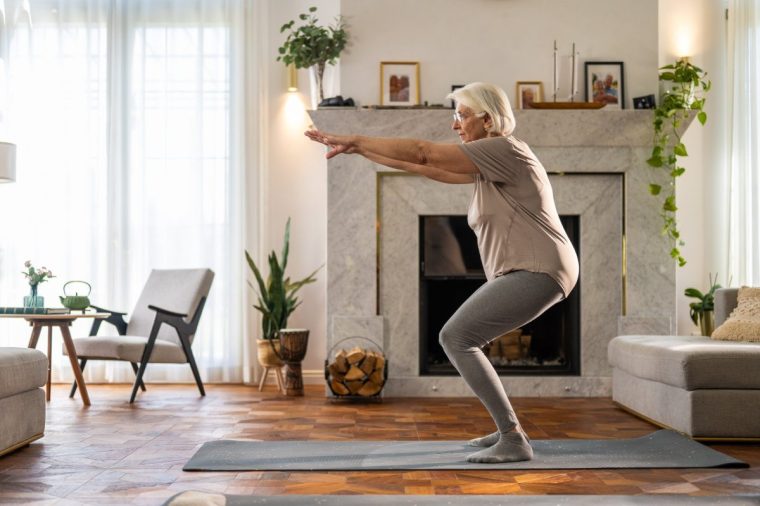 Stay fit to age well (Photo: simonkr/Getty)
Ages 60-70
Staying active in your sixties isn’t just about strength or stamina, it’s about staying connected. According to research, around one in 14 people aged over 65 is often lonely. Prioritising connection as soon as possible can prevent that from happening – and exercising together has been shown to bolster relationships.
The impact of being around others when your endorphins are flowing, as well as co-ordinating with each other in movement (such as in a dance class or team sport) encourages feelings of collaboration and trust, according to University of Oxford research.
Not only that, but it makes you more motivated to train at a time when health complaints or aches may make it feel easier not to move. Known as the “enabling hypothesis”, having others encourage us improves our own self-belief and confidence about what we can do in the gym, and boosts our desire to exercise.
What to do
Keep it social for more motivation and benefits. That might look like taking your friends to the gym with you, laughing at each other in a Zumba class or even striding together for a long walk. If you don’t know anyone who wants to train, group classes are a great way to be around people while moving and make new friends.
Ages 70+
As we move into our seventies and beyond, confidence in everyday actions matters more than any milestones. Up to 42 per cent of people over the age of 70 experience a fall, which is why both Corrigall and Heaton-Armstrong say now is the time to train your balance.
“I have several clients over 70 and not a session goes by where we don’t dedicate time to balance and stability,” says Heaton-Armstrong.
Falls can be dangerous at any age, but these stability-building movements will have real gains outside of the gym, helping you to feel stronger in your daily movement patterns.
“These exercises that improve balance, co-ordination and lower-body strength are crucial, as they directly translate to real-life tasks such as getting up from chairs or the floor, climbing stairs and carrying heavy shopping bags – all of which we want to be able to do in the years to come,” adds Corrigall.
What to do
Build stability and balance with functional exercises. Heaton-Armstrong prioritises unilateral exercises – moves that work one side at a time – with her clients, such as lunges and step-ups.
It is also a good idea to add functional exercises into the mix. These build strength in movement patterns we repeat outside of the gym – think squats, which mimic getting up and down from a chair, and farmer carries (holding heavy weights), which build grip strength.