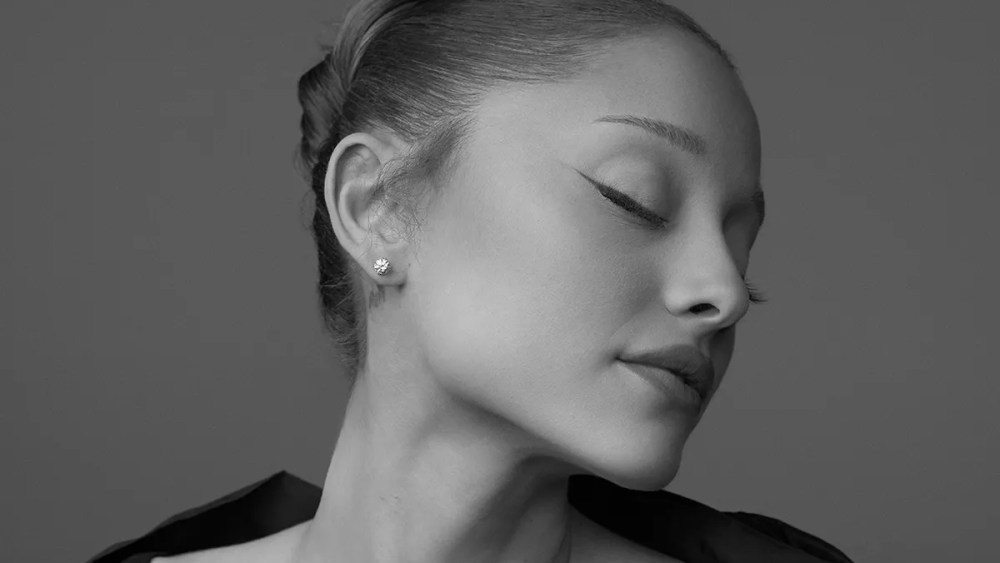
If music is confession, then acting is reconciliation for Ariana Grande.
“I really love the work,” Grande tells Variety. “I love getting to know the little mental map of a person — what makes them tick, what triggers them. Even the things that never make it into the film.”
Speaking via Zoom from a sunlit room, the window light framing her like a natural spotlight, Grande radiates an ease that belies the gravity of what she is describing. She smiles often, her gratitude genuine and unguarded, even as she navigates questions about the skepticism she has often faced and the struggle to prove herself worthy of a space she has occupied since childhood. Now, she’s an Academy Award nominee for her revelatory work as Glinda in “Wicked” (2024) — and is once again in the awards hunt for its sequel, “Wicked: For Good.”
The demands of the role arrived at a moment when Grande was already accustomed to being watched — and judged — from every angle. But acting, she insists, offers a fundamentally different kind of exposure than music. “Music is very self-focused. It’s confession,” she says. “Acting is confession through a character. You’re still using your heart and soul, but you’re honoring someone else’s story. There’s a layer of protection there.”
In “Wicked: For Good,” that interior labor is everything. Grande’s Glinda is bright and buoyant on the surface, but threaded with an underlying doubt and insecurity about her overhyped magical abilities. It is a performance that demands agility — emotional, musical and psychic — often within the same breath. “Every single day was a big day,” she says. “A lot of days, we were shooting two movies in one.”
The distinction between her two artistic lives matters profoundly to Grande. Music, she explains, is intimate and self-directed, inseparable from her own lived experience. Acting, by contrast, requires surrender. “It’s an amazing experience to be able to jump into somebody else and tell someone else’s story,” she says. “To take yourself out of it, to be part of an ensemble — a small piece of a massive puzzle with hundreds and thousands of creative hands — that’s a beautiful thing.”

Ariana Granda is Glinda in WICKED FOR GOOD, directed by Jon M. Chu.
Universal Pictures
From the moment her casting was announced, Grande faced a familiar chorus of dismissal — the suggestion that celebrity precluded seriousness, that success in one medium somehow disqualified legitimacy in another. It is a narrative she has learned to keep at arm’s length, constructing a protective distance between her work and the noise surrounding it.
“I learned very quickly that I was going to have to shut it out,” she says. “There was a lot of noise saying I couldn’t handle it, or that I wasn’t the right choice. But I had a job to do — a really big one. I had earned it, and I needed to give it my entire life and my being.”
She did. The shoot was relentless, with emotional scenes filmed out of sequence, often back-to-back. “Those days we would go home feeling like husks,” Grande recalls. “You rehearse, you prepare, you live with these characters. But when the camera’s rolling, you can’t expect anything. It has to hurt the same every time.”
What sustained her were the quiet hours — late-night car rides through London, calling her mother, replaying the day’s work in the dark. “Those moments felt sacred,” she says. “Just being proud of myself in the quiet.”
That pride is not performative. It is private, hard-earned and fiercely protected. “It can be very hurtful when people question your commitment,” Grande admits. “So I focus on what’s real. The love I feel. The people I meet. Gratitude is the only thing that reframes it all.”
Now, as “Wicked: For Good” carries her deeper into the awards conversation — most recently with her second consecutive nomination at the Actor Awards — Grande finds herself falling further in love with acting. She is clear-eyed about what comes next. Music will return — eventually. Acting, however, is no longer something she’ll visit between albums.
“I love actors,” she says. “I love talking about acting. I love learning how my process changes. I’ll never take that for granted.”
And yes, she adds with a smile, there is another role ahead — one she is “very excited about.”
“More very soon,” she promises.
Ariana Grande sings ‘The Girl in the Bubble’ in ‘Wicked: For Good’
Universal Pictures
Read excerpts from her interview below, which has been edited and condensed for clarity.
You’ve said repeatedly that acting feels like coming home. What is it about acting that feeds you in a way nothing else does?
I think it’s an amazing experience to be able to step into somebody else and tell someone else’s story. With music, it’s very self-focused and deeply personal — it’s your own experiences, your own pain and joy. Acting is different. The work is about serving another story, taking yourself out of it and being part of an ensemble. You’re a small piece of a much larger puzzle, with hundreds or thousands of creative hands working together. That’s a beautiful thing. I really missed that.
What part of the acting process do you love most? Is it the preparation, the rehearsal, or just being on set?
I really love being on set, but I also love the rehearsal process just as much. I think I love and find both to be just as enjoyable, because I love doing the work. I love the phase of the early days of getting to know the character and figure out who they are and what makes them tick and what triggers them, finding little pieces of information that matter to you as the actor that you can use and experience on set that don’t even matter for the film, but that you can pull on and draw from for your own experience. I really love getting to know the little mental map of the person — that’s really fun. But also being on set, I’m present and I enjoy all parts. I do.
What surprised you most about yourself once you found yourself really committed to acting again?
Every time something goes well — even if you’ve prepared for it for years — there’s always that rush of relief and gratitude afterward. You think, “Oh my goodness, OK, we did it.” You call your acting coach or your mom and say, “We did it.”
With “Wicked,” that feeling happened constantly. Cynthia and I joke about it, but it’s true — every single day was a big day. We started with “Popular” and “What Is This Feeling?” and then jumped straight into “Defying Gravity.” Before lunch, I’d be in the attic at the beginning of the number, and after lunch I’d be singing the finale alone. It was nonstop mental hurdles. There was no time to process what had happened the day before — or even earlier that day — because we had such quick turnarounds. It was very much blinders on, just staying in it. But whenever something landed, there was that overwhelming sense of relief.
The “For Good” number, particularly the “split door” frame is easily the single best acting work of your career. How did you get into that mindset, especially with such a fractured shooting schedule?
That’s why Glinda is such a gift to an actor. She requires everything. Even in the lighter, comedic moments, there’s someone deeply insecure underneath the surface. Across both films, there’s so much happening in her head at all times. Even when she’s using comedy to cover the fact that she’s breaking — especially in front of Elphaba — both things are always present. It’s a lot, but that’s why I love her. It was such a privilege to play her.
On days like that, you just have to be present. Cynthia and I have very different processes, and we’re very different as people and as actors. That day was about finding a balance — giving each other space when needed and then coming together at the end with a hug, holding hands. Those days were emotionally exhausting. You’re doing the scene all day, across different angles, different sizes, different coverage, and it all has to connect.
The hardest but most rewarding part is resetting every time. Even though you rehearse and live with these characters, you can’t anticipate the moment. It has to hurt the same way every time and feel just as real. We would go home feeling like husks.
Do you get frustrated by the perception that you’re not fully committed to acting, especially after giving so much to scenes like that?
I try really hard to maintain distance from that so I don’t get hurt anymore. I learned quickly that I had to do that from the moment I was cast. There was a lot of noise saying I couldn’t handle it or wasn’t the right choice. But I had a job to do — a really big one — and I needed to shut everything else out and focus on what was real. I had earned the role, and I needed to give it my entire being.
I’m proud knowing that’s what I did. I’m a very committed artist, and it can be hurtful when that’s questioned. So I protect myself by focusing on the love and support that’s louder and more real. I have real interactions with people — moments that make me cry, stories that stay with me. I don’t take that for granted. I’m proud of the work I do and the artist I am. But yes — sometimes it’s hard.
Do you feel less judged when you’re inhabiting a role or when you’re being yourself?
It’s present either way. It feels pretty consistent no matter what.
If music is confession for you, then what is acting?
It’s confession through a character. You’re still accessing parts of yourself, but you’re using someone else as the vessel. There’s a layer of protection — a kind of coding that says, “This isn’t my story.” But it is you doing the work. You’re still crying the tears, feeling the feelings, laughing the laughs. It’s still your heart and soul at play — just in service of someone else’s story. And in doing that, you learn so much about yourself.
Do you feel like you’ve given yourself permission to be taken seriously as an actor?
That idea of permission is really interesting. I’m so grateful to have earned the role, and I think that was the beginning of it. My early lessons with Nancy Banks — when she believed in me and told me I was doing beautiful work — mattered so much. Sometimes it’s easier to hear that from someone you respect deeply, like her or John Chu. It takes time to sink in, but I do feel like I’ve given myself permission. As for the rest of the world, I try to focus on the work.
You’re now an Academy Award nominee Ariana Grande. A moniker that can never be taken away from you. What does that recognition mean to you?
It’s incredibly surreal. It still doesn’t feel real. It feels like the warmest welcome into a community I truly love. I love acting. I love actors. I love talking about acting and learning about other people’s processes — and my own. It’s life-changing, and I’ll never take it for granted.
Cynthia Erivo wasn’t nominated by SAG, and Jon Chu wasn’t nominated by the DGA. What are your thoughts on those omissions?
There aren’t enough flowers on this earth for Jon M. Chu. He’s an extraordinary human being and director. This film will be watched for decades to come. He set out to move people, to challenge them, to make them better allies and better humans — and he succeeded.
The impact of his work and Cynthia’s Elphaba is undeniable. Cynthia’s performance is the most truthful, vulnerable and fierce Elphaba we’ve seen, and it will be referenced and adored for generations. That can’t be taken away.
That’s why I say every good thing that happens to me belongs to them, too. None of this exists in isolation. We informed each other every single day. Of course, it’s hard — they deserve all the flowers this world can grow.
What do you hope audiences say about you five years from now?
I want to challenge myself and take on roles that exercise different muscles and ask something new of me. I try to stay present rather than thinking too far ahead, but I hope we’ve had many more conversations like this — about projects that are unique, surprising and meaningful. I’m drawn to things that feel different.
I’m contractually obligated by the “Arianators” to ask about your upcoming music tour. Should fans expect new music before then?
No — definitely not. Nothing is coming before May. I love them so much, but sometimes I want to ask, “Do you think there’s another version of me out there who had time to write an album?” Not yet — but soon enough.
You have “American Horror Story” and “Meet the Fockers” coming. Is there anything else you can tease?
There is something else I’m very excited about down the line. I can’t say much yet, but it’s something that inspires me deeply. It contains multitudes. I promise I’ll DM you the day it’s announced.
What has been the hardest but most meaningful moment of being an actor so far?
My mind immediately goes to being on set — the days that required the most challenging work of my career, all of which were on these films. Going home in a quiet car through pitch-black London, knowing I’d be back before sunrise — those moments were sacred. Just sitting with the work, feeling proud, calling my mom to tell her how it went. I’ll never forget those rides home. Being there and doing the work meant everything to me.